




★★★
“What rules?”
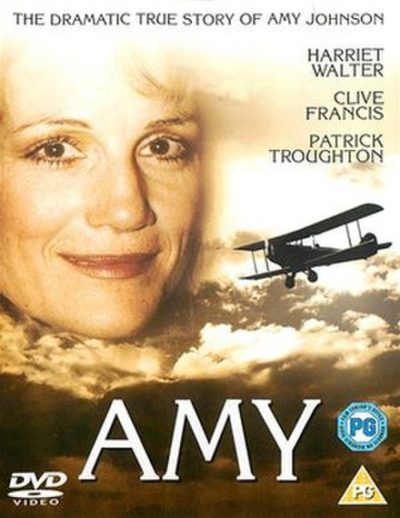 It’s interesting to compare the approach taken in this biopic of aviation heroine Amy Johnson, made in 1984, with the one over 40 years earlier (and shortly after her death) in They Flew Alone, and note the similarities and differences. Both are relatively restrained in budget. The earlier one because it was a low-cost production, made during a war; the later one because it was made for television – and the BBC at that, never a broadcaster known for its profligate spending! As a result, both are limited in terms of the spectacle they can offer, and end up opting to concentrate on Amy as a character. It’s the cheaper approach.
This benefits from a little more distance, and doesn’t need to paint an almost beatific picture of its subject for patriotic propaganda purposes. It begins with Amy (Walter) already fully grown up and seeking to raise funds for her record-setting flight to Australia, despite only a hundred hours of solo experience. Actually, 102, as she points out to a potential sponsor, also delivering the line above. when it’s pointed out she’s not even supposed to be in the hangar. The film does a somewhat better job of capturing Amy in flight, with wing-mounted camerawork that’s an improvement over the obvious rear-projection used in Alone. Yet there’s still too much reliance on newspaper headlines, to avoid having to spend money, though there is some deft use, of what’s either genuine newsreel footage or artfully re-created, sepia facsimiles.
There is a similar focus on her failed marriage to fellow aviator, Jim Mollinson (Francis, who really does not sound Scottish at all), and he doesn’t come off much better than the character did in Alone. Jim is portrayed again as a drunken womanizer, though this version plays down the idea of him becoming fed-up at being overshadowed by Johnson’s exploits. It feels like there’s a slight hint of a romantic relationship between Johnson and earlier co-pilot Jack Humphreys (Pugh). There’s also a statement that she had an operation to prevent her from having children, which I had not heard before. But it does depict Amy as quickly becoming fed up with the endless appearances required by her Daily Mail contract post-Australia flight, which seems accurate: she was happier out of the public eye.
The biggest difference between the two films is probably the way they depict her death. This… simply doesn’t. It ends instead, in a 1940 meeting with her ex-husband, while they were both ferrying planes around Britain for the Air Transport Auxiliary. Barbs are traded, and Jim seems annoyed when a fan comes up seeking Amy’s autograph and ignoring him completely. She leaves for her flight, despite being told regulations won’t let her take off due to the conditions. “What rules?” she says, before a caption details her death in 1941. It’s understated, and that’s in line with the approach taken here – perhaps too much so. While I think it is slightly better than Alone, this feels mostly due to better technical aspects. I still can’t feel either film gave me a true understanding of what she was like, or what made her tick.
Dir: Nat Crosby
Star: Harriet Walter, Clive Francis, George A. Cooper, Robert Pugh
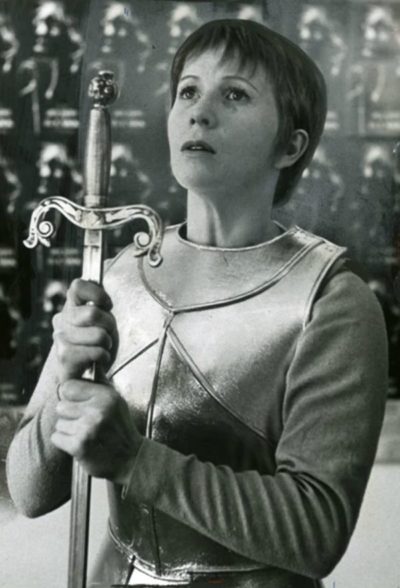 This was originally a French play, L’Alouette, written by Jean Anouilh in 1952. Three years later, a translated version was brought to Broadway, where it ran for 226 performances from November 1955 until June 1956. Julie Harris played Joan, and there was quite a star-studded cast behind her, including Boris Karloff as Bishop Cauchon, Christopher Plummer and Theodore Bikel. It was critically acclaimed, Harris winning that year’s Tony Award as Best Leading Actress, and Karloff being nominated as Best Leading Actor. The following February, a TV adaptation was screened in the United, though wasn’t the first or the last such. In November 1956, the BBC screened their version, with Hazel Penwarden as Joan, and a supporting cast including Michael Caine. Additionally, 1958 saw an Australian version, though it seems notable only for having Olivia Newton-John’s father in the cast.
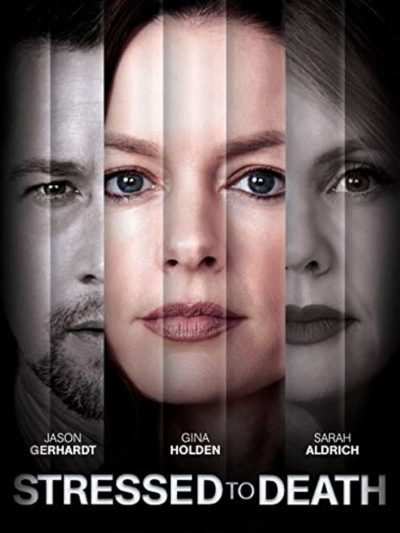 The concept here is intriguing. It’s just the execution – and the script in particular – which is bad. A robbery at a convenience store ends in the death of David, the husband to Victoria Garrett (Aldrich). She blames the paramedic on the scene, former soldier Maggie Hart (Holden), for the loss of her spouse, though the incident hits Maggie equally hard. She quits her job, raising daughter Jane (Blackwell) with her husband, commercial real-estate agent, Jason (Gerhardt). But Victoria hasn’t moved on – in probably the film’s most memorably loopy elements, she feeds her husband’s ashes to a pot-plant she calls David, to which she chats. She’s also clearly a believer in that saying about revenge being served cold.
 This one is slightly unusual among action-heroine films, in that it was both written and directed by women: Kirsten Elms and Kari Skogland respectively. Unfortunately, it’s not exactly an advert for their gender; after a brisk start, it falls apart, and becomes a ridiculously implausible movie, in a completely different genre from where it started. That’s a real pity, because where it started, had a lot more potential than where it ends up. It begins with Sage Rion (Manning), a young but highly-talented thief, taking a bet with her partner, as to who can boost a classic car quickest. She picks a 1966 Dodge Challenger, but inadvertently leaves her ID at the scene of the crime.
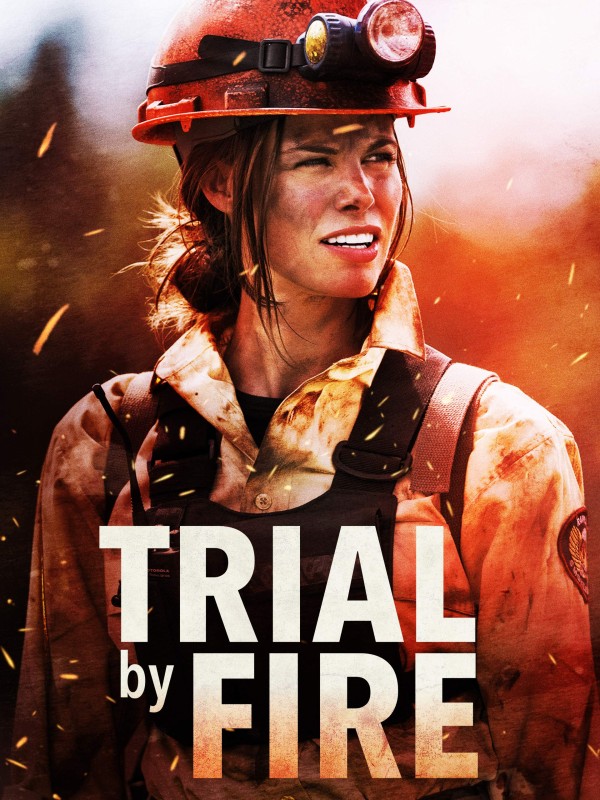
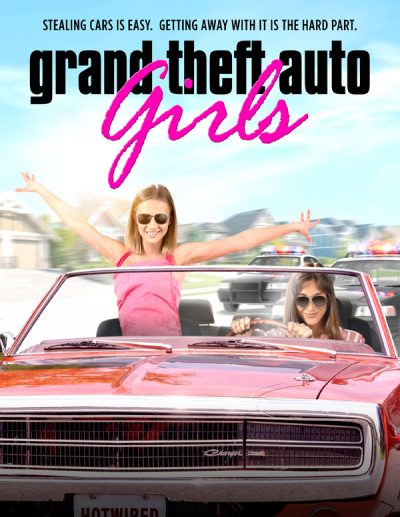 Turns out that The Asylum are not the only company who makes mockbusters. As its alternate name makes clear, this Lifetime TVM is clearly a knock-off of the title mentioned above, down to the same, basic plot. Two teenage girls begin doing crime, largely for the excitement. A teacher becomes aware of their exploits and decides to blackmail them for his own benefit, by making them escalate their activities. This brings them increasingly under the scrutiny of both authorities and criminal elements, not to mention parental disapproval, eventually leading to a climax where all these aspects cross paths. As my
 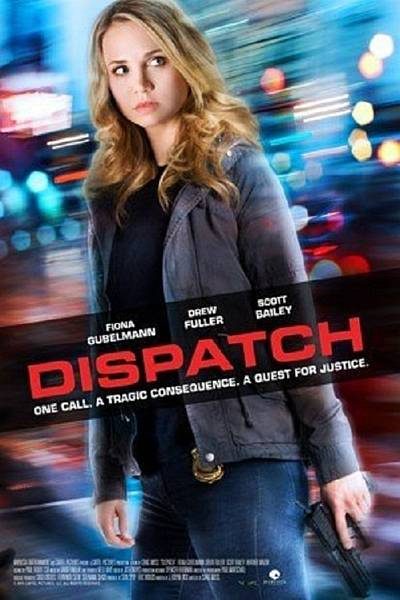 Christine McCullers (Gubelmann) is a new cop, out on patrol with her father, a long-time veteran of the force. A poor decision involving a robbery suspect leaves Dad dead and Christine crippled. Re-assigned to dispatch, things go from bad to worse, when she gets a call from a kid, which she takes to be some kind of prank. It’s very real, and the caller’s friend ends up murdered as a result. Crucified by social media – not least due to her popping of painkillers to deal with her injury – she’s suspended from duty. Believing the killers are not the victim’s parents as her colleagues think, Christine begins her own investigation to try and achieve redemption through finding the real murderer.
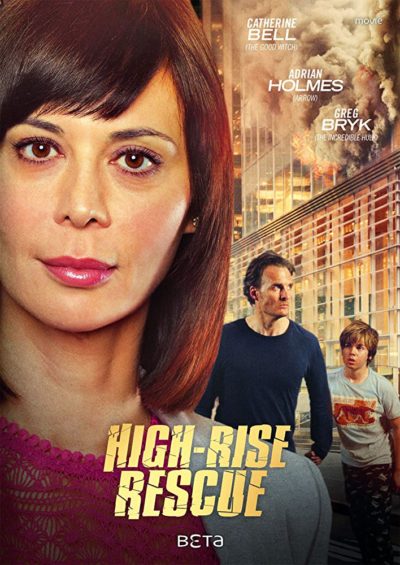 Architect Beth Davis (Bell) is just about to leave Chicago for a business meeting in Miami, when she hears there has been an explosion at the high-rise apartment building downtown, where she lives with husband Jack (Davis) and son Charlie (Arnold). Rushing back home, she finds the situation increasingly perilous, and the fire department unwilling to enter the unstable structure. Having been the person who designed the building, Beth is able to sneak in, with the aid of a sympathetic fireman, Ray Steele (Holmes, looking like a low-rent Tony Todd) on the outside, and begin the perilous climb to the 55th floor where Jack and Charlie are trapped in the bathroom.