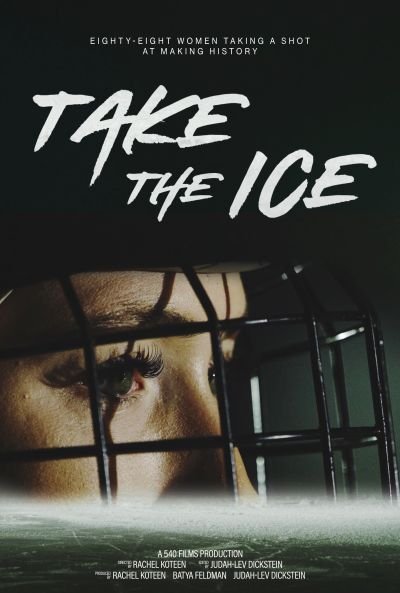
There’s no doubt that women’s sports very much plays second fiddle to their male equivalent, though the gap varies from sport to sport. The WNBA is experiencing a surge of popularity, though the NBA is still a financial behemoth. This documentary focuses on ice-hockey, and the debut season in 2015 of the first professional women’s competition in the US, the National Women’s Hockey League. Though semi-professional is closer to the truth: the league could only afford to pay its players around $15,000 a year, meaning almost all of them had to have day jobs, from teachers to paralegals to engineers, to cover the expenses. Commissioner and founder Dani Rylan spends most of her time seeking sources of finance, though finds the men’s league less than thoroughly supportive.
To be honest, I can’t blame them. There’s a vague sense of entitlement coming off the NWHL, not realizing they are largely competing with the NHL for the same fans and money. Why should the NHL help a rival start-up, just because they have women players? That’s the harsh reality here. I respect Rylan for putting in the work and starting the league, but this is capitalist equality in action. There were points at which I wanted to reach into the TV set and remind the NWHL, nobody has a “right” to funding in the world of professional sports. You have to earn it, whether you are male or female, and doing so starts with the quality of your product.
It may have been a mistake to start with just four teams, because with all of them making the playoffs, the entire regular season felt kinda pointless. And how did Boston end up with eight members of the US national team, while none of the other franchises had more than a couple? Wasn’t there some kind of a draft to balance the teams? Unsurpisingly, the Boston Pride won the inaugural championship – without, it seems, too much trouble. The film does make some effort to make this less of a procession, by telling the story of Denna Laing, a player on the Boston team who suffered a spinal injury during a game, which left her paralyzed.
I felt these elements, concentrating on the players and their stories rather than the business, worked better, but were frustratingly brief, except for Laing. There’s not enough of a narrative in the game-play to sustain things, and I suspect I’m an outlier, in that most other people watching the documentary probably will already be well aware how the first season ended. The league is still going, albeit under different ownership, although it’s interesting the film didn’t come out for more than six years after the season covered by it. I’ve been to ice hockey games, both here and back in the UK, and at various levels. But I’d have to say, in contrast to, say, Perfect, there is not much here likely to make a fan, if you weren’t one already.
I’m rarely going to find animated action as impressive as “live action”. Something done by an actual human will always seem more real than anything CGI or traditional hand-drawn animation can achieve. That’s true even if the former is arguably as fake, between stunt doubles, green screen and no small amount of CGI itself. Maybe it’s just me. While I have given multiple animated films our Seal of Approval previously, including Mulan, Aeon Flux and Battle Angel, these have been won on the basis of other elements beyond action. A live-action film can get there purely on those merits, despite clear deficiencies elsewhere e.g. In the Line of Duty IV. I don’t think animation can do that.
Hence, I suspect that I would look more kindly on this were it another live adaptation. It wouldn’t have to do much to be an improvement over the Alicia Vikander version, though to be honest, the Angelina Jolie versions were only adequate and borderline bad respectively. Maybe the makers would be better taking a Resident Evil approach, and not worrying about being faithful to the video-games. I did play the original – it remains one of only a few I ever completed – but care not about accuracy. Films and games are different, and need to be. Plot and character matter more on screen, not playability. Here, those elements are alright: they feel functional rather than organically inspired. For instance, it feels less a story than a series of levels.
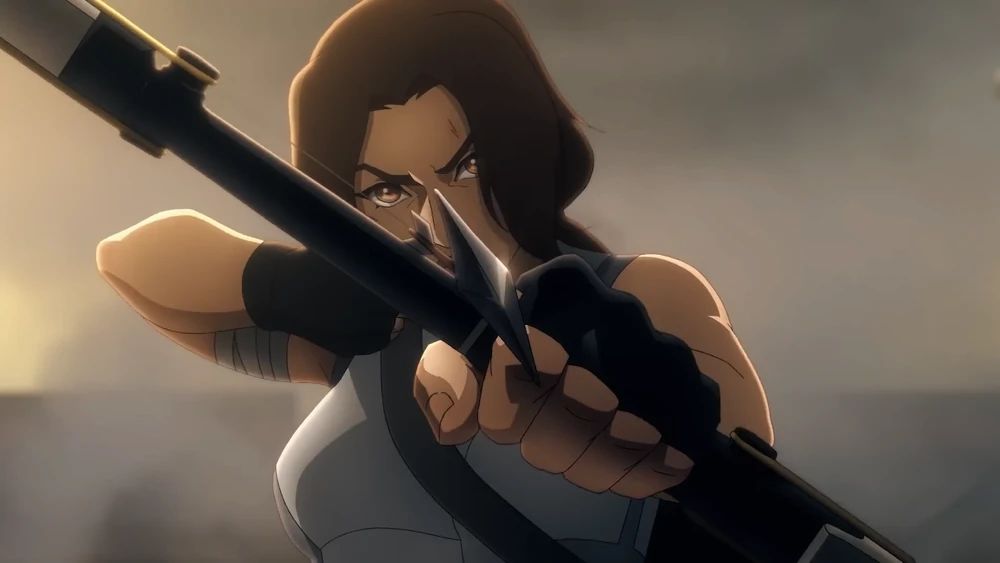
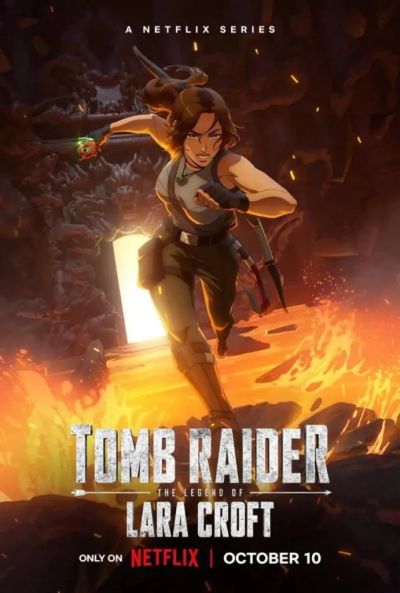
We begin with a prologue which sees Lara (Atwell) in Chile retrieving a box, alongside her mentor, Conrad Roth. Three years later, Roth is dead and Lara blames herself for that. She’s about to sell off all the family’s treasures, when the Chilean box is stolen by Charles Devereaux (Armitage). Turns out the stone it contains is the first in a series of four, which when combined will destroy the precarious balance under which the world operates. Along with sidekicks Jonah (Baylon) and Zip (Maldonado), Lara criss-crosses the globe, from China to Turkey to France, and back to China, trying to stop Devereaux from completing the set and unleashing the power they contain.
From subsequent reading, I suspect you probably need to have played the specific games on which this is based (I believe it’s the “Survivor timeline”), to understand the significant of the apparent trauma through which the character has gone. None of this is depicted in the film, so I had no clue why I should be bothered by the off-screen death of Conrad, someone I’d only known for about five minutes. Also, Lara seems a bit gay here. Quite why a video-game character should be given specific sexuality escapes me. Shame they didn’t have the courage of their apparent convictions, to do more than hint heavily. To quote Yoda, “Do. Or do not.” Give us hot cartoon babes making out, or don’t bother bringing it up.
Of course, an old white guy is the villain, in comparison to the young, ethnically diverse group in Lara’s camp, and there are a couple of other jabs along those lines. But in general, it’s light enough with the messaging. The eight episodes probably total just under three hours, by the time you trim off the credits, so not all that much more than The Cradle of Life‘s 117-minute running time. You could probably get through it in a single sitting: it’s not difficult viewing. The animation is mid-tier, but does the job, and I liked the performance of Atwell (well-known here for her depiction of Agent Carter), who comes over as a serious, almost solemn, heroine – yet one with whom it’s still easy to empathize. Her supporting cast though, feel superfluous and don’t make much impression.
Within the limitation of animated action discussed above, what you get here isn’t bad. There are some good set pieces, and a couple of occasions where I almost forgot I wasn’t watching actual people, and held my breath. Key word there though, is “almost”. There’s an overall air of competence surrounding the production, and no obvious elements at which I can point a critical finger. Yet there is also not much to cause me to recommend this actively to anyone, who isn’t already a fan of the games. A second series hasn’t been confirmed: there are reports it received a two-season order out of the box, although it doesn’t appear to have received the critical acclaim given to Arcane. But if Lara does return, she probably falls into the “If I’ve nothing else to do” category.
[Jim]
Looking at some of the harsh reviews for the show, I get the impression a lot of it comes from, “I wanted the show to be this but it was that.” It’s a bit unfair because as a show, the series is good, standard adventure animation. Those who expected the show to be somewhat like Arcane: League of Legends, for example, were setting expectations very high. It’s true, that there are “two Laras”. The original by Eidos was invented in 1996, and the “modernized version” came out with the new games of Crystal Dynamics in 2013, and influenced the 2018 reboot movie, with Alicia Vikander. The original Lara could be described as a rich but goodhearted sociopath: watch the Angelina Jolie version, she really got it. Lara was a female Indiana Jones, living in a Bruce Wayne-like mansion, while the modern version seemed inspired by the Lisbeth Salander character from the Millennium Trilogy.
She instead became a guilt-stricken trauma survivor: I remember a trailer for one of the modern games, where she was talking with a psychiatrist and her whole body shook while remembering her previous experiences. The relentless adventurer who just enjoyed the journey seems to be out; the pain-stricken and emotive heroine is in. Still, she does all the action you would expect from her. This Lara just comes with emotional baggage; she has to learn to value her friends and understand that people are more important than the things she hunts. In a way it’s like modern and old James Bond. Once upon a time, he was a superhero we all loved and adored. Today, he has been cut down in size to make the character “more human”. For Lara, it makes her more relatable, for sure – but arguably less interesting. I’m not sure it’s the best way to present the character.
Filmed versions of Lara always seem to have her suffering from the loss of her father. This is the third such, after the Jolie and Vikander live-action versions. It should be noted this was not originally part of her imagined biography, which has changed several times over the years. Originally, she fell out with her family, when she decided to make adventure her lifestyle, earning her living as a travel writer, instead of marrying the Earl her parents had chosen for her. Her big defining moment was surviving alone for two weeks in the Himalayas after a plane accident. It was only after the Jolie films and the reboot games, it became that she had lost both parents.
Here, Hayley Atwell gives our favourite tomb raider a very good voice, and you wonder why film makers seem so resistant to casting a British actress as real-life Lara, with the previous actresses being American and Swedish. After all, Lady Lara Croft is as quintessential British as Sherlock Holmes, James Bond or Emma Peel. [Jim: be careful what you wish for, Dieter. You now have to deal with Sophie Turner as Lara in Amazon Prime’s adaptation!] In Charles Devereaux, this show offers Lara a villain who gives her the old, “You and me are actually very much alike” speech, as heard from Belloq in Raiders of the Lost Ark and Scaramanga in The Man with the Golden Gun, to emphasize the darker side of a hero. Nothing new here on this front.
A lot of effort goes into giving Lara a circle of friends, something less a factor in the games. But as every Bond has his Felix Leiter, every Indiana his Sallah, it’s only fair Lara also get her sidekicks! Interestingly, Lara’s arc is as an emotional vulnerable character, who finds her way back to humanity, in contrast to the villain who seems to lose his more and more. But the “coolness” of the original character, as seen in the early games and movies, has perhaps been lost in favour of her becoming a team player. It’s indicated that what prevents Lara from falling to her more negative instincts, is that she has friends who care for her, and help cope with her pain and grief. Devereaux is essentially alone, with no reason for him to overcome his anger, pain and wish for revenge. Richard Armitage gives a believable performance there. Yet she is still constantly trying to save her enemy. I suspect that “old Lara” would just have killed him when he attacked her, of that I’m quite sure.
There are a lot of small nods to previous games and films if you pay attention, beyond Lara doing parkour, reflecting her running and jumping around in the games. Things like a mention of the Trinity group, which appears in the Alicia Vikander movie, or her hallucinations of demons with a striking resemblance to the stone gargoyles that came alive in the first Jolie adventure. However, the show delivers only standard adventure, neither great nor bad; like so many things, it’s in the middle, just average. If you can cope with that, the show should entertain – no less, no more, with animation which similarly is fairly standard but satisfying enough. It provides the action and adventure I would expect from this genre. The one real flaw I see, is that it lacks the kind of humour, fun and levity I’d also deem essential elements of the Tomb Raider franchise. Lighten up a bit next time, Lara.
[Dieter]
Showrunner: Tasha Huo Star (voice): Hayley Atwell, Earl Baylon, Richard Armitage, Allen Maldonado
Well, this is a spectacular mess. Except, the word “spectacular” implies something of interest, and that’s far from anything this delivers in its boring trudge towards a predictable ending. It demonstrates the perils when you, as a film-maker, decide to take your story and fragment the timeline. This only works if the script is able to maintain coherence around the jumps back and forth. This painfully fails on that count, beginning in the middle, but then bouncing back and forth to the point you know little and care less about any of the participants, or what happens to them. How bad is it? It gets the rare honour of me starting on the review, when there’s still half an hour to go.
Loosely, it’s the story of Star (Scout-Compton), who decides to go full vigilante after her best friend, an addict called Karma (Francesca), had enough of life and killed herself. Fortunately for the plot, Karma left a letter behind which explained, in tedious detail, the reasons why she committed suicide. This would largely be the result of abuse at the hands of her boyfriend, BJ (Miller) and various members of his scummy family. Meanwhile, there’s also a connection to a vicious murder that took place forty years ago, and a police investigation, including a homicide detective sporting the most implausible Swedish accent this side of The Muppet Show. What there is not, however, is any reason to give a damn about any of it.
The makers even manage to waste the talents of a triple-bill of horror icons, in Michael Berryman, Kane Hodder and Bill Moseley, all of whom are capable of carrying films on their own. Here, they just kinda… exist, wheeled on screen and then shuffled off again without making any significant impact. Instead, it’s mostly Star yelling at BJ and their relatives, as they are abducted with remarkable ease, and tied up in a shed somewhere. This proves sufficient to reduce them to snivelling wrecks, apologizing for whatever they did. The notion that Karma might – as her name ironically suggests – be in any way responsible for the unpleasant consequences of her own actions, is never breached to significant degree.
I was certainly left asking myself questions. Unfortunately, the questions were along the lines of, “What happened to Taylor Scout-Compton’s once promising career?” or “How many incriminating photos does the writer/director have, in order to get this financed?” Because what you have here is an ugly, uninteresting mess, which fails on the level of basic coherence, and has almost nothing to offer the viewer. It’s startling to see an 86% audience score for this on Rotten Tomatoes; looking at the far more credibly harsh reviews on Letterboxd, I’m certainly leaning shill. Not even going to bother reaching my usual 500 words here. This simply doesn’t deserve it.
★½
“May contain boredom, stupidity and poor action.”
There’s an old joke about bad movies: “This film wasn’t released, it escaped.” It seems disturbingly appropriate here, however, considering the shooting of this finished in October 2021, and it has been part of our annual previews for 2022, 2023 and 2024. Quite why Netflix sat on the end product close to three years, I don’t know. But having watched it, I can confidently say: it wasn’t long enough. This is the kind of movie that left me feeling actively more stupid by the end of it. Alba plays Parker, a soldier who returns to her hometown in rural New Mexico after her father is killed in a mile accident. Only, of course [and that whirring sound is my eyes rolling], it turns out not to be an accident.
From here spirals off a ludicrous plot in which local ne’er-do-well Elvis (Weary) is selling heavy armaments, include machine guns and RPGs, to domestic terrorists. His family basically runs the town: brother, Jesse (Webber), is the town sheriff, and his father is Senator Ezekiel Swann (Hall), an obviously Republican politician running for re-election. It’s up to Parker to stop the bad guys, who are so evil, they burn down the bar which is Parker’s inheritance from her father. Named after her grandmother, he apparently built it when he wasn’t busy being a miner. Or a Green Beret. It’s all a bit vague. This is as authentic a portrayal of Hispanic culture as you’d expect, given a script written by three white people, which unironically uses the word “Latinx”.
It’s also directed by an Indonesian which, in a nod to the politics criticized by the movie, makes me want to go on a rant about foreigners coming over here and takin’ er jerbs. For, after all, there are plenty of American directors who are perfectly capable of making shitty action films with ham-handed social commentary. We do not need to be outsourcing this work. However, we maybe should look at outsourcing Jessica Alba. Possibly replacing her with a stick insect, since she is among the least convincing soldiers I’ve seen. The action is equally dumb: it’s the kind of movie where a bad guy picks up a chainsaw in a hardware store fight, and it starts, apparently being fully fuelled.
The whole thing is littered with similar elements which had me shaking my head. Parker can waltz into any location at will, such as finding the exact file she needs in the police station within ten seconds. While most recent Netflix action heroine films have been forgettably acceptable ways to pass a couple of hours, this one probably competes with Interceptor over the coveted crown of Worst Netflix Original. It’s amazing to think how far Alba has fallen from the glory days of work like Sin City. For Jessica’s sake, I hope her cosmetics company endeavour is working out. Because she seriously needs to rethink this whole acting thing.
Dir: Mouly Surya Star: Jessica Alba, Mark Webber, Anthony Michael Hall, Jake Weary
This certainly wastes no time. Malina (Martens) regains consciousness to find herself in the trunk of a car stopped at a petrol station. Things get worse, as she discovers her legs are paralyzed, and she has a nasty wound in her lower abdomen. How did she get there? And more importantly, what can she do to escape her predicament? It’s certainly one hell of a hook, and in the way it hits the ground running – as well as its Germanic origins, almost real-time approach and the plucky heroine with a sketchy boyfriend, forced to survive on her own – reminded me of Run Lola Run. Not as brilliantly executed, of course, but well enough done to keep my interest thereafter.
It does require a little suspension of disbelief to get things rolling, such as the way she has a mobile phone. What self-respecting abductor would not ensure their victim is kept well away from portable electronic devices? The fact Malina’s very first call is not to the police also seemed a bit iffy. But once the initial road bumps are overcome, I found myself increasingly drawn in to her predicament. Considering the film takes place almost entirely in a car boot, it works surprisingly well. Schießer uses all the tricks in his cinematic locker to keep the story moving forward, as find out about Malina, and her relationship with boyfriend Enno (Gilz), her father (Rettinghaus) and even the police operator (Helm) who is her best hope of survival.
Gradually, it becomes clear that this is not quite the simple abduction for ransom it initially appears. While her Daddy is certainly rich, why was the poverty stricken Enno apparently abducted too? Is there a connection to a bit of medical malpractice in which Malina, a trainee doctor, was involved? Then there’s the wound in her side, which is not just an accidental gash. Not all of these will end up relevant in the final analysis, and piecing them together is part of the fun. I figured out the key revelation only a couple of seconds before the film announced it, and this propels things forward in a very different direction, the rest of the way.
Obviously, given her circumstances – locked in a car trunk and with limited use of her legs – this is less “action” oriented in the traditional sense. But also given these limitations, I’ve no doubt that Malina qualifies here, having to use all the abilities at her disposal, from her medical knowledge to brute force, to try and survive, as her situation grows increasingly dire, e.g. she crosses the border out of Germany. I feel sure it’s the kind of plot where a less charitable reviewer could probably pick so many holes, it ends up resembling a lace garment. Martens isn’t Franke Potente either, though who is? However, I am prepared to give it the benefit of the doubt, and note that I wasn’t even tempted to pick up my cellphone once. These days, I’ll take that.
Dir: Marc Schießer Star: Sina Martens, Luise Helm, Artjom Gilz, Charles Rettinghaus
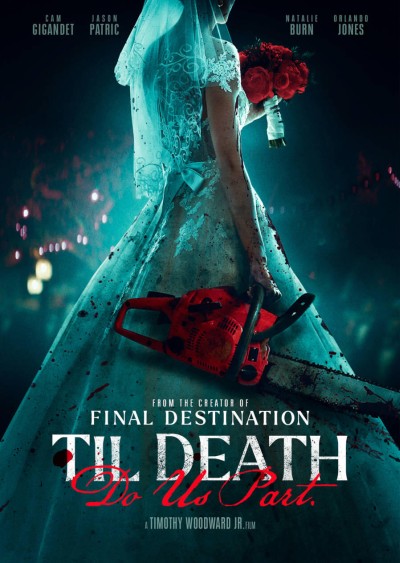
Great poster. Solid trailer. In the light of those, unfortunately, the film can only be described as a significant disappointment. While it’s good, and occasionally very good when in motion, damn, there is a LOT of flapping of lips going on here. It’s clear that writers Chad Law and Shane Dax Taylor, as well as director Woodward, are in love with their dialogue. This is unfortunate, since it’s nowhere near as amusing, informative or entertaining as they think. There’s probably a decent twenty minutes in this, mostly when the lead character – nameless, known only as “Bride”, a conceit shamelessly stolen from KillBill – is kicking butt. Since the film runs a hundred and eleven minutes, that is a problem.
Indeed, nobody here gets a “proper” name. The Bride (Burn) decides at the last minute she is not going to go through with marriage to her fiance (Blain), and runs off to her family cabin. Her husband-to-be doesn’t take that lightly, and sends seven groomsmen, under the best man (Gigandet), to bring her back. not with polite discussion to convince her to return. For it turns out everyone involved is part of a shadowy organization of assassins called “The University”. You don’t get to leave, so the Bride has to defend herself from the consequences of her decision, still in her wedding dress. Which as Chris pointed out, is odd, considering it’s her family’s property. No clothing better suited to combat?
Confusing matters considerably further is a flashback (I guess) to happier times on a beach somewhere, whose purpose escapes me, except for providing a nice vacation for Jason Patric. What these lengthy scenes certainly do, is sap the film of any momentum as survival horror. Then again, the film does plenty of that itself, with endless scenes of the characters talking and talking and talking and… you get the idea. It’s a pity, because the violence, when it shows up, is done with some energy. Burn seems to be doing quite a lot of her own stunts, to good effect, and there’s nice use of improvised weaponry. The chainsaw shown on the poster is not just there for show either, providing perhaps the film’s most memorable moment.
Not that there’s exactly a lot of competition, admittedly. I found myself frequently thinking of ways this could have been improved. “Being roughly thirty minutes shorter” would be a good start. Alternatively, could potentially have been fun if the seven bridesmaids had also been assassins, fighting for the Bride. Why is it just the groomsmen? There, it feels like a sure-fire case of diminishing returns, with most of them more annoying than anything else. This is especially true of Gigandet whose character is perpetually droning on about the speech he has to give. Pancho Moler as T-Bone is perhaps the only one to make an impression. It’s all a garbled mess, which seems poorly constructed, and only occasionally delivering on the wildness of its premise.
Dir: Timothy Woodward Jr. Star: Natalie Burn, Cam Gigandet, Ser’Darius Blain, Orlando Jones
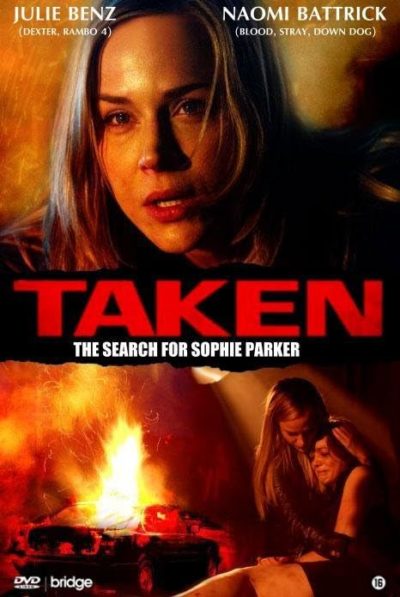
For a Lifetime Original Movie, this is actually close to the best of its kind I’ve seen., but it is surely docked points for being a thoroughly shameless knock-off of a certain Liam Neeson movie, all the way down to the title. As there, we have an American abroad, searching for a teenage daughter who has been kidnapped by even more foreign sex-traffickers. They will stop at nothing – nothing, I tell ya! – to recover their child, be that personal danger or interference from local corrupt police. The main difference is it’s a heroine, NYPD detective Stevie Parker (Benz), with the location being shifted from Paris to Moscow – though under current circumstances, the location has not aged well.
Certainly, letting your daughter Sophie (Battrick) now go by herself to Russia, even if she is friends with the ambassador’s daughter, would feel like utterly irresponsible parenting. Even a decade ago when this was made, it seems questionable, and concerns prove justified. Despite the presence of lurking CIA minder Nadia (Bailey), it’s not long before Sophie and her pal have snuck out, gone to a nightclub, been roofied, and are on their way to becoming the playthings for some rich tycoon, courtesy of the Chechen mafia. Mama Parker is not happy. She’s on the first plane to Moscow, where she teams with Nadia and reluctant local cop Mikhail (Byron, who’s English, though his IMDb credits are littered with Eastern Europeans!) to work her way up the chain and rescue the girls.
It’s never less than glaringly obvious, and the first thirty minutes are especially excruciating in this department, not least due to a shoehorned romance for Stevie: it is Lifetime, after all. Once she arrives in Russia – actually, Bulgaria standing in for it – while things don’t get any less predictable, the energy level ramps up several degrees, and this becomes considerably more watchable. Benz has the necessary intensity to be the unstoppable force she needs to be, and pairing her with another woman is an additional wrinkle that works nicely. The action is a bit limited, with the only real sequence of note at the end, when the pair storm the hotel where Sophie is being held before her departure, followed by a chase back to US sovereign territory at the embassy.
There’s no denying a major case of American saviour complex here, with the locals being portrayed as useless or actively evil, and needing the help of the USA in order for any action to be taken. Chris noted the presence of a large Stars and Stripes in the film’s final shot, and it seems entirely deliberate, reminding viewers that they are now back on safe, i.e. American soil. Yet there is surprising darkness, not least in the uncompromising fate meted out to the corrupt official. After a start where this struggled to hold my attention, by the end I was being just about adequately entertained. Given the source, that’s high praise indeed.
Dir: Don Michael Paul Star: Julie Benz, Amy Bailey, Andrew Byron, Naomi Battrick
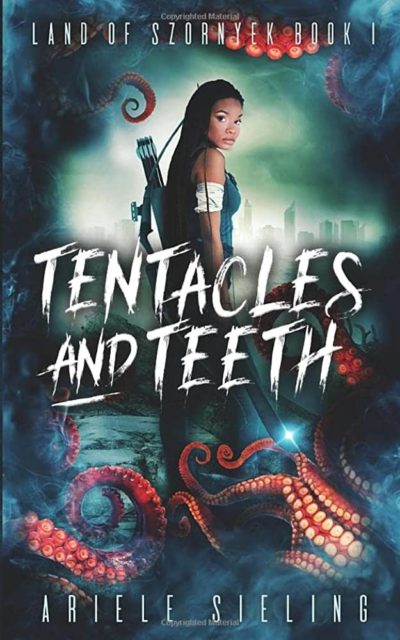
I was disappointed by the lack of tentacles. However, there were certainly no shortage of teeth in this post-apocalyptic tale, which takes place decades after the arrival of monsters, from an uncertain source, has led to the collapse of civilization on Earth. The survivors are left to scratch out a fragile existence, trying to dodge the many kinds of lethal new fauna which inhabit the landscape. Askari is a young woman who forms part of one such nomadic group, but finds herself increasingly questioning the strict rules by which they operate. As punishment for breaking these laws, is sent by elders of her tribe on a hazardous mission into a long-abandoned urban area.
Fortunately, she’s not alone, with allies human and animal. Even with these on her side, there are any number of lethal hazards to be faced, fought or avoided. There are also lessons to be learned, both about survival and her own heritage. When she re-unites with her group, they find themselves trapped in a cave network, possessing an unpleasant sitting tenant. Once that is disposed of, the only way out is through a pitched battle against multiple packs of rarohan, carnivorous creatures the size of horses, capable of ripping a full-grown man to shreds in seconds. Survival is possible, but what might the cost be, and are they willing to pay it?
Despite any deficiencies on the tenticular department, I liked the world-building here, which is likely the strongest element. There’s just enough information given about things became this way, that it doesn’t seem a faitaccompli, and it feels like the author has a whole bestiary of weird and wonderful creations in her locker, ready to drop on Askari, as and when necessary. Getting rid of them, on the other hand, is a little less convincing, and is where Sieling struggles most. It’s a combination of questionable evolution – turns out the rarohan have a button on their backs which basically makes them explode – and too convenient contrivance, such as the fully-functioning gun one character suddenly pulls out of thin air. This weakens Askari significantly as a lead character.
It’s something of a shame, since she has many admirable attributes, being smart, inquisitive and in particular, having a questioning nature. She doesn’t accept that “the science is settled,” for example, in the blanket labelling of all monsters as bad. While this can certainly put her in needless peril, the knowledge gained seems likely to help both her and her group in the longer term. Sieling does a good job of telling a complete story here: while the ending clearly opens the door towards further adventures for Askari, it’s not a cliff-hanger, and should leave you feeling satisfied. I might not be willing to pay full price for further entries in the series, yet if I was to see a special offer or collection of them, I could be tempted into a purchase. Let’s just hope the tentacles show up…
Author: Ariele Sieling Publisher: Independently published, available through Amazon, both as a paperback and an e-book Book 1 of 7 in the Land of Szornyek series.
★★½
“That old bag wanted to damp my Spirit Knife with Virgin Sword.”
Yeah, if the above line of subtitled dialogue makes sense, this film then ups the ante, with white subs on a frequently white background, and which frequently appear to be making a bid to escape from the bottom of the picture. It’s safe to say that a decent presentation of this, perhaps with a print which doesn’t look like it was left in someone’s pocket when their suit went to the cleaners, might merit a half-star more. A few more fight sequences would help too: the ones there are, don’t lack in quality. There’s just a bit too much farcical comedy for my taste.
It begins with the evil Aoba swiping a book of martial arts skills, killing its owner and kidnapping his wife (Hui). Their daughter, Lunar (Wong, who was Jet Li’s first wife) grows up, clearly believing revenge is a dish best served cold. Eventually, along with her comic relief acolyte (Wan), Lunar enters Aoba’s castle, disguised as a man, seeking to recover the book, free her mother and take revenge for her father. However, complications ensue, largely down to Aoba’s sex-mad wife. To stop her from being unfaithful, Aoba has staffed the castle entirely with gay men. The acolyte is the only exception, and has repeatedly to fend off her demands. The always welcome Cynthia Khan also shows up, as another swordswoman who switches sides to join Lunar, after finding out the truth about Aoba.
At least, the above is my best guess. For the reasons explained in the first paragraph, I’m not prepared to stake my life on much beyond the film’s title. As usual, I do have to question the apparently literal gender-blindness of people here. The only person less convincing as a person of the opposite sex, than Wong trying to be a man, is likely Wan attempting to pass as a woman. That and him trying to keep his trousers on, occupy a significant chunk of the middle portion. While it’s not too painful, as comedy goes – at least, when compared to some entries I’ve endured – it’s not why we are here, and the decent opening fight only whets this unsatisfied appetite.
Although there are sporadic outbursts of activity, it’s not until Lunar discovers the key to tap into the power of Virgin Sword (let’s just say, it’s counter-intuitive to the name), that she’s able to take on Aoba and his many, many minions. This provides the acceptably rousing content for which we have been waiting, as she storms the castle and releases Mom. Not least, for a spectacular sequence involving some kind of outdoor scaffolding construct, and a significant quantity of pyrotechnics. Everyone ends up having to team up in order to destroy Aoba, and there’s an odd coda where the acolyte ends up with both Lunar and Khan’s character, while pretending his mother is one of the gay guys from the castle. I can only presume the phrase “lost in translation” applies here.
Dir: Chien-Hsun Huang Star: Wong Chau-Yin, Deric Wan, Cynthia Khan, Kara Hui
a.k.a. Wu Tang Witch
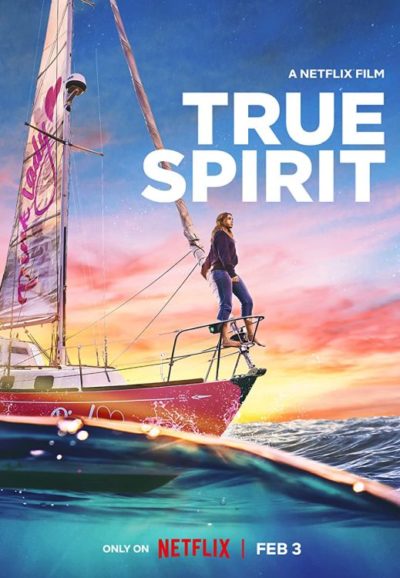
This blandly inspirational tale from Australia is based on real events. In 2009, sixteen-year-old Jessica Watson (Croft) set sail out of Sydney Harbour, intending to become the youngest person ever to sail around the world solo and unassisted. 210 days later, she returned to Sydney safely. There: I’ve spoiled it for you. Oh, alright: in between departure and arrival, stuff happens. There is also some stuff which happens before she leaves, with certain parties questioning whether she is fit to carry out such a dangerous voyage, citing her lack of age and ocean-going experience. A close encounter between Jessica’s boat the Pink Lady and a freighter, while on a test sailing trip, only seemed to confirm there was good reason for concern.
Still, with the backing of her mom (Paquin) and dad (Lawson), as well as her sailing coach Ben Bryant (Curtis), she intends to prove them wrong. Ben is on a bit of a quest for redemption himself, his reputation as a sailor having been damaged by the death of a crew member on his watch. Just to confuse matters, no such person existed: he’s a composite of various people who helped out, and exaggerated for dramatic purposes. Speaking of facts, while Jessica did go around the world, her journey was not long enough to qualify for the official record (the closer to the poles you go, the less distance is needed). This is something the film effortlessly ignores. I guess being the youngest person to kinda do something is less interesting.
I think my main complaint is how mundane much of the 210-day journey was. A couple of storms, including one on the final leg, along the South of Australia, is about as dramatic as it gets. Otherwise, Jessica gets a bit whiny after the Pink Lady is stuck in the doldrums for a week, and has some encounters with dolphins (though I suspect these might have been digital!). That’s really about it. It’s all reasonably well-handled from a technical perspective (except for some ropey storm CGI), and Croft’s portrayal of the young heroine is decent. She’s not depicted as some kind of saint, and is given a good deal of personality, so you will find yourself rooting for her to succeed.
There just isn’t very much sense of danger here. Part of it may be the factual nature of the store: we know she survives, even subconsciously, negating any genuine feeling of peril on the high seas. But it hardly seems like she was “solo”, being in almost perpetual contact with Ben and her family through a sat-phone, and even posting regular entries to a vlog online of her trip. Obviously, having her sitting around on a yacht by herself might have been more challenging from the film’s perspective, but as is, this feels more like a slight challenge, akin to going on holiday by yourself for the first time, rather than the life-threatening endeavour it actually was.
Dir: Sarah Spillane Star: Teagan Croft, Cliff Curtis, Anna Paquin, Josh Lawson



 There’s no doubt that women’s sports very much plays second fiddle to their male equivalent, though the gap varies from sport to sport. The WNBA is experiencing a surge of popularity, though the NBA is still a financial behemoth. This documentary focuses on ice-hockey, and the debut season in 2015 of the first professional women’s competition in the US, the National Women’s Hockey League. Though semi-professional is closer to the truth: the league could only afford to pay its players around $15,000 a year, meaning almost all of them had to have day jobs, from teachers to paralegals to engineers, to cover the expenses. Commissioner and founder Dani Rylan spends most of her time seeking sources of finance, though finds the men’s league less than thoroughly supportive.
 ★★★
★★★ We begin with a prologue which sees Lara (Atwell) in Chile retrieving a box, alongside her mentor, Conrad Roth. Three years later, Roth is dead and Lara blames herself for that. She’s about to sell off all the family’s treasures, when the Chilean box is stolen by Charles Devereaux (Armitage). Turns out the stone it contains is the first in a series of four, which when combined will destroy the precarious balance under which the world operates. Along with sidekicks Jonah (Baylon) and Zip (Maldonado), Lara criss-crosses the globe, from China to Turkey to France, and back to China, trying to stop Devereaux from completing the set and unleashing the power they contain.
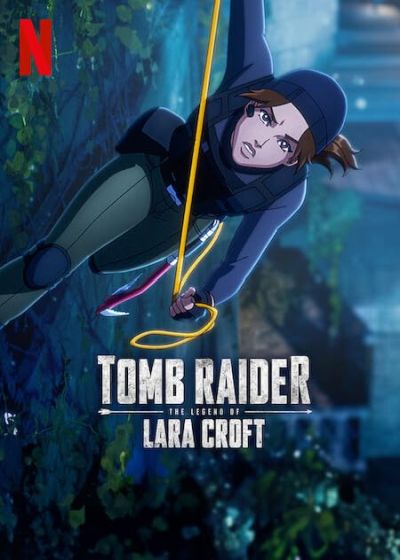 Filmed versions of Lara always seem to have her suffering from the loss of her father. This is the third such, after the Jolie and Vikander live-action versions. It should be noted this was not originally part of her imagined biography, which has changed several times over the years. Originally, she fell out with her family, when she decided to make adventure her lifestyle, earning her living as a travel writer, instead of marrying the Earl her parents had chosen for her. Her big defining moment was surviving alone for two weeks in the Himalayas after a plane accident. It was only after the Jolie films and the reboot games, it became that she had lost both parents.
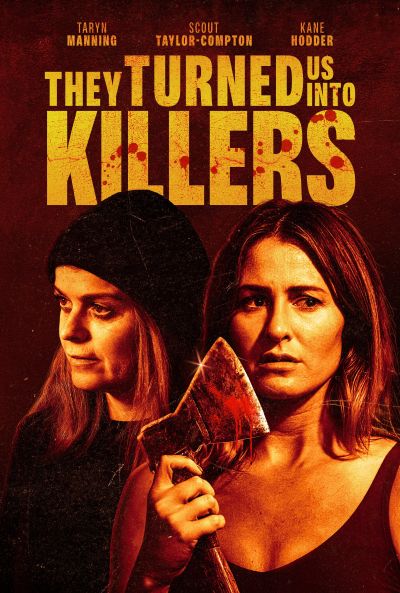 Well, this is a spectacular mess. Except, the word “spectacular” implies something of interest, and that’s far from anything this delivers in its boring trudge towards a predictable ending. It demonstrates the perils when you, as a film-maker, decide to take your story and fragment the timeline. This only works if the script is able to maintain coherence around the jumps back and forth. This painfully fails on that count, beginning in the middle, but then bouncing back and forth to the point you know little and care less about any of the participants, or what happens to them. How bad is it? It gets the rare honour of me starting on the review, when there’s still half an hour to go.
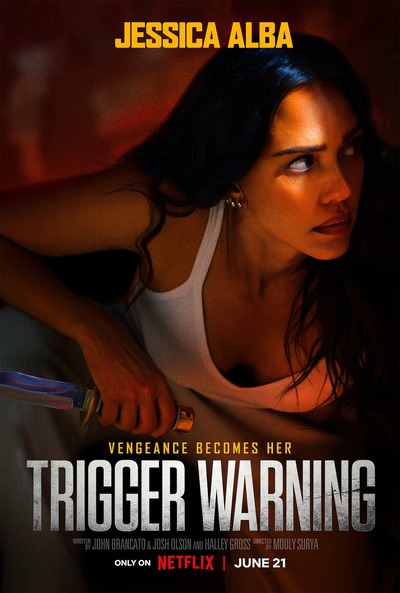 There’s an old joke about bad movies: “This film wasn’t released, it escaped.” It seems disturbingly appropriate here, however, considering the shooting of this finished in October 2021, and it has been part of our annual previews for 2022, 2023 and 2024. Quite why Netflix sat on the end product close to three years, I don’t know. But having watched it, I can confidently say: it wasn’t long enough. This is the kind of movie that left me feeling actively more stupid by the end of it. Alba plays Parker, a soldier who returns to her hometown in rural New Mexico after her father is killed in a mile accident. Only, of course [and that whirring sound is my eyes rolling], it turns out not to be an accident.
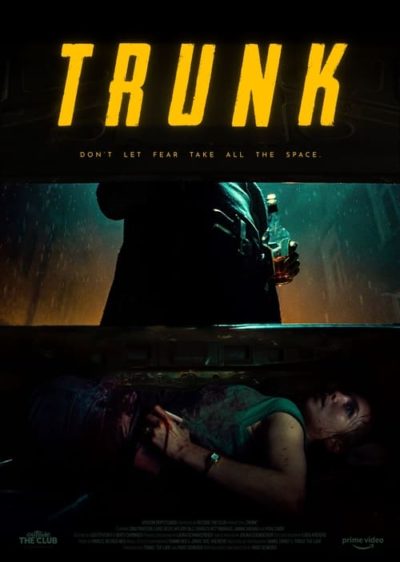 This certainly wastes no time. Malina (Martens) regains consciousness to find herself in the trunk of a car stopped at a petrol station. Things get worse, as she discovers her legs are paralyzed, and she has a nasty wound in her lower abdomen. How did she get there? And more importantly, what can she do to escape her predicament? It’s certainly one hell of a hook, and in the way it hits the ground running – as well as its Germanic origins, almost real-time approach and the plucky heroine with a sketchy boyfriend, forced to survive on her own – reminded me of
  Great poster. Solid trailer. In the light of those, unfortunately, the film can only be described as a significant disappointment. While it’s good, and occasionally
  For a Lifetime Original Movie, this is actually close to the best of its kind I’ve seen., but it is surely docked points for being a thoroughly shameless knock-off of a certain Liam Neeson movie, all the way down to the title. As there, we have an American abroad, searching for a teenage daughter who has been kidnapped by even more foreign sex-traffickers. They will stop at nothing –
  I was disappointed by the lack of tentacles. However, there were certainly no shortage of teeth in this post-apocalyptic tale, which takes place decades after the arrival of monsters, from an uncertain source, has led to the collapse of civilization on Earth. The survivors are left to scratch out a fragile existence, trying to dodge the many kinds of lethal new fauna which inhabit the landscape. Askari is a young woman who forms part of one such nomadic group, but finds herself increasingly questioning the strict rules by which they operate. As punishment for breaking these laws, is sent by elders of her tribe on a hazardous mission into a long-abandoned urban area.
 Yeah, if the above line of subtitled dialogue makes sense, this film then ups the ante, with white subs on a frequently white background, and which frequently appear to be making a bid to escape from the bottom of the picture. It’s safe to say that a decent presentation of this, perhaps with a print which doesn’t look like it was left in someone’s pocket when their suit went to the cleaners, might merit a half-star more. A few more fight sequences would help too: the ones there are, don’t lack in quality. There’s just a bit too much farcical comedy for my taste.
 This blandly inspirational tale from Australia is based on real events. In 2009, sixteen-year-old Jessica Watson (Croft) set sail out of Sydney Harbour, intending to become the youngest person ever to sail around the world solo and unassisted. 210 days later, she returned to Sydney safely. There: I’ve spoiled it for you. Oh, alright: in between departure and arrival, stuff happens. There is also some stuff which happens before she leaves, with certain parties questioning whether she is fit to carry out such a dangerous voyage, citing her lack of age and ocean-going experience. A close encounter between Jessica’s boat the Pink Lady and a freighter, while on a test sailing trip, only seemed to confirm there was good reason for concern.