



★★★
“Perfectly-acceptable time-passer, helped by a solid cast, yet feels like a wasted chance.”
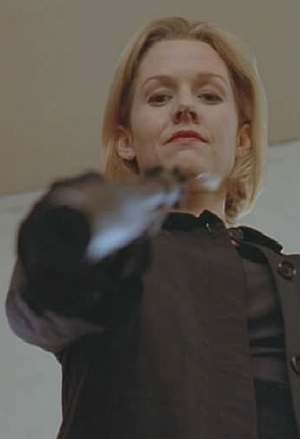 Ward (whom we’ll watch in anything, as payment for the enjoyment Tremors has given us) plays John McWhirter, a hard-bitten journalist with a fondness for the bottle, who is still trying to put behind him an incident when he was a young radical, that led to his friends being sent to jail for long terms, while John escaped doing time. He’s looking into the murder of an industrialist by Palestinian terrorists, when said friends show up, asking him to hide a woman (Ticotin) from the authorities for a few days, describing her as an activist in Shining Path, a Peruvian rebel group. Turns out she’s not who she seems, and it also turns out John had more to do with his friends’ arrests, thirty years ago, than it initially appeared. With enemies in the FBI, led by Robert Lecker (Plummer), an ally in the CIA, and a female assassin (Miller, right) out to tidy up all the loose ends, McWhirter has to decide whether to do what’s right, what’s easy, or what’s best for himself – and those might be three mutually exclusive options.
This dates back to early 2001, and it’s probably unlikely that a film like this could be made now, because it’s just too sympathetic to terrorists. Similarly, it’s too naive to stand up to close scrutiny in these more cynical days, and the idealistic actions of McWhirter seem at odds with his character. That said, the performances are generally good, with the likes of Virginia Madsen and Kim Coates showing up to support a solid B-movie cast. Miller’s callous approach to her work is particularly memorable in the finale, when she is torturing John, to get him to divulge the location of the fugitive. Despite such elements, however, the pieces here could certainly have been re-arranged to provide something less forgettable: potential for a remake, perhaps? Instead, what we have here feels too much like a TV-movie, though the ending has a surprise that will likely survive longer in my mind than the rest of it.
Dir: John Bradshaw
Stars: Fred Ward, Rachel Ticotin, Christopher Plummer, Penelope Anne Miller
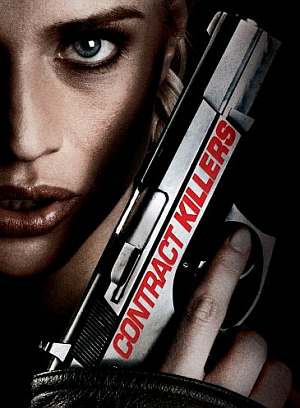 This feels more like a mid-season episode of Alias than anything else, and not much more than a filler episode at that. I say this, because so little effort is put into developing the characters, it’s as if the makers reckon everything had already been established in the previous seven installments. And since there
  Film-makers really need to let the sixties go, especially when it comes to mining TV schedules and turning them into movies. The Mod Squad, Thunderbirds, Wild Wild West: the remainder bins in Walmart are littered with the DVD corpses of failed attempts. While it’d be a massive stretch to call this incoherent mess anything like a success, it does have some merits, not least in the casting of Fiennes and Thurman as John Steed and Emma Peel. If undeniably different to Patrick McNee and , it still works, despite the unfortunate efforts to shoehorn in a romantic relationship between the pair; one of the things that made the original series work was the
 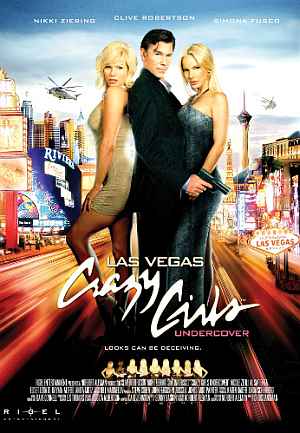 Written and produced by the man behind the ‘Crazy Girls’ topless revue at the Riviera in Las Vegas. Really, that’s about all you need to know: much like most Vegas shows, it’s quite shiny and glossy, but if you look behind the surface, it doesn’t have any real heart and possesses no brain at all. It centres on Damon Archer (Robertson), a freelance CIA operative whose day-job is running said revue – I dunno, but I always thought these shows consisted of more than five women [mind you, all I know about such things was learned from Paul Verhoeven’s epic]. They are investigating shady arms-dealer Hamid Marzook, a man with terrorist links who, it turns out, was previously responsible for the death of Archer’s wife and child. So, it’s personal as well as national security being at risk, with the terrorists seeking to detonate a bomb on Las Vegas Strip [though let’s not get involved in why Archer calls it a “chemical bomb”. Merely containing chemicals – half a ton of nitrates – does
 My review of this is somewhat delayed, because the book spent two months inside what remained of our car, after a nasty accident on the freeway. It was finally rescued, and the next chance I got was actually on a plane going to Las Vegas – fortunately, it appears as though the book was not cursed, and I survived that trip intact. Chris actually got to read this one first: she made note of Leissner’s frequent usage of the word “Undulating”, to describe everything from the landscape to the heroine’s figure. Me? It’s a good word, one you don’t get to use too often, so more power to him there. The heroine in question is Cat Warburton, the semi-estranged daughter of an industrial tycoon, who works as a secret agent for an agency of uncertain origins. Her intended vacation goes awry, and she finds herself knee deep in a plot involving black militants, white supremacists and – this’d be a spoiler if it weren’t mentioned on the back cover – aliens from outer-space. She’ll need all her talents, if you know what I mean, and I think you do, to survive.
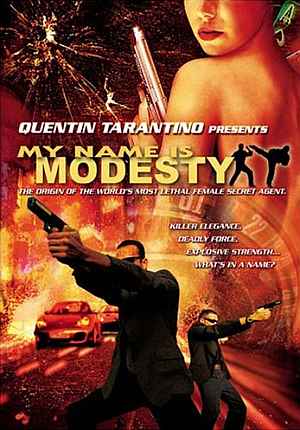 The word is, Miramax made this in order to keep their rights to the Modesty Blaise series active: I imagine a clause reverted them back to creator Peter O’Donnell, if unused within X years. Tarantino wanted to direct it, but couldn’t find the time, hence this stop-gap directed by journeyman Spiegel, who’s familiar with Quentin cast-offs, having also directed From Dusk Till Dawn 2. Shot in 18 Romanian days, the limitations of time and budget are clear [save admittedly copious flashbacks, the movie is almost all set in one location], but given them, it’s by no means a disaster. The main failing is the lack of action; we don’t see alleged jet-setting, goddess of kick-butt Blaise do much at all until the last few minutes. This may be because Staden looks as if she’d struggle to move forward in a stiff breeze; seeing her trading blows is unconvincing, and the fight choreographer should have focused on speed and/or agility instead. Though in terms of presence and steely gaze, she does fit the part well.
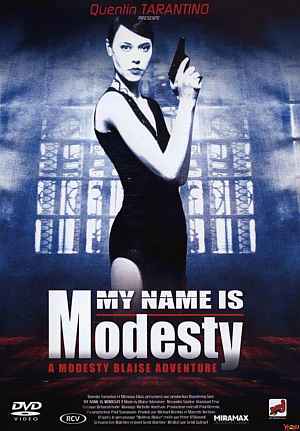 I remember the books from my youth, and the huge disappointment I felt when I saw the 1966 camp abortion starring Monica Vitti [there was also an 1982 TV pilot, with Ann Turkel, which I haven’t found]. This “origin” story is an improvement, at least taking the characters seriously. Blaise is trapped in a casino by a robber with a grudge against the owner (Waldau), and as they wait for the guy with the safe combination to arrive, she trades stories of her past for the freedom of the other hostages, Arabian Nights style, almost. I’d be somewhat curious to see the original cut, which apparently ran nearly two hours. Now, it’s barely 70 minutes between Bond-esque opening and closing credits, yet is still pretty talky, Blaise and her mentor (Pearson) meandering between the Balkans and Morocco.
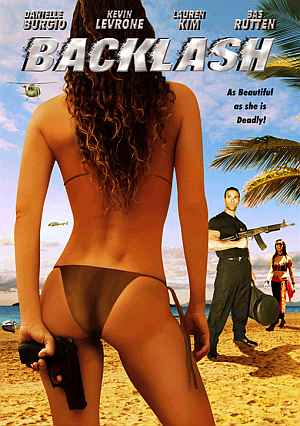 I think it may be more infuriating to see a film that
  In the middle lies the action. While some fights work nicely, too often (particularly between Burgio and Kim) they are an obvious sequence of blocks, with blows having no impact – some parts of the car chases are clearly shot at an extremely sedate pace. The script is nothing special either; I hoped a woman, writer Caitlin McKenna, could bring fresh aspects, yet the story here is tired and old. CIA agent Skye Gold (Burgio) is compromised, targeted for death and forced on the run, leading to the usual “Who can she trust?” issues we’ve seen a million times before. There’s little new here of note; the film, indeed, largely abandons Gold for a lengthy chunk in the middle, deciding to focus on the assassins’ approach to the base where she’s hiding out.
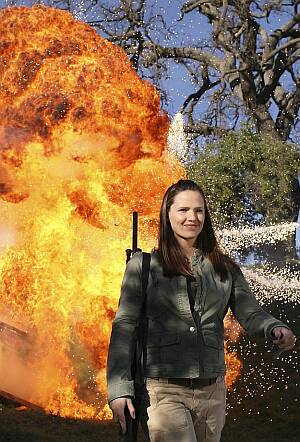 Our once-favourite TV show walks off into the sunset – literally – and we are confirmed in our belief that it is very, very hard to keep interest in a series going past the third season. Especially if you’re creator JJ Abrams, who was missing, presumably making the very Alias-like Mission Impossible III; he didn’t even return to write or direct the season finale. It was, on the whole, a credible stab at trying up loose ends: Rambaldi, the question of whether Sloan was good or evil, Syd’s relationship with her mother, and the real identity of Vaughan, about to be revealed at the end of season four, when he and Sidney were in a car-wreck. This led into the main arc of the series, a hunt for ‘Prophet 5’, a shadowy organization intent on the usual things shadowy organizations want. As opposed to, say, the Alliance, the Covenant, K-Directorate, SD-6, etc…
 Just imagine Jennifer Aniston watching this film: every time Ange appears on the screen, or gazes lovingly at Brad, Jen shrieks maniacally, “Die, sluuuuuut!” Such thoughts will keep you entertained during the sluggish first hour – you’ll need them, while you wait for the characters to realise what we know from the start: Mr. and Mrs. Smith are both assassins, now targeted by their respective agencies. For
  We don’t know whether the Smiths are “good”, “bad” or independent contractors, an interesting approach (we have no moral compass beyond their actions), yet disappointing. For another weakness is that the villains are merely faceless minions, when the genre needs a Big Bad for the climax – the obvious one here is the people that ordered the terminations. Liman, whose Bourne Identity was also about a killer with a contract on his head, might appreciate this more than most, and word is two such endings were shot, just not used. Still, I suspect that the sequel – likely inevitable, given this was one of 2005’s top ten at the US box-office – could very well be more fun than the original. At least we’ll have all the tedious set-up out of the way.