



★★★
“Terrorist? Freedom fighter? You decide…”
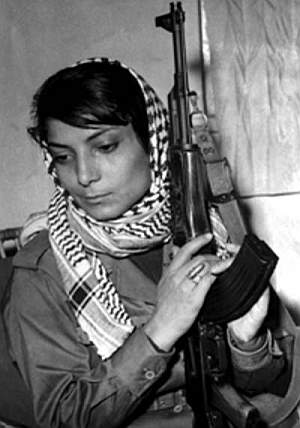 Khaled became internationally famous in 1969, for hijacking a TWA flight from Rome to Athens, diverting it to Damascus, where it was blown up – after everyone had been taken off [this was a kinder, gentler era of terrorism]. She then underwent plastic surgery to conceal her identity, and the following year tried to hijack another plane. However, air marshals shot her colleague and captured Khaled, who was taken into custody in London, only to be released soon afterwards as part of a prisoner exchange. She returned to the Middle East, her sky-piracy career at an end, but became an icon of the Palestinian movement, and remains active in it to this day, despite travel restrictions. The Guardian wrote of Khaled in 2001,
She flamboyantly overcame the patriarchal restrictions of Arab society where women are traditionally subservient to their husbands, by taking an equal fighting role with men, by getting divorced and remarried, having children in her late 30s, and rejecting vanity by having her face reconstructed for her cause… “I no longer think it’s necessary to prove ourselves as women by imitating men,” she says. “I have learned that a woman can be a fighter, a freedom fighter, a political activist, and that she can fall in love, and be loved, she can be married, have children, be a mother.”
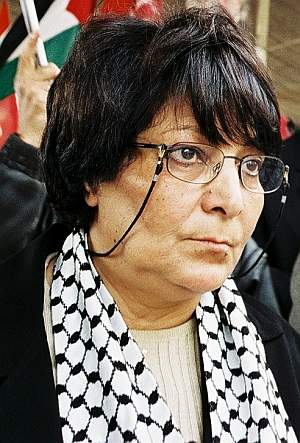 A fascinating and complex character, it can’t be said that much of the complexity – both hers, and the entire Middle East situation – comes across in this documentary, less than a hour long. You get a quick romp through her early history, her family’s departure from then-Palestine just after World War II, both hijackings, and then we leap forward to the present day, where she’s a mother and works for a political group. There are some interesting moments, such as where she draws a line between what she did, and the 9/11 hijackings: “I don’t agree with the murders of civilians, no matter where in the world”, and she’s been consistent in expressing that. More probing questions would have been welcome: instead, Makboul – brought up in Sweden by her Palestinian parents – admits to having been basically a fan. She interviews others involved in the hijacks, such as a stewardess and the crew, and follows Khaled on a trip to the Chatila refugee camp in the Lebanon, but the film ends abruptly, just as she asks Khaled about the negative image of Palestinians as terrorists that she helped create.
Overall, it’s a frustrating documentary, raising as many questions as it can be bothered to answer. It only scratches the surface of an icon from whom a line can be drawn to modern-day female ‘martyrs’ such as Wafa Idris, but leaves me eager to learn more: she wrote an autobiography, entitled My People Shall Live, published in 1973, so I may have to try and track that down. She certainly stands alongside Patty Hearst and Ulrike Meinhof in the ‘Hall of Fame’ for female terrorists; having had a song written about her by The Teardrop Explodes merits some extra cool points. But if you’re interested, here’s a probably better – less disjointed, certainly – interview with Khaled, carried out in 2000 by, ironically enough, the magazine Aviation Security. Leila notes the black humour there, saying she’s “looking forward to finding out what you wanted to know from me about the security of aviation…”
Dir: Lina Makboul
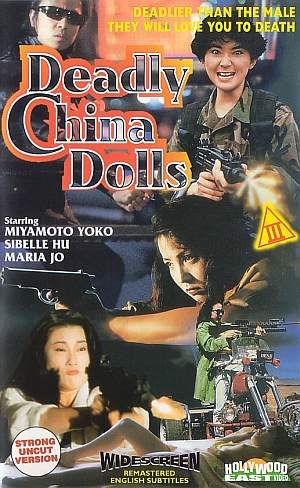
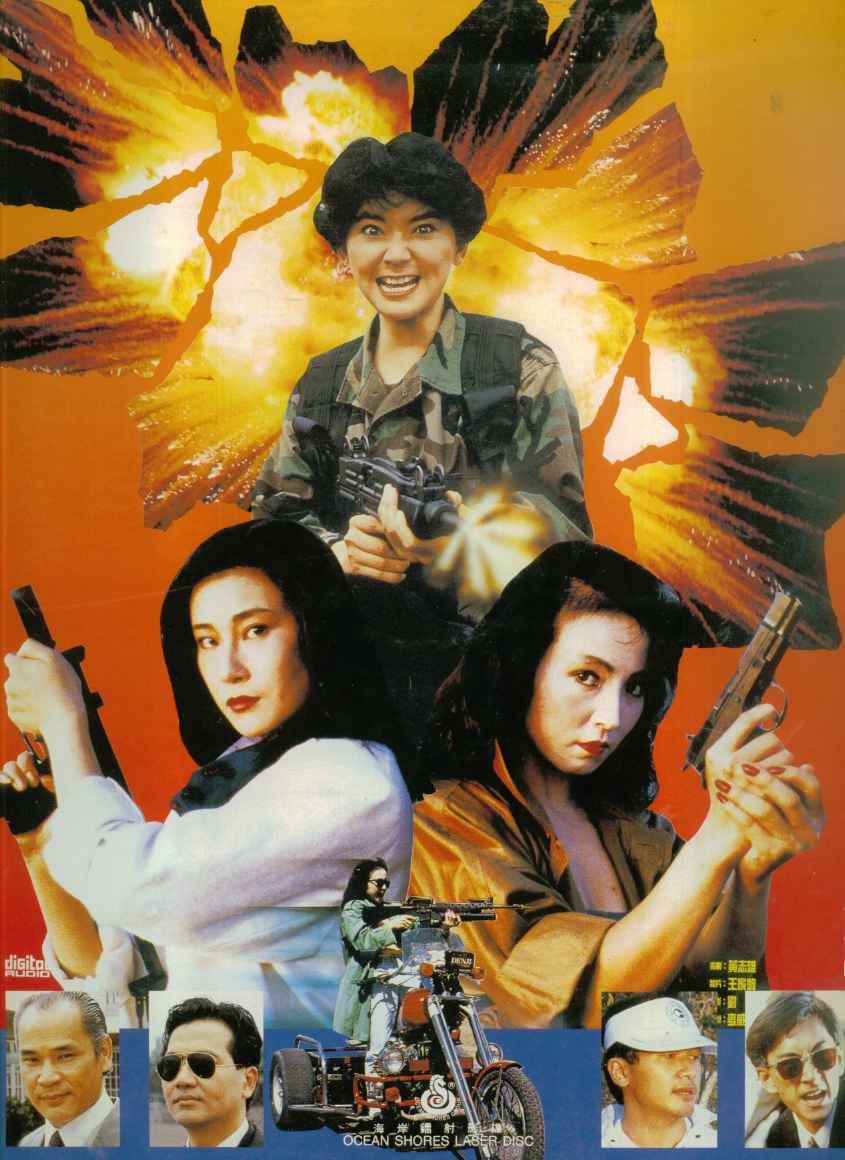 The action is even more copious than the nudity however, and not bad, though one suspects a fair amount of doubling for the main actresses is going on. Despite Ho’s reputation as a complete hack [some of his films consist entirely of footage spliced together from other movies], he knows the right buttons for action heroine fans, and how to push most of them. On what I strongly suspect was a poverty-row budget – you don’t go to the Phillippines for the scenery – the movie delivers an impressive quantity of action, mixing firearm-toting and martial-arts battles to decent enough effect. All of the actresses get their moments to remember: a massacre in a restaurant and a supermarket shoot-out stand out in particular, as well as the roof-top fight between Hu and Yuen.
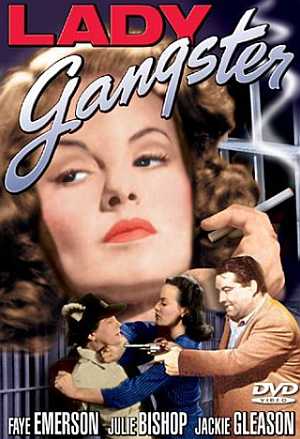 Having watched both Transformers and Miami Vice over the past week, it’s nice to see a film that doesn’t hang around: coming in at sixty-two minutes, Lady Gangster has hardly a line of dialogue that does not propel the story forward. Based on the play, Ladies They Talk About (previously a 1933 film starring Barbara Stanwyck), this centers on Dorothy Burton, member of a gang of bank-robbers. She takes the rap for one of their jobs, and goes to jail, but is also the only one who knows where the loot is hidden. Childhood friend Kenneth Phillips (Wilcox), now a renowned broadcaster, tries to help Dorothy get parole, but she has also made an enemy inside the prison, who is just as keen our heroine does not get released, and her former gang colleagues have their own interests, needless to say.

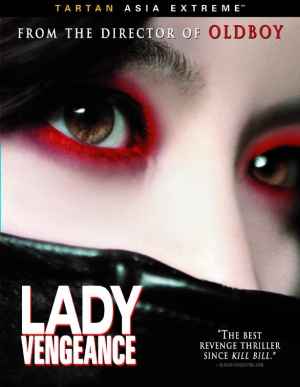 This film may need two viewings. First time up, I was irritated by an apparent lack of coherence – which was particularly annoying, since the non-linear storyline seemed almost completely superfluous. Second time round, it bothered me less though remained, perhaps deliberately, disorienting, and I still doubt the need for it. But the re-view left me better able to appreciate the great central idea, a chilling meditation on justice, revenge, the thin line between the two, and the effects on those who become involved. The final part of Park’s loose trilogy (after Sympathy for Mr. Vengeance and Oldboy) is the story of “kind-hearted Geum-ja” (Lee), who spends 13 years in prison, for the heinous murder of a young child. Except, she isn’t guilty, and spends the time forging alliances which will help with her new goal: revenge on the real perpetrator (Choi).
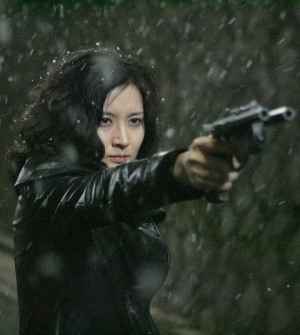 The pace is stately, rather than adrenalin-driven, yet there’s no denying its place here. Much credit to Lee for a great performance in a complex character, capable of huge sacrifice in her quest for redemption: she cuts off a finger in front of the victim’s parents, and has to be physically restrained from removing more. Yet it seems that her charity and good deeds, such as donating a kidney to a fellow prisoner, may be part of her vengeance. And then, when her goal is within grasp…she steps back to allow others, perhaps better-motivated, to take her place. Or is the opportunity that she offers a poisoned chalice? The questions asked have no easy answers; neither proponents of capital punishment, nor those opposed to it, will find it comfortable viewing. By the end, there are no victims left; everyone is guilty – to use the old Sex Pistols line, no-one is innocent.
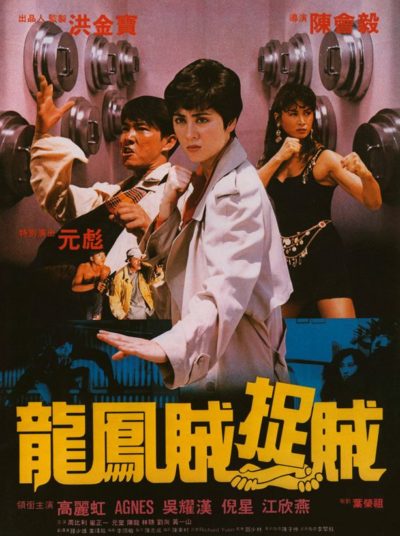 This is an largely over-looked gem, featuring the future Mrs. Samo Hung (Godenzi – they married in 1995) in a role and performance which are so excellent, as to make you wonder why she apparently quit the cinema the following year [though she does have a cameo in Mr. Nice Guy, appearing in the cooking show audience]. She first came to attention in Eastern Condors and, despite a lack of training, developed a graceful, fluid style of action that works well. Her best known vehicle is She Shoots Straight, but for my money, this is even better.
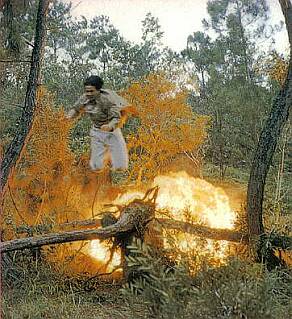 Godenzi is great, putting over a great combination of coolness and charisma, with a confident attitude that’s wholly justified. It’s established in the first scene that she
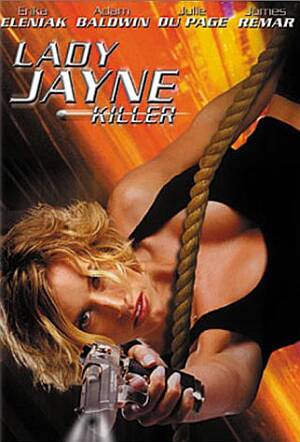 Memo to self: don’t tell your wife the star of a film was in Playboy. Chris’s interest, already somewhat on thin ice, evaporated entirely, pretty much the moment I made that mistake, and I almost had to handcuff her to the bed to prevent a sudden trip to the supermarket. The concept here is kinda cool: Mom Emily (Eleniak) vs. anti-Mom Jayne (du Page). The latter is a hitwoman for the Mob, with 20 kills to her credit when she decides to abscond with a million in cash. She ends up hitching a ride beside Emily and her 16-year old son Kerry (Lelliot) on their way to San Antonio, with the former owners of the money in hot pursuit. And the cops. And the FBI. Then Kerry – when not fantasizing about Eleniak in the shower [cue Chris’s neo-departure!] – decides to solves Mom’s financial problems with thievery of his own.
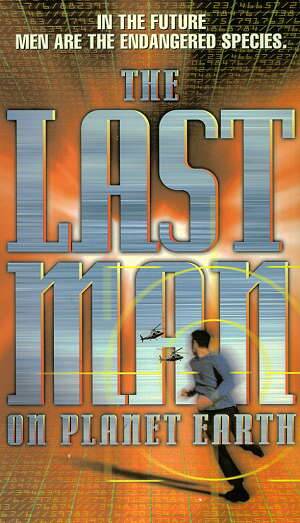 You’ve got to admire any film – particularly a TV movie – that provokes diverse reviews. This, then, not only “
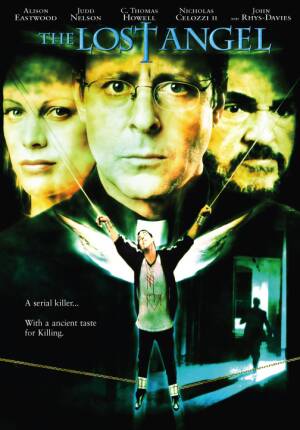 The daughter of Clint does her best in this police thriller but, despite one decent twist, and a couple of half-decent scenes, this collapses under the weight of too familiar a storyline and some rampant overacting. Inspector Billie Palmer (Eastwood) is assigned to catch a killer who has promised a victim a day for 20 days, and is living up to their promise. Events centre around a local deaf priest (Rhys-Davies), but she also must deal with a disgruntled suspect whom she shot, a traumatic incident in her past, and a suspiciously knowledgeable informant. Oh, and a laughably gratuitous sex scene that appears out of nowhere, 80 minutes in.
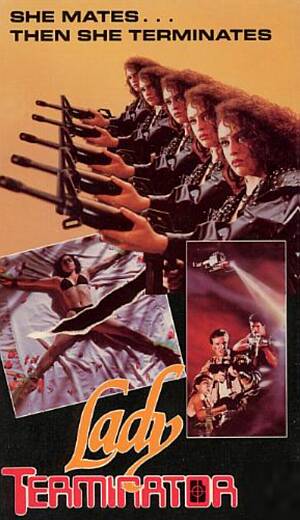 Watching the unstoppable female killing machine in this 1988 Indonesian film might make Terminator 3 seem less original – except most of the concept here, as well as entire scenes and exact lines of dialogue, come directly from the