



★½
“Bleeding terrible, innit?”
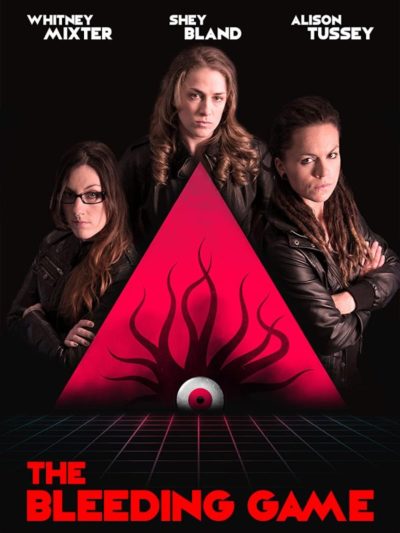 It is possible to do Lovecraft on a low-budget and make it work. Earlier this year, I was introduced to the delightful films of Lars Henriks, who did a whole trilogy of micro-budget movies, loosely in the Lovecraft universe. Taken in the right spirit, they’re quite charming. Then, there’s this… I think I can safely say, it’s neither delightful nor charming, regardless of spirit. The best I can say is there is a non-terrible core concept here. Mr. Temple (Bolton) wants occult power, and feeds on blood, so summons a trio of Shoggoths, mystical minions who possess a sleazy businessman, a metalhead, and a rent boy. They prey on the women who frequent his bars, bringing their essence back to their master. Arrayed against him are three sisters (one adopted), the Proctors: Aida (Mixter), Flo (Bland) and Lizzy (Alison), who come from a family of white magicians. When the corpses of the Shoggoth’s victims start piling up, they seek to stop first them, then Temple, from continuing their dark harvest.
I should have recognized the director’s name: I’m presuming he’s the brother (or something) of Sean-Michael Argo. That is the Argo who gave us one of the worst ever action-heroine films in Iconoclast. He shows up here as The Grin, an Oracle-like figure to whom the Proctor sisters turn for advice. His relative Ian is, at least, able to tell a coherent story, so that puts him well ahead of his relative. However, there are still way too many problem present for this to be successful, even by the low-standards of incredibly cheap horror. The audio is inconsistent from scene to scene, varying from muffled to incredibly echoey. The pacing is terrible, with scenes that serve no real purpose, and the backstory involving their father is murky, at best. Though I was quite amused by the way that shotguns are basically more effective than any traditional tools, and there is a half-decent impalement.
My biggest complaint, however, was the flat-out terrible British accents sported by the Shoggoths. I’m not sure why being taken over by a demonic entity causes the victims suddenly to channel Dick Van Dyke from Mary Poppins, but here we apparently are. I feel personally attacked by this blatant example of Britwashing, not least since it’s an accent that serves absolutely no purpose whatsoever, any more than the top hat sported by one Shoggoth. The film is at its best least worst when they aren’t speaking on screen, simply because I no longer had a rising desire to put my fist, the living-room table or our cat through the television. Even writing this paragraph is sending my blood pressure spiking. The sisters don’t bother with fake accents, and occasionally border on being interesting characters: looks like two of them have an on/off sexual relationship, though we cut away from ever seeing anything there. Like the rest of the film, that demonstrates its disappointing failure to deliver.
Dir: Ian Argo
Star: Whitney Mixter, Shey Bland, Alison Tussey, C. Jason Bolton
 This is part of the Blood universe, which previously gave us anime series
 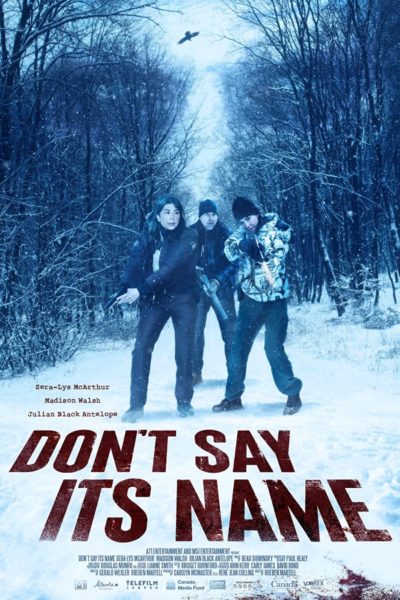 I was going to start this with a warning to try and avoid reading other reviews of this before watching it, because it felt as if, without exception, they all included spoilers for a significant plot-point, that wasn’t actually revealed until deep into the movie. Heck, the IMDb synopsis does it too. However, having sat through the entirety of this bland piece of indigenous folk pseudo-horror, all I can say is “Meh.” You do you: it’s probably not as if it’s going to have much impact, because it’s hard to spoil something which already smells past its best before date.
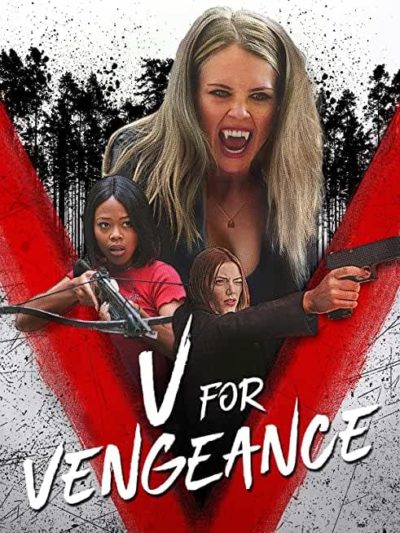 This is briskly entertaining, and feels like a female version of Blade, with an extra good-girl vampire as a bonus. Yet it’s definitely best not to pause and think about some aspects, because the story will likely fall apart under close scrutiny. Matters are complicated by a flashback-heavy structure, on occasion multiple levels deep, and an apparent desire to overstuff proceedings, at the expense of some elements. That said, it hangs together and is entertaining, mostly thanks to a likeable pair of lead performances. There is a decent quantity of hand-to-hand action, even if some of it does leave a little bit to be desired on the quality front.
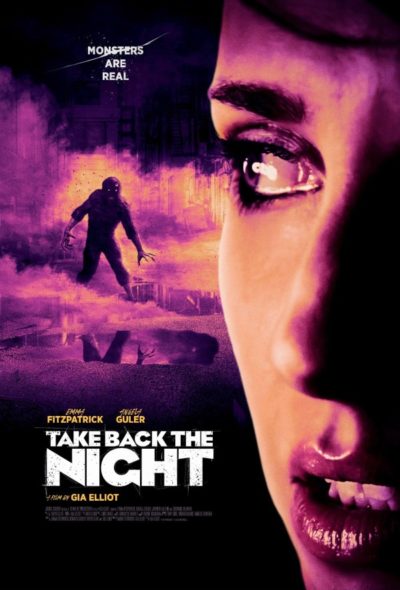 This is not exactly subtle in terms of its messaging, or the underling metaphor. But to be honest, I kinda respect that. I’d probably rather know what I’m in for, from the get-go, rather than experiencing a film which thinks it’s going to be “clever”, and pull a bait and switch. Here, even the title makes it obvious enough. The ‘monster’ here is sexual violence, and should you somehow make it through the film oblivious to that, you’ll get a set of crisis helplines before the end-credits role. However, it manages to do its job without becoming misanthropic, largely by having very few male speaking characters, and is adequately entertaining on its own merits, not letting the movie drown in the message.
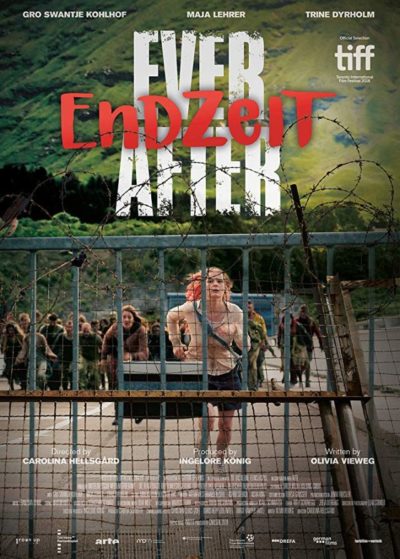 This is not your normal action heroine film. Nor is it your normal zombie apocalypse film. While it certainly nods in both directions, it seems entirely committed to going in its own direction. My mental jury is still out on whether or not this was a good thing or not. I think if I’d perhaps been prewarned what to expect, I might have been better equipped to handle this. It takes place after the outbreak of a plague, with the dwindling number of survivors now holed up in two cities: Weimar, where infection is an immediate death sentence, and Jena, reported to be trying to research a cure.
 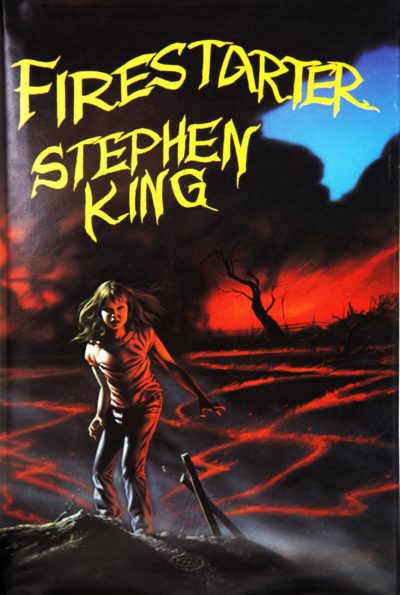 Having watched both versions of the film, I followed up by reading the book on which they were based. Despite my general fondness for horror, I haven’t read very much Stephen King: this is only the second novel of his, after Salem’s Lot. First thought: at 576 pages in the mass paperback edition, it’s quite a door-stopper, and you can see the problems in adapting a work of that size into a movie. Inevitably, a lot of the detail and nuance is going to be excised. There’s no doubt, the 1984 version is more faithful; the 2022 adaptation takes the basic concept of a young girl with pyrokinetic powers, on the run from the government with her father, and does its own thing, more or less.
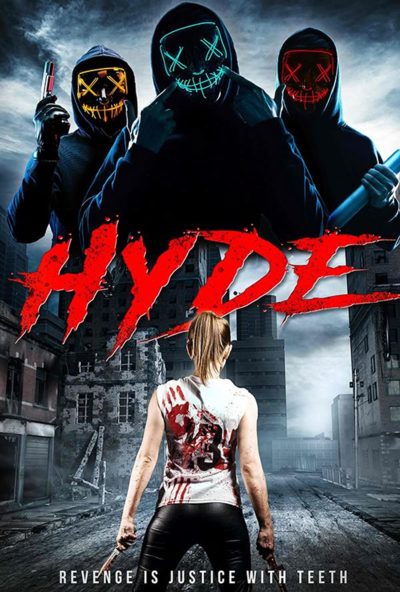 This gets off to an impressive and intriguing start. Cora Fisher (Pribilski) has a perfectly normal life. Then, she’s involved in a car crash. The next thing she knows, she wakes up in a hospital bed. Oh, to which she is handcuffed. Before she can come to terms with that, she is informed that ten years have passed. And completing the triple-whammy, Texas Ranger Jim Krueger (Llorens) enters, and tells Cora he’s going to make sure she gets the death penalty for the murders she committed. It’s safe to say, the movie has successfully gained my attention by this point. Guided by mysterious cellphone texts, Cora escapes the hotel and goes on the run, seeking to find out the truth about what happened.
 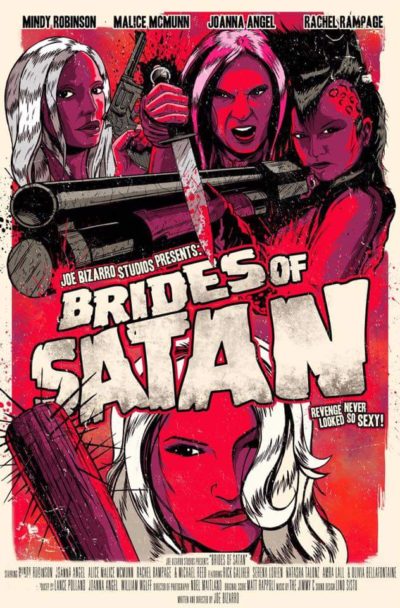 It’s probably significant that the opening credits of the film talk about the bands and the whiskey company involved. Any mention of the actual actresses taking part, is relegated to a secondary sequence, 15 minutes into the film. That seems to indicate where the priorities lie: if you told me the whole thing was made up to get freebies and as a showcase for the director’s mates, I’d have no problem believing you. Another warning sign is the way every post-production visual trick you can imagine is thrown in there; this often indicates an attempt to paper over flaws in other areas. There’s no doubt the film is certainly trying. However, Bizarro simply tries far too hard, and it’s not long before it becomes simply trying on the viewer instead.
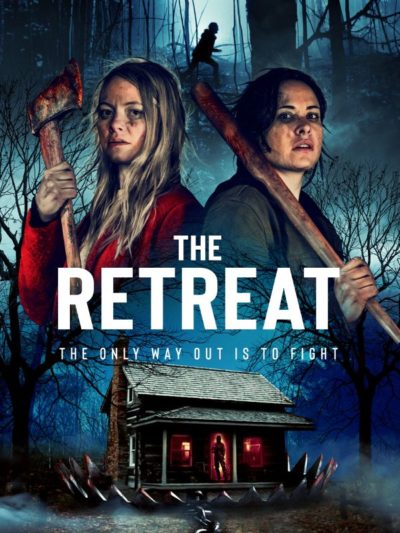 After the unexpected pleasures of