



★★★
“A girl walks home at night…”
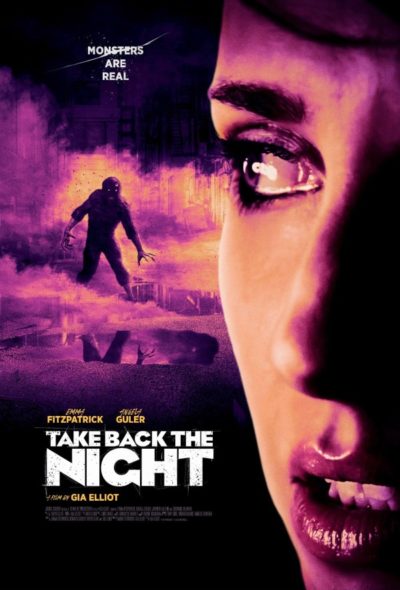 This is not exactly subtle in terms of its messaging, or the underling metaphor. But to be honest, I kinda respect that. I’d probably rather know what I’m in for, from the get-go, rather than experiencing a film which thinks it’s going to be “clever”, and pull a bait and switch. Here, even the title makes it obvious enough. The ‘monster’ here is sexual violence, and should you somehow make it through the film oblivious to that, you’ll get a set of crisis helplines before the end-credits role. However, it manages to do its job without becoming misanthropic, largely by having very few male speaking characters, and is adequately entertaining on its own merits, not letting the movie drown in the message.
Up-and-coming artist Jane Doe (Fitzpatrick) is savagely attacked one night outside the warehouse where she’s having her show. Though she reports it to the police, the investigating detective (Lafleur) comes increasingly to the conclusion that Jane is making up the story. This is partly because of her history of petty crime, substance abuse and hereditary mental illness; partly because what Jane describes, rather than a conventional attacker, is a monstrous, smoky and fly-blown apparition. Nor is Jane’s sister (Gulner) exactly supportive, even after the creature returns, looking to finish what it started. Jane discovers an underground network of survivors, and lore stating that only a bronze dagger, forged by a hunter, can hurt it. Fortunately, as an artist, she has a very particular set of skills…
The makers have made some interesting, and rather brave choices. Jane is the only character with a name, and she’s not exactly relatable in a conventional sense. I found it easy to dislike her influencer ways – she seems happiest when telling her sister of an upcoming TV interview about her ordeal – or the random sex she has minutes before the attack. One element of the message is very much that none of this makes Jane ‘deserve’ what happens to her, though the film ignores the counter-argument that when our actions have negative consequences, we can’t deny entirely our own responsibility. You go swimming with sharks, you might end up losing a limb.
There are points which do require the audience to stretch their disbelief more than the grounded tone of this should need. I’d also have liked to hear more about the network. Indeed, the film feels like it finishes just when it should be starting. An entity more interested in entertainment might have compressed what we get here into the front thirty minutes, and developed the notion of a crypto-cult of female vigilante warriors battling these creatures, with their bronze daggers from the shadows. That would, however, likely have diluted the message here and, make no mistake, that is what matters most to the film-makers. Regular readers will be well aware of my problems with cinematic soapboxes. While this does not avoid the resulting pitfalls entirely, nor is it a complete failure like some I’ve endured, and is certainly watchable.
Dir: Gia Elliot
Star: Emma Fitzpatrick, Angela Gulner, Jennifer Lafleur, Sibongile Mlambo
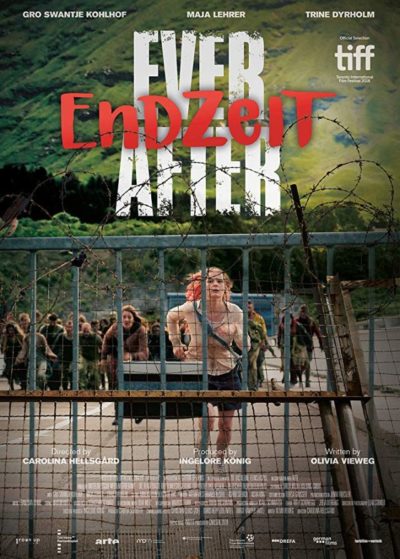 This is not your normal action heroine film. Nor is it your normal zombie apocalypse film. While it certainly nods in both directions, it seems entirely committed to going in its own direction. My mental jury is still out on whether or not this was a good thing or not. I think if I’d perhaps been prewarned what to expect, I might have been better equipped to handle this. It takes place after the outbreak of a plague, with the dwindling number of survivors now holed up in two cities: Weimar, where infection is an immediate death sentence, and Jena, reported to be trying to research a cure.
 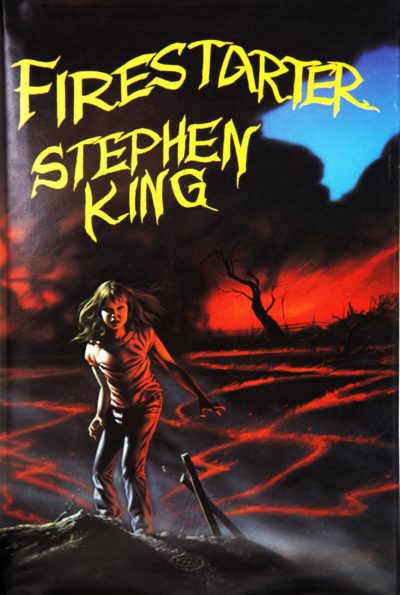 Having watched both versions of the film, I followed up by reading the book on which they were based. Despite my general fondness for horror, I haven’t read very much Stephen King: this is only the second novel of his, after Salem’s Lot. First thought: at 576 pages in the mass paperback edition, it’s quite a door-stopper, and you can see the problems in adapting a work of that size into a movie. Inevitably, a lot of the detail and nuance is going to be excised. There’s no doubt, the 1984 version is more faithful; the 2022 adaptation takes the basic concept of a young girl with pyrokinetic powers, on the run from the government with her father, and does its own thing, more or less.
 This gets off to an impressive and intriguing start. Cora Fisher (Pribilski) has a perfectly normal life. Then, she’s involved in a car crash. The next thing she knows, she wakes up in a hospital bed. Oh, to which she is handcuffed. Before she can come to terms with that, she is informed that ten years have passed. And completing the triple-whammy, Texas Ranger Jim Krueger (Llorens) enters, and tells Cora he’s going to make sure she gets the death penalty for the murders she committed. It’s safe to say, the movie has successfully gained my attention by this point. Guided by mysterious cellphone texts, Cora escapes the hotel and goes on the run, seeking to find out the truth about what happened.
 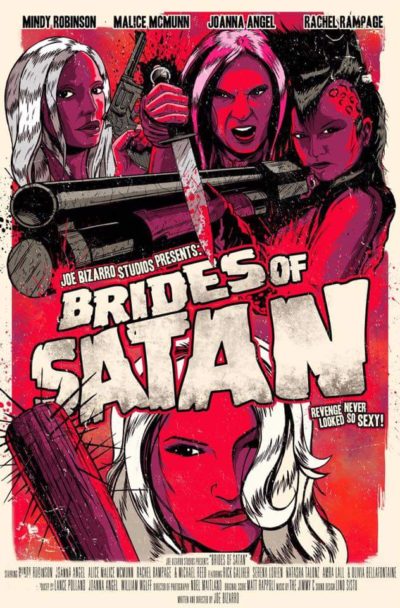 It’s probably significant that the opening credits of the film talk about the bands and the whiskey company involved. Any mention of the actual actresses taking part, is relegated to a secondary sequence, 15 minutes into the film. That seems to indicate where the priorities lie: if you told me the whole thing was made up to get freebies and as a showcase for the director’s mates, I’d have no problem believing you. Another warning sign is the way every post-production visual trick you can imagine is thrown in there; this often indicates an attempt to paper over flaws in other areas. There’s no doubt the film is certainly trying. However, Bizarro simply tries far too hard, and it’s not long before it becomes simply trying on the viewer instead.
 After the unexpected pleasures of
  Perhaps I just expected more from the combination of martial artist Takeda (High-Kick Girl, Karate Girl) and Iguchi (Mutant Girls Squad, The Machine Girl). While this has its moments, it falls well short of the best works of either star or director, delivering neither the action nor the insanity, of which I know both are capable. The set-up is fine. Takeda plays Keiko, the daughter of a sushi master, who leaves home after being told by her father she’ll never amount to anything. She gets a job working in a Japanese hot springs inn, and isn’t much good at that either.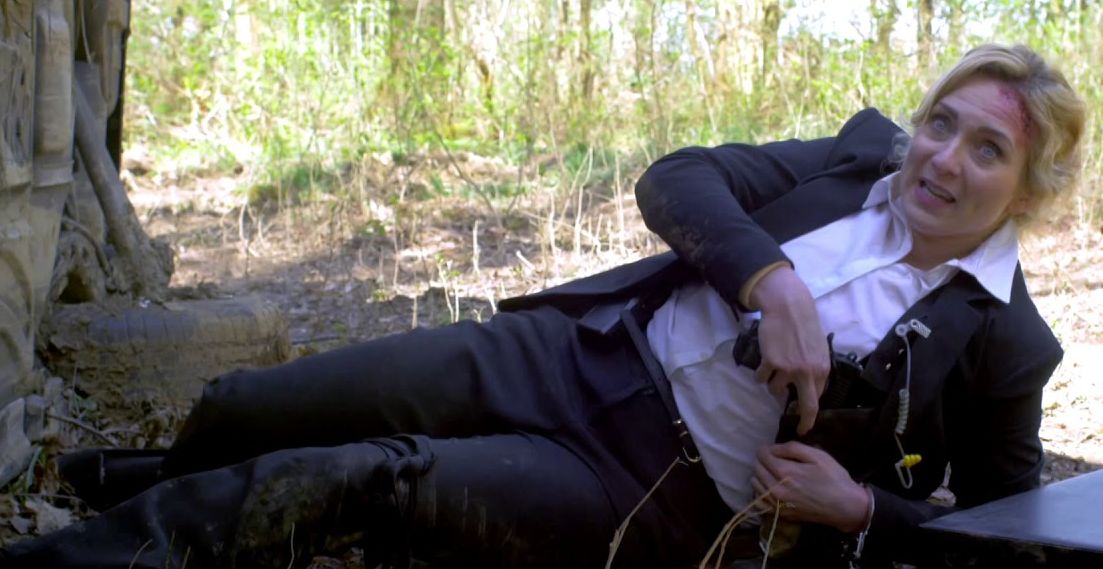
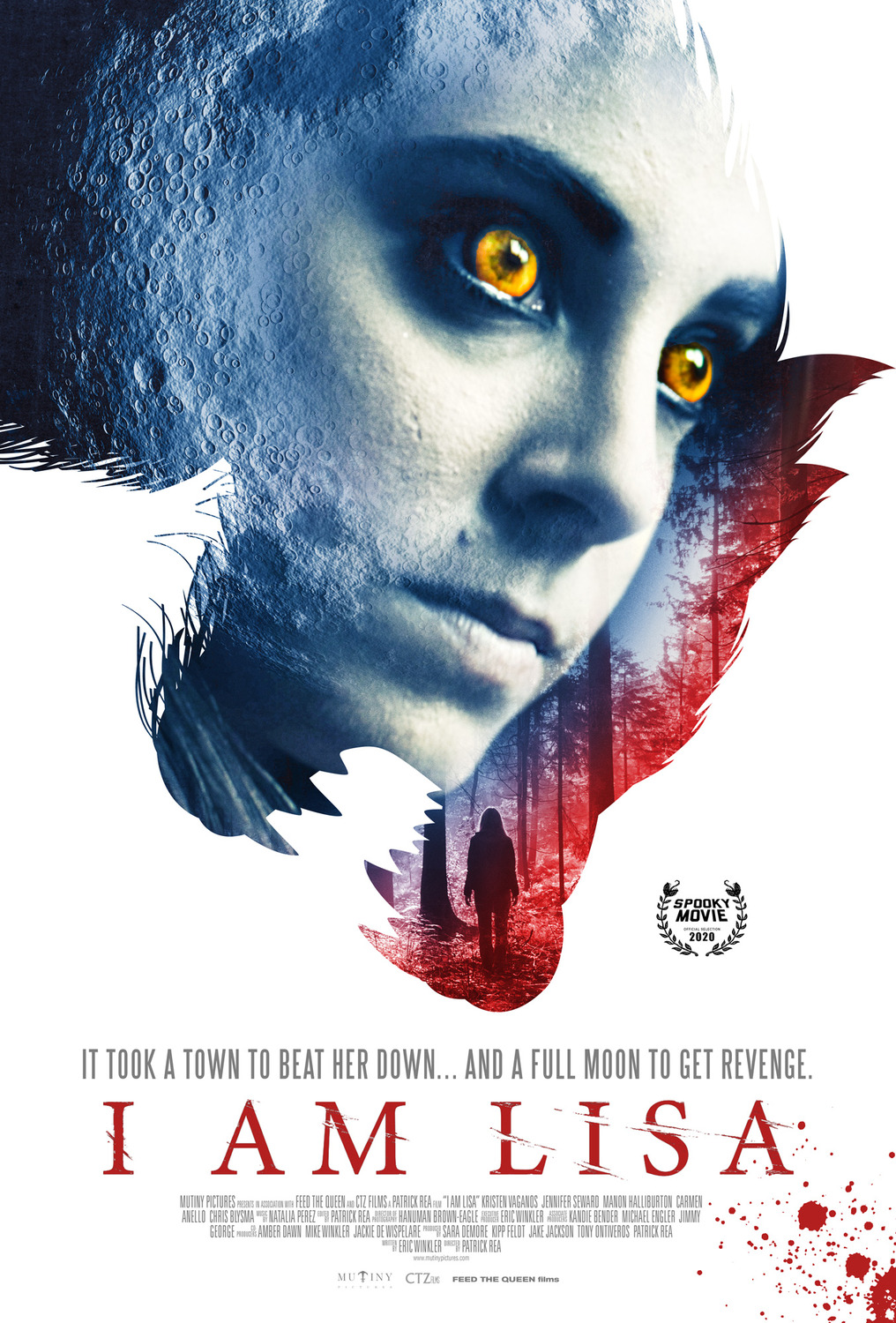
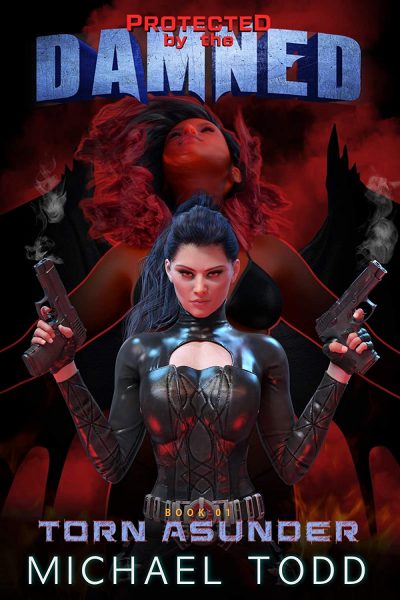 Katie Maddison is just your average chemistry college student, until she gets kidnapped for use by a Satanic cult, intent on summoning a demonic entity. Fortunately, she is saved from a fate worse than death, and is rescued just in time by a group of warriors known as “The Damned”. However, by that point, said demonic entity – going by the name of Pandora – has embedded herself inside Katie. The good news is, it’s less possession than symbiosis, with Pandora largely happy to chill and pass snarky comment. Though her presence acts as a supernatural power-up, enhancing her host’s strength, speed and healing abilities. The fact Katie is not under control of her dark passenger gets her an invite to join the group on their mission “to protect the uninformed from reality.” As their creed goes, “The sheep can sleep at night, because we don’t.”