




★★
“Shaolin Volleyball.”
 Sharon (Chau) and Rachel (Fu) have a pretty idyllic life, spending their days mostly on the beach playing volleyball, with occasional bouts of clubbing and very occasional work. But this relaxed approach to things is threatened by the Brewer family, who plan to turn the entire seafront into a megaresort, displacing all the happy local beach-bums. Leading the charge is family daughter Natalie (C, whom I can only presume was named by the same model-actress-whatever department to give us Maggie Q), who has a hatred for the “little people” and, along with her sister, kicks the arse of Sharon and Rachel in an early contest.
Through a series of frankly implausible events, and clouded by the blossoming relationship between Sharon and Brewer scion Tim (Law), the future of the resort project hangs on a rematch, the two teams making their way through a tournament to face each other in the final. However, anyone familiar with kung-fu movies will not be surprised to hear the good girls have been getting training from relatives well-versed in martial arts, and they won’t be such a pushover in the second battle.
It’s hard to work out exactly who the audience for this mess is supposed to be. Beach volleyball fans will hate the dreadful CGI, used to portray any protracted rallies, in lieu of actual skill, and likely find the heroines implausibly unmuscled (one in particular looks like she will shatter if dropped). Action fans will find little to remember here either, despite the presence of veteran heroine Yeung Pan Pan as Mrs Tao, and despite an obvious influence being Shaolin Soccer, there isn’t a trace of Stephen Chow’s wit. Even those looking for pleasures of a more exploitative nature will likely get bored, sitting through the lengthy comedic and romantic interludes.
I suppose those fascinated by Acting Performances In A Second Language might get a kick out of the Brewer family, who deliver lines in English about as well as I could in Cantonese. But I think the main intended market for this is a fetish one, and fairly specific at that. If you like seeing women hit in the face by balls, this is the movie for you. No, really. particularly during a competitive montage at the end, where it becomes a virtual barrage of ball-to-face action, including in slow-mo. Otherwise, the idiocy of the plot and blandness of the lead characters overpower much of whatever potential this had, and Wanted: DOA did a much better job with the sport. Probably, this needed either to be taken completely seriously or go over-the-top entirely and head into total parody (like Soccer did). Instead, this does neither, and the end results just sit in front of you like a beached whale for 95 minutes.
Dir: Tony Tang
Star: Chrissie Chau, Theresa Fu, Him Law, Jessica C
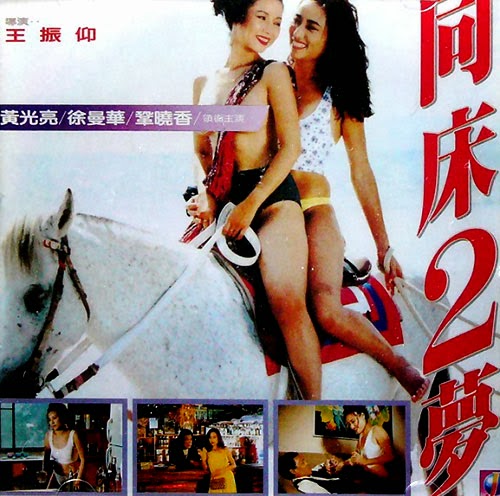 This obscurist Hong Kong revenge flick is a little different, mainly because the couple at the heart of the film are lesbians. Admittedly, this is largely for crass, exploitative purposes: the dialogue quoted above, pretty much confirms the makers want to tut-tut disapprovingly at the love that dare not speak its name, while simultaneously depicting it in salacious detail. Such is the nature of Cat III in the mid-90’s, this seems to want to be something like Naked Killer, released two years earlier to this in 1992, but just doesn’t have the desire to go for the full delirious insanity, necessary to pull the concept off. Particularly in the middle section, it drags horribly, with the story diverting off into the usual triad drug-smuggling, betrayal and cop investigations that we’ve seen a million times before.
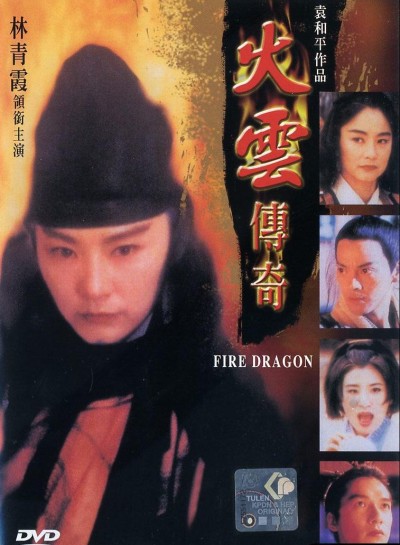 Prince Six (Tan) is plotting rebellion against the legitimate government, but Ming (Chu) has obtained a piece of compromising evidence from a dying Imperial guard. Before he can deliver it, the seal proving his identity is lifted by Tang Lyn-Yu (Ng), who runs a circus troupe, but has set her amorous eyes on Mind. He returns to the troupe, to try and locate the seal, but also there, undercover, is Fire Devil (Lin), who has been tasked by Six with locating and destroying the evidence of his treachery. However, after her involvement in a battle which leaves a young child orphaned, along with her beginning to fall for Ming, she begins to question whether she is on the right side of the fight. It doesn’t count as much of a spoiler to say that it ends with Fire Devil taking on Six, in a finale which involves so many things blowing up, you’d be forgiven for thinking the title of the film was as given at the top.
 Boo (Chow) owns a failing boxing gym, and largely survives only by catering to masochistic geeks, with fantasies of being beaten up by Lara Croft, etc. To try and recoup customers driven away by her abrasive style, she hires the bubbly Miu (Lo), as a replacement for childhood friend TT (Yu), with whom she broke up after a spat over a man. Just as Miu brokers a reconciliation, the trio get an unexpected job offer, to work in Indonesia as bodyguards for the mysterious Lady Zhuge (Tong). Except, they eventually discover, this was just a lure to bring them in as fresh meat for her all-female fight club, where they must battle to the death.
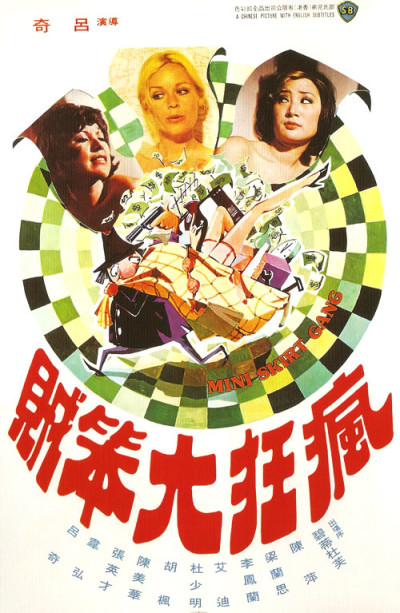 Dear god, this is awful. The only reason this 1974 film manages the dizzy heights of 1 1/2 stars, is the finale, which is actually a pretty decent burst of comedy action, highlighted by the heroine receiving inspiration from a poster advertising a Peking Opera production of the Mulan legend. Up until then, it’s a rancid piece of film-making, wasting the talents of those involved. Well, the actresses anyway, since Lui Kei provides no evidence, in either his direction or script, that there was any talent present to begin with.
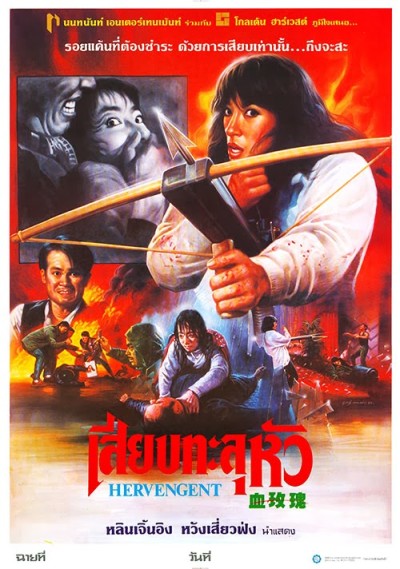 Director Lam is responsible for insane cult classic, The Story of Ricky, and if this is more restrained, it’s only by comparison. Casino manager Chieh Ying (Wong) is gang-raped by five sleazebags – and, wouldn’t you know it, they’re the same guys who killed her father. Worse is to come, as a trip to the doctor reveals a rather nasty case of venereal disease, and after some melancholic wandering around which occupies the rest of the first half (and, to be frank, is rather boring), our heroine gets tore into the villains, extracting the titular payback. Though you know the old saying, “She who seeks vengeance, must first dig two graves”? That’s a severe understatement here, because this roaring rampage will end needing an entire cemetery, costing Chieh Ying almost everybody she cares about, from her uncle, a wheelchair bound kung-fu wizard (Lam, best known for the Mr. Vampire series), to her wannabe boyfriend (Wong).
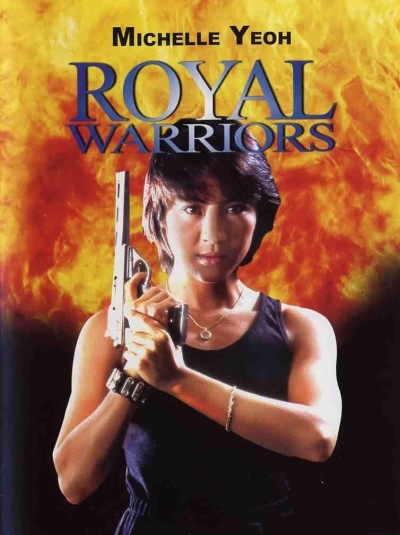 It’s really the finale which makes this stand out – not necessarily for its qualities (though it’s far from bad), more for the batshit insanity. It sees ex-cop Michelle Yip (Yeoh) storm a construction site in an armoured car, to rescue the coffin containing the body of a colleague, which has been suspended from a crane by the bad guy. How the hell did we get here? Good question. It all starts on a plane back from Japan, where among the passengers are Yip, Interpol agent Peter Yamamoto (Sanada, recently seen creating doomsday diseases in Helix) and security guard Michael Wong (Wong – a lot of thought clearly went into that character). On the flight, there’s a hijack, in an attempt to free a killer being extradited to Hong Kong; our heroic trio foil it, killing the hijackers. But that just brings down the wrath of the rest of the gang, who vow to take their revenge on the people who killed their colleagues. And they really don’t care who gets in their way, as a mass gun-battle at a night-club shows – it also gets Yip taken off the case.
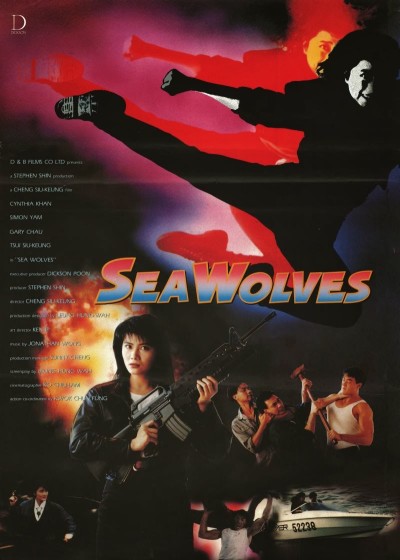 As with the preceding entry, there’s a smattering of social commentary; here, the topic is Vietnamese boat people, who reached Hong Kong in droves during the late eighties. The bad guys are a group of pirates, led by Keung (Chu), who prey on the boats, stripping the refugees of valuables before killing them. On one raid, member of the crew John (Yam) recognizes friend Gary (Chow): while he manages to hide Gary, and stop him from being killed, the stowaway suffers cinematically-convenient amnesia, until the boat docks in Hong Kong.
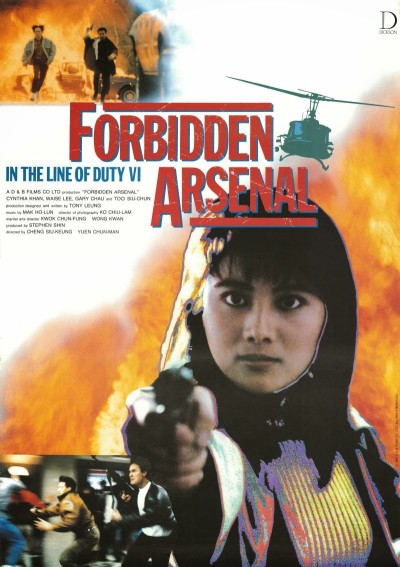 Sporting the subtitle “Forbidden Arsenal” – though if the poster (right) is anything to go by, it’s more of a domtitle – this further weakens the series by making Cynthia Khan only one-third of the action. She’s joined here by Chen (Lee), a cop from mainland China, and Hua (Do), a Taiwanese policemen, who get caught by the locals while they are operating, independently, in Hong Kong as part of their investigation of an arms smuggling gang run by Paul (Shou). Rather than deporting the uninvited guests, they are brought on to assist Madam Yeung (Khan), but soon discover one of the problems about taking on gun-runners: there’s a good chance they’re going to be rather better-armed than you.