
Literary rating: ★★
Kick-butt quotient: ☆☆
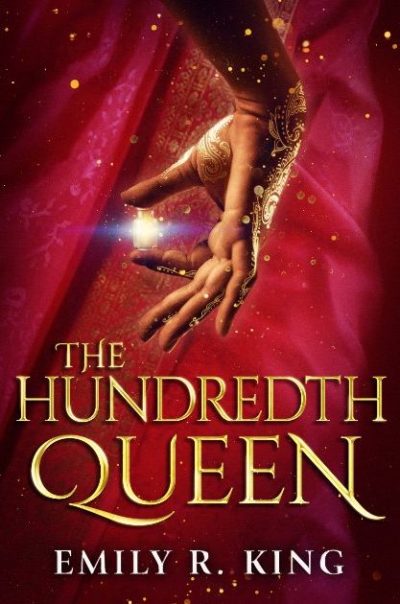 An interesting premise gets wasted, buried under a muddied writing style which sets up in one direction, then abandons it for another. Orphan Kalinda has been brought up by The Sisterhood in their remote temple in the mountains (kinda Indian, kinda Sumerian, annoyingly non-specific), training in the ways of a warrior – though others have far more talent in the era. Her life is upended when the local monarch, Tarek, visits the temple and selects Kalinda to be his next wife. Next, as in he already has 99, not to mention his additional courtesans. The problem for Kalinda is, this sets up a tournament in which she can be challenged by the other women, who seek to supplant her.
The journey to Tarek’s palace is barely under way before two issues rear their head, that drive the plot the rest of the way. One is Kalinda falling into a forbidden love for Deven, the guard who’s escorting her. The other is her encounter with a “bhuta”. These are half-human, half-demons, who exist in four kinds, each possessing power over the elements of fire, earth, air and water. Might this, perhaps, be connected to the mysterious fevers from which Kalinda has been suffering from a child, only kept in check by her daily consumption of a potion?
Of course it is. For the book rarely strays from the obvious, virtually from the start when Kalinda immediately falls head-over-heels in love, with literally the first man she has ever seen. There’s no sense of chemistry here at all, or of a romance growing naturally out of the characters. It seems shoehorned in there because, dammit, it was on a checklist of things fantasy books need to be successful, which King found online somewhere. The interactions between Kalinda and the other women weren’t much more convincing, sitting somewhere between Mean Girls and The Hunger Games.
I’m not even clear on the details of the tournament, which is supposed to be the main plot device of the book. Who challenges who? What are the mechanics here? What does Tarek get out of it? It’s the ultimate plot-device, since his motivation for setting up the event is entirely obscure. It’s not as if he can exactly stream the event on pay-per-view. There are a couple of plot twists later on, that did manage to engage my interest briefly – these did help explain why Tarek picked Kalinda, when we had repeatedly been assured earlier of her plainness and lack of talent.
However, the actual competition is largely glossed over with a disapproving frown, culminating in a big, damp squib of pacifistic grrl power. This is less drama than melodrama, with every character being exactly what they appear to be, and possessing few hidden depths. The last third of this proved to be a particular slog, and it’s not a universe to which I’ll be returning in future.
Author: Emily R. King
Publisher: Skyscape, available through Amazon, both as an e-book and in a printed edition.
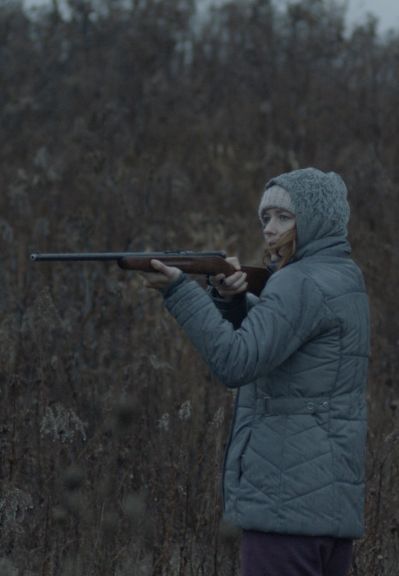 A viral plague has decimated mankind, turning its victims in mindless, flesh-craving ghouls. One of the few to have survived is Ann (Walters), who has taken up residence in the woods, where she has camped out. Ann uses the survival skills she received from her now-absent husband, Jason (West), only occasionally having to emerge and risk the threat of the infected, in order to gather supplies. Her secluded, yet relatively safe existence is disturbed, when she finds an injured man, Chris (Thompson) and his teenage daughter, Liv (Piersanti) on a road. They are supposed to be on their way north, to where the epidemic is reported to be in check. Yet Chris, in particular, seems curiously unwilling to be on his way.
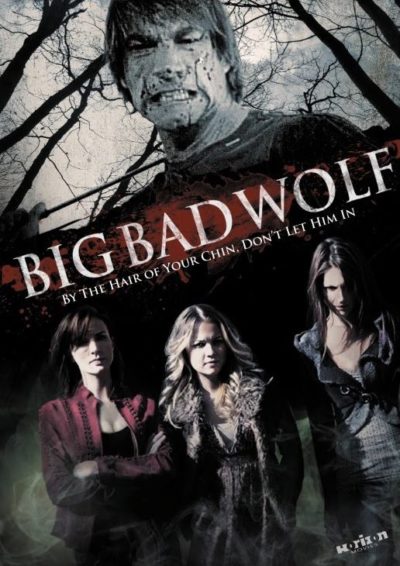 A modern-day update of The Three Little Pigs, this works better than you might think. The wolf is “Huff” (O’Connell), a really warped individual whose interests appear to be religion, drugs and molesting his three step-daughters. Bit of an odd combination. Their mother, Lorelei (Elina Madison), is a largely absent stripper, who seems not to care too much that her boyfriend’s attention have now turned from her oldest daughter, Brixi (Bollinger), to the youngest one, Shay (Stefanko). But when Huff prepares his big score, using cash “borrowed” from his mistress’s ex-husband (or something like that – the relationships here are so complicated, you need a chart to keep track), Lorelei sees her opportunity, sending the three girls away with the money. That leaves Huff in serious trouble, and he’s soon after them, intent on retrieving the cash. Huff is indeed going to puff… on his asthma inhaler.
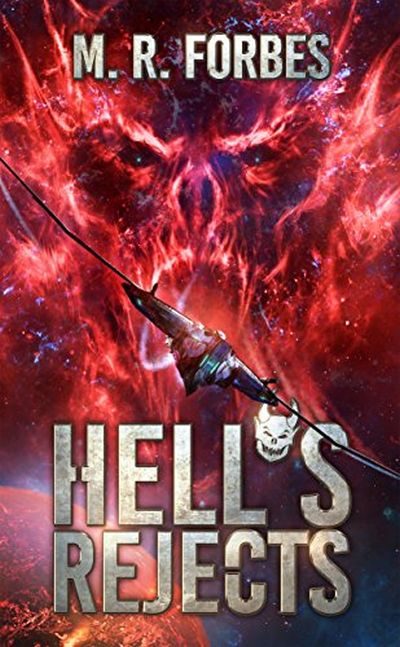 The heroine in this enjoyable slice of space opera is Lieutenant Abigail Cage. She’s a “breaker” – effectively, a hacker – although one who is highly trained in combat. Her latest mission is to enter a rebel compound and recover a laptop, but the job goes awry, and she finds herself framed for treason after a cache of weapons goes mission, and sent to Hell. No, literally: that’s the name of the planet, and it’s an entirely apt one.
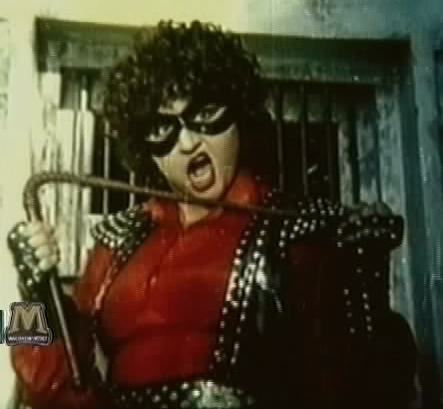
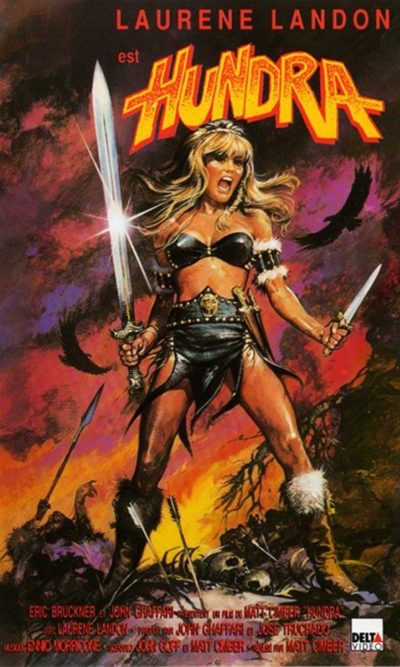 Director Cimber seems always to have had an interest in the action-heroine genre, having previously directed Lady Cocoa, he’d go on to do Yellow Hair and the Fortress of Gold , also starring Landon, and work on Gorgeous Ladies of Wrestling. But this was likely his best work, a rather inspired Conan knock-off, which both predates and is significantly better than Red Sonja.
 ★★★
★★★ Originally pitched as a vehicle for Gillian Anderson – creator Spotnitz was a head writer on The X-Files – the main problem here is likely a structure which demands a second season the show never received. This seems to have come as a surprise to the creators, since they had put together a writing team and planned out storylines. Then, the show was abruptly not renewed, in response to sagging British ratings (the series lost 30% of its viewers over the eight-week run). Even after the BBC pulled the plug, there were hopes Cinemax would continue the show, as it had sustained its audience much better in the US. Those failed to come to fruition either, and the story of Sam Hunter is left frustratingly incomplete.
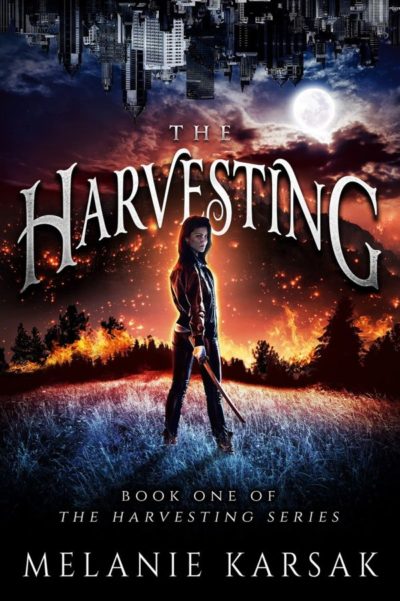 This is likely the kind of book you enjoy rather than appreciate. While no-one will ever mistake this for great literature – you could go with “ludicrous nonsense,” and I’d not argue much – it’s a fun enough bit of pulp fiction that I kept turning the pages.
 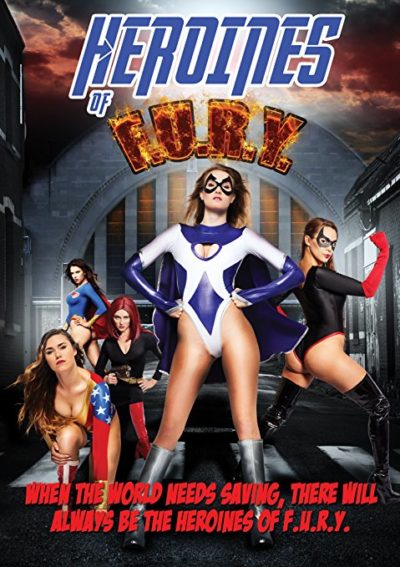 Given the cover, you might reasonably have expected one of the above, but if you saw the rest coming, you’re a better judge of cinematic dreck than I am. It’s hard to work out exactly who would form an overlap between the various potential audience sections here. And even someone not averse to any of the categories (I’d probably qualify) might well be turned off by the poor production values and overall shoddy quality of this.