



★★★½
“Emotional Battle Angel.”
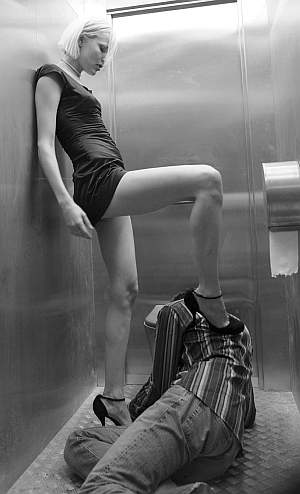 Andre (Debbouse) is at the end of his tether, owing large amounts of money to at least three separate gangs. He decides to end it all by leaping off a Parisian bridge into the Seine below, but is beaten to it by the tall, leggy blonde, Angela (Rasmussen, who you may remember in a bathroom stall with Rebecca Romijn-Stamos in the opening of Femme Fatale). His suicide forgotten, he jumps in to save her, and as they sit, dripping on the river-bank she vows that she will repay his selfless act by taking care of him. This may not be quite the way he expects; for example, she hijacks a negotiation with one of the mobsters to whom Andre owes money, marches upstairs and emerges not long afterwards, the debt apparently forgiven and with tens of thousands in bonus cash. Just as important as resolving his pecuniary problems are the emotional ones which plague Andre, and Angela is perhaps even more adept at addressing those: his lack of self-confidence, trust issues, an inability to give or receive love and so on. She sees the good person who is buried very deeply, and slowly teases it out. For her name is almost literal: she’s an angel, sent down to save Andre from himself.
After six years where he was involved in writing a dozen film and producing even more, this was Besson’s first film as director since The Messenger. Nice to see him back, and the decision to shoot the entire film in black-and-white adds to the fairytale feel, though sometimes it feels more like a Calvin Klein commercial than anything else. The contrast between the 5’10” Rasmussen, towering over the 5’5″ Debbouse like an Amazon, is also unique, and it’s the former’s attitude that makes it qualify here, in a way reminiscent of Run Lola Run. Angela is as relentless as a force of nature, and will let nothing and no-one get in the way of her mission; in this way, she also reminds me of Leeloo in The Fifth Element, or even Mathilda from Leon.
In terms of action, it’s more understated than I’d like: Angela could certainly kick the ass of everyone else in the film, but never needs to get out of second gear. However, the emotional content of the film is considerable, never more than in a single shot that seems endless, where Angela makes Andre stare into a bathroom mirror and look at himself for, probably, the first time in his life. It’s a beautiful moment of impressive heartfelt exposure, laying bare Andre’s soul and exposing the human heart beating inside the scam artist. If not quite the badass-oriented remake of Wings of Desire I was hoping for, it proves very satisfactory and a unique romantic fantasy. I hope Besson doesn’t forget to showcase his own talents as a director more often in the future.
Dir: Luc Besson
Star: Jamel Debbouze, Rie Rasmussen, Gilbert Melki, Serge Riaboukine
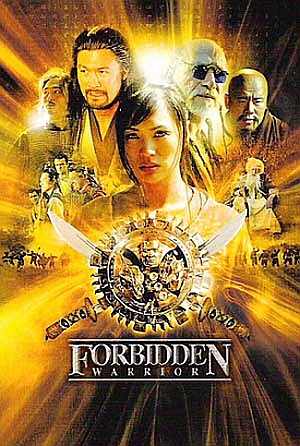 Though I couldn’t put my finger on why, large chunks of this seemed very familiar when I was watching it last night. Maybe it was just the story, cut from a template [mystical book, blah, chosen one, blah-blah, key to all power, etc.] we’ve seen a million times before. But then, when I Googled the film’s title, I realised why: at #6 was
  “Like The Prophecy, made for 75 cents and without Christopher Walken.”
 Things build to a final showdown in a warehouse, where the makers finally locate their supply of fake blood, which has been largely notable by its absence for the first hour, and it is quite effective. I do wonder why the angels, on both sides, don’t make better uses of their powers, though must also say, said powers are also somewhat crap: if I was responsible for holding the balance between good and evil, I’d want something better than the ability to turn into a fat guy. Overall, one would quite like to see this remade as a big-budget work, because the ideas here are good; with a good effects studio – and significantly better fight choreography – this has a lot of potential. However, Hollywood appears too busy remaking mostly-mediocre Asian horror to notice. We are therefore stuck with a cheap version, whose flaws likely distract too much from its merits for this to find a wide audience.
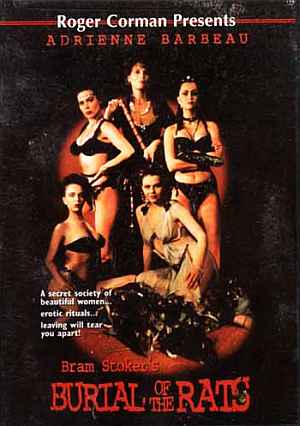 This can only be described as utterly mad. Bram Stoker is kidnapped by a group of bikini-clad female vigilantes, ruled over by “the Pied Piper’s twisted sister” (Barbeau), who can control rats with her flute (when not decapitating them in her rodent-sized guillotine, I kid you not). He is coerced into becoming one of them because the Queen decided his writing skills could aid their PR skills, striking fear into their targets with his eye-witness accounts of the raids where the extract vengeance on evil men. Of course, one of the clan (Ford) falls for him, but when she is captured by the authorities, her colleague must mount a raid to rescue her. Meanwhile, Stoker’s father is trying to find his son. Oh, and I did I mention the topless ballet which is apparently the women’s chief source of entertainment? No wonder Barbeau permanently wears a pained expression. [Though she now looks back and
 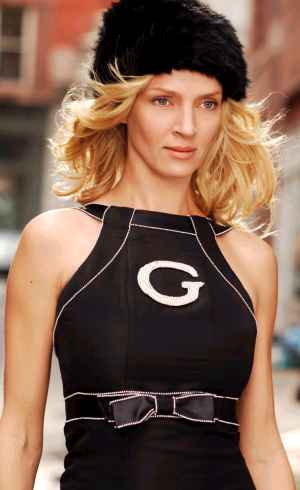 There’s certainly plenty of potential in the idea: how do you break up with your girlfriend, when she’s not just needy and possessive, but also has superhuman strength, the ability to fly and can boil your fishtank with her gaze? And the casting is, in general, excellent, too. Matt (Wilson) is an endearing everyman, and Thurman is perfect for capturing the mix of neuroses and power in G-Girl – her sequence where she pouts and refuses to save New York from a rogue missile is great. Izzard, naturally, steals almost every scene as supervillain Professor Bedlam [or “Barry”, as G-Girl knows him], though Riann Wilson matches him as Matt’s best friend, who talks a far better sexual game than he actually plays.
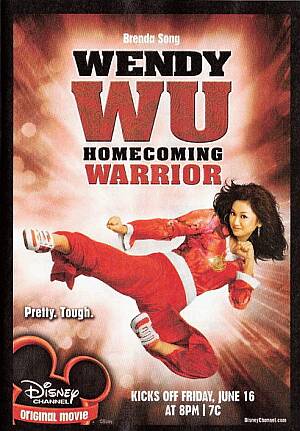 It’s kinda sad to say, but the action in this Disney TV movie kicks the ass of, not only most TV shows, but a credible number of Hollywood films. Then again, behind the fights here is Koichi Sakamoto, who is also responsible for Drive, among the best American martial-arts films of all time. And while obviously “Disneyfied”, this is still sprightly and engaging, with a couple of very decent fight sequences. It is, however,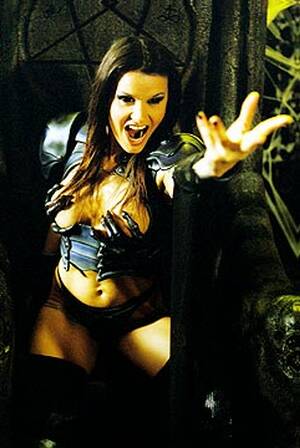


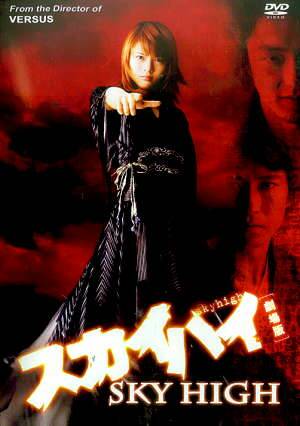 Combining elements from Dead Like Me and Ghost, this still manages to come up with something unique, especially given its origins as a prequel to a popular TV series. It is designed to explain how Mina (Shaku) got the job as Keeper of the Gate, where murder victims must decide whether to forgo revenge and pass on, return to Earth as a ghost, or seek vengeance at the price of eternal torment. She ends up there after having her heart torn out on her wedding day by insane billionaire serial killer Kudo (Osawa) who will stop at nothing to save his one true love, currently lying in a coma. Trust me – it all makes perfect sense, and it’s a particularly nice touch that Mina’s fiance, Detective Kohei (Shosuke) is equally driven in his actions by love.
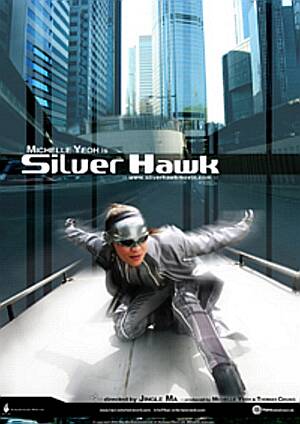 There’s no doubt about the aesthetic they’re aiming for here; heroine with secret identity, sneering evil nemesis, gadgets, etc. Take a Marvel comic from the 60’s, transplant it to the modern Far East, and there you are. Indeed, this period is apparently where SilverHawk originated; unfortunately, the makers failed to learn from similar failures such as The Avengers, The Mod Squad and Wild Wild West, and the results are lacklustre.
 This is one of those Hong Kong movies which seems to believe that if they cram in enough complications and characters, you’ll overlook the deficiencies. They’re kinda right: if you can let go (I did, Chris couldn’t), you will enjoy this a whole lot more, though here, it’d take five times as much plot to make you ignore the truly woeful titular bird. There would seem to have been confusion in the prop department over whether the request for a “giant crane” meant a bird or a piece of construction equipment: it looks as if they split the difference, building something with feathers, which remains (painfully) obviously mechanical.