



★★
“LARPing for all.”
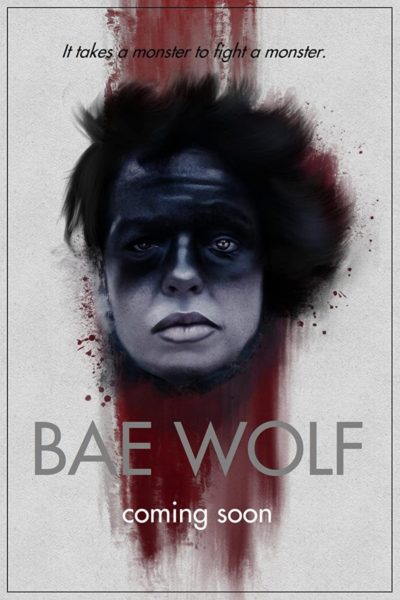 There is certainly room for reworking of the tale of Beowulf and Grendel, and making the heroines of this version female is what got me interested in it. However, the warning signs were out very quickly. Opening titles which said “Denmark… 500 AD… (-ish)” are a good sign of what to expect, for it’s clear that the makers were not happy to leave their changes at that. Indeed, they consciously embrace anachronism, especially in the dialogue, which is thoroughly modern, and could not be further from the epic poetry of the original if they tried. And I suspect they did try: congratulations on erasing one of the main reasons the story has survived down the millennia.
The basic story is, at least, largely unchanged. The land of Queen Walchtheo (Petsiavas) is under attack from the monstrous Grendel (Kern), and she sends her daughter, Princess Freawaru (Renew) out to find someone who can slay the beast. Freawaru finds a party of Danes led by Beowulf (Hill), who is disgruntled about the legends making her male: “As if you need balls to hold a sword.” They are commissioned for the job, which is where it gets murky, in a variety of ways. The Danes are a bit sketchy, in terms of delivering the contractually required slaughter; Grendel has mommy issues; and the princess falls for Beowulf, because this is 2022, and everyone has to be gay for no particular reason.
This was apparently shot at a Live-Action Role-Playing (LARP) camp, and to be honest, it shows. This is very much at the “running around in the woods” level of fantasy cinema, and at no point even remotely approaches selling its time and place. It leaves the film precariously perched between two stools, neither historically authentic nor modernizing the story. It drops contemporary characters, attitudes and dialogue into the 5th(-ish…) century, and the results don’t typically work, unless you’re playing for comedy. They can’t quite commit to that either, with a jokey tone, that simultaneously feels like it wants its opinions on gender and sexuality to be taken seriously. The net result at points feels like a political lecture delivered by someone wearing a pink pussyhat.
Yet I couldn’t bring myself to dislike this as much as I might. Beowulf and Grendel are both given more complex characters than in some other adaptations, and are helped by decent performances from the leads. I will also admit, the final confrontation between Beowulf and the much-feared dragon is a great example of how you can genuinely yank the carpet from under your viewer. Let’s just say, very little in this world is as it seems, and the film works best when playing on this line between myth, legend and the facts, along with the way they mutate into each other. If they could have developed this aspect more, in lieu of the less successful elements, the obviously low budget and clunky writing would perhaps not have been so glaring.
Dir: David Axe
Star: Morgan Shaley Renew, Josh Kern, Jennifer Hill, Rachel Petsiavas
 If Ryan looks familiar, that’s because she is. She starred in
  I came into this somewhat braced, given its 3.0 IMDb rating, and reviews which tended to be scathing e.g. proclaiming “This May Be The WORST Movie I’ve Ever Seen!” While it’s clearly not
 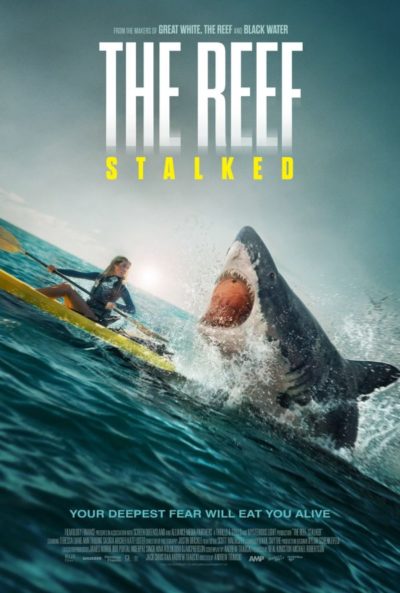 This is a sequel to Traucki’s 2010 film, The Reef, whose synopsis reads: “A sailing trip becomes a disaster for a group of friends when the boat sinks and a white shark hunts the helpless passengers.” I haven’t seen it, yet based on that, I’m not sure I need to. Replace “sailing” with “kayaking”, and you’re more or less here. Perhaps lob in a bit borrowed from
  There is a tendency for directors married to actresses to make them action heroines. This perhaps started with Renny Harlin and Geena Davis, but the most famous example is probably Paul W.S. Anderson and Milla Jovovich (she was previously married to Luc Besson too). It seems that Marshall and Kirk may be heading that way, with her starring in his last two movies. First there was witch-pic The Reckoning, and now this, which blends elements from a number of genre films. Not the least of which are Marshall’s own Dog Soldiers and
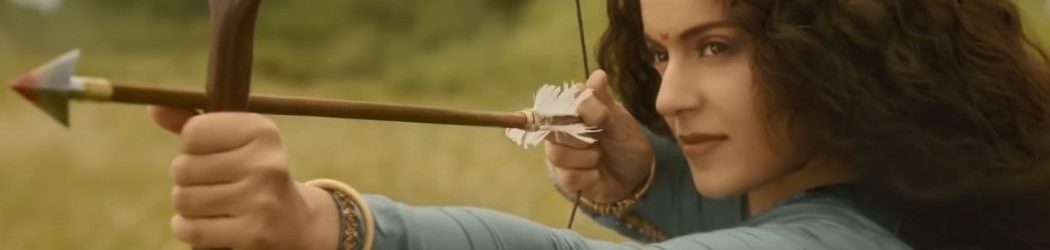
  The above rating reflects my deep-held tolerance for low budget cinema. If a film is made with heart, I’m generally prepared to overlook, to some degree, technical shortcomings. Both sides of that equation are present here, in a somewhat revisionist take on the Robin Hood mythos. This takes place after Hood’s original victory over the Sheriff of Nottingham, and he has now gone on crusade to the Holy Lands with King Richard. In their absence, however, the country has not fared well. Marian (Craig) has adopted another identity, and is hiding out as novice nun Matilda, though occasionally sneaks out to help poach from the rich, and give to the poor.
 The latest stop in our ongoing tour of female-driven urban crime movies brings us to the nation’s capital in Washington, where the police are celebrating just having taken down a leading light in the city’s organized crime industry. Now, they set their sights on a new target: the gang led by Racine Robinson (Vaughan) and her two daughters, Kat (Crosby) and Candy (Bethea). These might prove a tougher nut to crack, since the Robinson crew have a harsh, zero tolerance policy to anyone who messes with them in the slightest, yet also gathered local support during the coronavirus pandemic. Indeed, Racine is so popular in the neighbourhood, a run for political office is not out of the question. However, she has rivals, who have more than a passing interest in seeing her taken out of the picture – albeit for very different reasons, in order to make room for them to rise up.
 Lara Winslet (Daigh) is a vulcanologist, who is on the side of a mountain in Italy, taking samples, when the ground gives way beneath her, and she falls into an underground pit, damaging her leg in the process. Help isn’t going to come, so with limited resources (not to mention a count of functioning limbs that stops at three), she is going to need to cope with the situation on its own, and figure a way out of what could easily become a fatal scenario. Meanwhile, on the outside, her father (Cosmo) is becoming increasingly frantic. This is erhaps because if Lara doesn’t come back, he’s going to be stuck permanently with her kid (Di Mauro). That would be my reaction, anyway…
 June Williamson (Guillot) is an out-of-work actress, who just broke up with her boyfriend, Oliver (Vernet), and is behind on the rent to her creepy landlord. An unexpected lifeline arrives in the shape of a very well paid gig, house-sitting a large house, deep in the countryside. Things get annoying when Oliver and his asshole pal Marcel (Thevenoud) show up. They get worse when Oliver admits they had an accident on the way, and there’s a body in the car boot. A stare of “terrible” is reached when the body vanishes. And we reach peak awful, when the house comes under siege from Wolfströeme (Bary) and his heavily-armed gang of mercy, who are looking for…
 I’d been aware of this movie for some time, through its innovative crowd-funding approach, which raised $3 million to cover the cost of production. After COVID hit, there were doubts it’d ever see the light of day, but here it is: the first “Swissploitation” film [If not quite the case, it’s certainly the first one with a seven-figure budget, as well as the first Swiss movie covered on this site] And it’s not bad: if you’re familiar with similarly crowd-funded spoof, Iron Sky, this is along similar lines of broad parody. It covers almost every genre of cult from kung-fu films through Starship Troopers to women-in-prison films, e.g. there’s an Asian prisoner