




★★★
“There will be Blood“
 This is part of the Blood universe, which previously gave us anime series Blood +: Episodes 1-25 and Blood: The Last Vampire in both animated and live-action versions. That’s small beer compared to the Blood-C segment, which began as a 12-episode anime show, subsequently becoming two manga series, a novelization, a stage play, and three live-action movies. The other two, set in the current day and entitled Blood Club Dolls 1+2, aren’t of interest here despite their title (and aren’t very good), since at least the first only includes a brief cameo by Saya, the heroine of the series. Her role here is considerably more substantial, and it’s basically a better production all round. Not least because most of it works reasonably well with no prior knowledge.
It takes place not long before the outbreak of World War II, in a small rural village, plagued by a series of mysterious deaths. Brutal military policeman Amakatsu (Furuta) is charged with investigating, blaming local communist sympathizers. However, two elements suggest otherwise. Firstly, the arrival of Saya Kisaragi, member of a vampiric race called the ‘Elder Bairns’, who hunts her own kind. Then there is the contraction of a mysterious blood-based disease of Ran (Aono), the sister to village resident Ren (Matsumara). He encounters Saya when she meets a police squad, and tries to rescue her. If you’ve seen any of the entries linked above, you’ll know that she isn’t a character exactly in need of rescuing.
Wisely, the film doesn’t stretch out the “who” aspect of the mystery, since it’s not exactly hard to guess. The “why” does turn out to be a bit more unexpected, and at the end, there are a few moments where it does feel like some familiarity with the world in which it works would be helpful. Generally though, it’s fine as a standalone piece. I would have liked to have seen more of Sana in action: after taking on the police, she takes a back seat to Ran and the struggles of the village to convince Amakatsu they’re not better off dead than red. However, it certainly qualifies for the site, with some solid sword-fights at the end, which make up for in very enthusiastic, crunchy sound design, what they may lack in explicit gore and impalement.
Outside of Sana, it is a bit bland in terms of characters. Ran doesn’t make much of an impression and, until the final third, neither does his sister. There were points where this reminded me of a Hammer film, albeit one obviously set in a different time and place, with the concept of a small village plagued by a terrible evil. Twins of Evil might be the closest, as it also had a strong authoritarian figure (played by Peter Cushing), who was correct about the presence of evil – just terribly wrong in regard to its source. Amakatsu doesn’t have anything like the same arc, though this remains a considerable improvement, in most ways, over the contemporary live-action film.
Dir: Shutaro Oku
Star: Ryūnosuke Matsumura. Kanon Miyahara, Kaede Aono. Arata Furuta
 I initially intended to review this and its sequel, Jeanme, by Dumont as one entity, for a couple of reasons. They really only work as a single item. This confused the hell out me, because the second film turned up on a streaming service by itself. Five minutes in, I was so confused, I started searching the Internet, only to find I had, in effect, joined a movie already two hours in progress. Also, I suspected I would be hard-pushed to deliver 500 words on
 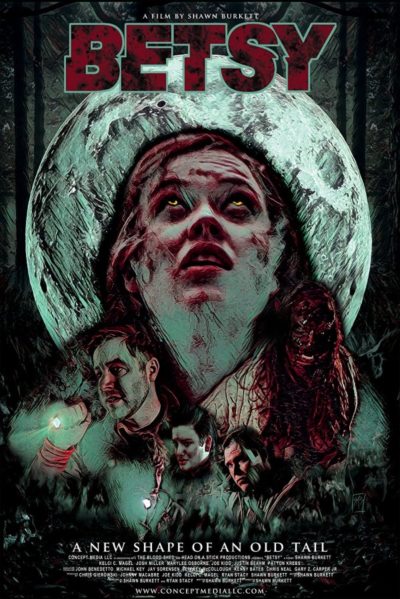 On her way home one night, Betsy (Ryan) is attacked by a mystery assailant and badly injured. While she recovers, she’s traumatized by the events, with nightmares that even her attendance at a support group can’t help. She is also increasingly plagued by violent outbursts against her supportive but increasingly concerned roommate Kayte (Osborne), and physical changes. If you are at all familiar with horror movies, you’ll know the symptoms: Betsy’s attacker was a werewolf, and she’s now in the process of becoming one. This throws a spanner in her growing relationship with Sam (Miller), made worse because he’s a policeman, investigating the recent spate of “animal attack” murders around town.
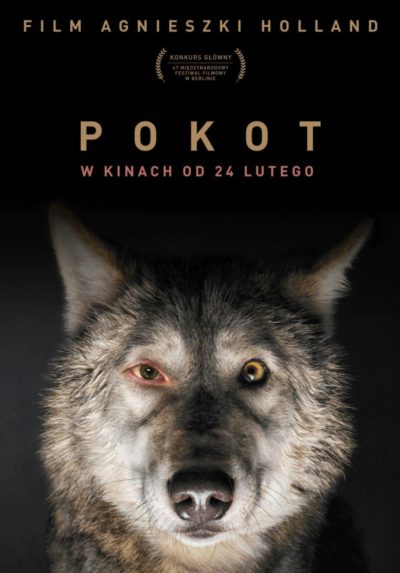 Janina Duszejko (Mandat) is a former engineer, who now lives in a small rural Polish town. She has a deep love of nature and animals. This is a belief not shared by many of the local population, who treat animals as a resource, put there for their benefit – an attitude which brings them into conflict with Duszejko. After her two dogs disappear, she goes to the authorities, but they blow her off. However, the man she suspects most, turns up dead – just the first in a series of mysterious deaths, that may be related to Jaroslav Wnetzak, a local businessman with a finger in a number of shady pies. Subsequent corpses include the police chief, who owes Wnetzak money.
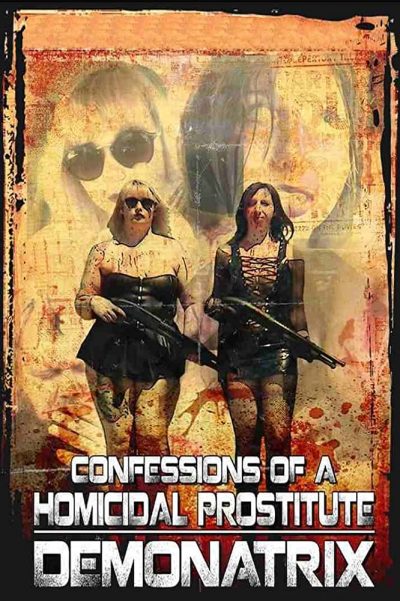 I must confess I have not seen Confessions of a Homicidal Prostitute, to which this is a sequel. It’s marginally possible, I suppose, that the character development, story and nuance were present there, and explain why these are all but entirely absent in its successor. I would not, however, be prepared to bet on it. I suspect the original was every bit as mean-spirited as this: and “suspect” is all I’ll ever do, because I won’t be making any effort to track it down. In fact, I probably wouldn’t watch it if my aged mother begged me to on her death-bed. Too harsh? Perhaps. Yet I don’t think I’ve ever seen a flat-out
 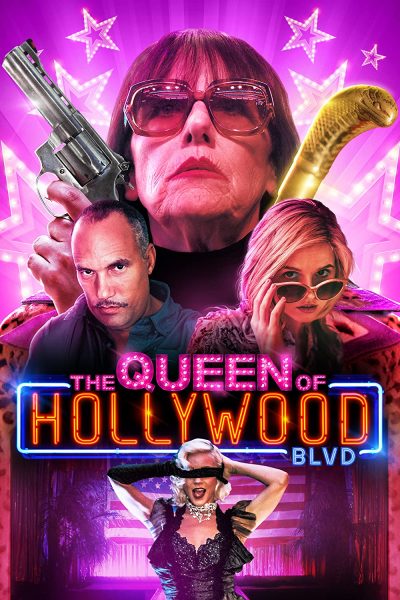 This is definitely not your typical action heroine. For it’s Mary’s (Hochschild) 60th birthday when the events of this film unfold. She runs a long-running strip club on the titular location, when Duke (Smith) spoils the party, by demanding she hand over ownership of the establishment, to settle a loan taken out decades earlier. Mary isn’t having any of it, and when Duke’s lackie Punk Rock Charlie (Berkowitz) shows up to take over, she beats him up and leaves him for dead in the Bronson Caves – which, as the film helpfully tells us, was used as the Batcave for the Batman TV series. But Duke is ahead of her, and has kidnapped Mary’s son. To free him, he demands she do another job: kill an accountant who is being too talkative for Duke’s liking.
  This feels like a Canadian version of
  You’ll probably understand why that cover picture got me to pause my casual scrolling through Amazon Prime. Well played, movie producers. Well played… Likely inevitably, the film didn’t quite live up to the advertising, mostly due to a significant lack of plot. The film barely runs 65 minutes, before we get to a sloth-like end-credit crawl, and there’s probably not enough story-line to fill a music video for one of the gangster rap songs which pepper the soundtrack. Yet, in terms of atmosphere and setting, it
  When I first put this on, and saw it was only 41 minutes long, I thought there had been some kind of mistake. 41 minutes later, it was clear the mistake had been all mine. Additionally, I was now thoroughly grateful for the abbreviated running-time. A feature length edition would have constituted cruel and unusual punishment, and may be forbidden by the Geneva Convention. This blatant Buffy the Vampire Slayer knock-off is missing only two things: a budget, and everything else.
 There are indeed, six reasonably attractive ladies here, and they do indeed spend most of the film in a warehouse. Can’t argue about that. The problems, unfortunately, are numerous, and start with the fact that 6HCiaW is not, in itself, a concept sufficient to sustain a feature. The half-dozen women in question are models, hired by moderately creepy photographer Adrian (Malam), for what he announces will be his final photoshoot before retiring. Which is a bit odd, since he looks no older than thirty. Whatevs. Unfortunately, after he overhears the models making fun of him, Ade goes a bit loopy – a situation not helped by the steroid-like substance “Pump ‘n’ Gro'” which he has been ingesting. So he locks the models up in cages, injects them with the same stuff, and makes them fight each other inside an electrified cage. As you do.