




★★½
“Because ‘Killing Asian model of few words’ wouldn’t fit on the DVD sleeve.”
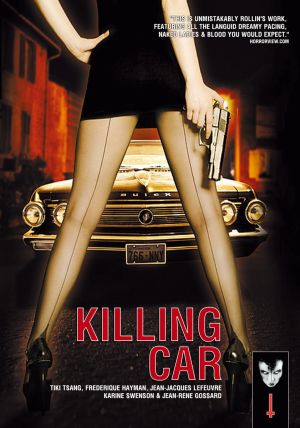 This is a surreal revenge thriller, which begins at a scrapyard where the bickering of a couple is interrupted by an Oriental woman (Tsang), who shoots them dead and takes a car. A series of similar encounters follows, which take a similar form: we are introduced to one or more characters; then the woman shows up, and kills them, leaving a toy car behind at the scene as a marker. This includes a photographer and her assistant; an antiques dealer and his girlfriend; the owner of a dance club, etc. Meanwhile, two cops are following the trail of corpses and Hot Wheels, and it gradually becomes clear that the woman’s actions are tied to a car accident the previous year, with which all her victims had a connection of some kind.
It’s a very chilly piece, with a central character about whom we know almost nothing for the great majority of the film, making it difficult to empathize with her murderous rampage. Meanwhile, it doesn’t take long before we realize that just about everyone else to whom we’re introduced, is going to get shot, so there’s no point in getting attached to, or even caring about them. The role is one that was written for Tsang, who never appeared in anything else, as far as I can tell: that probably says more than anything else. She’s not bad, and has a certain cold charisma that’s appropriate, but there just isn’t enough on which to hang any criticism of her performance. Certainly, despite a willingness to shed her clothes, she’s nowhere near as good as Brigitte Lahaie was in the other Rollin flick we’ve reviewed here, Fascination – interestingly, that appears to be explicitly referenced in one scene here, with a scythe being wielded in a very similar way.
It does remind me somewhat of Ms. 45 too, with a lead character who lets her violent deeds speak louder than her words, though the motive there was a good deal clearer, and placed up front. The highlight is probably an early gun-battle in an almost deserted fairground, which has an eerie, suspenseful quality that’s quite effective, and it’s interesting to see a Rollin movie which does not include female vampires, a staple of his work. However, on balance, I think a few more fangs, perhaps accompanied by a less willfully-misleading title, might not have been a bad thing.
Dir: Jean Rollin
Star: Tiki Tsang, Frederique Haymann, Jean-Jacques Lefeuvre, Karine Swenson
 Agent Delilah (Cattrall) is undercover investigating arms dealer Alec Kasharian (Voyagis), and his connection to Palestinian terrorists [this was 1993, when people were concerned about such things]. At the behest of her handler Paul (Zane), she copies a floppy-disk containing vital information [I repeat, this was 1993, when an entire arms dealer’s business would apparently fit on a floppy!], but she’s discovered, shot multiple times, and left for dead. Paul drags her Swiss cheese-like body back to a secret government lab, where she is repaired, upgraded and generally enhanced in terms of speed, power and other abilities.
 Sunny Justice (Carter) is a former soldier, who is somewhat estranged from her sister, but who returns to town when the sibling – who also happens to be the mayor – dies under mysterious circumstances [savaged by a dog]. Turns out she was about to blow the whistle on developer Billy Joe Rivas (Gorshin), who has both designs on the town, and who has been using his mine as a dump for toxic-waste. The local sheriff (Singer) had bedded both sisters, but he refuses to act, and federal authorities prove no willing, so Sunny calls up some of her old pals, who were part of an all-female Special Forces unit, to take matters into their own hands. Rivas doesn’t take kindly to having his money-making scheme interfered with, and calls in reinforcements of his own, using his East-coast mob connections.
 So opens this rare example of British grindhouse. We don’t generally
  While there’s no denying the
 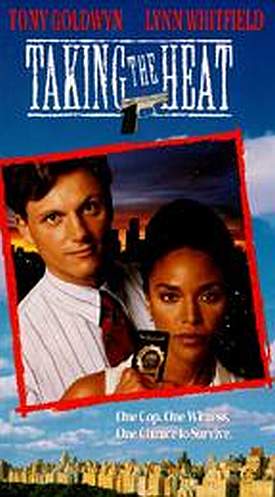 Michael Norell (Goldwyn) sees mob boss Tommy Canard (Arkin) whacking a debtor, but won’t admit it to the cops. However, when they look at the credit-card transactions, the truth comes out and Detective Hunter (Whitfield) is sent to retrieve the witness; Canard, thanks to a mole, also finds out and send his top hitman to ensure Norell never reaches the courthouse. A heatwave has simultaneously hit New York, leading to blackouts, gridlock and a breakdown in communications, so it’s down to Detective Hunter, back on her old stomping ground, to negotiate her way through the traffic jams and dodge the killers out to get Norell.
 Polo plays Quick, an assassin whose job is to take out mob accountant Brewer (Donovan) after he turns stoolpigeon. When her employer tries to double-cross her, she goes on the run with her target, who has hidden $3m in ill-gotten gains. Her corrupt cop boyfriend (Fahey) also has designs on the money, raising the suspicions of his partner (Carrere, an effective but wasted performance).