If there’s absolutely nothing new here, it still manages to do what it does, fairly well. In the main, it’s light and fluffy, to be sure – though it has the capability to switch gears in an instant. For example, while this is by and large a Die Hard knock-off (from the “team edition” subcategory), I’ve not seen many films in that genre where a villain bludgeons a hostage to death with a hammer, because she reminded him of his mother. Just do not ask me to identify any of the players. This is another one of those films with the credits entirely in Chinese, very limited information available online, and subtitles which left a lot to be desired. Coherence, especially.
The basic premise sees two duelling groups of special ops: the all-male Flying Tigers, and the all-female Farewell Flowers. Look, that’s what the subtitles call them. I’m not arguing. There’s a fierce rivalry between the groups. But both are sent to protect renowned Hong Kong businessman Li Xuchang, after a tip-off is received that terrorist group XSA intend to kidnap him at a birthday party he’s giving for his son at his private club. The attack in question does indeed come to pass, though it turns out to be not quite the simple abduction attempt expected. To absolutely nobody’s surprise, the Tigers and the Flowers will have to overcome their differences and work together, to defeat the evil threat posed by XSA.
It is fairly clear that most of the actresses concerned were chosen for their roles on the basis of looks, rather than fighting ability, or even credible musculature. There’s almost as much cheesecake (and some beefcake, too) as fighting. But the action choreographer, cinematographer and editor do a decent job of shooting round the limitations of the cast. You’ll still need to be in a forgiving mood, and I could have done without the obvious attempts at unresolved sexual tension, some of which require stupidity in the extreme. A terrorist letting his hostages tie themselves up? What could possibly go wrong. There are other points where moderate competence on the part of the criminals, would have lead to a very different outcome.
Yet, I was still adequately entertained, and occasionally impressed. The villains have a tendency to pit the hostages against each other in contests, brutally killing the loser (a tactic used in real life by Mexican cartels), so it’s certainly not all fluffy and light. Or there’s the chief evil henchwoman, who strips down in front of the hostages in order to go from evening dress to her battle corset. It’s a striking power move. However, there’s rarely any threat to the main characters: an unpleasant fate for one or two of them would have helped up the tension. But then, we wouldn’t have got a final scene where everyone has apparently forgotten the carnage, laughing and squirting each other with water-pistols, would we?
I suspect the issue here is partly my own expectations. When I read a memoir of somebody who spent more than three decades working for the Central Intelligence Agency, I was half-expecting a life somewhere between Salt and Atomic Blonde (ok, the latter was technically MI-5, but the concept remains valid). This is… not that. It is, of course, perfectly understandable that real life would not be as exciting as a Hollywood film. But given how long the author worked there, I would have expected more entertaining, amusing or even interesting anecdotes. The peak is probably right at the end, with her struggles to pass a lie-detector test when she tried to go back into the Company after 9/11.
It is an an eye-opener, in a couple of ways. Firstly, I kinda thought the CIA simply were not allowed to operate on American soil – that was the territory of the FBI. But based on this book, it appears that’s not the case, with Kirk being based domestically for a number of positions. These mostly involve gathering intelligence from friendly American assets who had foreign connections, and seem to involve being up-front about this being on behalf of the CIA. However, it’s hard to be sure, because a lot of specifics are omitted. This isn’t the author’s fault: an introductory note says, “As a retired CIA employee, I am obligated to present any writing I do to the Prepublication Classification Review Board… Places I served and lengths of time are notably absent per PCRB guidelines.”
This means you’re left with no real sense of place and time, whether she’s serving at home or abroad, and the specific details of what she was working on, are also very limited. In lieu of that you get a lot of complaints about chauvinism and flat-out sexism in the profession. What can I say? It was the sixties. I’m not sure what she thought life would be like, but a degree from Wellesley College might perhaps create certain, unrealistic expectations of life in the outside world. Some of her criticisms do appear justified: there’s no real reason why women couldn’t operate as case officers, just as well as men. But there’s a certain point beyond which I found myself rolling my eyes and quietly mouthing, “We get it”. I mean, she stayed there for thirty years. How bad could it be?
The other thing I took away is how banal and humdrum most intelligence work is – in sharp contrast to every depiction of it in fictional books, movies and television shows. It feels as if Kirk spent more time fighting with bureaucracy than Communism. In this way, it’s no different from any other big business, with the bosses at the top severely disconnected from those on the front lines. I certainly will admit to having learned things here. Those things, however, are just not particularly interesting. I’ll be sticking with the fiction, thank you very much.
Author: Lucy Kirk Publisher: BookBaby, available through Amazon, both as a paperback and an e-book Stand-alone memoir
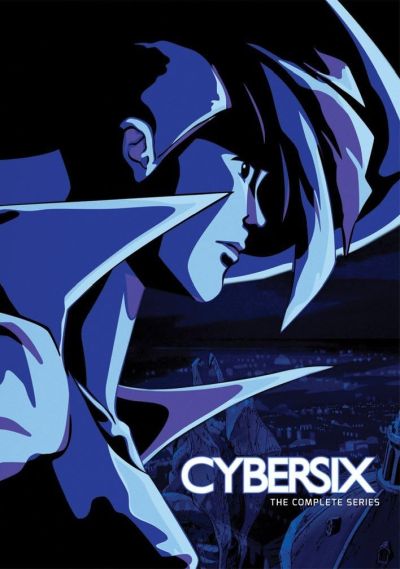
In the 90s, Warner Brothers’ animated Batman series received a lot of praise for its artful animation and style. Not surprisingly, a lot of studios and channels tried to jump on the bandwagon and create their own dark, classy animated show. Disney gave us Gargoyles, French Canal+ did The Legend of Calamity Jane, and the Vancouver-based Network of Animation (NoA) produced this series. It was shown on Teletoon in Canada and – for a short time, though not the entire series – on Fox Kids in America. What is most interesting, is the back story of the show, largely forgotten by almost everyone. Though thanks to people seeing it at the time and remembering it, Cybersix has become a cult show. It may be due to its rarity, since you couldn’t see it for a very long time. It was not available on DVD until fifteen years after its original broadcast – a similar fate to the animated Calamity Jane show.
Cybersix originally started as a black-and-white strip, written for an Italian comic magazine from 1991 to 1999. Interestingly, it was developed by two Argentinian comic book creators, Carlos Trillo (story) and Carlos Meglia, both now deceased (Trillo died in 2011, Meglia in 2008). They grew up in Argentinian comic book subculture during the dictatorship, where comics very much had a subversive, underground status. Very often these hand-made, self-distributed comics were political, and didn’t hold back in their depictions. I’m no expert on Argentinean comic book history, but I imagine nothing like the American Comic Code Authority existed in South America. Voicing critical opinions under such an oppressive regime was probably very dangerous, and the no-holds barred approach comic artists grew up with, remained after the end of the military dictatorship.
Therefore, it’s not too astonishing the Cybersix comic reflected that attitude, with its wild, very often over-the-top depiction of violence, nudity and sexuality. These comics have still never been translated for the English-speaking world: those interested will have to buy them in French, Italian or Spanish. It should be noted that not all of the series are available in all of these languages. Having read one of the volumes in French years ago, my judgement on it was that, story-wise, it is quite a strange and jumbled mess. There are scenes of gratuitous nudity and sex, and though not the main focus, they’re definitely not recommended reading for teenagers. It lacks a clear goal, with the plot often meandering, and scenes lack cohesion. Also, José, the main antagonist in that volume is an annoying and disgusting teen character. It appeared to my – admittedly very European – eyes, as a bit crude and short on narrative focus. It is neither like an American superhero saga, nor the typical Franco-Belgian fun comics, but something of its own. Of course, that is my judgement based on one single volume. Maybe I just picked the one rotten apple!
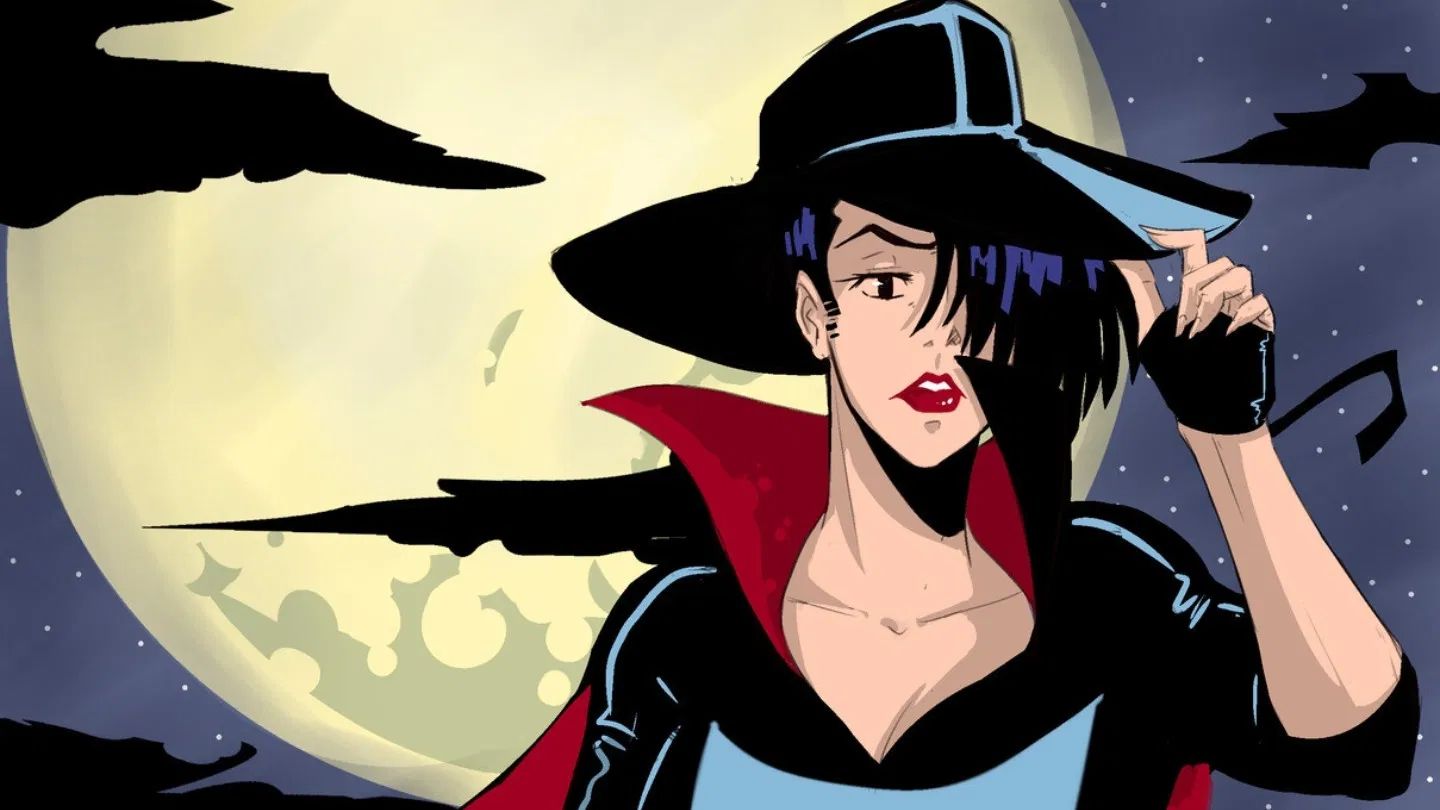
I would like to stress that these comics are not “violence-porn”, as I would personally categorize TV series like Game of Thrones. But they are definitely for a more adult readership, albeit with a bit of a juvenile mind. The drawings of a city that definitely reflect Argentina, and Cybersix, clothed in black leather while running and jumping from roof to roof with a parachute-sized cloak that would make comic anti-hero Spawn blush with envy, convey a respectable artistic style. Someone compared the comics and their 90s edginess to the works of Frank Miller (Sin City, 300), and it is not a bad fit. Actually, I’d say the drawings are more elegant and beautiful than Miller’s style.
The idea was born when one of the creators read an article about a couple who had invested in storing their own embryos, before dying in a plane crash. This resulted in the Australian government arguing about what should happen to the embryos. In the end they were destroyed, but the artists wondered what would happen if they were stolen instead. An idea took shape, though changes would naturally occur; originally the main character was supposed to be a police officer, not a superhero. The comic must have enjoyed some popularity in Argentina, since it was made into a very short-lived live-action TV series in 1995, but had such low ratings it was cancelled after only a few episodes. It is believed lost, though you can find at least one episode online. It’s not really cause to mourn, since those who did see it, generally agree how bad it was.
Nevertheless, the comic was lucky enough to get another adaptation in 1999. As Canadian producers were looking for something to turn into an animated show, their attention was drawn to this work. The show was animated by Japanese studio TMS-Kyokuichi, making this essentially a Canadian-Japanese co-produced adaptation, of an Italian comic, written and drawn by two Argentinians. What a culture mix! But sometimes a lot of different influences are not detrimental to the final product. A big influence on the story is the historical German connection to Argentina. Back in the 19th century there were already economical, and later ideological, ties between the two countries. These became stronger after WWII, when both Nazis and Jewish Germans fled to Argentina. This history is rarely addressed in the media, but the historical legacy here, influences and is referred to by the comic, and therefore the animated show.
The story itself: In the fictive city of Meridiana lives superheroine Cybersix, an escaped experiment of Nazi scientist Von Reichter (though this is never directly stated in the animated show). Von Reichter has created his own Frankenstein-like creations for… nefarious purposes, I guess. These beings must obey his orders, and he uses them to hunt Cybersix, the last survivor of a failed project. But he never does his own dirty work, instead having his own cruel teen clone, José, execute his orders via his soulless monsters: tall, ugly and dumb men called Fixed Ideas. While she doesn’t enjoy it, Cybersix relies on killing these man-monsters, as she needs their life-force for sustenance. When she kills one, the body vanishes, leaving only a small test tube containing a green liquid that she consumes.
This is different – as are many other things – from the comic, where she sucks the life-force out of the bodies, Dracula-style. I guess this would have caused quite a stir in a show supposedly for a younger audience. By day, she poses as a friendly school teacher under the name of Adrian Seidelman, working with friendly colleague and possible love interest, Lucas. At night she has to fight the schemes of Von Reichter and his cohorts, supported by her “brother” – another experiment, where the mind of a child was transferred into the body of a black panther. Though she is faced with an existential dilemma. She has to stop Von Reichter, but if she kills him, she will lose all further “sustenance” and can never become a normal human. Her success would also mean her death.
Unsurprisingly, the more controversial elements of the comics fell to the wayside – namely the violence, nudity and sex. The comic was no stranger to the depiction of sexual abuse and rape, and featured teen clone José sleeping with women and showing a sadistic streak. In no way would this ever have been allowed in an animated series for a much younger audience. An interesting sidenote is that LGBTQ-groups try nowadays to claim Cybersix as one of their own, calling her “the first transgender superhero”. I personally disagree, though understand where this comes from. A queer audience can interpret the show as a metaphor for their own situation, especially given that in the ’90s, non-heteronormative lifestyles were not part of the public discussion, as happens today ad nauseam and ad infinitum.
I think this idea was fueled by the fact that Cybersix – very much a beautiful female, who in the comics sleeps with Lucas and gives birth to a child – lives her cover identity as a male teacher. The explanation is not given in the animated show but can be found in the comics – which few read due to the language issues discussed above. While on the run, Cybersix found the identity card of one Adrian Seidelman, who looked similar to her and had died in a car crash. It’s a simpler, more logical explanation than declaring her transgender. Though, if people want to see certain narratives they can see them. She falls in love with school colleague Lucas, a biology teacher and reporter – obviously you need two jobs in Meridiana to make a living. He is good friends with her as Adrian, but she doesn’t dare reveal to him her true identity. Cybersix fears she will never find someone who loves her for what she is – a human experiment with superpowers, depending on a green liquid.
Yes, if you really, really want to, you can find a queer perspective here. But let’s be honest. Isn’t it the same thing Superman/Clark Kent or Batman/Bruce Wayne have done since the dawn of superhero comic books? Also, her Adrian Seidelman persona looks very Clark Kent-ish to me. Though there are several influences in her design. Cybersix’s cape and large hat remind me of classic pulp hero “The Shadow” – but maybe a bit of Carmen Sandiego, too! When she stands on a rooftop overlooking the city, the similarity to images of Batman cannot be denied, and her body costume makes me think of Catwoman.
The show ends on an open note, though nevertheless feels like it achieves some closure. While Von Reichter has been killed by his own monsters, his evil young clone José has survived. At the same time while Cybersix is believed to be dead, Lucas sees a light in her window, indicating that she has survived. Originally, there was a commission for two seasons, but the Canadian and Japanese production studios had different opinions on how to continue the series. The Canadian side wanted it darker, closer to the original comic, while the Japanese side preferred a lighter approach and more humour. Both influences can be found in the show and I dare say that the combination is what makes it appealing for those who like it. I can definitely see a similarity to the Batman animated show. But here, it was a quarrel over the direction the show should take in season two that broke the camel’s back.
It’s a pity, because the potential can be seen and felt throughout the series, though some episodes are weaker than others. Animation-wise the series is well done, and even impressive in the action scenes. Unfortunately, Cybersix was an unknown character, rather than a famous IP like Batman or Superman. So, it’s possible the TV ratings were underwhelming when the show was released. One final point of note: Trillo and Meglio filed a lawsuit against James Cameron – yes, that James Cameron – as they believed his TV show Dark Angel, with Jessica Alba playing a genetically enhanced female super soldier, had plagiarized their show. As they lacked the financial backing to maintain the lawsuit, they had to let it drop. Since both artists are no longer with us, and Cameron will probably not volunteer to talk about this issue, we will never know the truth.
For the show as a whole, I would say it is worth a watch. The basic plot was maybe ahead of its time – but then, considering Dark Angel, maybe not at all that much? The show is entertaining, though it’s mostly a “monster-of-the-week” show, a format at that time already successful in The X-Files. But female superheroes as the main character of an animated show were not common at that time, giving the series a rarity bonus, together with its unusual combination of very different national influences. Overall, it’s a good animated series, and deserves to be rediscovered by a new generation in the same way as Gargoyles or The Legend of Calamity Jane.
Creators: Carlos Meglia and Carlos Trillo Star (voice): Cathy Weseluck, Michael Dobson, Alex Doduk, Janyse Jaud


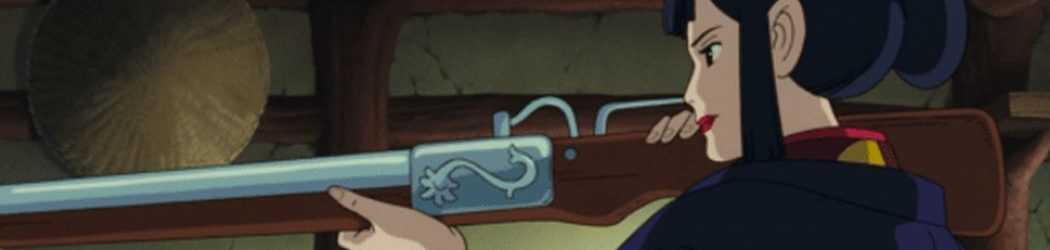

 If there’s absolutely nothing new here, it still manages to do what it does, fairly well. In the main, it’s light and fluffy, to be sure – though it has the capability to switch gears in an instant. For example, while this is by and large a Die Hard knock-off (from the “team edition” subcategory), I’ve not seen many films in that genre where a villain bludgeons a hostage to death with a hammer, because she reminded him of his mother. Just do not ask me to identify any of the players. This is another one of those films with the credits entirely in Chinese, very limited information available online, and subtitles which left a lot to be desired. Coherence, especially.
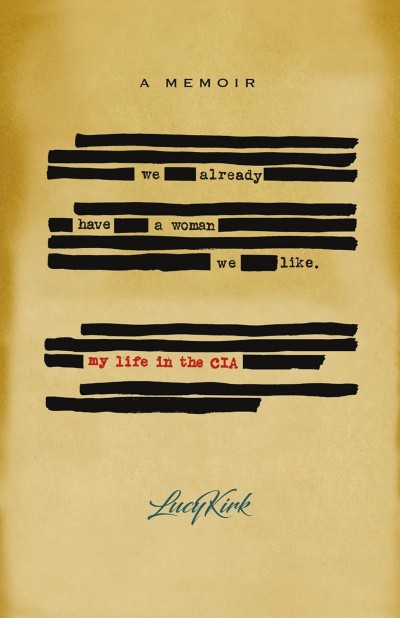 I suspect the issue here is partly my own expectations. When I read a memoir of somebody who spent more than three decades working for the Central Intelligence Agency, I was half-expecting a life somewhere between
  ★★★½
★★★½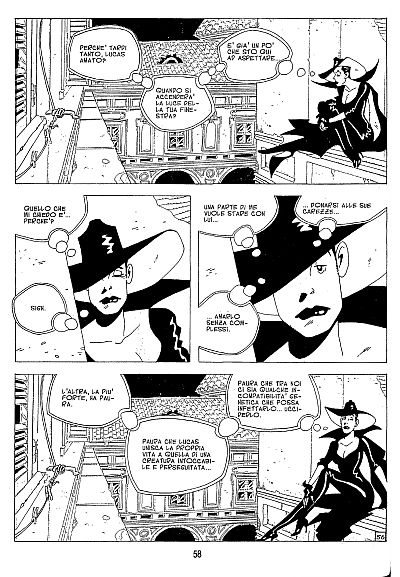 I would like to stress that these comics are not “violence-porn”, as I would personally categorize TV series like Game of Thrones. But they are definitely for a more adult readership, albeit with a bit of a juvenile mind. The drawings of a city that definitely reflect Argentina, and Cybersix, clothed in black leather while running and jumping from roof to roof with a parachute-sized cloak that would make comic anti-hero Spawn blush with envy, convey a respectable artistic style. Someone compared the comics and their 90s edginess to the works of Frank Miller (
 I think this idea was fueled by the fact that Cybersix – very much a beautiful female, who in the comics sleeps with Lucas and gives birth to a child – lives her cover identity as a male teacher. The explanation is not given in the animated show but can be found in the comics – which few read due to the language issues discussed above. While on the run, Cybersix found the identity card of one Adrian Seidelman, who looked similar to her and had died in a car crash. It’s a simpler, more logical explanation than declaring her transgender. Though, if people want to see certain narratives they can see them. She falls in love with school colleague Lucas, a biology teacher and reporter – obviously you need two jobs in Meridiana to make a living. He is good friends with her as Adrian, but she doesn’t dare reveal to him her true identity. Cybersix fears she will never find someone who loves her for what she is – a human experiment with superpowers, depending on a green liquid.