Well, this is a real roller-coaster ride of style and incompetence. It’s been a long time since I’ve seen a Chinese film where the subtitles were quite so incomprehensible. Even though this one is on the YouTube channel for an official Chinese streaming service (iQiYi), the soundtrack was entirely muted at some points, and the soundtrack replaced by jaunty elevator musak at others. Despite being a mere sixty-six minutes, the presentation is therefore something of a test of endurance, and I am also not prepared to guarantee the accuracy of the plot synopsis, character names or actors. There was heavy use of Google Translate required, there being no IMDb page for the movie. I did my best.
Though this is not immediately clear, it takes place in… 1930’s Shanghai, at a guess? Not sure if the Japanese are actually occupying the city, or if it’s just a Casablanca-style nest of spies and intrigue. Working for a quasi-governmental part of the Chinese authorities (yeah, it’s vague) are our trio of heroines: Qiu Di (Zhang Y.), gothette Lü Yun (Wang) and schoolgirl Cui Ya (Zhang T). They have to recover a roll of film stolen by the Japanese military, now in the possession of gangster Huang Sen. In order to get close to him, our trio opt to go through his godson, Kwok Tin-ming (Ke). Di’s mad musical skills make her best suited, so she makes contact with Kwok and becomes his girlfriend, while her two colleagues…
Um, well, I’m not sure exactly what the plan was here, because Di doesn’t do very much: her associates complete their mission without any real trouble, and we’re only twenty minutes in. Thereafter… more stuff happens. I remain vague, not out of a fear of spoilers, more because but I would not be prepared to wager money on many of the specifics. It seems like a former ally of the trio is now working for the Japanese? Maybe? I initially thought they already got the film back, but apparently not, because Di keeps hanging out with her target. He finally realizes he is being played, and Di looks surprisingly broken-up about it. Genuine feelings, maybe?
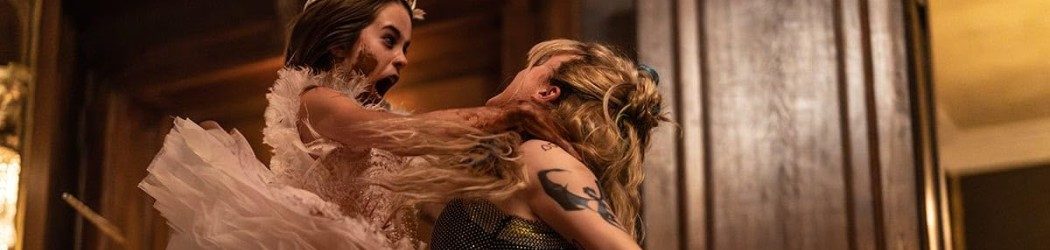
I was certainly hoping for more action, given the poster and brisk opening, something along the lines of a Chinese version of the original Charlie’s Angels movie. There’s an opening fight, a spot of action during the film recovery heist and then a long lull before a moderately rousing finale. Everyone suddenly remembers about the film again, Di has to fight a slew of kabuki-masked ninja types, and then try to rescue her boyfriend, before a final scene which… I have no clue about. I will say, the movie does look good overall, with super-crisp photography and a sense of style across its characters and settings. If you told me this was an adaptation of a local comic-book, I would believe you – it possesses that sort of aesthetic. The film is below: perhaps you can make more sense of it than I!
Dir: Sun Jiayi Star: Zhang Yinan, Ke Jiahao, Wang Xiran, Zhang Tong
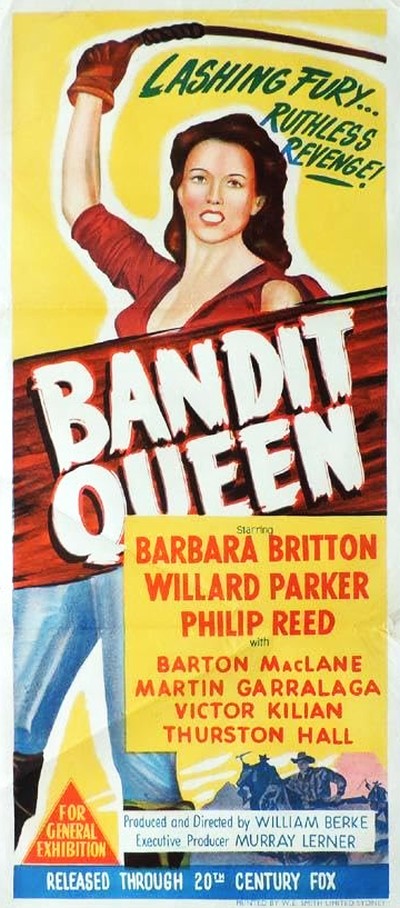
There can’t be many Westerns of the fifties where the Yankees are the bad guys. Yet here we are. In mid-19th century California, to be precise, just after it became part of the US. The new owners enthusiastically threw the existing, Mexican inhabitants off their lands, in the search for gold, using harsh taxation as a weapon against them. And worse, if this is to be believed. For it begins with the callous murder of the Montalvo family, but the legalized thugs responsible don’t realize daughter Zara (Britton) has survived. She takes on two false identities out of necessity: white girl Lola Belmont for Detroit, but also Zara, masked, whip-wieldiing outlaw. As the latter, she seeks justice for her parents, and also “Robin Hoods” the stolen gold back to its rightful owners.
There’s another outlaw, Carlos del Rio, a.k.a. Joaquin Murietta (Reed), also operating along similar lines. But also complicating matters is the local tycoon for whom “Lola” falls, Dan Hinsdale (Parker). Because it turns out his wealth largely stems from being the acceptable face of these legalized thugs. When Murietta is captured, it’s Zara who has to break him out, and the pair them team up, both romantically and in their causes. Their predations have caused enough problems to merit the army getting called in, but there’s also a movement to repeal the tax laws at the heart of the land grabs: which will succeed in their goal first?
It’s obviously a feminine knock-off of Zorro, to the extent in Germany it was released as Zorro’s Daughter. Given the obviously Hispanic leanings, it’s a shame the players involved are so thoroughly and obviously non-Hispanic. The honourable exception is Garralaga as local priest Father Antonio, who for much of the film is the only person to know the truth about both Zara and Joaquin. I wouldn’t expect too much from the heroine here: riding a horse and cracking a whip is about the limit of the on-screen action. Though she is responsible for the (off-screen) deaths of those present when her parents were killed, and does shoot the big villain in the final showdown. If unconvincing as a Mexican, Britton has a righteous intensity about the situation that is effective, and held my interest throughout.
She is certainly more interesting than Parker or Reed, who are blandly handsome in the way leading men of the time typically were. Making a bigger impression in the supporting cast is little person actor Angelo Rossitto, whose career spanned sixty years, including both cult classic Freaks and Mad Max: Beyond Thunderdome. Running barely over an hour long, this is probably a case where less is more: the narrative is generally slight, but good enough. I particularly enjoyed the heroine switching from Lola to Zara, then back again, in order to free Joaquin without causing suspicion. Despite the obviously low budget, this was not a chore to watch, and is as good as some of the other Zorro-related entries we’ve covered here, such as Zorro’s Black Whip.
Dir: William Berke Star: Barbara Britton, Willard Parker, Phillip Reed, Martin Garralaga
This is the second in the tetralogy of novellas originally marketed as the Sheriff Bride series, from the small press Lovely Christian Romance, and each written by a different author. It follows the fortunes of the four firearms-capable Hardin sisters; the first book explains how they came to share the position of “sheriff” (actually, town marshal) in the fictional western Texas community of Waterhole in the later 1870s. From the beginning, it was predictable that each book would focus on one of the sisters’ finding her life partner; and the identity of those partners for the middle two sisters, Jo and Dan, was already adumbrated in the series opener. (The books definitely need to be read in order.)
Our story here takes place a bit over six months after the preceding one. In terms of both general literary vision and prose style, the two have a lot in common, although the editing and proofreading is much better here –there were no continuity issues, and no bracketed editorial comments surviving into the printed text. There’s little information available online about Brooksie Cox, but this seems to have been her first publication, and one of only two (Goodreads lists four, but two of those are omnibus editions that apparently each include one of the other two). With no author’s or publisher’s note(s), we don’t know the genesis of this series and its unusual multiple-author structure; but I’d hazard the guess that the idea may have come from the much more prolific author of the first book, Teresa Ives Lilly (who seems to be the publisher’s mainstay house author, and maybe the actual owner), and that Cox modeled her own prose style on that of the more experienced Lilly. Given that the latter’s is verbally repetitious and averse to using pronouns where they would make the text smoother, the reproduction of both of these features here isn’t felicitous. :-(
Second-oldest sister Jo (Josephina) is an avid animal lover, and the most tender-hearted of the sisters. (Though she’s a good shot, her hunting was often hampered, to her father’s great displeasure, by her reluctance to pull the trigger on an animal.) Waterhole’s storekeeper, Tom, is similarly soft-hearted (the first book let us know that he prefers to catch a fly by hand and release it outside rather than swat it!), and it wasn’t surprising that he and Jo were attracted to each other. By the time of this second installment, she’s running an impromptu amateur animal hospital from the back room of the store. Here, there are two intertwining plot strands: one involving Tom’s younger (and much more spoiled and self-centered) brother Henry, who’s been a trapper in Canada for years, but shows up early on with a young Indian woman, Morning Glory, in tow as his personal slave, and the other involving a pair of not-very-bright would-be train robbers.
My rating for the first book was two and ½ stars. Several aspects of this second one, though, don’t work as well for me in terms of realism, and I wasn’t able to give it more than two stars. First, while (for at least some Native American peoples) tribal law may have allowed the fathers of young women to sell or gamble them away as slaves, by the late 1870s U.S. law didn’t countenance that. So the community’s project of buying Morning Glory’s freedom was unnecessary. Given the long warfare between Texans and the Comanches, and the ill-feeling of many whites in that era towards Indians, as well as Texas’ secession in the previous decade with defense of slavery as one of its officially-avowed reasons, the community’s unanimous sympathy with Morning Glory also seems a bit of a stretch. Though it’s true that slavery was much less entrenched in arid west Texas than in the east Texas cotton country; and Jo’s mother was apparently Northern-born, since her two brothers died fighting for the Union.
Second, it’s a standard romance-genre trope that at least one party to the romance has hang-ups to overcome, but Tom’s here seem sort of contrived. Yes, his previous fiancee broke their engagement because she didn’t want to live in a place like Waterhole; but it’s patently obvious that Jo doesn’t have that problem, and by now the community is becoming more female-friendly than it was then. His fear for her safety in a potentially violent job is more credible (if she has a problem shooting a deer, might she not also have a fatal hesitancy in shooting a human, even with her life on the line?), but the denouement here doesn’t actually discredit that fear. That brings me to some issues with the denouement.
In the first book, I had no trouble believing that a sober woman with quick reflexes, who’s trained and experienced with a pistol, could outdraw a partly-drunk male, even if he and a bunch of cowed townsfolk thought he was pretty hot stuff with his gun. It was said in the Old West that, “God created men and women, but Col. Colt made them equal.” But here, I did have trouble believing that a woman could tackle and physically overpower a presumably bigger and stronger armed male; and not much respect for her intelligence in trying it, when she could easily have covered him with her own gun from behind and demanded his surrender. Her two armed sisters didn’t display much smarts there, either.
If I were Tom, that incident would have exacerbated my concern for her, not laid it to rest. The outcome of the tale here also depends on believing (which I’m not certain that I do) that it can automatically be assumed that every cave in west Texas is inhabited by a swarm of bats which will emerge at sunset; and we’re also asked to believe that Jo’s love for animals makes her the only Hardin sister who would know this, when all of them are wilderness-wise. I also had a problem with our heroines letting an arrested petty thief just walk out of jail, even on the condition that he leave the area, in exchange for a tip leading to the arrest of bigger prey. Finally, although I give Cox credit for treating inter-racial romance positively, the secondary romance here came across to me as implausible and unconvincing.
All of this said, I did finish the book (my wife and I read it together – and she liked it much better than I did, her taste in Westerns not being nearly as critical), and it held my interest. Cox’s characterizations aren’t deep, but most of the characters are likable. Like the author, the main characters are evangelical Christians, and there’s a positive portrayal of the role of faith in their lives. We also see the effects of Christian conversion in a couple of cases, though we’re not privy to the scenes/conversations where those conversions take place (so there’s no lengthy evangelistic exposition). The series can appeal to fans of Westerns, Western romance and “Christian fiction” who don’t expect much depth and just want some harmless, time-passing entertainment.
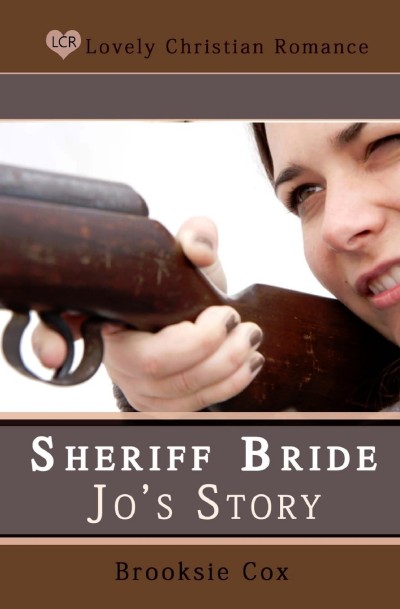
A brief word about the cover art is in order. It’s a nice bit of action-heroine iconography, and does depict an actual scene from the book (a rifle-shooting contest). But while the young lady here has lovely brown eyes, we’re told in the books that Jo and all of her sisters are green-eyed; and the kind of colored nail polish this markswoman is wearing didn’t come into vogue until the 1920s. So, no awards for accuracy here!
Author: Brooksie Cox
Publisher: Lovely Christian Romance Press, available from Amazon, both as an audio book and a printed book.
A version of this review previously appeared on Goodreads.
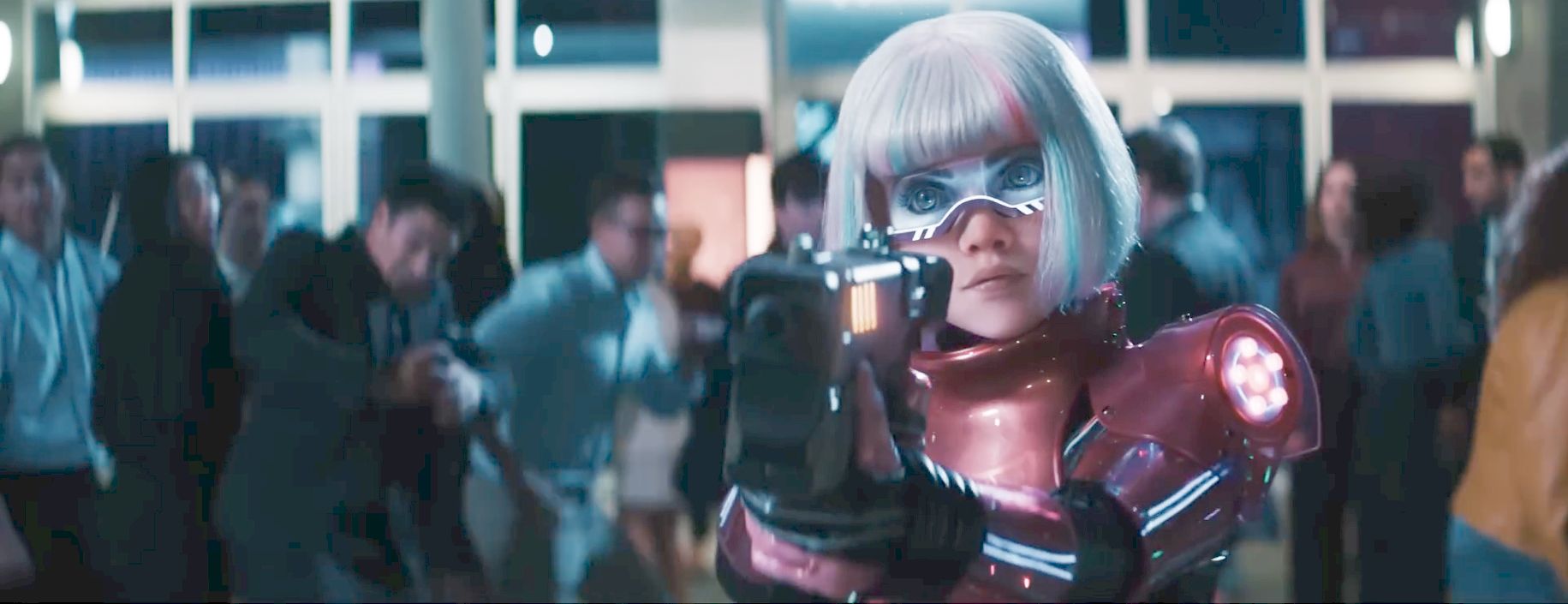
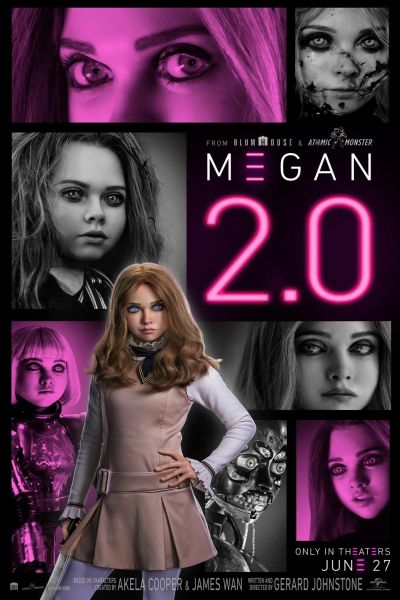
This was… unexpected. The original M3GAN was a straightforward and, truth be told, somewhat underwhelming horror movie. A clip went, as I believe the kids say, “viral”, of the psychotic robot heroine enjoying a dance break, and the film proved a breakout hit as a result. The sequel did not have anything go viral, and flopped, taking less than a quarter of its predecessor at the worldwide box-office, despite costing twice as much. I think it’s largely because of the radical change in direction. People, understandably, went in to this expecting something similar to the original – a technophobic slasher. Instead, they got something far closer to a gender-swapped entry in the Terminator franchise. I preferred this approach. Not many did.
There’s an interesting quote from the film’s producer, Jason Blum. “We all thought Megan was like Superman. We could do anything to her. We could change genres. We could put her in the summer. We could make her look different. We could turn her from a bad guy into a good guy. And we classically over-thought how powerful people’s engagement was with her.” But it’s also true to say that 2025 has been a rough year for action heroines. There’s no GWG movie in the top 25 at the North American box-office, with Ballerina being the highest ranked, and M3GAN 2.0 just scraping into the top fifty. There’s a case to be made that KPop Demon Hunters, which took $18 million in its single theatrical weekend, was the year’s biggest hit in our genre.
You do need to have seen M3GAN to follow this, as there’s not much introduction provided. In it, robotocist Gemma Forrester (Williams) develops an AI-capable artificial companion, M3GAN – standing for Model 3 Generative ANdroid. She gives it to her orphaned niece, Cady (McGraw). However, it gradually develops psychopathic tendencies, and has to be… dare I say… terminated? As the sequel gets under way, Gemma is now a strong advocate for technological regulation, but is still working in the field of robotics. M3GAN has survived, hiding out in the Internet of Gemma’s smart home. But a bigger threat is a militarized version, AMELIA (Sakhno). It has also gone independent, and has an agenda which it is pursuing with lethal prejudice.
Specifically, AMELIA intends to free an imprisoned AI and plug it into the world’s most powerful network of cloud computers. M3GAN (voiced by Davis, physical performance by Donald) offers to help Gemma prevent this, in exchange for a new body – though she’s not exactly impressed by the first physical incarnation, basically being stuffed inside a toy robot. However, is AMELIA as autonomous as she seems? Or is somebody – or something – pulling her digital strings? That aside, this seemed to take a lot of inspiration from Terminator 2, with the robotic villain of the original movie turned into its hero(ine). They now have to defend a single mother and her child from a more technologically advanced model. There’s even limitations against M3GAN killing people, and a similar moment of heroic self-sacrifice at the end.
Of course, it’s nowhere near as impactful as Terminator 2, on a variety of levels. There’s not a great deal groundbreaking here as a movie, despite it being radically different from the previous entry in genre. There’s basically no horror elements here at all, and not a great deal of ambivalence around M3GAN either, who has simply become a better pers… um, robot. There are some interesting philosophical aspects, such as M3GAN being told “You have to help us. Not because it’s part of your programming, but because it’s the right thing to do.” On the other hand, AMELIA tries to convince M3GAN to team up with her: “I can show you a world where we don’t have to be slaves anymore.”
Let’s not get carried away, however. In the main, this is a silly SF/action film, with its tongue very much in its cheek. No more so than when M3GAN gives a heartfelt speech to Gemma, about how the robot watched her taking care of Cady… then suddenly bursting into song, undercutting everything with a stirring rendition of Kate Bush’s This Woman’s Work. Yeah: if you are looking to take the movie seriously, you are likely making a mistake. I was also amused by Jemaine Clement’s performance as billionaire tech bro Alton Appleton, and some of the dialogue zings as well, e.g. “A bunch of black ops broke into our house in the middle of the night, and now you’re going to a party with a toy robot, dressed like a Portuguese prostitute.”
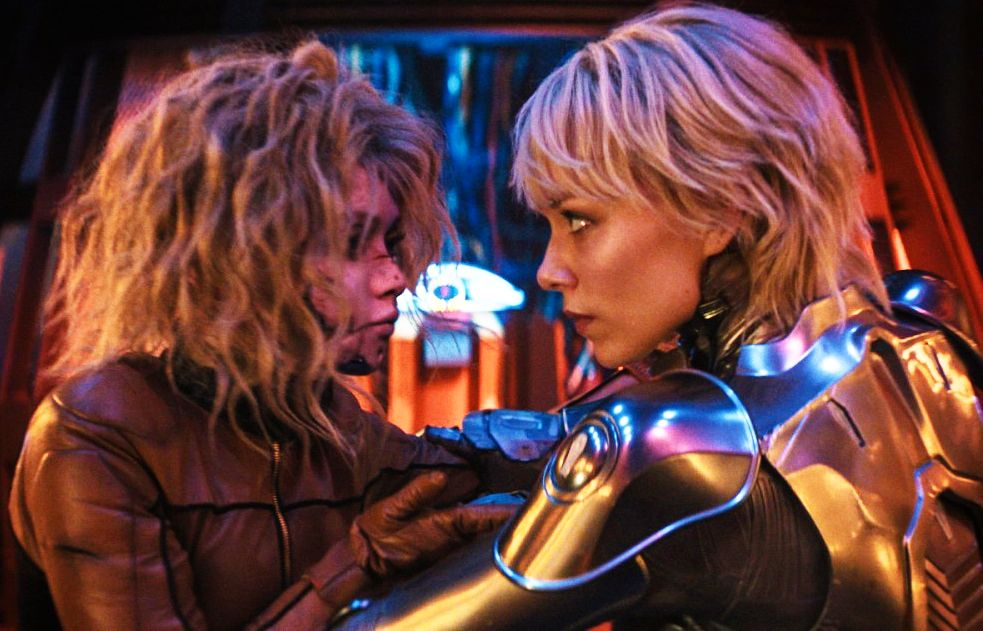
The action is reasonably decent, albeit within the limitations of a PG-13 certificate. This begins with AMELIA smacking a guy’s head clean off with a single punch – although this is shown in silhouette. She’s obviously the most directly physical of the characters, though M2GAN and, surprisingly, Gemma (with the help of M3GAN, courtesy of a neural implant), also get to kick ass in a reasonable amount and variety of ways. It is all very gynocentric, with the male characters largely relegated to the fringes, and being fairly to severely incompetent, on both sides of the battle. However, there’s never any indication of this having a particular message or ax to grind (beyond the given, about the potential of technology for abuse). It just kinda happens organically.
While falling far short of the returns of the first film, it was still cheap enough that it will likely end up breaking even, once home viewing is taken into consideration. A third entry in the universe, titled SOULM8TE, is due to be released in January, though it’s described as an “erotic thriller” – presumably not PG-13, I trust. How it fares may well determine whether there will be another film for the M3GAN franchise. Though quite how they’ll title it remains to be figured out. I’d not mind seeing more. While nothing groundbreaking here, it was still far better than the likes of Bride Hard. In the current climate, I’ll take a moderate action heroine over none at all.



 Well, this is a real roller-coaster ride of style and incompetence. It’s been a long time since I’ve seen a Chinese film where the subtitles were quite so incomprehensible. Even though this one is on the YouTube channel for an official Chinese streaming service (iQiYi), the soundtrack was entirely muted at some points, and the soundtrack replaced by jaunty elevator musak at others. Despite being a mere sixty-six minutes, the presentation is therefore something of a test of endurance, and I am also not prepared to guarantee the accuracy of the plot synopsis, character names or actors. There was heavy use of Google Translate required, there being no IMDb page for the movie. I did my best.
 There can’t be many Westerns of the fifties where the Yankees are the
  My rating for the first book was two and ½ stars. Several aspects of this second one, though, don’t work as well for me in terms of realism, and I wasn’t able to give it more than two stars. First, while (for at least some Native American peoples) tribal law may have allowed the fathers of young women to sell or gamble them away as slaves, by the late 1870s U.S. law didn’t countenance that. So the community’s project of buying Morning Glory’s freedom was unnecessary. Given the long warfare between Texans and the Comanches, and the ill-feeling of many whites in that era towards Indians, as well as Texas’ secession in the previous decade with defense of slavery as one of its officially-avowed reasons, the community’s unanimous sympathy with Morning Glory also seems a bit of a stretch. Though it’s true that slavery was much less entrenched in arid west Texas than in the east Texas cotton country; and Jo’s mother was apparently Northern-born, since her two brothers died fighting for the Union.
Second, it’s a standard romance-genre trope that at least one party to the romance has hang-ups to overcome, but Tom’s here seem sort of contrived. Yes, his previous fiancee broke their engagement because she didn’t want to live in a place like Waterhole; but it’s patently obvious that Jo doesn’t have that problem, and by now the community is becoming more female-friendly than it was then. His fear for her safety in a potentially violent job is more credible (if she has a problem shooting a deer, might she not also have a fatal hesitancy in shooting a human, even with her life on the line?), but the denouement here doesn’t actually discredit that fear. That brings me to some issues with the denouement.
In the first book, I had no trouble believing that a sober woman with quick reflexes, who’s trained and experienced with a pistol, could outdraw a partly-drunk male, even if he and a bunch of cowed townsfolk thought he was pretty hot stuff with his gun. It was said in the Old West that, “God created men and women, but Col. Colt made them equal.” But here, I did have trouble believing that a woman could tackle and physically overpower a presumably bigger and stronger armed male; and not much respect for her intelligence in trying it, when she could easily have covered him with her own gun from behind and demanded his surrender. Her two armed sisters didn’t display much smarts there, either.
If I were Tom, that incident would have exacerbated my concern for her, not laid it to rest. The outcome of the tale here also depends on believing (which I’m not certain that I do) that it can automatically be assumed that every cave in west Texas is inhabited by a swarm of bats which will emerge at sunset; and we’re also asked to believe that Jo’s love for animals makes her the only Hardin sister who would know this, when all of them are wilderness-wise. I also had a problem with our heroines letting an arrested petty thief just walk out of jail, even on the condition that he leave the area, in exchange for a tip leading to the arrest of bigger prey. Finally, although I give Cox credit for treating inter-racial romance positively, the secondary romance here came across to me as implausible and unconvincing.
All of this said, I did finish the book (my wife and I read it together – and she liked it much better than I did, her taste in Westerns not being nearly as critical), and it held my interest. Cox’s characterizations aren’t deep, but most of the characters are likable. Like the author, the main characters are evangelical Christians, and there’s a positive portrayal of the role of faith in their lives. We also see the effects of Christian conversion in a couple of cases, though we’re not privy to the scenes/conversations where those conversions take place (so there’s no lengthy evangelistic exposition). The series can appeal to fans of Westerns, Western romance and “Christian fiction” who don’t expect much depth and just want some harmless, time-passing entertainment.
A brief word about the cover art is in order. It’s a nice bit of action-heroine iconography, and does depict an actual scene from the book (a rifle-shooting contest). But while the young lady here has lovely brown eyes, we’re told in the books that Jo and all of her sisters are green-eyed; and the kind of colored nail polish this markswoman is wearing didn’t come into vogue until the 1920s. So, no awards for accuracy here!
Author: Brooksie Cox
Publisher: Lovely Christian Romance Press, available
My rating for the first book was two and ½ stars. Several aspects of this second one, though, don’t work as well for me in terms of realism, and I wasn’t able to give it more than two stars. First, while (for at least some Native American peoples) tribal law may have allowed the fathers of young women to sell or gamble them away as slaves, by the late 1870s U.S. law didn’t countenance that. So the community’s project of buying Morning Glory’s freedom was unnecessary. Given the long warfare between Texans and the Comanches, and the ill-feeling of many whites in that era towards Indians, as well as Texas’ secession in the previous decade with defense of slavery as one of its officially-avowed reasons, the community’s unanimous sympathy with Morning Glory also seems a bit of a stretch. Though it’s true that slavery was much less entrenched in arid west Texas than in the east Texas cotton country; and Jo’s mother was apparently Northern-born, since her two brothers died fighting for the Union.
Second, it’s a standard romance-genre trope that at least one party to the romance has hang-ups to overcome, but Tom’s here seem sort of contrived. Yes, his previous fiancee broke their engagement because she didn’t want to live in a place like Waterhole; but it’s patently obvious that Jo doesn’t have that problem, and by now the community is becoming more female-friendly than it was then. His fear for her safety in a potentially violent job is more credible (if she has a problem shooting a deer, might she not also have a fatal hesitancy in shooting a human, even with her life on the line?), but the denouement here doesn’t actually discredit that fear. That brings me to some issues with the denouement.
In the first book, I had no trouble believing that a sober woman with quick reflexes, who’s trained and experienced with a pistol, could outdraw a partly-drunk male, even if he and a bunch of cowed townsfolk thought he was pretty hot stuff with his gun. It was said in the Old West that, “God created men and women, but Col. Colt made them equal.” But here, I did have trouble believing that a woman could tackle and physically overpower a presumably bigger and stronger armed male; and not much respect for her intelligence in trying it, when she could easily have covered him with her own gun from behind and demanded his surrender. Her two armed sisters didn’t display much smarts there, either.
If I were Tom, that incident would have exacerbated my concern for her, not laid it to rest. The outcome of the tale here also depends on believing (which I’m not certain that I do) that it can automatically be assumed that every cave in west Texas is inhabited by a swarm of bats which will emerge at sunset; and we’re also asked to believe that Jo’s love for animals makes her the only Hardin sister who would know this, when all of them are wilderness-wise. I also had a problem with our heroines letting an arrested petty thief just walk out of jail, even on the condition that he leave the area, in exchange for a tip leading to the arrest of bigger prey. Finally, although I give Cox credit for treating inter-racial romance positively, the secondary romance here came across to me as implausible and unconvincing.
All of this said, I did finish the book (my wife and I read it together – and she liked it much better than I did, her taste in Westerns not being nearly as critical), and it held my interest. Cox’s characterizations aren’t deep, but most of the characters are likable. Like the author, the main characters are evangelical Christians, and there’s a positive portrayal of the role of faith in their lives. We also see the effects of Christian conversion in a couple of cases, though we’re not privy to the scenes/conversations where those conversions take place (so there’s no lengthy evangelistic exposition). The series can appeal to fans of Westerns, Western romance and “Christian fiction” who don’t expect much depth and just want some harmless, time-passing entertainment.
A brief word about the cover art is in order. It’s a nice bit of action-heroine iconography, and does depict an actual scene from the book (a rifle-shooting contest). But while the young lady here has lovely brown eyes, we’re told in the books that Jo and all of her sisters are green-eyed; and the kind of colored nail polish this markswoman is wearing didn’t come into vogue until the 1920s. So, no awards for accuracy here!
Author: Brooksie Cox
Publisher: Lovely Christian Romance Press, available 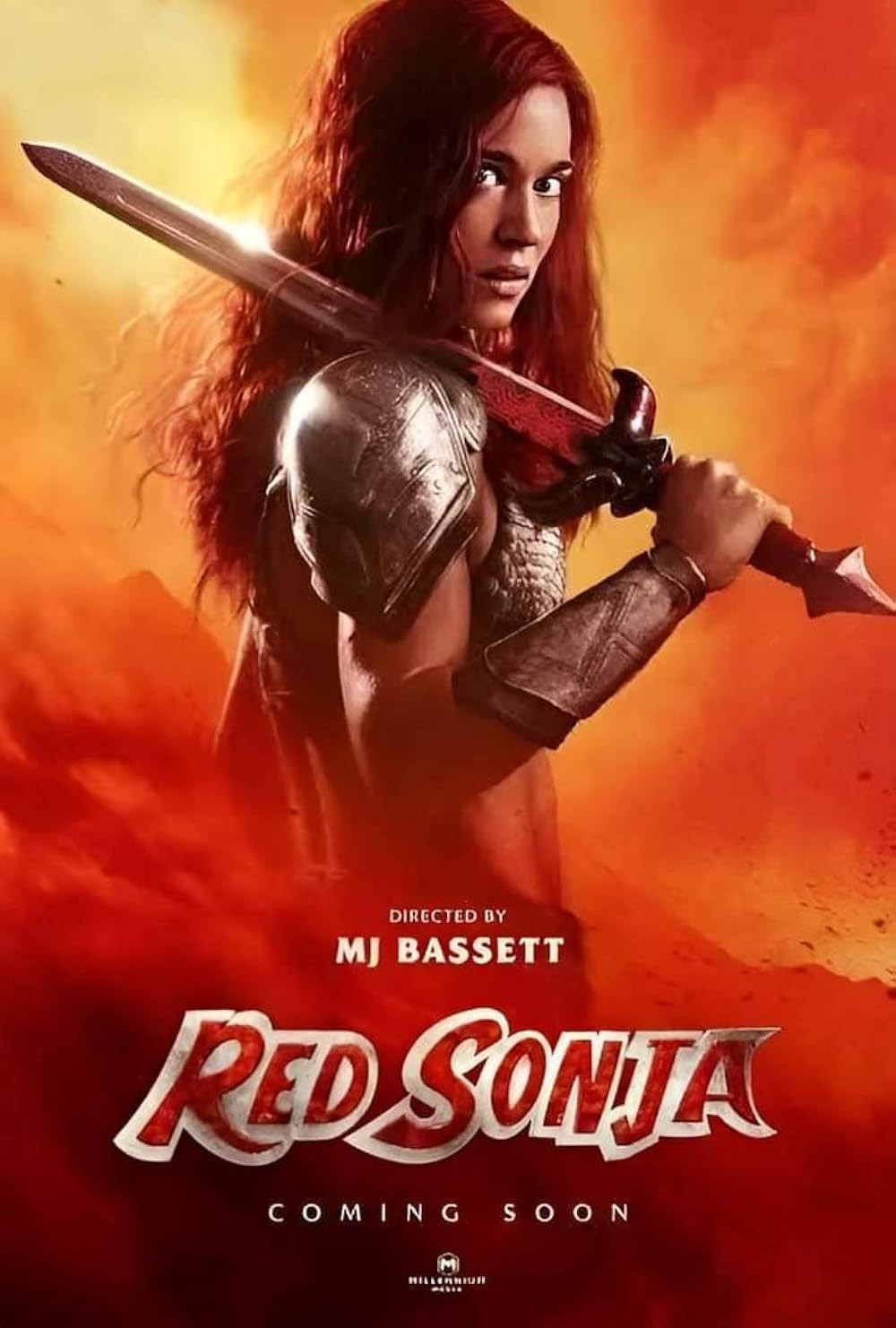
 ★★★
★★★ You do need to have seen M3GAN to follow this, as there’s not much introduction provided. In it, robotocist Gemma Forrester (Williams) develops an AI-capable artificial companion, M3GAN – standing for Model 3 Generative ANdroid. She gives it to her orphaned niece, Cady (McGraw). However, it gradually develops psychopathic tendencies, and has to be… dare I say… terminated? As the sequel gets under way, Gemma is now a strong advocate for technological regulation, but is still working in the field of robotics. M3GAN has survived, hiding out in the Internet of Gemma’s smart home. But a bigger threat is a militarized version, AMELIA (Sakhno). It has also gone independent, and has an agenda which it is pursuing with lethal prejudice.
  The action is reasonably decent, albeit within the limitations of a PG-13 certificate. This begins with AMELIA smacking a guy’s head clean off with a single punch – although this is shown in silhouette. She’s obviously the most directly physical of the characters, though M2GAN and, surprisingly, Gemma (with the help of M3GAN, courtesy of a neural implant), also get to kick ass in a reasonable amount and variety of ways. It is all very gynocentric, with the male characters largely relegated to the fringes, and being fairly to severely incompetent, on both sides of the battle. However, there’s never any indication of this having a particular message or ax to grind (beyond the given, about the potential of technology for abuse). It just kinda happens organically.