



★★
“Suffering from a bit of an identity crisis.”
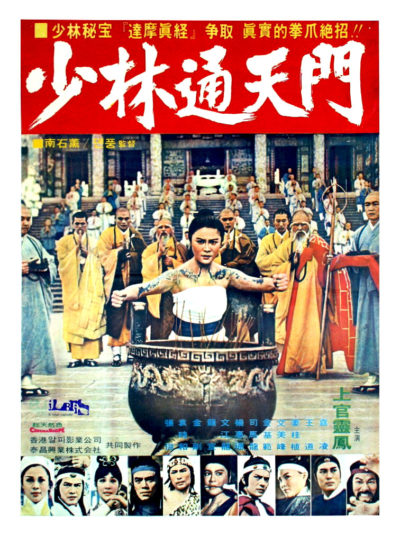 This Taiwanese kung-fu potboiler just about manages to sustain interest for an hour, before losing the plot (literally, and such as it was to begin with) down the stretch. It begins with ten martial arts masters stealing an omnibus edition of fighting manuals from the local Shaolin temple. Trying to get entry, and failing, because they won’t admit women, is Shi Fu Chun (Kwan). With the help of former head priest Lin Chiu (Chan), who still lives nearby, she is taught a slew of skills, and ends up assigned the task of recovering the purloined books, and restoring the temple’s honour. Oh, except the “positive kung-fu” learned is causing Shi Fu to transition into a man. So she/he (inexplicably, the 1977 film does not provide us with preferred pronouns…) needs to find and learn some “negative kung-fu” stat, to counter the process.
This is mostly standard stuff, with the novice being trained by the master, before going out into the world and putting her skills to the test. Except it feels like the movie was edited down from a four-hour version, as the story jumps from Shi having about three of the ten parts, to her heading back to the temple with them all. The heads of the ten clans then show up, and it all becomes almost incomprehensible. About the only part that I am certain about, had them forming what looked disturbingly like a kung-fu version of the Human Centipede [now, that’s a movie I would… if not perhaps pay to see, certainly consider downloading from a dodgy website]. I think one of the clan leaders tries to fight his way into the temple, defeating various occupants in different styles, leading up to a fight again Lin. He faked his own death to get Shi accepted, and since then, has apparently been sitting around the temple, covered in gold paint, because that’s what they do to dead ex-leaders.
There are a couple of bits which are kinda cool, such as Shi having to accept the branding of the temple, carried out through her carrying the red-hot cauldron depicted on the poster. One of her skills involves the ability to extend her arms and legs to remarkable length, which leads to some interesting fights. However, the old gender re-assignment plot may well reach new depths of implausibility. Somehow, this is repeatedly mistaken for a man. Another weirdness (at least, to contemporary Western viewers) is the good luck symbol on the clothing worn by the heroine and her allies. Yep, it’s the ol’ Buddhist swastika. Beyond such trivial concerns, the main problem though, is that most of the fights are pedestrian and uninteresting. The makers even bring Judy Lee in, and don’t allow her to get into action. This shows a severe misunderstanding of how things should be done, and if you pass on this, you’ll not be missing much.
Dir: Cheng Hou
Star: Polly Shang Kwan, Chan Wai-Lau, Che Chi-Sang, Judy Lee
a.k.a. Lady Wu Tang or Shaolin Tamo Systique
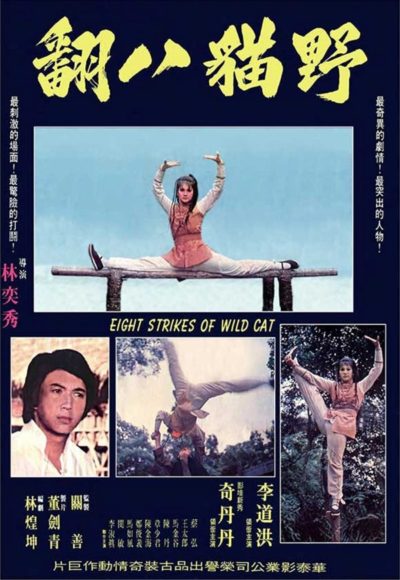 I guess this is, at its heart, about the quest for a treasure map that has been torn into two pieces. Though you could be forgiven for not really noticing, as most of the cast seem to forget about it for the bulk of the running time. The heroine is Shao Wa (Chi), whose father is killed by the Three Rats in their quest for the map. She ends up being punted off a cliff and presumed dead by them. Naturally – it’d be a short movie otherwise – she’s not as dead as they think. She’s rescued by the inevitable kung-fu master and his annoying sidekick, Lee Ta Fa (Hung), who nurse her back to health, and give her the skills necessary to beat the Three Rats.
 I was pleasantly surprised when this random kung-fu film found Tubi (under the Silver Fox title) turned out to be by the creator of
 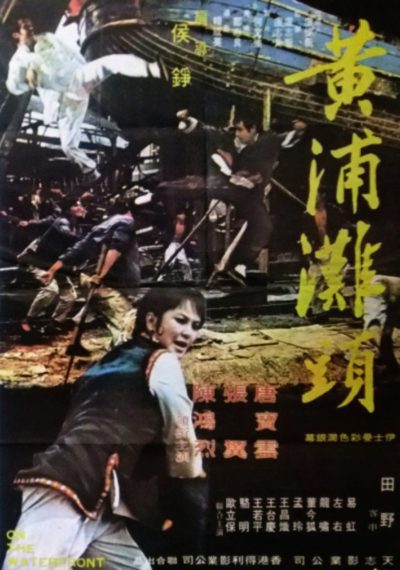 Yeah, I think if I’d seen this under the alternate title of On the Waterfront, I might well have passed it by. Though that is probably a slightly more accurate description of the contents here, even allowing for the complete absence of Marlon Brando. [At least we didn’t have to deal with the expectations set by the Italian title, which translates as “The merciless hand of Bruce Lee strikes again”!] It takes place around the Whampoa wharves in Shanghai, where various crime families are jostling for position and control, with varying degrees of morality e.g. whether or not they approve of drugs and/or sex trafficking as a means to make money. Particularly of note here are Red Rose (Tang) and Zhou (Chang), who eventually end up allies against their common enemy (Chen).
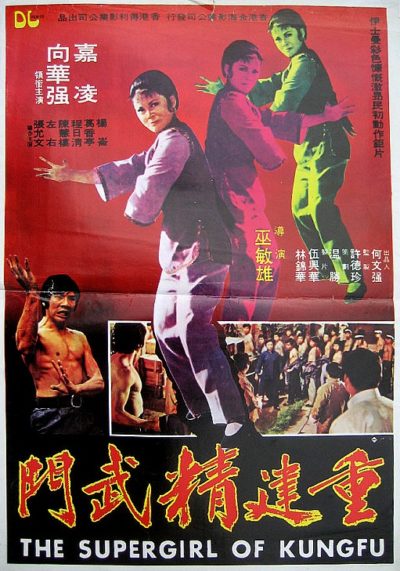 This is another one of an apparently infinite series of kung-fu films, set during the Japanese occupation of China that took place just before World War II. The heroine is Little Flower (Lee), who gets given a death-bed mission by her martial arts master father: return to Shanghai, and lead his students at the Ching Wu Men school against the occupying Japanese forces. Except, on arriving, Flower finds the school disbanded by force, and its disciples scattered to the winds. She begins to hunt the top students, Rock (Yang) and Mercury – the latter has gone particularly deep into hiding after having killed twenty Japanese soldiers in one night. But Flower’s own activities, protecting the poor, bring her to the attention of the Japanese authorities, because they think she’s part of the rebels, as well as a local Chinese cop (Heung).
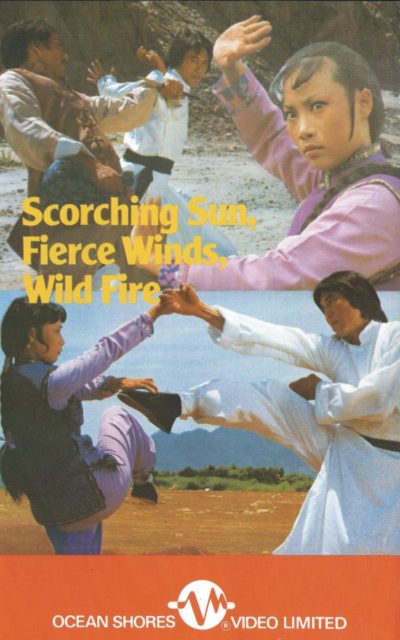 The first thing which will hit you about this 1979 Taiwanese co-production is the utterly shameless way it hijacks John Williams’s soundtrack to Star Wars. 93 minutes later, as the end credits roll, accompanied by more unauthorized liftage… That’s probably still going to be the main element of this you will remember. For the rest is largely a confusingly-plotted and not very well executed bit of chop socky. Despite Angela Mao’s presence, second on the list of participants, she is a long way behind the main character, in terms of both screen time and action.
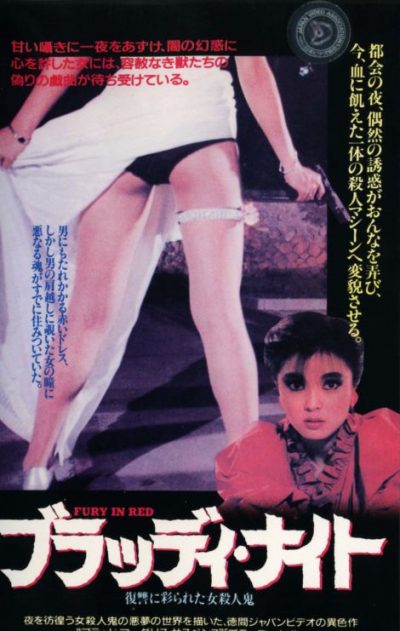 Make no mistake,
 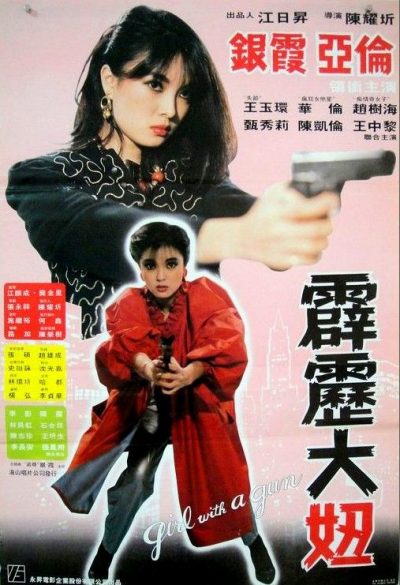 Many of the changes are relatively small – tweaks, rather than significant changes. For instance, rather than the landlady having a dog, Liang herself has a cat. Though in a morbid twist, she feeds her kitty some of the remnants of her victim. The gang attack is preceded by a battle between two different groups, both of whom have tracked Liang to a deserted Hong Kong park: the winners get… Well, gunned down by her. There is,
 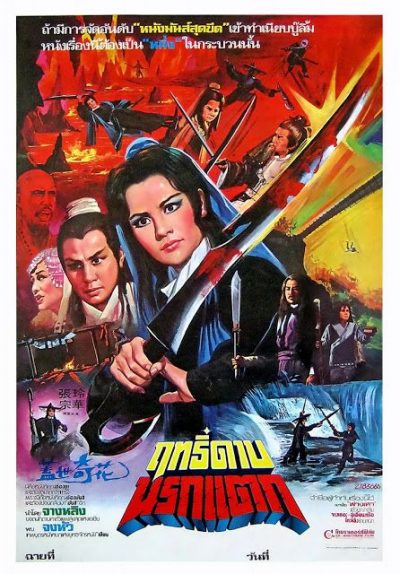 Another solid Pearl Chang movie – despite being mis-labelled as Wolf Devil Woman 3, it is in now way related to
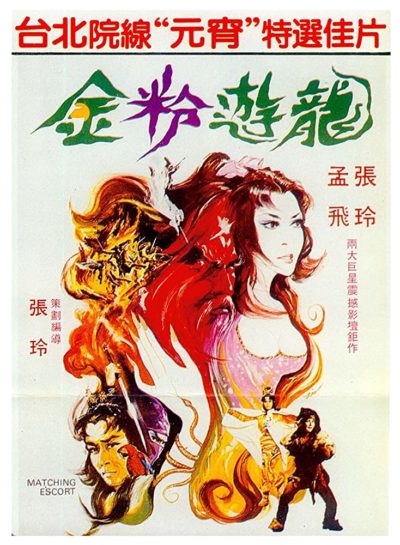
 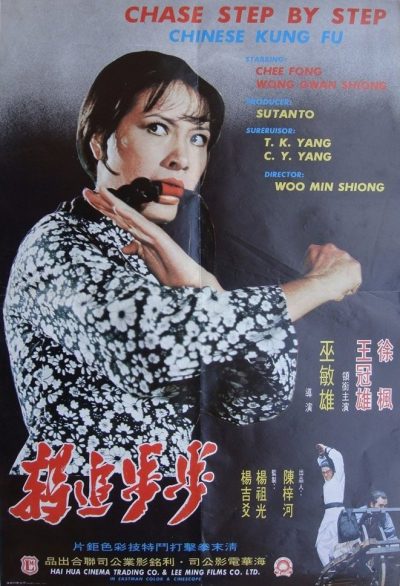 A solid if unremarkable Taiwanese kung-fu film, it’s set in 1887 and focuses on a mission to deliver a thousand taels of gold, which are intended for use in drought relief by another province. (Presumably) To avoid attracting unwanted attention, the delivery is kept very low-key. In fact, only two people are assigned as security for the gold: circus acrobats Lin Ying (Hsu) and Sao Wu (Chow). However, word apparently leaks out, and on their journey, they’re almost perpetually under attack.
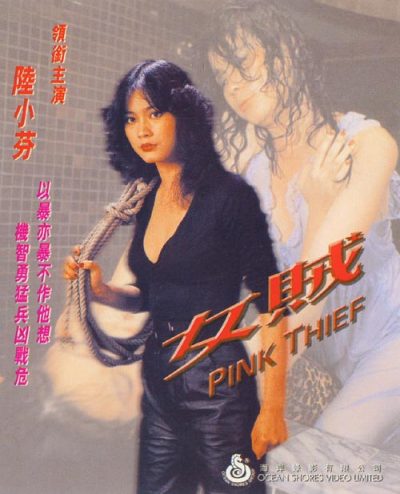 Lan Hsiao-Tieh (Lu) is one of four illegal immigrants to Hong Kong, who manage to escape from the human traffickers bringing them to the colony – albeit after Lan has been raped by one. She and her friends just about manage to eke out a living on the edge of society, which treats them very unkindly in comparison to legal residents: for example, working as a coolie, they get only a fraction of the wages. As a result, they’re forced into criminal activity. One of the victims of the resultant pick-pocketing is the feared Chief Detective Lu (Lui), who tracks down the gang and makes them an offer: go undercover and help in his investigation of a Triad gang called the Eagles, in exchange for legal status. Lan is doubtful – until she realizes that one of the targets is the man who raped her. With the assistance of training from a retired thief, Lan is inserted as the moll of the gang’s leader, Hao (Tien Feng).