

★★
“Gasping for air.”
 I wanted to like this more than I did: director Skiba is a veteran of the Arizona film scene, though his other film previously covered here, .357: Six Bullets for Revenge, left a bit to be desired. This is slightly better; but only slightly. The heroine is Zoe (Croden), a mixed martial artist who is trying to make it big in Las Vegas. Her dad (Van Dien) is back in Arkansas, and crosses paths with Russian mobsters, led by Natalia (McCrea). It doesn’t end well. Let’s just say, if you’re watching this for Van Dien, you’ll quickly be underwhelmed. Zoe leaves Las Vegas, seeking justice for her father – naturally, the only way to get to Natalia is through her convenient underground fighting circuit…
It’s as if the writers were determined to check off every cliche of the genre in 95 minutes. If that was indeed their aim: well done. Outside of having a female protagonist, there is almost nothing new or of interest here, the story unfolding exactly as you’d expect after Van Dien collects his cheque. I think peak eye-rolling was unlocked when Zoe “discovers” a video letter left by her father. Fortunately, this narrative conceit was too much even for Skiba, and is quickly discarded. Even the depiction of the underground arena was painful, with blaring music from a DJ, and people doing that “waving their fists in the air during fights” thing, that you only see anyone do in movies.
All of the above would likely be fine, if the fights were any good, as Lady Bloodfight proved, overcoming its basic plot with a plethora of kick-ass action scenes. Certainly, there’s no shortage of action here. However, MMA style is not the same thing as kung-fu movie style: one isn’t necessarily better than the other, they’re just different. Here, instead of going for one or the other, they occupy an unfortunate middle-ground between realistic and non-realistic, and don’t work as either. The exception is a battle between Zoe and Natalia in a bar. Released from the constraints of being a “proper” fight, the makers get to have a bit more fun, e.g. kicking a bottle at your opponent – and as a result, so do the audience.
The producers of the film include two sports legends. However, they’re baseball players, Kenny Lofton and Torii Hunter, which makes mixed martial-arts seem like an off choice of topic. Probably wisely, they stay off-camera, and some credibility is lent by the presence of retired MMA star Chael Sonnen, playing a fight promoter. It isn’t enough to save this, as it limps through the motions towards the expected ending. The surprises end with the unexpectedly early departure of Van Dien. And even that’s more the result of his name being misleadingly front and centre on most of the advertising, rather than any conscious effort by the film itself. Despite the female focus, this is just another entry in the bargain bin of UFC-lite fight flicks.
Dir: Brian Skiba
Star: Melissa Croden, Ilona McCrea, Corinne Van Ryck de Groot, Casper Van Dien
a.k.a. Golden Dragon: Lady Bloodsport for a 2025 re-issue.
 This dates back from 2005, before Carano was a household name in the world of mixed martial arts, or a somewhat successful actress. At this point, she was only involved in the sport of muay thai, which as it’s name suggests, is a martial art originating in Thailand. She was one of five girls training in Las Vegas under Toddy – a nickname given because the teacher’s real name of Thohsaphol Sitiwatjana was too unpronounceable to Westerners! The goal of both Toddy and his students was a trip to Thailand to take on the best local practitioners of the sport. This “documentary” covers both their training and the visit itself, climaxing with Carano’s battle against the Thai champion.
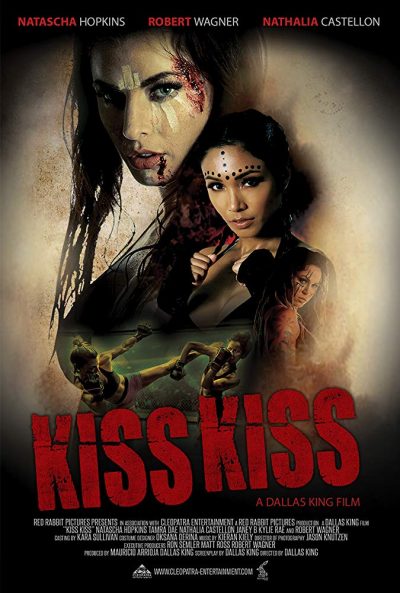 Four exotic dancers go on a trip to vineyard, courtesy of a customer at their club. However, they get more than they bargained for, falling unconscious and waking up to find themselves test subject in a scientific experiment run by Gibson (Wagner – no, not that one). He is attempting to convince the military-industrial complex to invest in his project to create “super soldiers”. To this end, he has a serum which vastly enhances both aggression and compliance, and has invited Senator Graham (Farino) to witness a test, under carefully controlled laboratory conditions. Oh, who am I trying to kid: he actually just shoots up the strippers with the serum and makes them fight to their deaths. In sports bikinis. And face-paint. In subdued yet artistic lighting. Because science! And that’s how government funding works!
 I’m not sure I’ve
 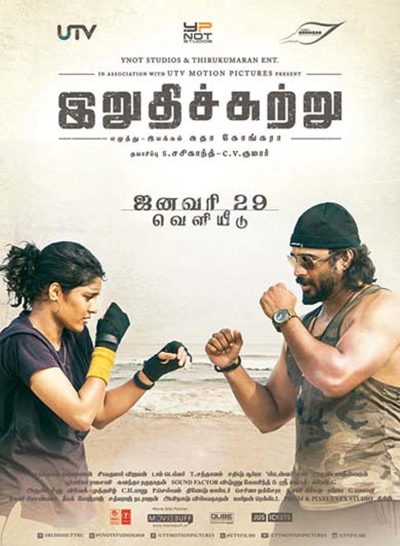 Despite thrashing virtually every sports cliché under the sun into the ground, this just about manages to skate by on the energy of its two central performances. Adi Tomar (Madhavan) is a boxing coach who gets hit with a trumped-up #MeToo charge by the head of the boxing association Dev Khatri (Hussain), and punted off to the backwoods of Chennai. There, however, he finds a raw jewel in Madhi (Singh), a fish-seller whose sister, Lakshmi (Sorcar), has been training as boxer with an eye to joining the police. But it’s Madhi’s aggression which attracts Adi’s attention, and he eventually convinces her to strap on the gloves.
 Oh, dear. A misbegotten concept – Sweet Home Alabama crossed with Rocky – doubles down with shaky execution, and a non-stop parade of painfully obvious cliches in both characters and plot, to startlingly poor effect. As evidence of the first, imagine a film about a man, dumped by his girlfriend, who decides that beating her up is appropriate revenge. This would not exactly be anyone’s idea of comedy gold. But the makers here think that, simply by reversing the genders, it becomes so. They are very much mistaken. I believe I laughed once.
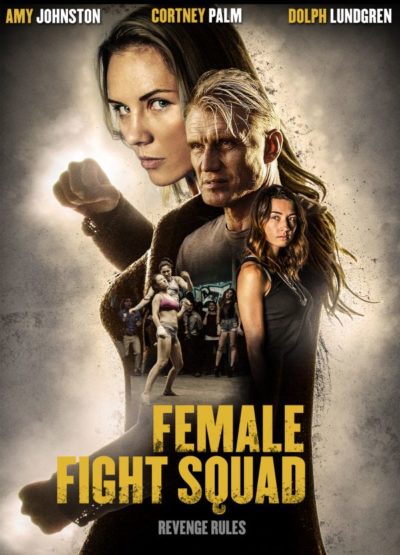 This was originally known as Female Fight Club. I presume the title was changed after a strongly-worded letter from David Fincher’s lawyers, perhaps to evoke thoughts of its star’s stunt work on Suicide Squad. It’s interesting, because Amy Johnston’s previous feature,
  The results of bringing female MMA fighters to the screen have been a bit mixed, shall we say. Gina Carano has looked decent in her films, but Ronda Rousey’s performances have been roundly criticized, and her Mile 22 project appears dead in the water. The performance by the recently retired from MMA Miesha Tate, which is likely the film’s major selling-point, rates… somewhere in the middle. She doesn’t disgrace herself – but that may be partly because there is no shortage of other weaknesses to criticize here. Tate is convincing in her role – yet since she’s playing a mixed martial-artist, it’s hardly proof of any acting ability. But I guess, everyone has to start somewhere, and a thinly-disguised version of yourself is a good place to begin.