



★★★★
“Not backwards in high heels, yet still highly impressive”
 This one might sound familiar, as I did previously review it about four years ago. But it deserves, and gets, a fresh analysis, due to my having recently had the chance to watch it in a way much closer to how it was originally meant to be seen. This version was purely subtitled, rather than dubbed, and in particular, had a 2.35:1 ratio print, rather than the previous 4:3 atrocity which meant that half the time, one or other fighter in the (numerous) battles was cropped off the side of the screen. This made it feel such a radically different movie, it took an hour for me to realize I’d actually seen it before. And it was all the better for the new look.
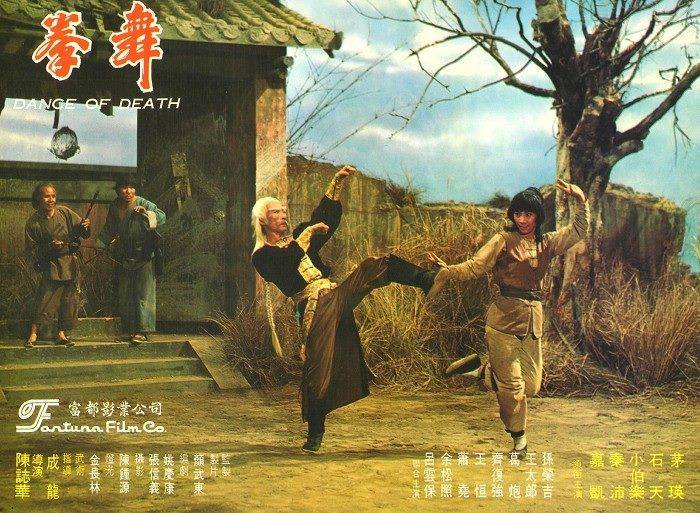 There were aspects which still befuddle me, such as most of the plot. Why, exactly, is Angela Mao pretending to be a boy? It’s completely unconvincing, and entirely unnecessary to the story-line. No-one ever discovers her true gender: it’s almost as if this were originally written for a man, then they got Mao, and in all the excitement, forgot (or, alternatively and equally credibly, couldn’t be bothered) to change the script. The rest of it is an odd mix. It’s partly vengeance with Fei Fei (Mao) out to pick up enough martial arts skill to take revenge on those who killed her family. Yet this sits alongside slapstick comedy which you’d not expect given the title, such as the two kung fu masters – one drunk, one stoner – whom she tricks into sharing her talents, or the villain with the world’s tiniest fan whom she defeats on her way to the big bad.
This time, those elements didn’t bother me anywhere near as much, and even if they had, I’m willing to forgive an enormous amount when the fights are so acrobatically inventive – the hand of Jackie Chan, who was a stunt co-ordinator here, might have something to do with this. Yes, it’s almost retro, even for its time. For by this point, in 1976, Bruce Lee’s shooting star had already blazed across the sky of martial arts cinema, and the Peking Opera approach was quickly being replaced by films based on his harder hitting style. Yet the long takes and fluid choreography used here have an undeniably elegant rhythm to them. I previously wrote that this movie reminded me of Fred Astaire and Ginger Rogers, and that’s one element which hasn’t changed between these viewings.
The steady progression in Fei Fei’s talents also remains notable, as does the blizzard of different styles of kung-fu, from crane through dragon to monkey, as well as less traditional approaches such as the.. ah, “flatulence fu” which shows up at one point. The graceful skill which Mao demonstrates in virtually all of these – save the intestinal variety, I’m pleased to say! – is truly a joy to behold, especially in this format, which allows you to appreciate it all the better. If there’s a more impressive vehicle for her talents, I’ve yet to find it.
Dir: Chuan Lu
Star: Angela Mao, Shih Tien, Shiao Bou-Lo, Chin Pey
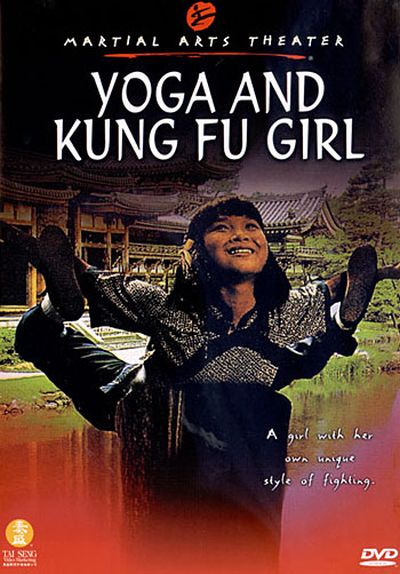 I’m trying to figure out if the “the” in the IMDb title used here is superfluous. “Yoga and Kung-fu Girl,” as on the DVD sleeve would make more sense, given the heroine’s martial arts are a combination of traditional skills with extreme flexibility. In some ways, it’s a slightly less exploitative version of things like The Crippled Masters, with its amputee-fu. The heroine here, Phoenix, could similarly make a living as a carnival exhibit, given her contortionist abilities, which are here shoe-horned into use to provide a style of fighting. To say this works with variable success would be an understatement. There are moments when her talents and flexibility are genuinely impressive. However, there are others where her limitations and lack of training are painfully apparent.
 This is a sequel to
 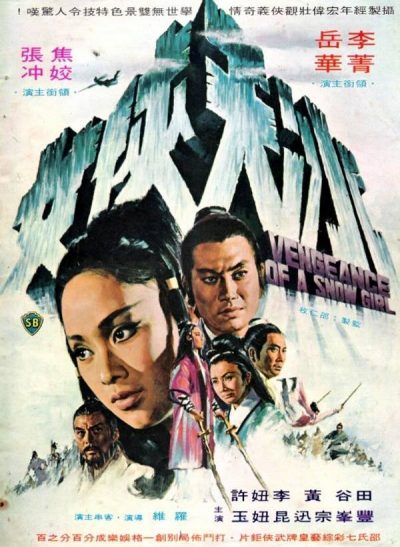 The elevator pitch version of this sounds like a million other kung-fu films: Shen Ping Hong (Li) seeks revenge on the people who killed her parents and left her crippled. But there’s rather more going on beneath the surface, and shades of grey on both sides. One of her targets, Lord Kao Hung, regrets what happened and wants to help Shen regain the use of her legs. But Shen only agrees to let his son Tien-Ying (Yueh) help, in the belief that it will make her mission of vengeance easier. It feels almost like she’s a mad dog, lashing out at anyone who tries to help; keeping the severed heads of her victims in jars is a clue there. Meanwhile, Kao’s associates – and Tien-Ying’s ex-girlfriend (Chiao) – think he’s helping because he wants to get Shen’s jade sword for his own ends, and are intent on getting their revenge in on her first.
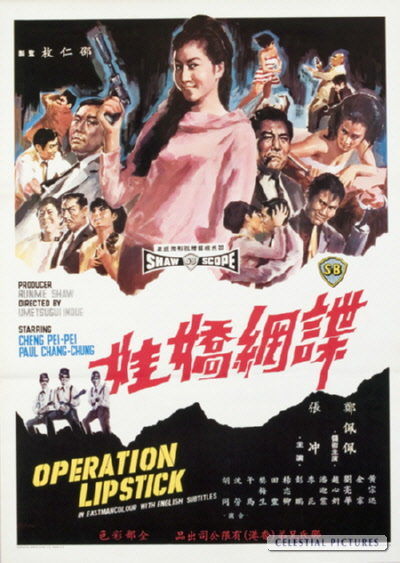 So warbles Li Bing (Cheng), a second-generation thief who has abandoned the criminal life and now performs a cabaret turn which is part song-and-dance, part magic act. These efforts to go straight are derailed when her former partner (Lee) shows up, demanding shelter due to being pursued for a wallet he lifted. She agrees to help, only if he returns the stolen property: when they try to do so, they find the owner now lacking a pulse.
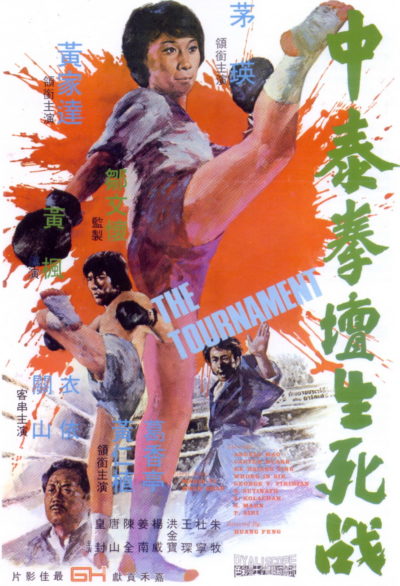 There’s a lot of chit-chat about face, honour and respect here. It begins when the master of a kung-fu school, Lau, has his daughter kidnapped by local hoodlums, after he won’t cough up protection money. Perhaps surprisingly, rather than using his skills to kick their arses, he sends two students to Thailand, including his son, Hong (Wong) in an effort to win the necessary funds. Hong loses, the other student is killed, and Lau is drummed out of the local Kung-Fu Association for having disgraced the name of Chinese martial arts by losing to foreigners. He’s so devastated, he hangs himself, leaving it up to his daughter, Siu Fung (Mao) to restore the family name, learn how to mesh Chinese kung-fu with Thai boxing, and rescue her sister. Quite the “to-do” list, I’d say.
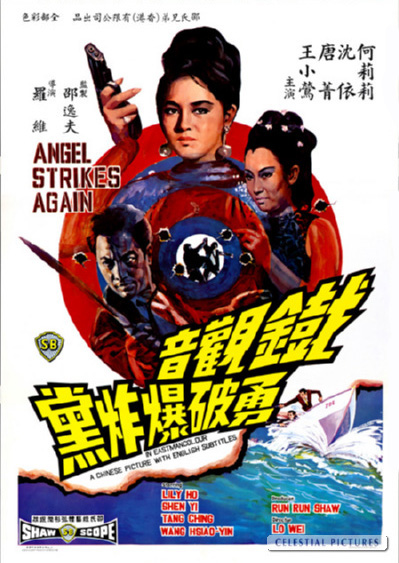
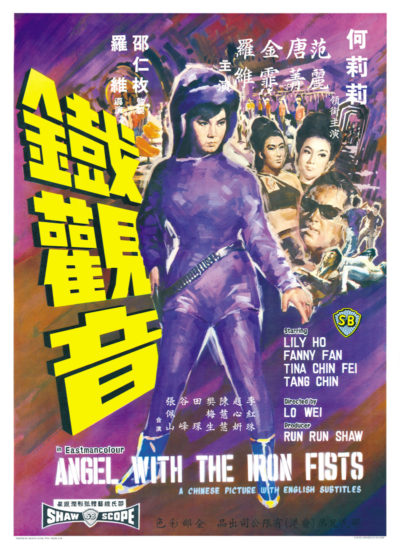 Swinging wildly between the surprisingly smart and the brain-numbingly stupid, this 1967 Hong Kong film is, in the end, not much more than a bad James Bond knock-off, despite its female lead. The heroine, Luo Na (Ho), is unsubtly named Agent 009, and goes to Hong Kong, posing as the mistress of an imprisoned gangster, who supposedly knows where he hid his ill-gotten gains. This brings her to the attention of the Dark Angels, whose leader is played by Tina Chin-Fei. This is a surprisingly gynocentric organization, owning both a vast, sprawling, underground lair and fetching two-piece uniforms. Keen to find out what Lona knows, they recruit her – which was 009’s cunning plan all along.
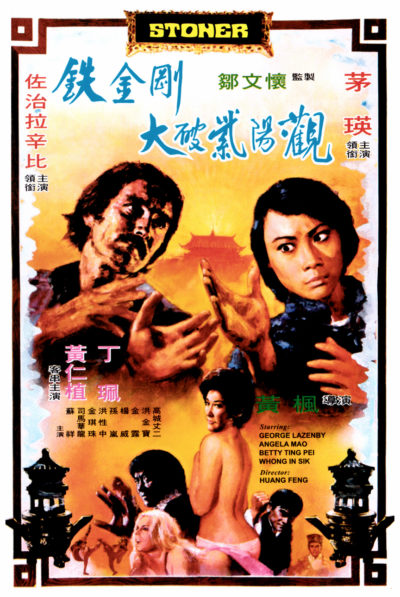 This production had a long, convoluted and quite interesting path to the screen. While Lazenby was always on board, the original plan was for him to be a Western bad guy, going up against Bruce Lee and Sonny Chiba. But Lee’s death – oddly, he was supposed to have had dinner with Lazenby that night – resulted in Chiba quitting, and Warner Bros then also backed out of their worldwide distribution deal. It was reworked as a much smaller film, at less than one-tenth the original budget (although at around $850,000, was still very expensive for the time, location and genre), with Lazenby now teaming up with Angela Mao.
 This is confusing. For the IMDb
  If this seems somewhat familiar, it’s because it is not dissimilar to