
★★★½
“#CinderellaForPresident2020”
While we’ve covered revisionist versions of fairy stories before, e.g. Maleficent, this is likely the closest to a “straight” retelling yet covered on the site. Cinderella (Šafránková) is condemned to a life of drudgery at the hands of her stepmother (Braunbock), until she gets a magical chance to attend a ball given by the local monarch. There, she meets the handsome prince (Trávníček) who falls for her, only for the couple to be separated at the end of the night. He seeks her out, with the help of a lost slipper, and they live happily ever after. All the standard elements of the well-beloved story are present in this 1973 co-production between East Germany and Czechoslovakia. So what is it doing here?
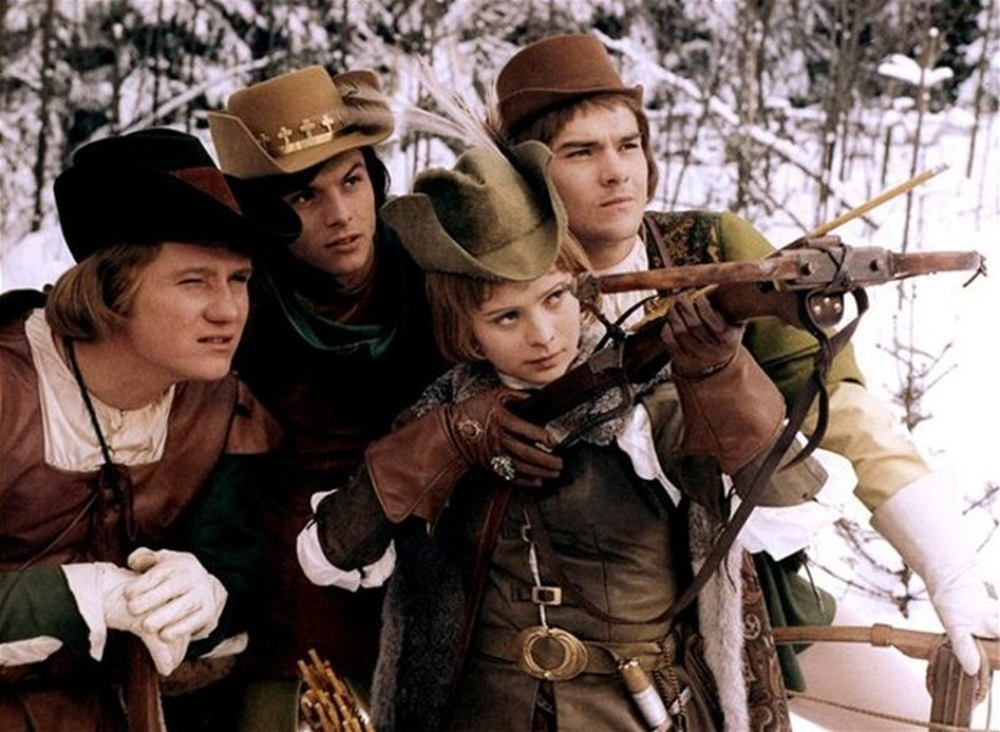
Well, as the picture above suggests, this Cinderella is quite the bad-ass. She initially has no interest at all in the Prince; while the rest of the town is getting in a tizzy over his passing through, she sneaks out to ride off on her horse. That’s where she first encounters him, since he has snuck off similarly – and it turns out, she’s a better rider than him. Their second encounter comes when he is out hunting with his pals. This time, Cinderella is dressed as a boy (above – raise your hand if you’re unconvinced!), and proves herself to have better aim than him as well, shooting into a crossbow bolt being held in his hand. She also demonstrates a talent for tree-climbing: this is all apparently a result of the upbringing through her late father, who can only be commended. When she shows u[p at the ball, she’s not exactly throwing herself at the prince, chiding him after he says he has chosen her as his bride, for not asking her opinion [To be honest, he seems a bit of a dim bulb. Like father, like son maybe, for the Queen is the smart one of the family as well.]
There isn’t even a fairy Godmother to be seen here, and one isn’t needed. For this Cinderella isn’t pining out a window, waiting for her prince to come. She gets things done herself, more or less. She does get help from the local fauna when stepmom inflicts particularly tedious chores on her, and there’s also the “three wishes” of the title – though they’re less wishes, than sets of clothes that appear out of hazelnuts, because fairy tale. But overall, this is a remarkably self-reliant, smart and confident young woman, who will likely make an excellent ruler. Indeed, it would have been perfectly fine if, at the end, she had politely listened to the prince, and said, “No, thanks – although, if you can get my stepmother off my back, I’d appreciate it.” I do understand, it would likely have been a step too far, even for a heroine several decades ahead of her time.
This has become something of a staple of Christmas viewing on the European continent, broadcast on TV across a number of countries. In Britain, it was one of the East European films imported by the BBC’s children’s department in the sixties and semi-translated (the original dialogue is retained; a voice-over translates the dialogue and narrates, as if by a storyteller). However, it has now largely been forgotten in the English-speaking world, overshadowed by the terrors of The Singing Ringing Tree. That’s a shame, since this is worth equally as much attention, and offers a considerably more robust heroine than anything Disney was producing at the time, or would produce this side of Mulan.
Dir: Václav Vorlíček
Star: Libuše Šafránková, Pavel Trávníček, Carola Braunbock, Rolf Hoppe
a.k.a. Drei Haselnüsse für Aschenbrödel, Tři oříšky pro Popelku, Three Gifts for Cinderella
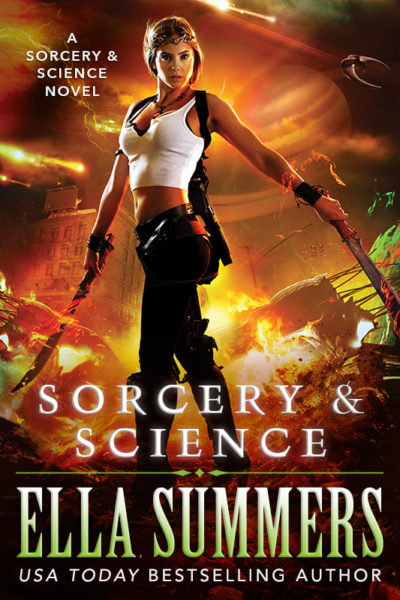 The blurb for this one reads, “Terra Cross is just your typical paranormal princess. She plays poker with goblins and leprechauns. She savors her morning muffin from the Pacific Sunrise Bakery in suburban California. She solves galactic crime cases. And on a particularly wild day, she can even see into the future.” It is somewhat inaccurate, at least as far as this novel goes. I don’t recall any poker at all, muffins appear once, and as for the crime-solving… Well, sorta but not really. There is, however, likely good reason, since the novel is a prequel to Summers’s “Sorcery and Science” series, in which I presume Terra does more of the above.
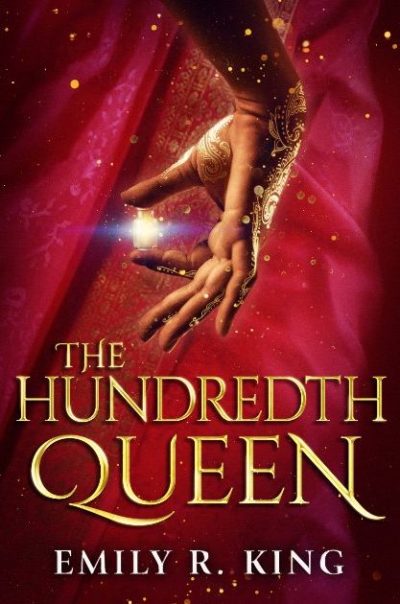 An interesting premise gets wasted, buried under a muddied writing style which sets up in one direction, then abandons it for another. Orphan Kalinda has been brought up by The Sisterhood in their remote temple in the mountains (kinda Indian, kinda Sumerian, annoyingly non-specific), training in the ways of a warrior – though others have far more talent in the era. Her life is upended when the local monarch, Tarek, visits the temple and selects Kalinda to be his next wife. Next, as in he already has 99, not to mention his additional courtesans. The problem for Kalinda is, this sets up a tournament in which she can be challenged by the other women, who seek to supplant her.
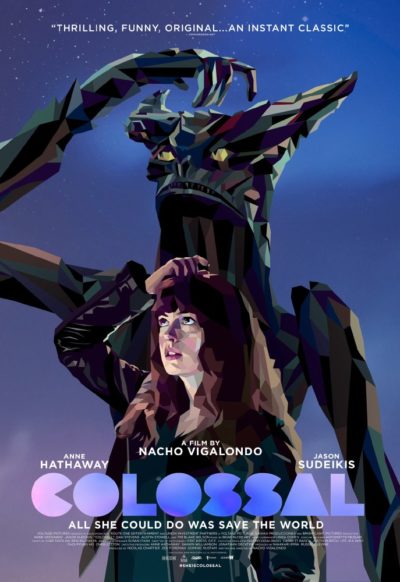 After breaking up with her boyfriend, Gloria (Hathaway) holes up in her middle-American hometown. She gets a job in a bar, run by her childhood pal, Oscar (Sudeikis) – not that this employment does much for Gloria’s burgeoning alcoholism. Meanwhile, over in Korea, the city of Seoul is being plagued by a giant monster, which will appear out of nowhere, behave oddly, and then vanish again. Gloria eventually figures out that when she goes through a particular spot – a local children’s playground – at a specific time, the creature appears in Korea, and its actions reflect hers. Turns out Oscar can do the same, manifesting in Seoul as a giant robot, and he may not be as benign with his new-found powers, as Gloria is attempting to be.
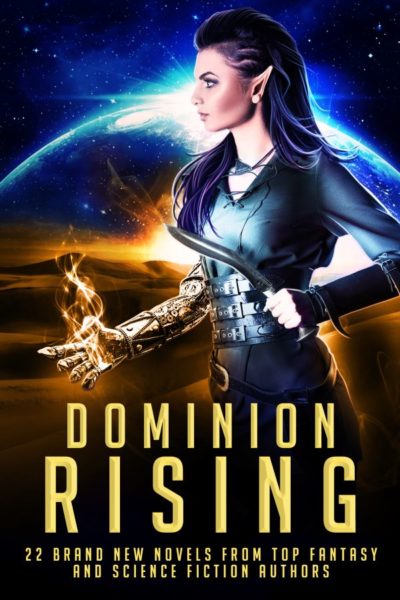 I am a sucker for bulk-buying. Regular readers will know this, since one of the first things reviewed here was the
 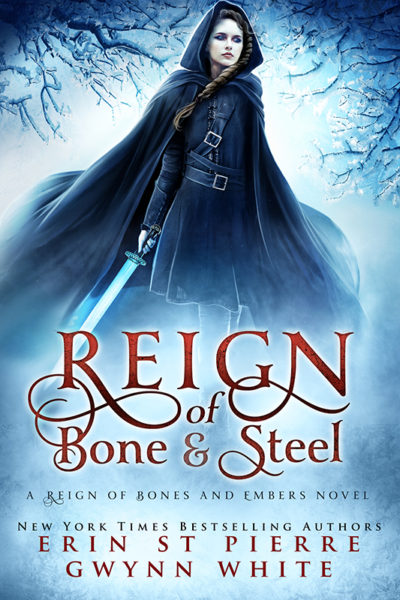 This certainly doesn’t waste any time, starting in the middle of a brutal pitched battle between the kingdom of Yatres, and their mortal enemies, the Nyhans. Among the Fae – basically, elves – in the former army is the warrior Caeda, and it’s her side that emerges victorious. But the price paid by the fallen on both sides is an ugly one. Their souls are absorbed through a magical sword, wielded by the Fae known as the Soul-Reaper, and fed to an artifact called the Bone. The trinity of Bone, sword and Reaper have helped sustain Yatres’s power down the centuries.
 I’m not sure if the problems here are a result of there being two authors credited on this story. It could certainly explain them. For rather than providing a single coherent vision, this feels like both its universe and characters are being pulled in too many different directions. It’s overstuffed with ideas and, instead of them being developed fully, scurries from one to the next, as if the writers were competing to have the final word. This comes to an end in a rather ludicrous finale. There, the entire plot takes a right turn, with the biological weapon which has formed much of the early focus all but discarded.
 Petra is a teenage Roman slave at around the birth of Christ. She is completely under the thumb of her sadistic master, Clarius, until a strange conjunction of events and a poisonous herb with mystical qualities changes the power dynamic entirely. Both of them, together with her lover, Lucius, attain immortality. But it’s an immortality which requires the two men to drink from Petra annually, or they will degenerate into sub-human monsters. Neither is happy with the arrangement: Clarius is not used to being reliant on anyone, least of all his former property, and Lucius hates the fact Petra agreed to submit to their ex-master, in order to save him. As the centuries stretch into millennia, Petra begins, slowly, to put together a group people who will be capable of defeating Lucius and the immortals he has recruited, allowing her to live in eternal peace with Lucius.
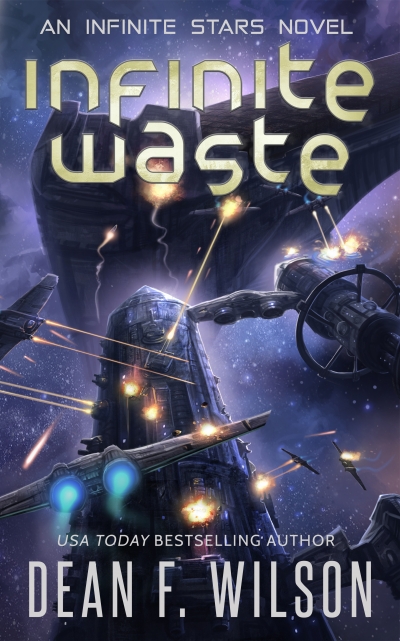 This initially seemed like a borderline entry, which I kept reading purely for entertainment. It’s about an exploratory star-ship, the Gemini, out on the very edge of known space, which comes across a giant barge, packed with nuclear waste and populated by a race of rat-humanoids, the Raetuumak. The Gemini is an appropriate name for the craft, as it’s effectively two separate ships, each with their own captain and very different approaches. Maggie Antwa, commander of Gemini Right, is a cautious scientist who abhors violence in any form, and was compelled to take on this mission after being involved in a environmentalist rebellion against the ruling Empire. Over in Gemini Left, on the other hand, Skip Sutridge is a square-jawed believer in shooting first and asking questions… well, never, to be honest. He has been sent to the fringes, probably to try and keep him out of trouble.
 I will confess to a little post-read confusion here. Amazon calls this Volume 2 in the author’s Rogue Galaxy series – but I could find no information, there or elsewhere, regarding Volume 1. I suspect Amazon and Goodreads are wrong, and this is actually the first entry, as stated in the Dominion Rising collection. It certainly
 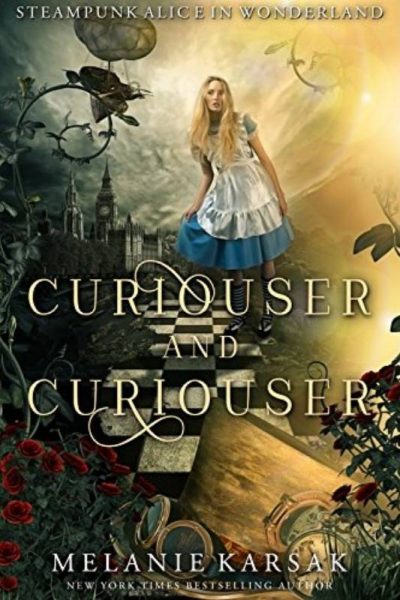 If you thought “Alice in Wonderland was okay, but it really needed more air-ships,” then this book is for you. It’s a steampunk take on Lewis Carroll’s classic tale, set in an alternate universe version of Victorian London. Specifically, 1851, when the renowned Great Exhibition took place in Hyde Park. Though it doesn’t actually feel particularly “alternate”; this angle lives mostly in its trappings, such as people using air-ships to get around, or clockwork cats, rather than in elements necessary to the plot. But that’s okay, because at its core, the story is strong enough to stand on its own.
 Almost all the action heroine novels I’ve read of late have been Volume 1 in a series. While not necessarily a bad thing, this does tend to lead to a sense of unfulfilled resolution. “Happy ever after” is frequently replaced by a semi-cliffhanger, intend to separate the reader from their cash for Volume 2. It rarely works, and is more likely to annoy me. After all, I’ve invested significant quantities of time (if not perhaps money; these introductory items tend to be of the 99-cent variety, so I guess the buyer should beware) in each tale, and to be left dangling is frustrating. That’s why it was especially nice to read a book like this, which tells a complete story, with a beginning, a middle and a solid, satisfactory end.
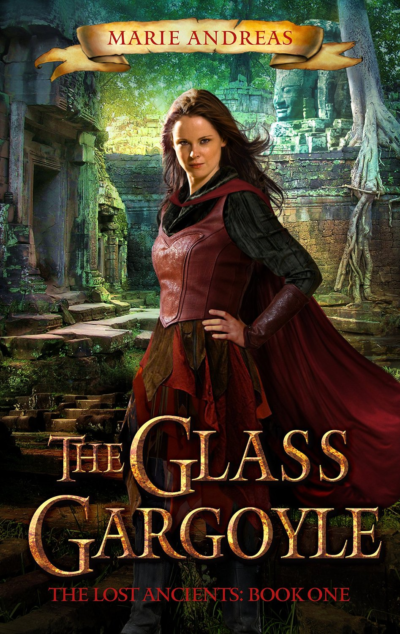 Taryn St. Giles is an out of work archaeologist, who has taken up bounty hunting in order to pay the overdue rent, after the untimely death of her current patron. However, her latest target turns out to be considerably more than she can handle. For Alric is a master of both disguise and hand-to-hand combat, and Taryn’s pursuit of him rapidly entangles the heroine in a deepening web of magic and intrigue. The titular artifact – which doesn’t actually show up until well into the second half – is a potential gate, which could open a doorway and leave this world a thoroughly unpleasant place for just about everyone. Fortunately, Taryn has friends both academic and physically-inclined on her side, as well as a trio of semi-domesticated fairies. Though the last-named are engaged in their own war, with a local family of squirrels.
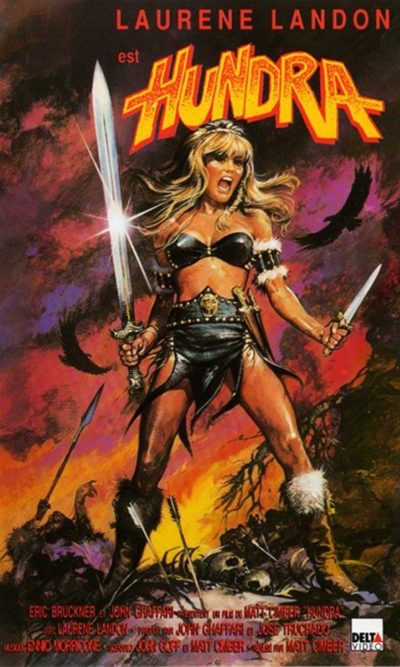 Director Cimber seems always to have had an interest in the action-heroine genre, having previously directed Lady Cocoa, he’d go on to do Yellow Hair and the Fortress of Gold , also starring Landon, and work on Gorgeous Ladies of Wrestling. But this was likely his best work, a rather inspired Conan knock-off, which both predates and is significantly better than Red Sonja.