 ★★
★★
“Paws for concern…”
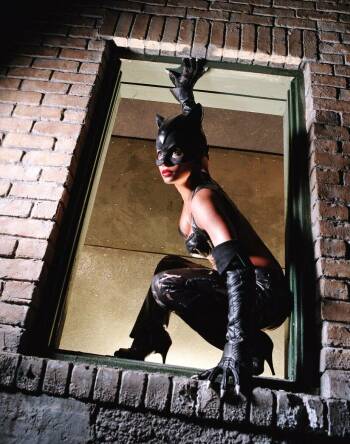 I entered the theatre with mixed feelings. This is, easily, the biggest action heroine film of the summer, and I want it to make a ton of money, so we’ll get more of them. On the other hand, it starred Halle Berry, whom I’ve loathed with intensity ever since she played the race card in her Oscar speech (and hell, our daughter is darker than Berry!). Her hideous performance as a Bond girl deepened this hatred, so the news that she would be Catwoman was a severe blow. But, hey, I decided to give it the benefit of the doubt. After all, how bad could it be?
- “This plodding, by-the-numbers superhero flick has all the feline grace of a walleyed mastiff.” – Mark Holcomb, Village Voice
- “Plays like a Lifetime movie on estrogen overdose, barely held together by a script that should have been tossed out with the kitty litter.” – David Rooney, Variety
- “The stench of the litter pan is all over this big-screen $90 million disaster-in-waiting.” – Peter Travers, Rolling Stone
- “The Showgirls of superhero movies.” – Robert K. Elder, Chicago Tribune
Ah. That bad? Actually, I’m one of the very few people who genuinely likes Showgirls, figuring that Paul Verhoeven’s film does a brilliant job of capturing the sleazy, tawdry spirit of Las Vegas. However, even I know that when reviewers invoke its name, it’s never as a recommendation. When you go to a theatre in our area’s main mall, the first week of release, and there are nine people at an evening show…you know this is a disaster movie, at least in terms of studio returns. It’s no wonder, for this is pedestrian and unaffecting despite – or perhaps, because of – director Pitof’s desperate flailing around in an effort to make things interesting.
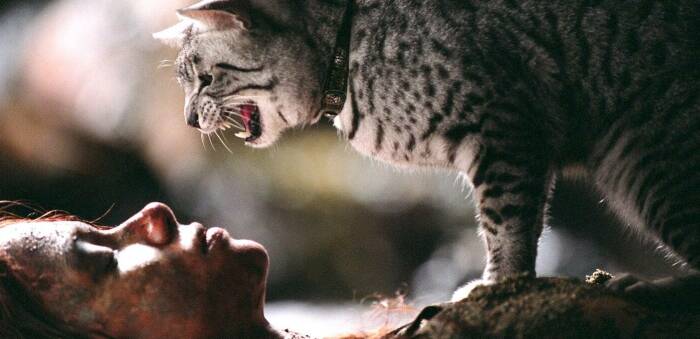
The story is pretty basic: Patience Phillips (Berry) works for a cosmetic company, under husband and wife sleazebags, Mr + Mrs Hedare (Wilson + Stone). While creeping around the factory, aided by remarkably lax security, she finds out that their face cream has rather unpleasant side-effects – but they’re going to release it onto the market anyway. Startled by this discovery, she bumps into something conveniently noise-making: all of a sudden, security is not so lax. Flushed out a waste pipe, and left for dead, she gets new life when a mysterious cat breaths on her, and Patience turns into…Catwoman.
Now, she has not only to expose her former employer’s evil scheme, but keep investigating cop Tom Lone (Bratt) away from knowing her secret, while still finding time for coffee, dinner, and occasional romps with him. Not to mention a game of one-on-one basketball, which must go down as one of the most superfluous scenes ever; Lone’s lack of reaction to her superhuman prowess leaves me wondering how the hell he ever became a detective.
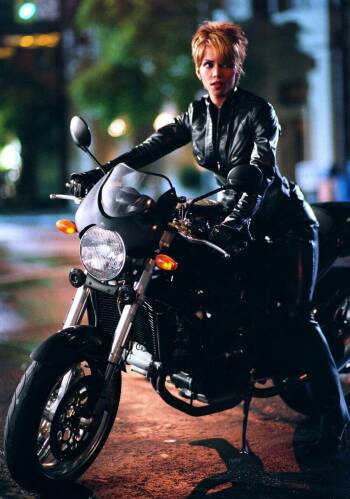
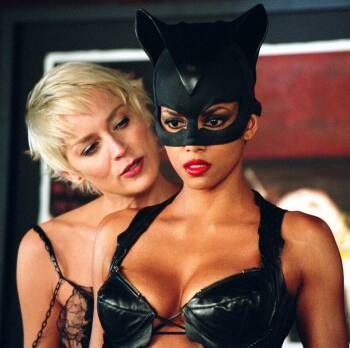 In the right hands, this storyline might have been fun, if played like the 60’s TV series – for camp value. Stone occasionally seems to be trying for this, but Berry is intent on trying to make us take the whole thing seriously, an endeavour that’s doomed to fail. Logic goes out the window pretty much about the same time Patience does – only it doesn’t get rescued: apparently, cat-induced skills include not only agility, but also the hotwiring and riding of motorbikes. And why, exactly, does she decide to cut her leather suit into something more befitting a two-bit dominatrix?
It’s almost as if, every time there’s a spark of intelligence or wit, a committee insisted it be removed. For example, at one point, Catwoman goes into a bar (which, appropriately enough, sounds like the start of a bad joke…), and asks for a “White Russian, no ice, no vodka…hold the Kahlua.” That’s kinda cute: until the barman responds with, “Cream – straight up,” just in case we’re total imbeciles who didn’t grasp the concept.
I could forgive that too, if the action had been at least competent. Instead, we get a mix of obvious doubling (most accounts say it was by a man, adding insult to injury!), and extremely poor CGI, both of which are shot as if Pitof was being paid by the number of edits. At best, it reaches the level of a mediocre video game, without any significant emotional or intellectual impact – the “Wow!” factor is entirely missing.
On the plus side, this clearly wasn’t a cheap movie, and it does put its budget on the screen – save the aforementioned CGI. Stone has fun with her role; she may even be getting a subtle dig in at Hollywood, when her character talks about being thrown on the scrapheap at 40. [Though in her case, it seems to have been less to do with her age than, by certain reports, being a bitch to work with in her superstar years…] And Pitof does have a sense of visual flair, even if the result is mostly to irritate. The movie also appears to be in focus, and the lip movements match the dialogue quite well. Can you tell I am stretching here?
It is, on the whole, about the bottom of what I expected or hoped. I didn’t fall asleep, but this was the epitome of lowest common denominator Hollywood film-making, with everything ground down to the mediocre, and possessing not even momentary impact. It doesn’t bode well for the upcoming Batman movie, and its failure will do absolutely nothing to promote the cause of big-budget action heroine films. However, if this is what we get in that field, that will be no real loss.
 [February 2005: Berry took worst actress for her performance at the 25th annual Razzies, at which Catwoman also took worst film, director and screenplay. However, I do have to give Berry much credit for turning up to accept her award in person, saying: “When I was a kid, my mother told me that if you could not be a good loser, then there’s no way you could be a good winner.” My opinion of Ms. Berry just went up quite a few notches.]
Feedback
Brian S: “Came across your site a few days ago and thought I would drop you a line to say how much I enjoy it. I love this sort of movie and it makes a change to be able to read a review from somebody with similar tastes. I get really sick of these critics who only seem to like drama and think that all movies should have some deep meaning attached to them to be considered any good. I especially liked the review on Catwoman which I had seen the day before, and found myself agreeing with many of the points raised. I’ve got a few more points I think will interest you. It has only just been released here in New Zealand, and with its poor box office, I don’t think it will be around for very long.
First of all, I have never rated Halle Berry as an action heroine. This goes back to her Bond movie and the publicity shots they put out of her in wet bikini and knife belt. I knew there was something wrong with this picture when I first saw it, but was unable to work out what it was until I saw it again in a different article, on the same page as a picture of the immortal Ursula Andress from Dr. No. Looking at the two of them in more or less identical outfits explained to me what was wrong – not only with the Berry picture, but the way action women are treated.
Halle Berry wore her knife belt as a fashion statement. Her main concern: has she colour-coordinated? Her face and body language say, “I’m ready for my close up now, I am beautiful”; Ursula Andress wore her knife belt as a weapon, and her main concern is survival. Her face and body language say, “I’m ready for anything, I am dangerous”. If they fail to cast the right people into these roles. how can they possibly hope to make a successful film? You can get away with it in a Bond film, but not when she has to carry the show.
Low expectations stopped me from being too disappointed in Catwoman. It seemed to me that the script was written by a committee who couldn’t decide what genre it was going to be in. It started as a chick flick and slowly changed into an action film that was rather short of action. Even the climatic “catfight” scene was a let down. Now I love a good catfight – hell I even write the stuff – but I don’t appreciate one that’s badly done. I’m afraid that special effects and stuntwomen just don’t do it for me in this sort of situation.
I got the movie Bringing down the House starring Steve Martin from our local video a few weeks previous to this, and was pleasantly surprised at what a good fight it contained. It was between Queen Latifah and some blonde who fought mainly with their fists with a few kicks thrown in for variety. My question is; if they can put a good, knock-down, drag-out fight into a comedy, why can’t they put one into a so-called action movie?”
Dir: Pitof
Stars: Halle Berry, Benjamin Bratt, Sharon Stone, Lambert Wilson




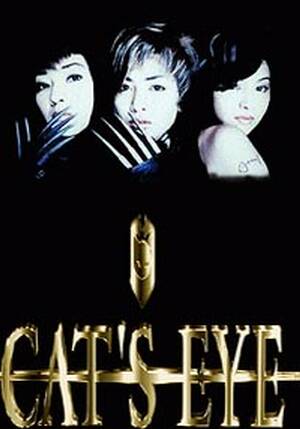 Despite an overall rating that is only mildly above average, when this is good, it is fabulous, and that’s why it merits recommendation. The highlight is probably a delirious first ten minutes, in which our three heroines steal a painting, and are pursued by the relentless and dogged Detective Hoshio (Harada), who doesn’t realise the cafe where he eats is run by the thieves he’s after. [If this sounds familiar, High-Heeled Punishers used a very similar idea in an S&M setting] This opening is lovely high-camp, played (as it should be) totally straight, with a beautiful sense of progression – both pursued and pursuers use wonderfully evolving gadgets.
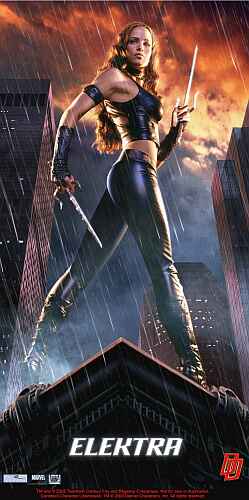 While 2003 has been touted as the Year of the Comic-book Movie, those centred around heroines have been notable by their absence. Sure, X-Men 2, League of Extraordinary Gentlemen and Daredevil have then in supporting roles, but going by the example of the last-named, anyone expecting much is likely to be sorely disappointed. Elektra, one of the toughest, deepest, most twisted characters in comics history – at least in the Bill Sienkiewicz/Frank Miller incarnation – was reduced to little more than a simplistic sidebar of little relevance. Credit to Jennifer Garner for doing what she could, but it’s safe to say that we’re not awaiting the touted Elektra spinoff with anything more than a “that’s nice” level of anticipation.
 I usually start watching this in a sense of disbelief, since it’s certainly not the most immediately convincing of movies. However, there’s a point near the middle which has in quick succession an amazing action sequence and two revelations, one touching, one tragic, and I realise that I am, yet again, utterly buying into the characters, storyline and setting. Disbelief simply ceases to be an option, and by the end, I know why this is among my all-time favourites, not just in the action heroine genre, but among all cinema.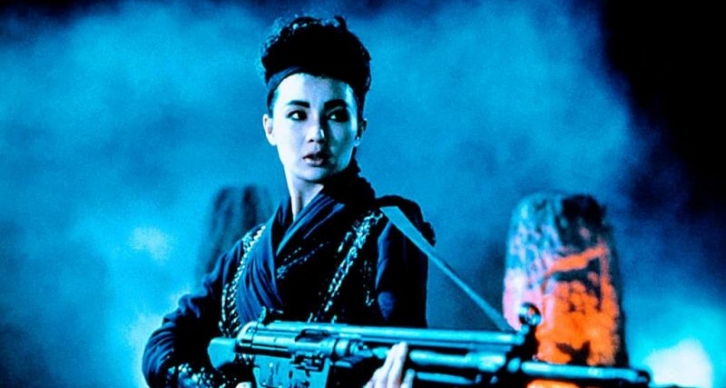
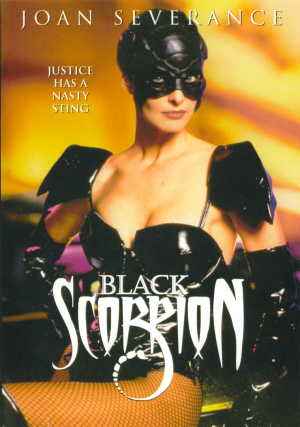 Roger Corman is a man without shame – and that’s in no way intended as an insult. He simply utilises any resource to the best of its ability, as is shown by the
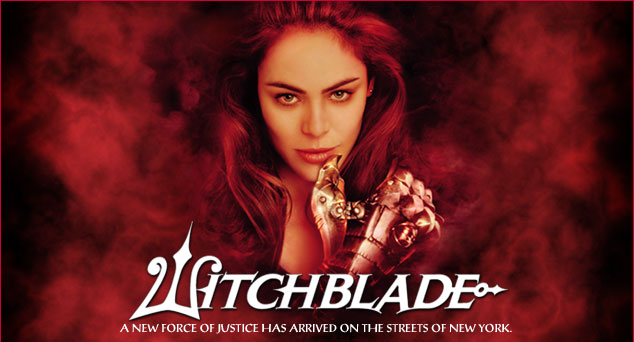
 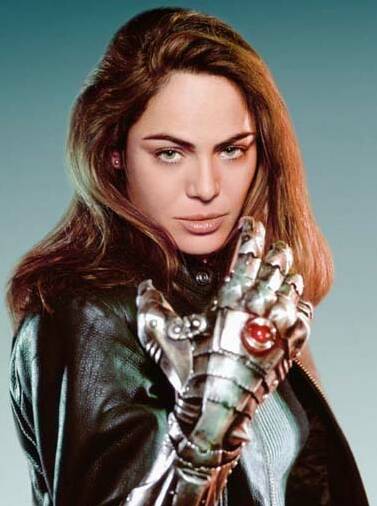 Much as in the first season, the second series of Witchblade brushed against greatness. Unlike the first, where you can point at the final episode as the key weakness, this time round it is a chronic rather than acute malaise that prevents it from getting the seal of approval. When it was great, it was fabulous – it just seemed that for every full, satisfying episode, there was a lame clunker to compensate. Particularly at the start of the season, there seemed to be precious little imagination on view.
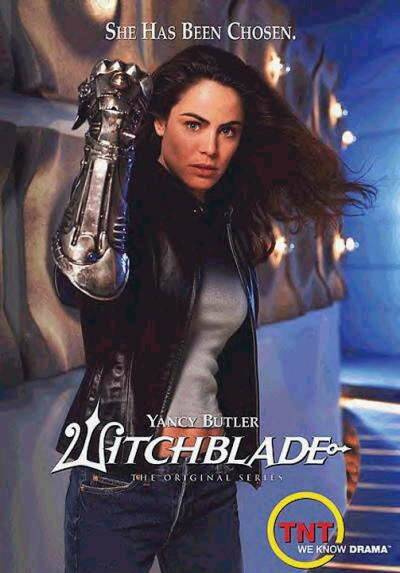 The finale, Ubique, also has to rate highly, for sheer perversity at the very least – Nottingham reaches new levels of creepiness in his final scenes with Lucrezia. Throw in a kicking soundtrack (Lords of Acid!), some spectacular deaths, and we’ll forgive a central plot device teetering curiously close to the main premise of feardotcom, which opened in cinemas the very same week. Among the interesting themes on view are the way both Pezzini and Nottingham both struggle to come to terms with the loss of their fathers, albeit temporarily in the latter’s case. This may be linked to one of the unresolved issues carried forward; who is the guy with wavy grey hair who always seems to be lurking round Sara? Indeed, the whole Nottingham/Pezzini relationship had perhaps more depth than any other in the show; veering between love, hate and obsession, with never a dull moment.
 ★★★½
★★★½ Put simply, having killed of most of the cast (a refreshing change from more cowardly shows, which refuse to let
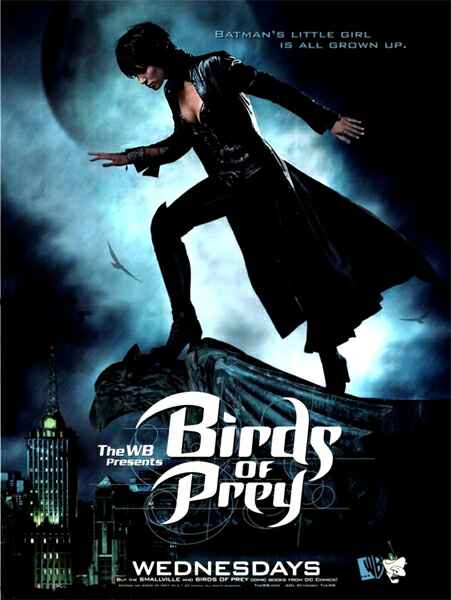 2002 should have been a great time to start a TV series based on a popular comic book – the biggest box-office hit that year was Spiderman, and with a host of other high-profile movies in the pipeline, comics had their highest profile in a long time. So what happened? Why was the show cancelled before Christmas, limping lamely along to the conclusion of its 13-episode run, the finale sacrificed against American Idol and The Bachelorette?

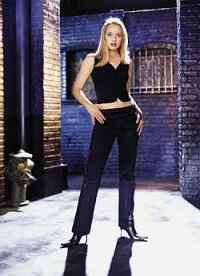
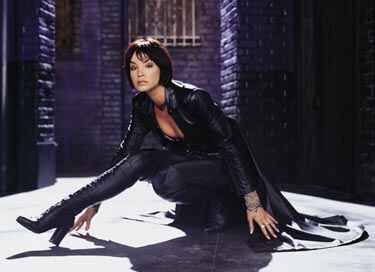 The show was at its best playing with the conventions of superhero TV; I particularly remember a discussion over secret identities and whether you could have one without a mask. But the same episode also featured – like the WWE, just without the chocolate pudding – a fight club where evil men watched as women fought. Given part of the appeal of the series itself was exactly this, it was shooting the audience in the foot, and illustrates the apparent schizophrenia of the show.
 Originally, Satanik was the villain in a series of Italian photonovels/comics. But in 1964, writer Max Bunker changed the sex and this 1968 movie – set in Spain, made by Italians – followed, though Satanik isn’t mentioned by name (I guess, a little like Heavy Metal). The central character here is a disfigured scientist, temporarily turned beautiful by a potion which also removes all her morals and inhibitions. The body count mounts, and to escape the cops, she takes another woman’s identity; unfortunately, her victim was a police stoolpigeon, and those she grassed up are also very keen to find her. Plus, her medication is wearing off…
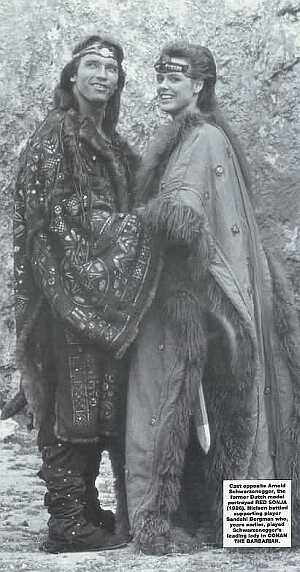 No, really. The milliner on this production deserves an Oscar, simply for providing the most amazing range of headgear I’ve ever seen. Everyone seems to have a different selection of pointy things to choose from; this civilization may have limited technology, but it’s clearly not short of hat-shops.