
Baby Assassins 3

★★★
“Sorry for laughing.”
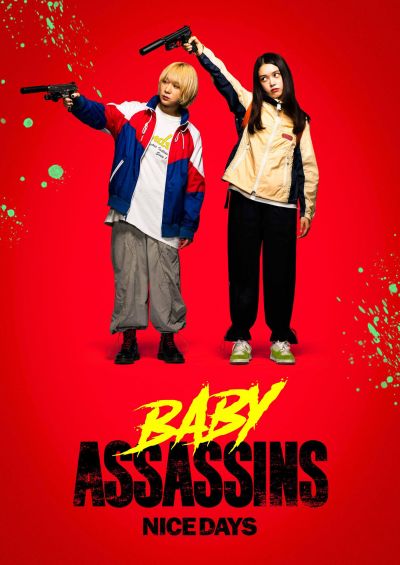
I am increasingly coming to the conclusion that the Baby Assassins franchise may be some kind of surrealist joke, being played on me by its makers. I really want to love the series and, as with both Part 1 and Part 2, there are moments where I do. At points, I was genuinely considering this as a Top 10 movie I saw this year – not just among GWG movies either. But then, it’ll grind to a halt, with such dedication to being mind-numbingly tedious, that it feels almost like wilful self-sabotage. In reality, I think it’s more likely to be cultural and societal impenetrability. Some elements here are ones which are relatable to a Western audience. Others? Not so much. 

It takes place in Miyazaki, a seaside city in Japan. Our heroines, Chisato (Takaishi) and Mahiro (Izawa) are on a working holiday there. Or a holiday where work keeps interrupting, it’s hard to say. However, their commission becomes an issue, because another, non-guild assassin, Fuyumura (Ikematsu), is also on the job. The guild are unhappy, and order the pair not just to complete the commission, but also eliminate Fuyumura for cutting in on their turf. This will be easier said than done, even with the largely unwelcome help of guild supervisor, Minami (Maeda). She is less than impressed with the Gen Z approach of Chisato and Mahiro, who would rather be in a restaurant eating the renowned local beef. 

As before, it’s the action which really resonated with me, in particular a stunning series of close-quarters battles. And when I say “close”, I mean fights where the combatants are frequently inches from each other. The early sequence where Chisato goes up against Fuyumura is a good example: while there is a gun involved, there’s not enough space between them, for either to point it effectively at their opponent. [This is when I was thinking, potential top ten movie] It’s also notable that, in this installment, most of the sequences involve professional assassins going up against each other in one-on-one, or two-on-one, action, not the mass brawls of previous films. This exchange of quality for quantity is a better opportunity for the participants to show off actual skills.

But the stuff between the fights? Dear lord, this is mostly terrible. And, in a film which runs an entirely unnecessary one hundred and twelve minutes, it’s terrible at near-excruciating length. There are only so many times you can listen to Mahiro worry about forgetting Chisato’s 20th birthday before it becomes a chore, rather than a pleasure. For me, that limit is “once.” Being charitable, this kind of stuff probably plays better to a local audience, or maybe simply one closer to the protagonists’ ages. My tolerance for Gen Z shit is certainly closer to Minami’s, and may be lower still. I’ve no doubt I’ll be waiting for Baby Assassins 4; I just hope the makers decide that joke isn’t funny any more. 

Dir: Yugo Sakamoto
Star: Akari Takaishi, Saori Izawa, Sôsuke Ikematsu, Atsuko Maeda
a.k.a. Baby Assassins: Nice Days
Playground

★★★
“Further education.”

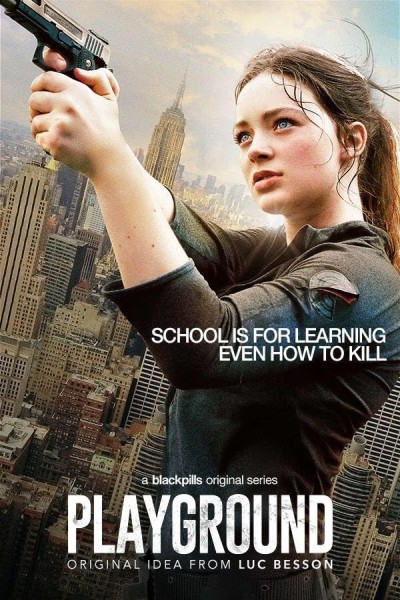
I’m a little surprised I hadn’t heard of this, considering it is based on a concept by Luc Besson. What we have here, though, is a feature-length version of what was originally a ten-episode web series. I presume it was intended for distribution on something like Quibi (remember that?), but I’ve not been able to find out where it previously appeared, if anywhere. Anyway, it recently popped up on Tubi, looking like a “proper” film, though still with the chapter headings. While touted as “an original idea” by Luc Besson, let’s be honest: if you chucked Nikita, Leon and Hanna into a blender, the resulting violence smoothie might well end up tasting not dissimilar to this.
Amy Seely (Holm) is a teen orphan in New York (though the series was made in France), whose father murdered her mother, then killed himself, and is not having a good time in the foster system. She is more than happy to take the route out offered to her by Father (Abkarian), even though that means attending The Courtyard, a school for teenage assassins. There, life is certainly cheap, with the mysterious powers that be who run it, taking advantage of the fact that nobody basically suspects children of being killers. However, Amy becomes privy to disturbing information, which suggests that the Courtyard might have been involved in her parents’ deaths, and begins to rebel against her own conditioning. Not helping matters: the facility is attacked, and the order comes from above to shut it all down.

After an impressive opening, where Amy ambushes a group of four thugs, by pretending to be the target’s daughter, this is… merely alright. It feels a bit too “young adult’ for my tastes, and spends an excessive amount of time within the Courtyard, dealing with what I am inclined to describe as Teen Soap-Opera Bullshit. For example, there’s a bitchy girl who takes an instant dislike to Amy, a cute boy that she kinda likes, and so on. Therefore, when her first mission goes awry because somebody sabotaged her gun, it leads to an additional helping of unnecessary TS-OB. I’d have preferred to see more of them operating in the real world, and suspect the webisode budget acted as a constraint there.

The structure is also a little odd as a result, because rather than building to an obvious climax, you have ten mini-climaxes, corresponding to the end of each episode. In some ways, this pacing has more in common with a golden era serial. I was quite impressed with Holm, who has potential, although it was a little odd having her first mission involving a paedophile, considering Besson’s own… um, very “European” history in the area of teenage attraction. It’s also eye-rollingly fortuitous how that mission provides her with the first evidence that the Courtyard may not be as beneficent as they claim. Still, it’s probably no worse than anything Besson has done in the past decade. 

Dir: Olivier Schneider and Pascal Sid
Star: Amalia Holm, Simon Abkarian, Melina Matthews, Ann Skelly

Buried in Barstow

★★★
“Cliffhanger in California.”

Before we go any further, you need to know one thing: do not expect complete resolution. This literally ends with “To be continued…” One of the major plot threads is wrapped up. But another remains largely unresolved, and the final few minutes start off another, almost entirely new one. The original intent was for this to be the first in a series of made for Lifetime movies. But since this came out in June 2022, no further installments have appeared. Instead, you get something which is so abrupt, I started to look and see if the copy I was watching had failed to download completely. It’s unfortunate, because until then, it might be the best Lifetime TVM I’ve seen.

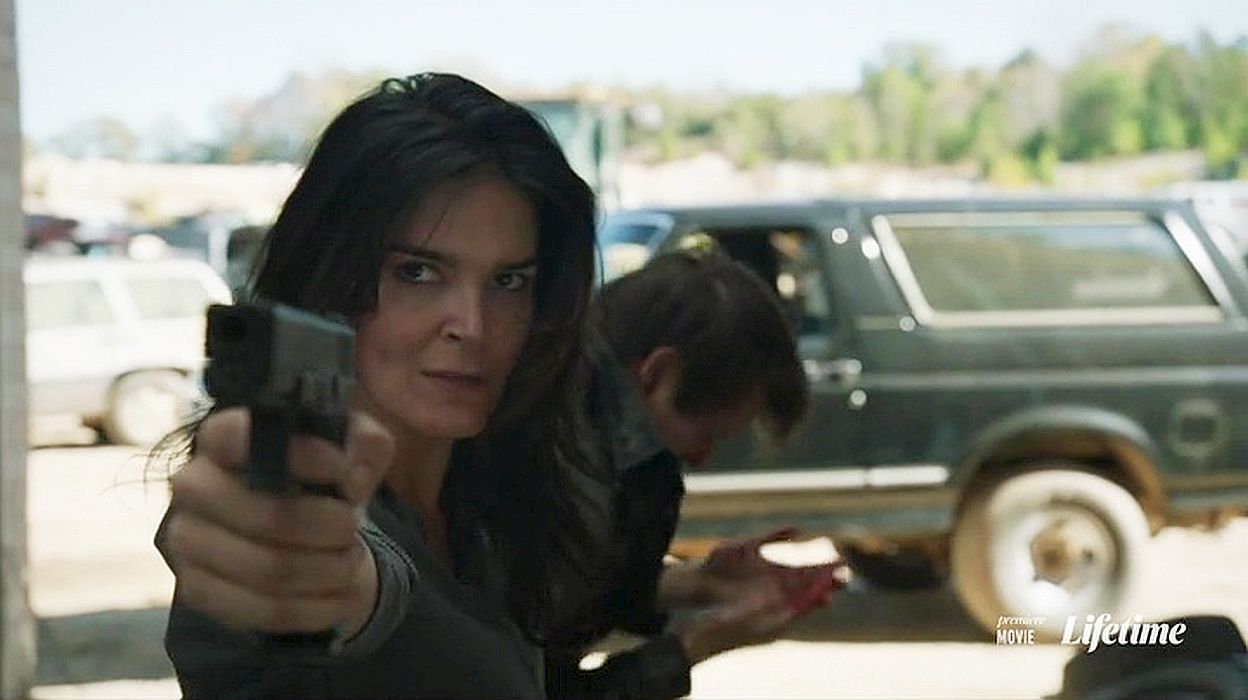
That begins with an opening caption: “This program contains strong violence. Viewer discretion is advised.” Ok, we are still talking about strong violence… by the standards of Lifetime TV movies. Do not expect founts of arterial spray and disembowelment. But it does mean that when someone gets their nose broken, there will be some blood. It’s surprising how a little helps there. The nose-breaking is delivered by Hazel King (Harmon), a single mother who runs a diner on the road to Las Vegas, and is fiercely protective of daughter Joy (Richards). So when Joy’s scuzzy boyfriend gives her a black eye, she isn’t standing for that. Or, as she puts it, “He raises a fist, I raise a gun.” Scuzzy boyfriend subsequently vanishes. 

Because, it turns out, Hazel is not just a momma bear, but a former mob assassin, who quit the job years ago. Of course, it isn’t that simple, and eventually her old boss, Von, comes calling. This being a Lifetime TVM, there is inevitably a romantic interest, in the shape of hunky dishwasher (!) and former heart surgeon (!!) Elliott (Polaha). However, this turns out not just to be purely for the obligatory sucking of face. Indeed, it’s integrated with surprising grace, tying in to Joy’s previous, but eventually discarded, ambitions in the medical field. Really, up until the final moments, this was almost indistinguishable from a “real” movie, in terms of plotting. Harmon’s performance, too, is polished and effective.

Never more so than when she’s going after scuzzy boyfriend, where there’s a genuine degree of intensity which I did not expect. I was entirely convinced she was both capable of murdering him, and had every intention of doing so. This all unfolds inside the first twenty minutes and, while we don’t get anything quite as effective thereafter, it makes an excellent impression, and establishes a great deal about Hazel as a character. It’s a real pity that we are now approaching four years since the broadcast of the film in June 2022, and there has not even been a peep about a follow-up. It’s a shame – both in terms of the concept not being developed to its potential, and because this, on its own, deserves to have received a better ending. 

Dir: Howard Deutch
Star: Angie Harmon, Lauren Ashley Richards, Kristoffer Polaha, George Paez

The Ballerina

★★
“Not particularly on point.”

Here’s a real obscurity. 18 years old, and yet still with a mere seven votes on the IMDb. There, I had to find it by going through the director’s name, as the title brought up nothing. To be fair, it’s not even the best-known film of the year, because some guy called David Lynch made a short called Ballerina in 2007. But it turns out to be an early work from Mauser, whose Lady Outlaw we covered earlier in January. That was certainly better – as it should be, coming almost two decades later, the director having made a good forty (!) features since. It doesn’t look like his budgets have increased much, but Outlaw does a better job of working within it.
Here, the ballerina is Tara, a ten-year-old girl who sees her parents ruthlessly gunned down because of their connection to the Capello crime family. She vows to find and kill whoever was responsible, and is brought up by her big brother Angelo (Jasso). He trains her in the ways of his own profession, as a hitman for the Capellos. Eight years later, Tara (Nutting) still has not been able to take her revenge, and is studying dance at college, while working alongside Angelo. She gets a visit from the mysterious Ruby (Young), a near-legendary figure in the underworld, who offers to tell Tara who killed her parents, if she helps fix things to his advantage. But she may not like what she is told. 

Mauser clearly subscribes to the notion that talk is cheap, for it is very chatty. Sometimes, this is ok: Young has a presence which commands the listener’s attention. But too often it comes off as a bad Tarantino wannabe – and even a good Tarantino wannabe would be on thin ice. Witness the lengthy early discussion about smoking, which had me wishing I had a knitting needle to jab into my ears. Fortunately, nothing thereafter is quite as terrible. However, it’s a film more interested in telling, rather than showing. There’s a corrupt female cop (Posas) in the mix, and I liked the way all the police station scenes were shot in shadow. Clearly to hide that they couldn’t afford a set, yet it works well enough. 

The action is no great shakes, with Nutting being slow and having a limited set of moves. Certainly, there’s little or no indication of the expected balletic grace. She seems about as much a dancer as I am: I won’t see fifty again, and my knees aren’t what they used to be. Jasso comes off like you ordered Joe Mantegna on Temu, which isn’t necessarily a bad thing, It all builds to an ending which strongly suggests Mauser is a big fan of The Usual Suspects in addition to Tarantino. As a pastiche of better film-makers, it’s just about okay, though the ten-year-old version of the heroine may be the most disturbingly intense thing this has to offer. 

Dir: Brett William Mauser
Star: :Amanda Nutting, Matthew Jasso, DeMarcus Young, Valerie Posas

Ballerina (2025)

★★★★½
“If the ballet slipper fits…”

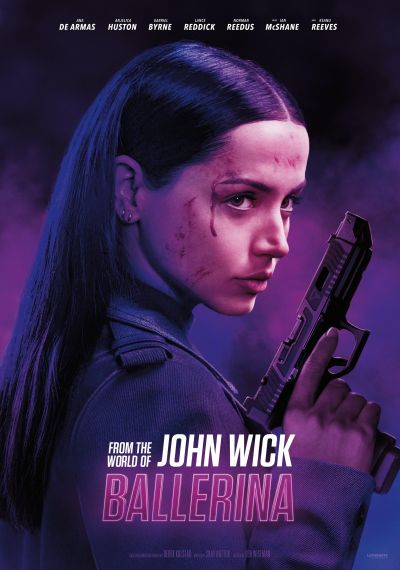
When I reviewed Furiosa, I discussed how action heroine films have been having a tough time at the box-office since before COVID-19. Add another data point to that decline, with the underwhelming performance of Ballerina. Or, to give it its clunky and excessive full title (for the first and only time), From the World of John Wick: Ballerina. Which – much like Furiosa – is a real shame, because it’s top-tier stuff. The critics liked it (76% on Rotten Tomatoes) and those who saw it, liked it too (93% audience score there). But it just did not seem to connect in a large-scale way with the cinema-going public, and will struggle to cover its $90 million budget, not excessive by today’s standards. 

Admittedly, it was a rather troubled production. Filming began all the way back in November 2022, and it was in post-production the following February. But a year later, word came out that additional shooting under John Wick director Chad Stahelski was taking place. There’s uncertainty how significant those were. Suggestions that much of the film was redone have been denied by both Stahelski and Wiseman, who said they were actually due to the studio providing them with additional resources. This allowed them to add scenes, such as the opening depicting the death of the heroine’s father. But regardless, the extra work was certainly a factor in the film being pushed back a full twelve months from its original release date of June 2024.

To be honest though, I really couldn’t tell based on the end product. I have read a lot of criticism suggesting, in brief, “Nobody asked for this.” While that’s dumb – nobody asked for John Wick either – there is an element of truth in it. If they wanted a spin-off, they might have been better using Sofia Al-Azwar, the existing character played by Halle Berry, who was key to one of the best scenes in John Wick: Chapter 3 – Parabellum. It’s worth noting, the script by Shay Hatten, written back in 2017, was not originally part of the Wick universe (although Hatten was inspired by the trailer for John Wick 2), and subsequently got tooled into it. But I wonder, how often are spin-off movies ever successful? Ok, except the Minions franchise. 
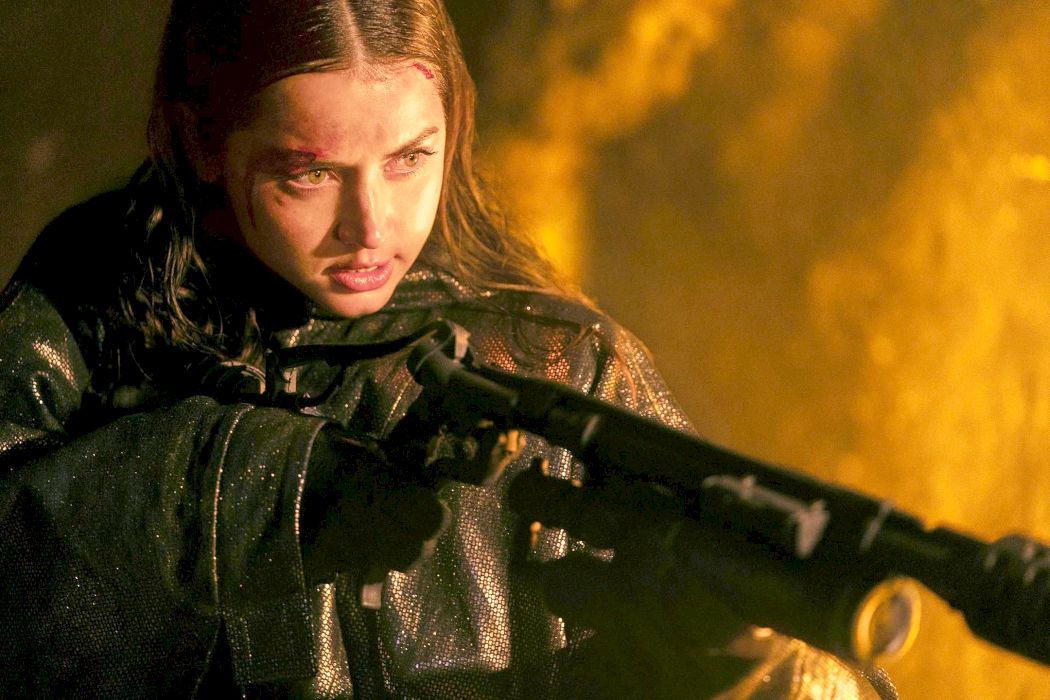
It’s not the first effort to expand the Wick-iverse which has fallen short either. In 2023, they made a TV mini-series The Continental, which… Um, well… We watched the first episode? You’re certainly left to wonder what might happen about the other spin-off film, focused on Caine, the blind swordman played by Donnie Yen in John Wick 4. We love Yen, and have since the days of In the Line of Duty IV, over 35 years ago. But he has a much lower profile in the West than Ana de Armas, and the appetite for films “from the world of John Wick” which do not have Wick front and center, certainly appears to be muted. Enough about such coarse, commercial considerations. How is Ballerina as a movie?

In this world, there are two specific tribes of assassins. The Ruska Roma, who are structured and orderly, and another group, known as the Cult, who are anarchic and savage. Lawful Neutral and Chaotic Evil, for those who know their D&D alignments. The two groups don’t get along, but generally tolerate each other, basically agreeing to go their separate ways and not interfere, under the current leadership of the Director (Huston) and the Chancellor (Byrne) respectively. A decade or so ago, there was Romeo and Juliet-style romance across the divided houses, resulting in the birth of Eve. When her parents tries to leave their factions, both are killed, her father dying in front of her after being killed by the Cult. She is then brought up in the Ruska Roma.

Eve (de Armas) is trained both as an assassin and a ballerina, although the latter is never of any real significance. On one of her missions, she encounters a Cult member and realizes they are responsible for killing her father. Against the express wishes of the Director, she goes in search of them, finding their headquarters in the remote (and very lovely) Austrian town of Hallstatt, and chewing her way through the Cult towards the Chancellor. But when the Director hears about Eve’s quest for vengeance, posing a threat to the uneasy truce between the Ruska Roma and the Cult, she sends a certain J. Wick (Reeves) after her, to restore the balance and keep the peace. 

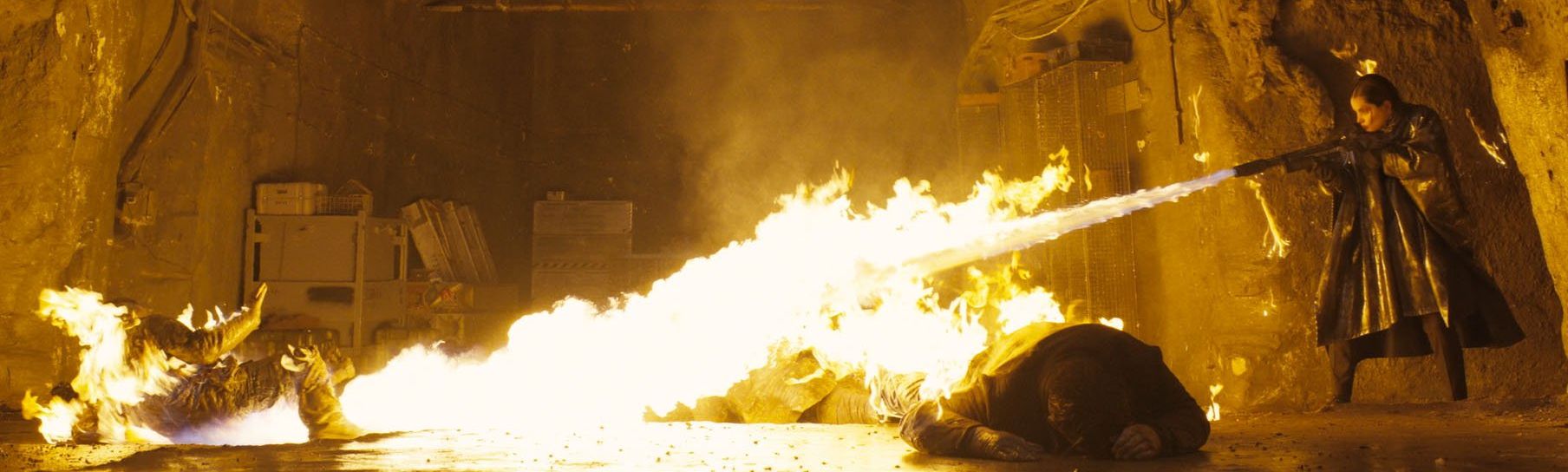
It’s borderline awesome, and on occasion, there’s no “borderline” about it. Let’s just say, I will now be looking into acquiring a flamethrower for home defense. Ok, I should explain. There’s a scene where Eve and one of the Cult members have a – bold font, capital letters, please – DUEL WITH FLAMETHROWERS. It’s every bit as epic and wonderful as that sounds, and it escapes me how they could possibly have achieved it, without reducing the entire stunt team to charcoal briquettes. That’s just the action highlight in a film which has a number of them. I was also impressed with the nightclub sequence – is this obligatory for every film in the Wick-iverse? – of Eve’s first mission, as much for the thumping techno tunes, as for the high-quality fisticuffs. 
I do say, some elements feel under-developed, and I wonder if they were a result of the adjustments made during production. The character of Daniel Pine (Norman Reedus), seems particularly an afterthought, not least the fact he’s supposed to be the Chancellor’s son. Adding John Wick in does feel like an unnecessary afterthought and, to be honest, smells a little of desperation. It’s just not necessary, because de Armas is capable of carrying things. This is likely, not just to be the best action heroine film of the year, it’s quite possibly – admittedly, I haven’t seen the last Mission Impossible film yet – going to end up as the best action film of 2025. Such a pity it appears likely to be one and done for this tiny dancer. 

Dir: Len Wiseman
Star: Ana de Armas, Gabriel Byrne, Anjelica Huston, Keanu Reeves

Ballerina: The Original Script

As mentioned in our review of the 2025 Ballerina movie, the script as originally conceived was not part of the John Wick universe. However, it was inspired by it. Shay Hatten was only in his early twenties went he first came to Hollywood’s notice, for his Maximum King script, a still unproduced entity based on the filming of Stephen King’s only directorial credit, Maximum Overdrive. He followed that up with the script for Ballerina, which was not only bought by Lions Gate, it also got Hatten into the writers’ room for the third and forth entry in the John Wick franchise. He has since worked on both parts of Rebel Moon and is working on the upcoming Resident Evil reboot, so seems to be a fan of our genre. 

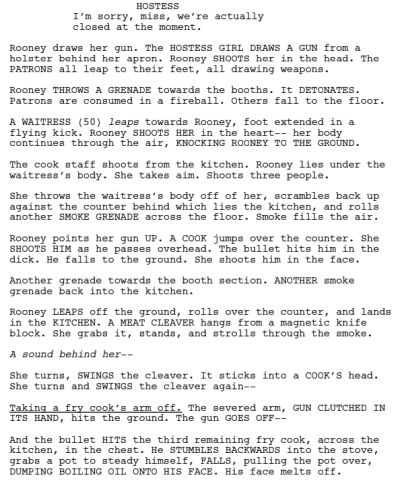
Hatten admits that Ballerina is “a script where I was really trying to go to the extreme because I was trying to get people’s attention.” It’s an understandable technique for what are called “spec scripts” – a screenplay written without a prearranged deal, rather than as paid work. You need to stand out among the thousands floating around Hollywood, and pushing the envelope is one way to do so.Ballerina does so from the get-go, showing us a long history of assassination: “The screen now divides into sixteen sections. You get the idea of what’s happening in each of them — in each, a murder from some point in the last five hundred years.” There’s also a sex scene which I’m just going to screenshot for the curious (NFSW, obvs!).

We then meet the heroine, six-year-old Rooney Brown, whose father is shot dead in front of her, immediately after giving her a ballerina music-box. She notches her first kill, pushing the assassin downstairs, and we get a caption. ROONEY KILL COUNT — 1. It’s going to go higher. Much higher. After growing up in group homes, Rooney is employed by a private military company, Whitewater (yeah, that’s subtle…), and becomes a hitwoman for them. In the early going, it’s your fairly standard Nikita clone, Rooney balancing work with a real life, and a blossoming romance with Tom, who has absolutely no clue about what her day job entails. But we do see life in the Alpine town populated entirely by killers, here named Sunnyvale. Which is perhaps close enough to be a Buffy nod, and is certainly not very Swiss. 

Things change after someone tries to kill Rooney, just as she’s beginning to have Assassin Cliche #27: second thoughts about her career. She gets to them first. Unfortunately for her, it’s the daughter of Elias Muller, the mayor of Sunnyvale, described as an “intense, Willem Dafoe, Mads Mikkelsen-looking motherfucker.” He and Whitewater are at war, and he is winning… until his minions massacre Rooney’s husband and his family. She kills all the attackers, telling the last one left alive, “I’m gonna kill everyone in your organization, no more and no less.” She then heads to Sunnyvale. Approaching the half-way point, the kill count has been restrained. Well, up until her arrival in Switzerland, it’s 26. Decent, but not exactly Resident Evil: Extinction [the highest-ranked GWG film at moviebodycounts.com]

Thereafter? Fifty minutes of more or less non-stop carnage. She’s helped in her mission by Pine, who wants to take the chance in the chaos created by Rooney, to escape with his daughter. [Pine does appear in the movie as produced, though his role is rather different] And when I say carnage, I mean it. The kill count racks up like a pinball machine, and by the time she is done, is at a final score of… [drum roll] one thousand, four hundred and eight. Yes, as written, this would perhaps have ended up being the most violent movie ever made. I think we reach peak attention-seeking when she finds the Sunnyvale old folks’ home, and murders two hundred or so senior citizens. However, she’s not totally callous: she largely spares the school, going through it only to extract Pine’s daughter. 

So, is it all any good? I think I preferred the version which actually reached the screen. While I’m a huge fan of senseless, cinematic violence, the second half in particular became a bit of a slog. It becomes, rather obviously, an exercise in pushing people’s outrage buttons. Since I don’t have any outrage buttons, it isn’t too effective. There’s no denying Hatten has a nice line in snark, and some of the descriptive passages are great. But this may be the poster child for less being more. I’m not sure there are many directors in existence who could have delivered the film as written. Maybe Gareth Evans? Takashi Miike? Timo Tjahjanto? The budget required would have likely meant it couldn’t have been released unrated, a necessity given the volume and degree of mayhem. 

On the other hand, I do have to admire the unfettered approach. That’s the good thing about the written word. You can let your imagination run wild, without constraints such as budget or… Well, good taste. Hatten has taken full advantage of that freedom, to trample on action film conventions and push the pedal to the metal. It achieved its intended goal, and now he is a full-time writer. Hard to argue this shouldn’t be considered a success on those terms, even if it was perhaps intended less as a genuine movie, than a memorable calling-card to get his foot in the door.

Gehenna: Naked Aggression, by Patrick Kindlon and Marco Ferrari

Literary rating: ★★★★
Kick-butt quotient: ☆☆☆☆½

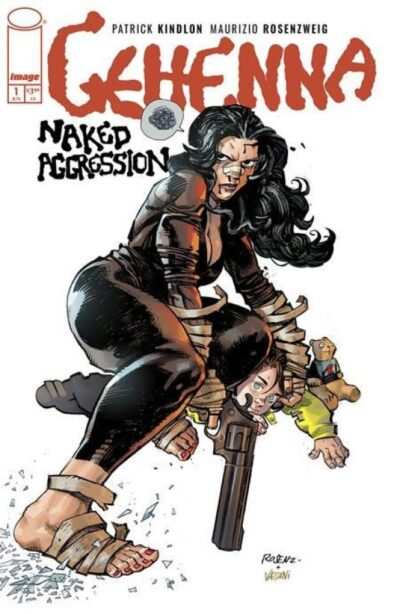
“What I need is stories where men get kicked in the chest. Stories where guns only run out of ammo for dramatic effect. I need pulp. I need exploitation. I need fun.”  I used to read a lot of comics, before moving to America. As in, most weekends involved a trip to Forbidden Planet, Gosh!, or Mega City Comics, coming home with a carrier bag of new issues. Then there were the trips to Paris… But I just kinda stopped – no particular reason – when I emigrated. There is still a large cardboard box, unopened from the move 25 years ago, in our boxroom. Some are probably worth a bit, e.g. the first issue of Hellblazer. But reading the first issue of Gehenna makes me want to restart. Well, if space, time, money and aging eyesight weren’t issues, anyway.

“This book is equally for the diehard comic reader and someone who hasn’t read sequential art since Garfield,” according to co-creator Kindlon. I’m certainly closer to the latter category, but certainly found it accessible, once I got into the comic-book rhythm again. It’s different from word-based literature, and even from cinema, where the pace is dictated entirely by the director. In a comic-book, you can linger over a panel to admire the artwork for as long as you want, or whizz through them so you’re basically picking up subliminal imagery. The text becomes a complement to the imagery, filling in the gaps. And the imagery is great. I now have a new backdrop on my PC desktop. Page 18 of the PDF, should you be interested. 
“Everything went to hell. And now that’s where I live.” But this also means exposition and action can co-exist: the latter doesn’t need to pause. Consequently, over the 24 pages here, there’s barely a pause for breath. You reach the end, to be honest, not necessarily sure what’s going on, but this is just part one of four. I presume things will become clear – or, at least, clearER – in due course. We have a dark-haired woman, kidnapping the son of a gangster because of reasons apparently connected to her husband’s death – leading to the quote above. There’s another woman, blonde, following in her wake – with bad intent if her line, “I’ll call you when the woman is dead”, is anything to go by. I will bet the house that they will end up facing off against each other, before very long. I certainly hope so. 

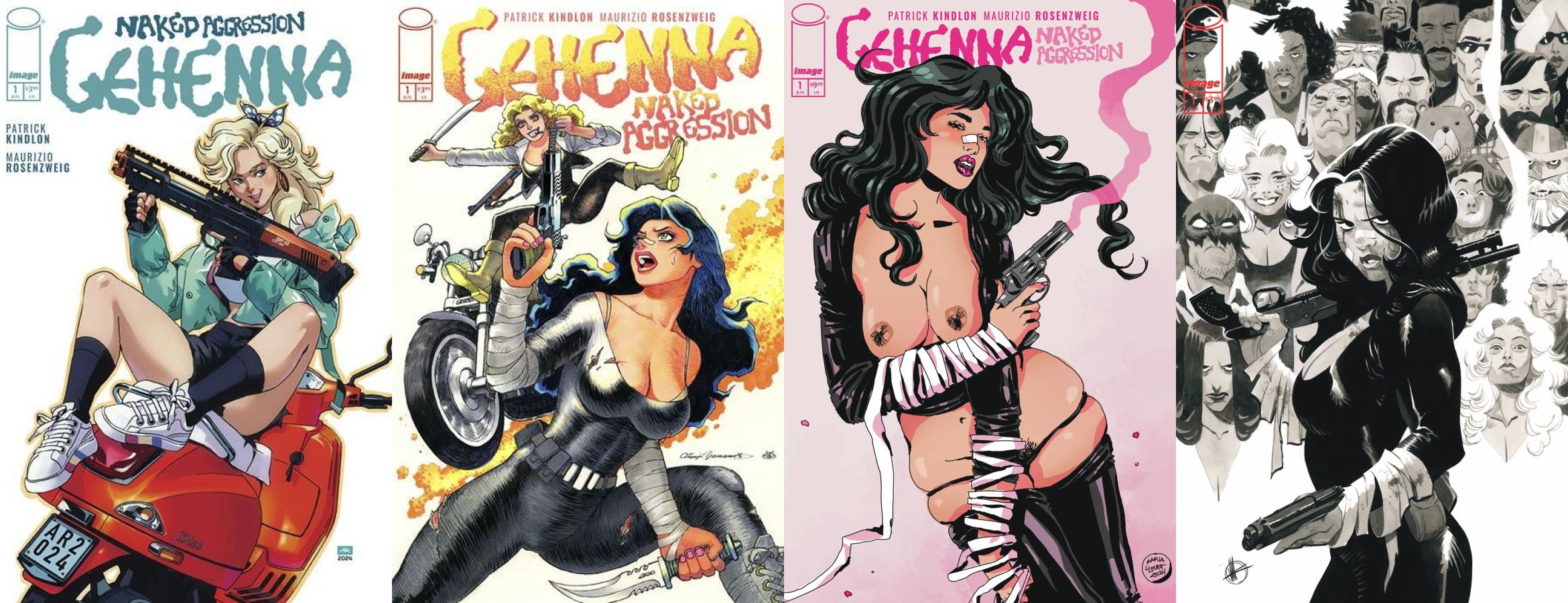
“It’s pulling from Beyond Hypothermia and Naked Weapon, and all of Hong Kong,” says Kindlon. So far, Naked Aggression has been more about the aggression than the naked – though cleavage certainly abounds, and an alternate cover (below) does deliver. It is difficult to judge the series overall, in the same way as giving your verdict of a film based on its opening twenty minutes. We’ve all seen movies which hit the ground running, only to run out of steam. But there’s no reason this shouldn’t be able to sustain the blistering pace: it’s not like a comic-book is going to run out of budget. If we weren’t looking to move house, this might well be the one to entice me back into the comic-shop. Failing that, I’ll just have to wait for the movie version, hopefully starring Eva Green and Charlize Theron. 

Author: Patrick Kindlon (text) and Marco Ferrari (art)
Publisher: Image Comics, available through their site, from July 2, or for Kindle through Amazon.
Book 1 of 4 in the series, also available in four alternate covers as below.

Kitty the Killer

★★★
“Nice Thai, but not quite a cigar.”

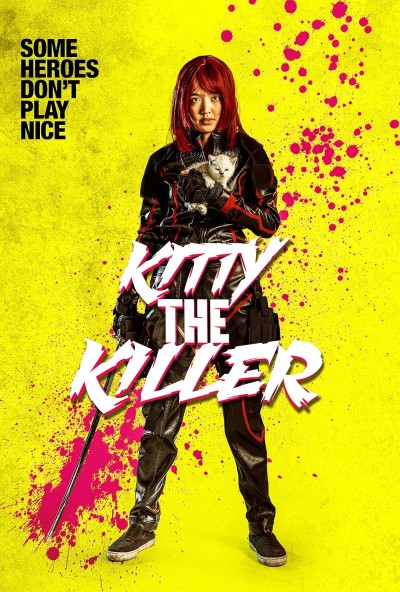
The easiest way to describe this is a Thai version of Wanted. You could make a case that the central character is not female. But like Wanted, there’s easily enough going on around him to qualify for this site. The similarities don’t stop there either. In both films, you have an innocent, totally unaware office worker, who is recruited into an ancient order of super assassins, just as they are going to war. Here, the rookie is Charlie (Ngamnet), an insurance salesman – sorry, he’s a sales manager, as he would no doubt correct you – who is caught up in the affairs, and eventually becomes a member, of a lethal organization known only as The Agency.
In something perhaps nicked from Naked Weapon, they recruit by using orphaned young girls, who are trained in the ways of murder for hire. They form cels, each overseen by a manager, in this case codenamed Grey Fox. The last incumbent, Keng (Semglad), drew the wrath of upper management for his unauthorized actions, and designated Charlie as his heir apparent. Which is news to Charlie, who eventually accepts and after an extended training montage, has to deal with the assassins. The most potent of these is Dina (Thangprapaporn). Though there are a number of others, of various experiences and skills, all the way down to Mina, who must be aged about eight [Yes, their names do all end in -ina, thank you for asking].

Fortunately, their enemies appear to sit back while Charlie gets up to speed, with the subplot about a stolen stone with mysterious qualities conveniently back-burnered. Instead, we watch fairly lengthy flashbacks, detailing the past of various characters. This is the movie’s main weakness, with a middle which is close to being free of action, filling in gaps that we never particularly cared about to start with. Given a running-time of almost two hours, this padding feels especially egregious. It also has a somewhat odd mix of tone, things like Charlie’s reactions to events largely being played for comedy. I guess at least it isn’t the toilet-based humour of certain Asian entries I’ve seen, and I will admit to genuine laughter on more than one occasion.

Pleased to report, the film gets back on track with a strong final act. This brings Dina back to the centre, and sees Charlie and her having to team up to take on the Agency’s #1 killer, the masked Nina (Ying Donnaporn Sukprasert). I can only presume the organization is capped at 26 killers, for alphabetical purposes. I pity the poor assassin called Wina. Anyway, the action is fairly solid, albeit somewhat prone to being over-edited. It’s largely hands-on, with swords the preferred weapon of choice, though I suspect the lead performers are actresses first, rather than martial artists. While it’s far from the most original movie I have seen this year, it does some interesting things with those influences. It’d be a better ninety minute film however.

Dir: Lee Thongkham
Star: Ploypailin Thangprapaporn, Denkhun Ngamnet, Somchai Kemglad, Vithaya Pansringarm

Sniper Goddess

★★★★
“Spot on target.”

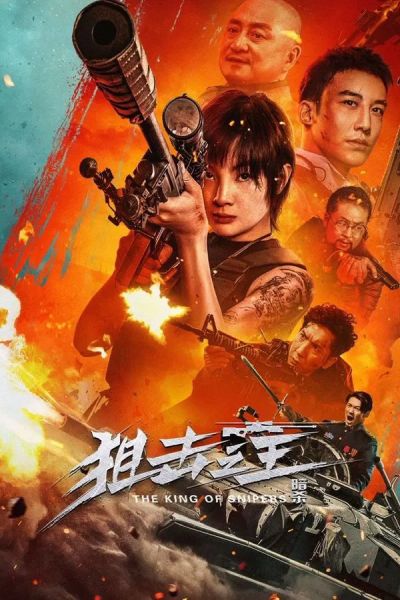
The Chinese title is 狙击之王:暗杀, which Google Translate informs me translates as “Sniper King: Assassination”. I don’t want to assume anyone’s gender, but I think I’m going to go with the alternate title above, as more appropriate, over the one on the poster. Because there’s no doubt about the amazing talents possessed by Anna (Yang), for whom a shot at three kilometers range is barely an inconvenience. We get right into the action with her being committed as a psychopath after begin captured, following her assassination of a drug lord. Yet another drug lord, actually – she has a deep hatred of them, for reasons we eventually discover, and has been taking them out with regularity.

It’s not long before someone tries to kill her in the psychiatric facility, but she’s able to escape (somewhat), with the help of struck-off former doctor, Nasipan (Tao). However, she is forced, with the aid of a nano-bomb injected into her bloodstream, to take a mission for Artest (Mak). There’s a war of succession going on in the country of “Libiwala”, with the prospect of drug production becoming legal in the country – to the joy of crime boss Roger (Lee). Artest requires Anna to liquidate all those in line for the leadership to prevent this. Or maybe encourage this. It’s all a bit murky, and the plot twists and turns until the very last scene, though never gets incoherent.
This one captivated me inside five minutes, with the hellacious firefight in the asylum, culminating in Anna sniping a sniper right through their scope. The action doesn’t let up for long thereafter, with some excellent set pieces involving both weapons and hand-to-hand combat. For the latter, Artest probably gets the bulk of it. But on the opposing side is a henchwoman who makes Gogo Yubari look like the picture of mental balance (I think she may be played by Guo Muhan, but I don’t recall hearing her name), and cuts a striking figure in her long blond hair and sword. It’s just one of the numerous things this film gets right, including occasional moments of comedy that genuinely made me laugh out loud, the movie winking at its own excesses. 

It’s simply a fun experience, with characters you can get behind, and an impressively strong anti-drug message. All the players are given depth to their roles, and the chance to develop them. Even the little kid, playing the third in line to the Libiwalian throne, is not irritating – and that’s high praise coming from me, as far as child actors go. All told, this is one of the most purely enjoyable ninety minutes I’ve spent of late, easily surpassing bigger budget films like Cleaner or The Gorge, and given my expectations, is likely going to be the most pleasant surprise of the year. The whole movie is embedded below. Take five minutes to check out the opening sequence, and see if it hooks you as well as it hooked me!

Dir: Huo Sui-qiang
Star: Yang Xing, Henry Prince Mak, Tao Tao, Lee Dong Hyuk
a.k.a. Sniper King: Assassination

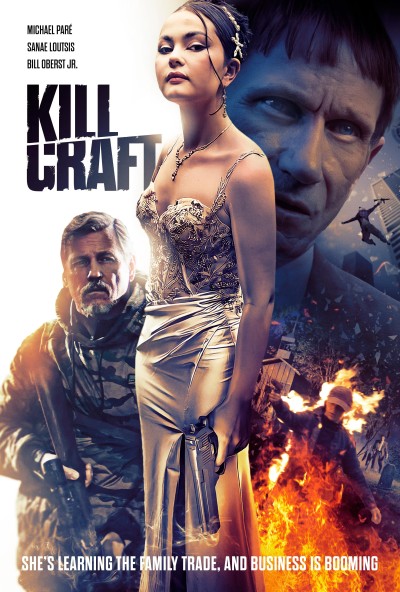
Kill Craft

★★
“More kill than craft.”

There is potential in the idea here. It’s a shame it ends up feeling like two separate movies, both of which come out feeling under-cooked. The main focus is on Marina Delon (Loutsis), a teenage girl with the typical teenage girl problems, e.g. bickering parents, generally sullen demeanour, etc. Except, her dad Thomas (Paré) is actually an assassin, working for the very strange Poe (Oberst). This has contributed to the marital strife, because his work is why mom is in a wheel-chair – and is not happy about it, to put it mildly. However, things are up-ended after Thomas is killed on a job, and Marina decides to take over the family business.

Thee are a few interesting directions this could perhaps have gone. Unfortunately, it doesn’t take any of them. Instead, things rumble vaguely on, with Marina doing not very exciting murders for hire, sometimes with the help of her Gother than thou BFF Freya (Eggleston), and to varying success. Such as trying to kill the estranged wife of a gangster, which only results in a bit of flirty chit-chat with the target’s son. Communication with Poe is entirely through dead-drops, so he has no idea his assassin is now a teen girl, until his boss informs him descriptions of the killer no longer resemble Michael Paré. Poe decides to tidy up the loose ends, by terminating what remains of the family.

Why it feels like two films, is mostly because the director can’t seem to commit to whether it should be Marina’s story or Poe’s. It could have been both, adopting a Leon-esque approach of Poe taking her under his wing. However, the two barely share a few seconds of screen-time before the final shootout. Instead, we get unconvincing family drama, e.g. Marina being upset her father isn’t attending the recital at which she is unconvincingly playing the violin, or even weirder stuff such as Poe digging up the grave of his dead mother. I’d actually have been fine with more of the latter – few do unrepentantly weird better than Oberst [he has done a one-man stage show adapting Edgar Allen Poe stories, incidentally, giving resonance to his character name here], and he’s much better an actor than Loutsis.

For whatever reason, I kept expecting some dramatic twist, such as Freya being a figment of Marina’s imagination. I mean, we first meet the pair digging animal graves behind her house, which sets an odd tone for the film from the beginning. The fact Marina and Poe both… have issues, is another way this could have developed. But once we’ve established Marina is taking over – and with remarkable vagueness on the details there – the film more or less grinds to a halt, dramatically and thematically. With action sequences which are no more than competent, despite some gore which is occasionally amusingly excessive, this is one you can afford to miss, despite Oberst’s best efforts.

Dir: Mark Savage
Star: Sanae Loutsis, Isis Eggleston, Michael Paré, Bill Oberst Jr.