




★★★
“Now, I always fight back…”
 This feels almost like a throwback to the silent era, and ‘white slave’ films with titles like Traffic in Souls, combined with a significant fear of ‘the other’. As such, it’s both painfully simplistic, and endlessly fascinating in the layers of interpretation which can be read into it, should you be so inclined. On the most basic level, it’s your everyday tale of “good” girls, kidnapped for sale to the highest bidder, who need to fight to retain their modesty and virtue. [Though let the record show, at no point is there any bikini-wearing wielding of automatic weapons, despite what the poster clearly wants you to think. The heroines here prefer weapons of the blunt and/or pointy variety]
Director Ford is no stranger to this site, having previously given us Never Let Go and The Ledge. This is similarly workmanlike, benefiting from a straightforward approach and uncomplicated plot. Young, attractive women on holiday (this was filmed in the Canary Islands) are being abducted and sold off as sex slaves. The tactics used by Andras (Cronin) and his gang vary from luring their targets to a remote cabin, to barging into their vacation apartment and chloroforming them. The net result is the same: they end up in a cell, deep in the bowels of a remote building, awaiting shipment to a buyer, located somewhere even more foreign. The latest victims are Tamsin and nurse Karla (Marks), who join seven other girls in peril, including Lucy (Rankin).
As well as the clearly xenophobic approach – foreign places are bad, and foreigners worse – there’s also a notable class element here. All the girls appear “nice”, from middle- to upper-class families, while their captors are rough-hewn working-class thugs. The exception is Jude (James): also the only one with a conscience, he provides Karla and friends with the opportunity to free themselves. This mass escape definitely feels like it’s taken from women-in-prison films, the women turning the tables on their captors. Karla, in particular, initially intends to leave, but for reasons connected to her past (everyone here has issues – see the quote, top), decides to go back and make Andras pay, using the pointy weapons mentioned above.
This is the gnarliest, though not the only bit of violence here, and the film doesn’t hold back. Despite some digital blood, other effects are clearly practical and the audio work enhances the effect nicely. There’s an subplot about the search for the girls back in Britain, which is almost entirely superfluous, and could surely have been replaced with some gratuitous nudity. The film is so chastely moral in that department, it could almost pass the Hays Code. It feels like there are too many interchangeable victims as well, who sometimes blur together, especially when they are running in different directions. Is that Tamsin? Or Karla? But it’s rarely boring, and as a melodramatic throwback, pushes enough of the right buttons.
Dir: Howard J. Ford
Star: Sarah Alexandra Marks, Sophie Rankin, Sean Cronin, Louis James
 This film is based on a Korean webcomic, but has been relocated to Japan. I can’t help wondering if something was lost in the process, because it feels like I should have liked this more than I did. Ran Tachibana (Miyoshi) is a promising amateur boxer, who gets devastating news when the body of her sister Yuzuki is found inside a burned-out vehicle. The cops call it suicide and quickly close the case. Except Ran doesn’t believe the corpse is Yuzuki, and begins to investigate what might have happened. The search leads her to an underground fight club run by the brutal Nikaido (Ito), who is holding Yuzuki hostage. He makes Ran an offer: beat his undefeated champion, and he’ll let Yuzuki go.
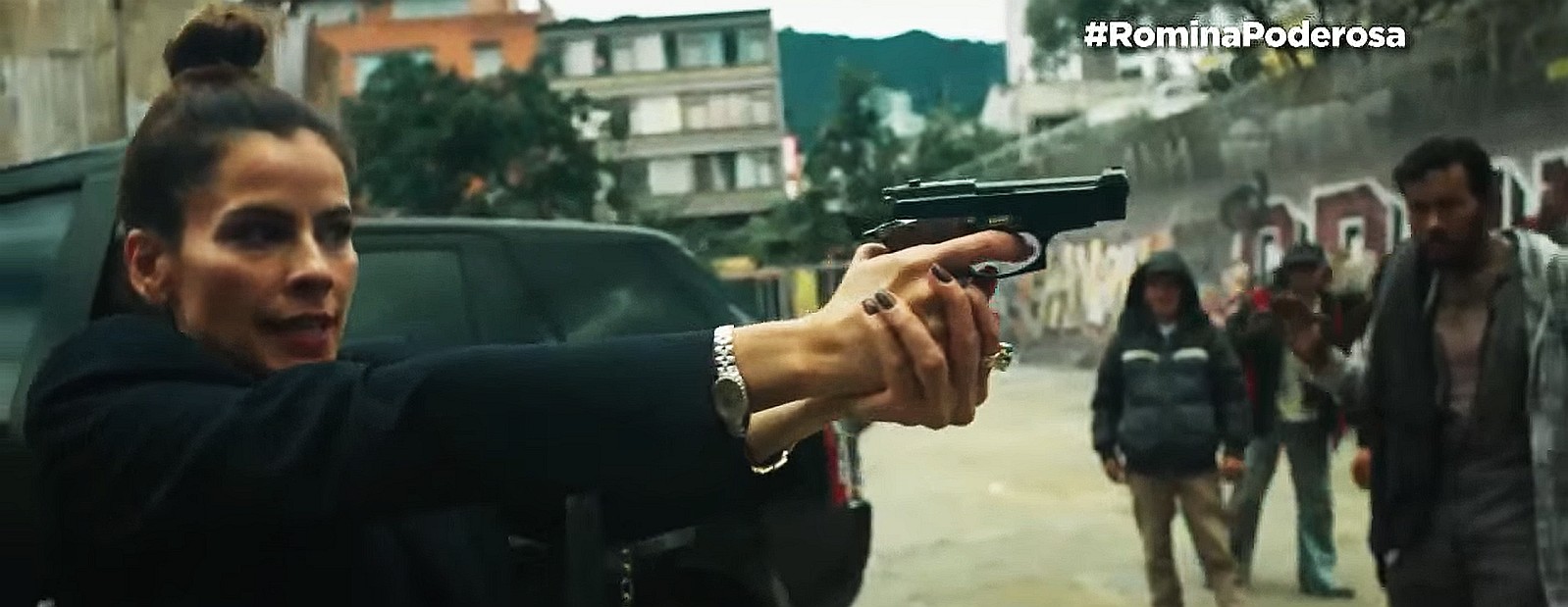 ★★★
★★★ These two elements clash, when the Chitiva brothers order the assassination of Romina and her mother. Except, it’s actually Laura is killed, while visiting her mother in the barrio. Romina escapes, and decides the best option is to pretend to be dead, and indeed, pretend to be Laura. However, Romina/Laura is intent on bringing those responsible for “her” death to justice, and it’s not long before reports of Romina’s ghost haunting her old stomping grounds are passing around. Investigating from the position of law is honest cop Cristobal “Whiz” Ruíz, who eventually comes to know Romina’s secret. But in another twist, the crime lord at the top of the tree, above the Chitivas… is Laura’s mother, Virgina Vélez (León).
 I guess the title is trying to riff off Gang’s of New York, though this is set significantly later. It begins in 1884, when the Apache gang run the Parisian underworld. Young orphans Billie, Paulie and Tricky are on the fringes, until Tricky is killed when forced to play Russian roulette by the gang’s leader, Jésus (Schneider). Billie is framed for the death by a corrupt cop, and spends fifteen years in jail. When she gets out, now a grown woman, Billie (Isaaz) seeks revenge on all those responsible for Tricky’s death, infiltrating the Apaches to get close to Jésus. Matters are complicated, by the presence in the gang of Paulie (Paradot), who was brought up by Jésus, and also by the seductive nature on her of the Apache lifestyle.
  ★★
★★ After the unexpected pleasure of
  ★★
★★ It’s worth mentioning a couple of reasons I don’t think had much impact. Some suggest the actors’ strike handcuffed the film, preventing the stars from doing publicity for it. Others blame a backlash against women-led movies. But neither of these seem to have affected other entries. For instance, you might have heard of this little woman-led film called Barbie? It did okay, or so I’ve heard. You don’t need to invoke conspiracy theories to explain The Marvels‘ failure. The fact it’s taken me, a devoted fan of action heroine movies, more than seven months to get round to watching it, probably tells you all you need to know.
 If I was feeling mean, I’d have tagged this as “Pretty shitty Bang Bang”. But while undoubtedly amusing, that wouldn’t be 100% fair. For in the field of low-budget urban action heroines, this is actually better than most. Now, by broader standards, that’s still not exactly great. However, I’ve seen enough of the genre to appreciate and welcome mere technical proficiency. Simply by having decent audio, I was already impressed. It’s the story of Kiara Sommers (Nunno-Brown), a former soldier who is now a prosecuting attorney. During a meet with one of her informants, she is shot and left for dead, but rescued by another veteran, Ray Smith (Parrish) and nursed back to health. [I’ve vague memories of a Chow Yun-Fat film with this plot]
 This was Ray Liotta’s last movie: he died during shooting. Cruel though it may be, I can’t help wondering if he died of embarrassment. Certainly, I note that his character never gets a proper send-off: while I must remain vague for spoiler purposes, you don’t see his face. Not that he’s in this much. A rambling conversation with the heroine is the bulk of it. But that’s getting ahead of ourselves. We begin with single mom Alma (Burrows) dragging unwilling teen daughter Rose (Rush) on a sailing trip from Florida to Barbados. The boat belongs to her new boyfriend, ex-cop Derek (Dane), and at first, things are pleasant, despite Rose’s obvious desire to be anywhere else but on the high seas.
 This shouldn’t be confused with the BBC