
Relentless Justice

★★
“1980 called. They want their action film back.”

relentlessBefore his death last August, Prior had a long career churning out straight-to-video action flicks with amazingly generic titles. Have a few samples. Deadly Prey. Death Chase. Invasion Force. Raw Justice. You get the idea. He was also responsible, on this site, for Mankillers, and returns to the female fray with this, which also mines another popular trope of the action film genre, the “hunting of humans”, which dates back to 1932’s The Most Dangerous Game.

Victoria De Vries (Sarelle) is a quiet suburban mom – albeit, one who happens to be the owner-operator of a martial-arts gym, and who used to be a member of Australian special forces. Her daughter heads off for a weekend’s camping with her boyfriend, but runs afoul of the local rednecks, led by local mayor Jason Macendale (Wells). They slit his throat and kidnap her – but when they discover mom’s background, use her daughter as a lure for their next bit of sport. Little do they know what they are getting into, however, and may have bitten off a lot more than they can chew, even with help from another special forces veteran, Joe Mangine (Rolston).

I had to think for a while and figure out why Sarelle’s name was familiar, and eventually remembered she played Sharon Stone’s girlfriend in Basic Instinct, back in 1992. Hardly seen her in anything since, and she’s certainly changed a bit – now, all “mumsy” and sporting an Australian accent for some reason that serves no apparent purpose, not even a  “That’s not a knife…” joke. The main problem here, is it takes way too long to get to the crunchy stuff, of Victoria kicking ass and breaking bones – literally, the final ten minutes of the movie have all the good stuff there. Up until then, you’ve got a lot of sitting around chit-chatting, with Roberts wheeled on for a role of absolutely no relevance at all, playing a big city mobster.

Sarelle isn’t actually too bad; from what I’ve read Kathy Long, five-time world kickboxing champion, was in charge of stunt coordination and fight choreography, and seems to have done a decent job in making the heroine look credible. Unfortunately, the same can’t be said for everyone else, and in particular there’s one knife fight, which is among the most cringe-inducingly terrible of all time [names redacted to protect the inept]. This all might have passed muster in a more innocent time, when audiences were happy to put up with low-rent former stars running around a forest, while someone shoots them with a video camera, accompanied by a low-fi synth soundtrack (courtesy here of the workmanlike Chuck Cirino, who has been a staple for the likes of Jim Wynorski over the past three decades). Now, viewers are… well, if I’m reluctant to say “more sophisticated”, this kind of second-tier production needs to be a good deal more self-aware, or at least provide something not findable in better quality with three clicks on Netflix.

Dir: David A. Prior
Star: Leilani Sarelle, Mark Rolston, Vernon Wells, Eric Roberts

Curve

★★★
“A feature-length advert for NOT wearing your seat-belt.”

Mallory (Hough) is driving to Denver for her wedding, though has some qualms about the upcoming event. She opts to take the scenic route, but her car breaks down – she’s startled, but delighted, when back-packer Christian (Sears) shows up out of nowhere to fix it. She offers him a lift, only to find once they hit the road, he’s a couple of sandwiches short of a picnic. Realizing the dire straits she’s in, and that she’s wearing her seat-belt while he isn’t, she opts to crash the car into a ravine. However, the result is the exact opposite of what she wants: Christian is thrown free, and Mallory trapped by her ankle in the wreckage. Realizing he has a captive toy, Christian wanders off to terrorize the residents of a nearby cabin, but pops back occasionally to taunt his victim, who is forced to extreme measures to survive, while trying to figure out a way to escape.

curveIt’s a perfectly reasonable way to pass the time, and given its obvious limitations – there are barely a handful of speaking parts and the bulk of the running time takes place in and around the single location of Mallory’s car – works within them reasonably well. It’s a little weird to see Hough, whom we recently watched play Sandy in a televised “live” version of Grease, cooking and eating rat, and contemplating going all 127 Hours on her leg, but she pulls it off decently enough. Less effective is Sears, though he has the problem of walking in the footsteps belonging to the pinnacle of psychotic hitch-hikers, Rutger Hauer in The Hitcher; it’d be hard for anyone not to be overshadowed by that comparison. On the other hand, I like the way Mallory is thrown entirely on her own resources: there’s no knight in shining chain-mail coming to her rescue here.

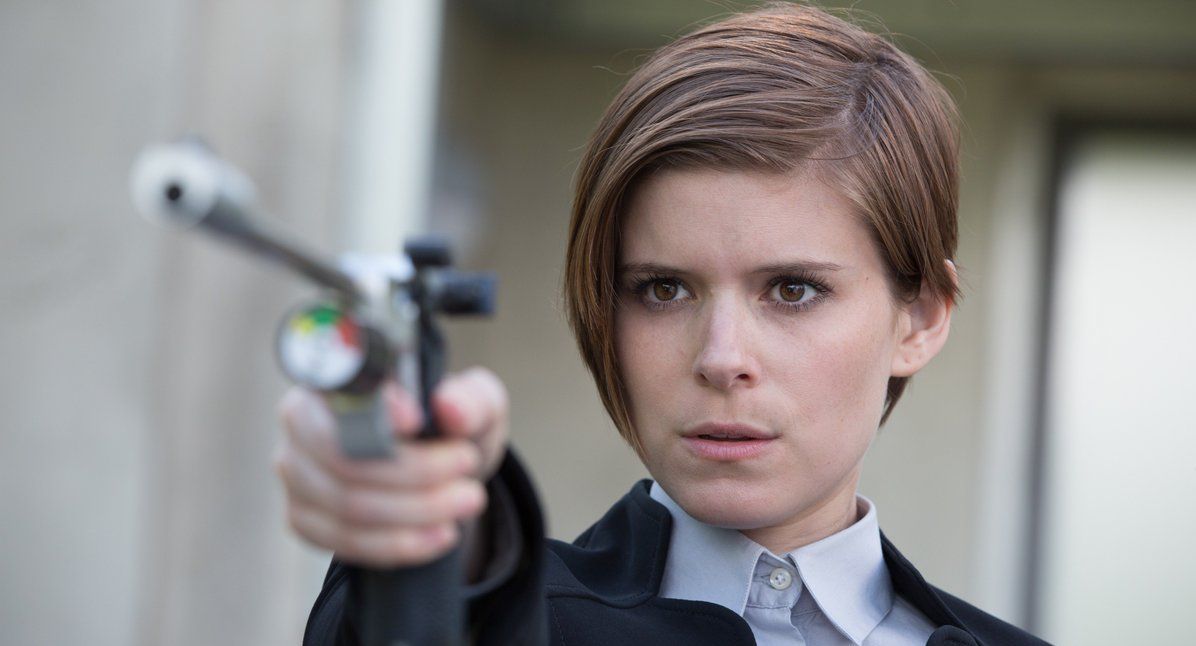
For obvious, ankle-related reasons, this only kicks into high gear once the heroine has extracted herself from the car, and the boot goes, at least somewhat, onto the other foot (hohoho), as she begins to hunt Christian – the still, above, is obviously from the later section. It likely does take a little too long to reach this point, and once it gets there, offers at least one element of shamelessly obvious foreshadowing, which had me rolling my eyes when it appeared, then again when it came to pass. Yet I can’t say this affected the overall respectable level of enjoyment provided here. No-one could ever describe this as ambitious, and I was surprised to discover this was by the director of Hackers, as it seems a much smaller work. That aside, there’s something to be said for aiming low and hitting your target, rather than over-estimating your resources and talents, then falling short. This definitely falls into the former categoty.

Dir: Iain Softley
Star: Julianne Hough, Teddy Sears

Mythica: The Iron Crown

★★★★
“Mythica makes its mark.”

mythica4While this fourth entry in the Mythica series is certainly flawed, I have to confess, I found it hugely entertaining. There’s a very strange Mad Max vibe present here, and no small amount of steampunk influence. But despite (or, perhaps, because of?) this, I still enjoyed it the most of the series to date. It’s basically a feature length chase sequence, beginning with heroine Marek (Stone) and her two sidekicks ambushing a powered wagon, on which is being transported the fourth part of the DarkSpore. This must be kept, at all costs, from falling into the hands of the evil Szorlok, as he already has the other three. They succeed, picking up a zombie princess in the process. However, they then have to transport it to a secure location, while under attack from:

  • Szorlok’s trio of undead warrior minions. Fortunately,  Szorlok himself is otherwise engaged, having been yanked through a portal into another dimension by Obi-Wan Gojun Pye (Kevin Sorbo), where the two duel using their magic.
  • Owner of the wagon, Admiral Borlund Hess (Eva Mauro), is miffed at the hijack, and ambushed them from her airship and squadron of attack hang-gliders (like I said: Mad Max meets steam-punk).
  • A mercenary crew is also after the DarkSpore. Their employer wants to barter it with Szorlok, who currently has the titular headwear, which allows the owner to rule over the dwarfs.

Oh, and we also hear about the Hammer of Tek, a legendary, long-lost weapon that can destroy anything… even the DarkSpore. File this away for future reference, it may be important later, and should be quicker than a trip to Mordor, anyway. So plenty going on, and it’s more or less non-stop, beginning with a 20-minute action sequence which sets a fast-paced tone, that barely lets up thereafter. It’s largely a light-hearted contrast to the darker, almost brooding, atmosphere hovering over part three; not entirely a bad thing, since even the most serious of legendary sagas benefits from a slice of levity. It’s perhaps not the kind of style on which you could found an entire, mythic universe (unless your name was Terry Pratchett), yet as a one-off, I haven’t enjoyed a fantasy film this much in quite a while.

There are still a couple of mis-steps, such as a woeful attempt to depict pilots from the attack hang-gliders dropping into a shallow lake. I’m also concerned about how death appears to be not much more than a minor inconvenience. People are returning from the grave rather too often – frankly, once is too much, for a loophole I’ve hated since the episode where Buffy Summers came back to life. I know fans and creators get attached to characters, but if you kill someone off, then bring them back, what’s left in the way of threat? On the other hand, you can argue it’s not entirely out of character in an entry that’s likely a bit of palate-cleansing before the grand finale of The Godslayer. Suspect there’s not going to be much amusement to be found with that title.

Dir: John Lyde
Star: Melanie Stone, Jake Stormoen, Adam Johnson, Ashley Santos

Memories of the Sword

★★★
“Looks lovely, yet literally loses the plot.”

memoriesoftheswordThe first 30 minutes of this are truly splendid: it’s got wonderful visuals, along the lines of Hero or House of Flying Daggers. But then, it’s as if the makers completely forgot about the story-line. The remainder of the two hours consists of semi-random scenes, half in flashback, featuring characters who apparently change names at random. While it still looks awesome, unless you have a detailed synopsis printed out in advance, you’re going to be reduced to going “Ooh!” and “Eh?” in roughly equal proportions.

As best as I can tell, the story is this. Hong-ee (Kim), also known as Seoi-hee, is a young martial arts prodigy, trained since birth by her blind foster mother, Seol-rang (Jeon), a.k.a Wallso. After Hong-ee’s talents become public knowledge, Wallso reveals the motive for the training. A long time ago, as Seol-rang, she was one of three rebel group leaders. The group were betrayed to the authorities by another leader, Deok-gi (Lee BH), who was rewarded with a position as the ruler’s right-hand man, and is now known as Yoo-Baek. He once loved Seol-rang, and realizes that Hong-ee is the daughter of the third leader, Poong-Cheon. [Fortunately, he was killed by Deok-gi, so does not complicate the plot further, under that or any other name] She has been brought up to act as an instrument of revenge, driven by the knowledge that Yoo-Baek killed her parents.

There is, it appears, a bit more than that going on, particularly in the middle hour where… other stuff happens. For example, there’s the inevitable romance between Seoi-hee and another young fighter, Yoo-Baek’s champion, Yull (Lee JH). This seems to have been added purely for cynically commercial purposes, though since it largely tanked at the Korean box-office… The action scenes are generally well-staged, though some of the CGI looks more than a little unconvincing. Some moments reminded me of Shaolin Soccer, and there has been close to 15 years of technological advances since then. It’s on more solid footing when using wire-fu, and both female leads are convincing enough in their skills.

The high level of confusion likely generated, however, means this isn’t going to be much more than empty emotional experience. You’re left so busy trying to figure out who’s doing what to whom, and why, you don’t have time to care about the participants. That’s why it falls so significantly short of the films it’s clearly trying to imitate, particularly Crouching Tiger. Instead, what you have here is purely cinema as spectacle. Not that there’s anything inherently wrong with this approach, of course. It’s just that when so much effort has been put into the technical aspects, you’re inevitably left wishing for more. If only the film’s heart and soul had been as diligently worked on as its cinematography.

Dir: Park Heung-sik
Star: Kim Go-eun. Jeon Do-yeon, Lee Byung-hun, Lee Jun-ho

Mythica: The Necromancer

★★★½
“In which Mythica levels up…”

mythica3Was it really less than a year ago I watched and reviewed the first two entries in the series? Feels much longer somehow, which probably indicates how little of an impression they made. This is rather better, I think. The special effects have gone from “best not looked at directly” to “actually enhancing the feel of the film,” especially when magic spells start flying. Central character Marek (Stone) is coming into her own, but the increased power poses increasingly difficult moral choices. That’s especially so, because nemesis Szorlok is closing in on his goal, of getting all four fragments of the DarkSpore, which will allow him to unleash an undead army on the world. How far will Marek and her allies be prepared to go, in order to stop him?

Here, however, the quest is somewhat tangential. Fighter Thane is captured by the head of the Thieves’ Guild, and used as leverage, forcing the other three on a mission to retrieve some cargo. To make sure they comply, he sends along his creepy minion, Betylla (Brodie), who uses beetles to communicate with his master. However, Szorlok is lurking in wait, and just when they think they’ve completed their task, and can return to free Thane… We’re back on the main storyline again, and the “Redthorns” (as the team has taken to calling themselves, a homage to the team of mentor Obi-Wan ) may be heading towards a significant reduction in permanent staffing levels. If you know what I mean, and I think you do.

If there is still very much the feel of an AD&D adventure here, the players here seem to be growing into their roles, with a better sense of the relationships between them. Here, the most interesting arc belong to priestess Teela (Posener), who has to decide what matters to her, and where her faith lies on that scale of importance. Particularly toward the end, it’s certainly the darkest in the series, and you get a sense that this is going to be an increasing theme. Shit’s getting real, as I believe they say.  Turns out this is now a five-film series, rather than the three I wrote in an earlier review. With one piece of the DarkSpore still left for Szorlok to acquire, I’ve a feeling after this one that I know what the fourth installment is going to involve, setting up a grandstand finale.

I’m not sure if they spent more money here; it does feel more expensive. Either way, I’m a bit more hopeful the film will be able to deliver on what it’s building up to, than after the last installment. New director Smith was cinematographer on those, and brings a suitably epic feel to proceedings, mixing the practical and visual effects into a coherent whole. I found myself sufficiently enthusiastic to head straight into part four, with more anticipation than I’ve felt to this point.

Dir: A. Todd Smith
Star: Melanie Stone, Jake Stormoen, Nicola Posener, Philip Brodie

Rosario Tijeras (TV series)

★★★½
“Scissors cuts… well, just about everything.”

rosario2As previously noted, one of the trademarks of the telenovela is the flashback, and the one we get here is a doozy. For, this begins with Rosario Tijeras (Yepez) being shot and rushed to hospital, prompting frantic phone-calls to her yuppie boyfriend, Emilio (Martinez). It then rewinds some five years, to show the events by which everyone got there, and takes roughly 45 episodes – three-quarters of the series! – to catch up and once more reach the point at which it began. Admittedly, this does reflects the structure of the source novel, and I don’t know if that’s why the final quarter feels like a marked improvement in terms of pacing and energy: the critically-injured Rosario is hunted in the hospital by those who want to finish the job, and has to be rescued by her brother Johnefe (Restrepo) and his crew – along with an unwilling doctor, to tend to Rosario in a workshop. From there, it’s an escalating series of death, betrayal, death, death, tragedy and death, with a body count that makes Hamlet look like Mary Poppins.

This is, however, getting well ahead of ourselves, and you have to trudge through your fair share of soap-opera drama and “love across the class divide” to reach these excellent 15 final episodes. It begins with Rosario still a schoolgirl, albeit a rebellious one: an incident where she gives a teacher an unrequested hair-cut gets her and pal Dayra expelled, but also gets her the “Tijeras” (scissors) nickname, and wins the heart of Antonio de Bedout (Sandoval), a student visiting her school as part of a college project. He is the son of a rich businessman! She is the daughter of a poor but honest beautician! They keep just missing each other, even though her mom does house-calls on his sisters! But, wait! There’s more! His best-friend, Emilio (Martinez), gets to Rosario first, and they begin a torrid romance! But he’s already in a relationship with Paula, a girl from his social level! Okay, enough already. Although I think I probably used up the entire month’s quota of exclamation points there, they did not die in vain – you presumably get the picture.

tijerasFortunately, that’s not all that’s going on. After their expulsion, Dayra and Rosario work for the latter’s sleazy step-dad in the local market, selling cellphone minutes. Not cellphones. Cellphone minutes. They have a set of mobile phones chained to them, one for each carrier, and rent them out to whoever needs to call – I believe it’s the result of a market where calls between networks is extremely expensive, so if you want to speak to someone whose mobile uses a different carrier, it’s better to pay a small mark-up to a third-party. This demonstrates one of the confusing joys of watching foreign shows; the cultural differences, with things that seem strange to an outside, yet make perfect sense as part of the cultural norm, to locals.

I digress – but given a show telling a single story over 60 episodes, so does the series, so we’re even. Anyway, the girls’ job brings them into contact with their stepfather’s boss, Gonzalo González, whose even sleazier, and has a “thing” for young virgins. Hoping to make her way out of the slums, Dayra sashays into Gonzalo’s ranch, but when he discovers she is not quite as pure as advertised, his revenge is swift and brutal, and her lifeless body is found on a patch of wasteland. Meanwhile, Rosario is having issues of her own, culminating in her abduction and rape at the hands of a local gang led by Cachi. She takes revenge there first, castrating him, and then goes after Gonzalo – although the plan is for Johnefe to help her, she ends up entirely on her own resources, but doesn’t flinch, and he becomes her first victim. Gonzalo’s drug-running rival, Adonai, known as “The King of Heaven” is delighted by her actions, and the first phase of the show ends with her becoming part of his organization.

We then fast forward a few years. Emilio and Antonio encounter Rosario again, in a nightclub, and begin their dalliance anew, unaware that she was there on a job for the King, and is now a feared and notorious assassin for him. The love triangle is more of a love quadrilateral, thanks to barrio boy Ferney, and it’s this which provides the key to the Shakespearean events of the second half. Rosario discovers evidence that the king’s brother, Teo, is deceiving him, having swapped out two tons of cocaine for sugar, blown up the plane on which the cargo was being transported, then sold the real thing off to another buyer. Teo realizes Rosario must be silenced, and convinces Ferney that he has no chance with her, when put beside the rich yuppies, and that she’s going to betray her roots for a future as part of the upper classes to which the pair belong. And that’s how we eventually end up, 45 episodes later, back where we started, with Rosario being rushed to hospital.

The early going is certainly more soap-opera than anything else, it still makes for adequate entertainment, with the good characters appropriately likeable, and the bad ones suitable evil. That said… Damn, the guys in this show appear to be almost entirely driven by their genitalia. In particular, Emilio has absolutely no issue with bedding Rosario, even as he is going out with, then engaged to, and even married to Paula Restrepo, an aspiring model. She shows rather more tolerance for his roaming than I would, and I can’t really blame her for eventually taking steps to remove Rosario from her married life. But Emilio is hardly alone: there’s an entire subplot involving Antonio’s father, Luis Enrique, who has been having a long-time affair with his secretary, including a secret daughter, which may explain his wife’s heavy drinking. Not sure how much of this is in the book, and how much is additional padding: I suspect the latter, since when you’ve got 60 episodes to fill, you’re likely going to need more material than a single novel. Some aspects does appear directly derived, however – or, at least, were also in the film version, made five years previously.

rosario3One such is the funeral of one character: it appears such events, at least in the Medellin slums, are rather less… formal than we’re used to. By which, I mean the corpse is paraded about on a sun-lounger, to loud reggaton, then placed on the back of a motorcycle which pulls wheelies around the neighbourhood. Like I said: these kind of cultural differences, can only be accepted for what they are. Though it might have helped if Netflix had the same person subtitle all the episodes, as there are sometimes confusing inconsistencies. It took me a while to figure out that characters called “Querubin” and “Mago” were the same ones called “Cherub” and “the Magician” elsewhere, depending on whether the subtitler bothered to translate their names.  Even more confusing, Netflix managed to list one episode entirely out of order. When watched in the order provided, this led to Luis Enrique’s affair-daughter suddenly being held to ransom, for no apparent reason, then being released, and only finally, getting kidnapped – at which point, it all made sense, rather than being some particularly obscurist structure involving nested flashbacks.

One aspect worthy of note is that the police aren’t shown here as being particularly corrupt or bad, in contrast to some I’ve seen where they are the “bad guys”. Detective Pamela Pulido, played by Jenny Vargas Sepulveda, is both honest and smart, and gets a fair amount of screen-time as she tries to disentangle the increasing mess with her partnet, Isaak – in particular, by turning up the heat on Emilio and Antonio. [During filming, there was an odd incident where Sepulveda was arrested and held for five hours, at the airport on the way to Medellin, after her luggage was inexplicably found to contain a number of live rounds of ammunition!] Rosario’s second step-father, Libardo, is also a member of the police force, though his morality turns out to be considerably more murky, even if some of his actions largely appear to be driven by concern for the welfare of his step-daughter.

I’d have liked to see more from the period over which the show entirely skips, showing Rosario’s rise to the top of the King’s accomplices, rather than the various subplots involving the business and property dealings of the de Bedout family. The show is called Rosario Tijeras after all, and should be about the heroine and her lethal exploits, not country-club memberships and tennis matches. Still, even during the lengthy periods where it focuses more on the drama than action, the cultural freshness and generally engaging nature of the people depicted, kept this ticking over. Rosario herself makes for a very good and strong heroine, who takes absolutely no shit from anyone, and when life gives her lemons, she makes lemonade – albeit, one imagines, only after repeatedly stabbing the lemons with a pair of scissors.

Star: Maria Fernanda Yepez, Andres Sandoval, Sebastián Martínez, Juan David Restrepo

Survival Instinct

★★
“Gratuitous violins.”

survival-instinctStacey and and Thom are on their way to a friend’s wedding, where she’ll also be providing the music, when their car breaks down. Stacey walks back to a garage they passed, but while she’s away. Thom is accidentally shot by father and (unwilling) son hunting duo, Weaver (Coughlan) and Rex (Smith). Realizing their victim was not alone, they wait for Stacey to return, so her presence as a loose end can be tidied up. But Rex’s reluctance to pull the trigger gives her a lifeline, and begins a game of cat-and-mouse through a remote, wooded area of the Derbyshire Peak District.

I guess the aim is something like a British version of Deliverance, but the resources aren’t there – and neither are the performances, direction and script, none of which reach above workmanlike at best. The worst offender is the script, which frequently had me rolling my eyes at the stupidity of the characters, who frequently behaved in ways that made no sense in real-life, purely for cinematic purposes. Not the least of these is the way Stacey suddenly opts to start carrying her precious violin around with her for the final sequence, having not apparently given a damn about it before that point. You don’t have to be a seer to predict why this is needed.

The idea isn’t a bad one, and the cinematography is solid, with the locations used photogenic. However, the action is nothing short of awful, possessing absolutely no impact. While Crevel’s performance as Stacey is okay, she needs to be a much more pro-active heroine, trying to turn the tables on her attacker. Instead, she spends the first hour doing virtually nothing but running away, save for dropping a sign with a nail on it, hoping Weaver will stand on it. [Spoiler alert: inevitably, he does!] Coughlan does exude a nice, unhinged menace as the villain, and the script does attempt to give him both motivation and a back-story. Unfortunately, this isn’t conveyed organically, rather in large gobbets of monologue that tend to bring the film to a halt.

Clocking in at 75 minutes, including credits, is likely a wise decision given the paucity of the material present. It’s clear the budget here was limited – simply because how expensive can four people running around a forest be? Lawson deserves credit for not letting those resources be too obvious. On the other hand, money doesn’t excuse the apparent lack of effort put into a lazy script, apparently worked out on the back of a beer-mat one Friday lunch-time. The fact it had different titles while shooting (Rites of Passage), from its limited cinema run, then a third name for its DVD release, is perhaps another indication more forethought would have been helpful.

Dir: Steve Lawson
Star: Helen Crevel, Andrew Coughlan, Sam Smith, Jay Sutherland
a.k.a. Footsoldier

Pearl: The Assassin

★★
“Fake pearls.”

pearlI think perhaps the most memorable thing here was that, while doing my usual pre-review Googling, the search results returned with the warning that, “In response to multiple complaints we received under the US Digital Millennium Copyright Act, we have removed 35 results from this page.” I’m not sure whether I’m surprised or concerned that 35 sites apparently deemed this worth their while to rip and upload a bootleg copy of this, because it probably doesn’t deserve it. I may be particularly disgruntled due to the presence on the sleeve both of helicopters that don’t exist, and someone totally different from the heroine; half a star was docked from the grade for this. In reality, the star  (Patton, the director’s wife – he plays the florist she’s garotting in the picture, right!) looks more like Marilyn Manson, with a high forehead and close to no eyebrows.

Not that this is necessarily a bad thing – indeed, there’s something to be said for a heroine who challenges conventional notions of beauty, and Pearl does that, even if the distributor chooses to hide this behind a leggy, long-haired model type. She looks like a pissed-off killer, out for vengeance – not any longer on the people who killed her parents, for they were taken care of years ago, as others of that same type. Which would be criminals, drug-dealers, pimps, etc. She kidnaps meth scientist Erik (Morales), using his inside knowledge to work up the chain toward top boss Tre (Brown), while Detective Wyatt (Morafetis) follows the trail of bodies left behind Pearl, from the other end.

Even given my tolerance for independent, low-budget cinema, the action here was particularly poor, barely choreographed and possessing absolutely zero impact. Surprisingly, what worked better than expected were the characters, particularly Erik, who actually possesses something of an arc, going from a meth-head with few redeeming features into something of a tragic hero. By comparison, Pearl doesn’t move the needle very much: she starts off the film as a stone-faced killer, and more or less ends it as a stone-faced killer. You do get to see some of her backstory, but it seems more perfunctory, and it’s also simplistic in the extreme: someone killed her family, now everyone must pay. That might have worked for Charles Bronson forty years ago; now, audiences expect rather more nuance. Still, there was one genuinely shocking moment, demonstrating Tre’s utter ruthlessness, and I actually laughed at one of Erik’s lines. Overall, it’s a case of being able to see where the film-makers are aiming; unfortunately, the results fall significantly short of that target, and you’re probably better off sticking with the obvious sources of inspiration here, instead of this attempt to imitate them.

Dir: Guy Patton
Star: Dana Patton, Scott Michael Morales, Justin Brown, George Morafetis