



Literary rating: ★★★
Kick-butt quotient: ☆☆☆½
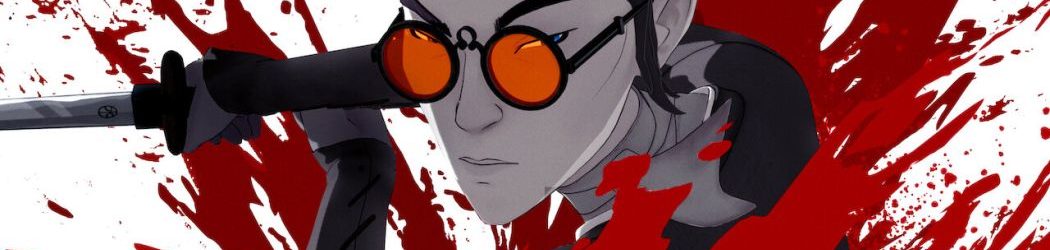
 The handling of this story is a little different from the usual novel. Julien adopts an “episodic” approach, with the story initially released in novella-length installments (seven of which have come out to the point of writing), some with cliffhangers. In structure, this is almost like the movie serials of old. Book 1, reviewed here, compiles parts 1-4. It’s set in 2087, when the authorities have gone back to a retro version of penal punishment: exiling criminals to a remote tropical island, from which there’s no escape, and where prisoners can pose only a danger to each other. 18-year-old Lydia Brone is sentenced to three years for killing her mother’s abusive boyfriend, so is dropped off (literally – out of a helicopter offshore), and left to make her own way on Kormace Island.
She is almost immediately captured by one of the existing tribes, under the control of long-term inmate Murk. To survive, the women have implemented their own society, with each being assigned a role necessary to the survival of the group. Brone is initially made a needlewoman, but after an attack by the “Northers”, a rival tribe, she’s re-assigned to learn archery. Daily life is not without conflict, with Brone being shaken down by another inmate, and eventually she realizes that attempts at practicing non-aggression can simply get you tagged as an easy mark. However, it turns out, there are much bigger problems at hand, with her entire new “family” coming under threat.
It’s an interesting, if somewhat uneven, character arc for Brone (she abandons use of her own first name quickly), as she evolves, mostly out of necessity, from scared teenager to battle-hardened warrior for the tribe. I say “uneven”, because it feels slightly inconsistent. At one point, she appears to say she was almost obsessive-compulsive about cleanliness, hygiene, etc. yet this is rapidly discarded, and he has few apparent problems adapting to a primitive lifestyle. I’d also have welcomed background information about the outside world: what brought us to the point where this solution was adopted? It has been running for decades, going by how long Murk has been there, and the apparent one-way nature of the place would seem to raise obvious questions. Do none of the women have friends or relatives on the outside waiting for them?
Julien does a good job with drawing the rest of the inmates, creating a set of characters whom are generally distinguishable, even if their back stories have a certain “society’s to blame!” similarity [not many of the prisoners accept full responsibility for the consequences of their actions, there’s always some excuse]. The episodic approach also means, almost out of necessity, a constant stream of incidents: there is, literally, never a dull moment here. The ending, admittedly, falls a bit awkwardly between two stools: it’s neither a satisfactory conclusion, nor dramatic enough to lure you into the next volume. This remained entertaining, however, and the almost complete lack of romance – for obvious reasons! – was a refreshing change from some recent entries.
Author: G. C. Julien
Publisher: Amazon Digital Services, available through Amazon, both as a paperback and an e-book.
Book 1 of 3
 Both Bell and Katon had worked with Santiago before, in



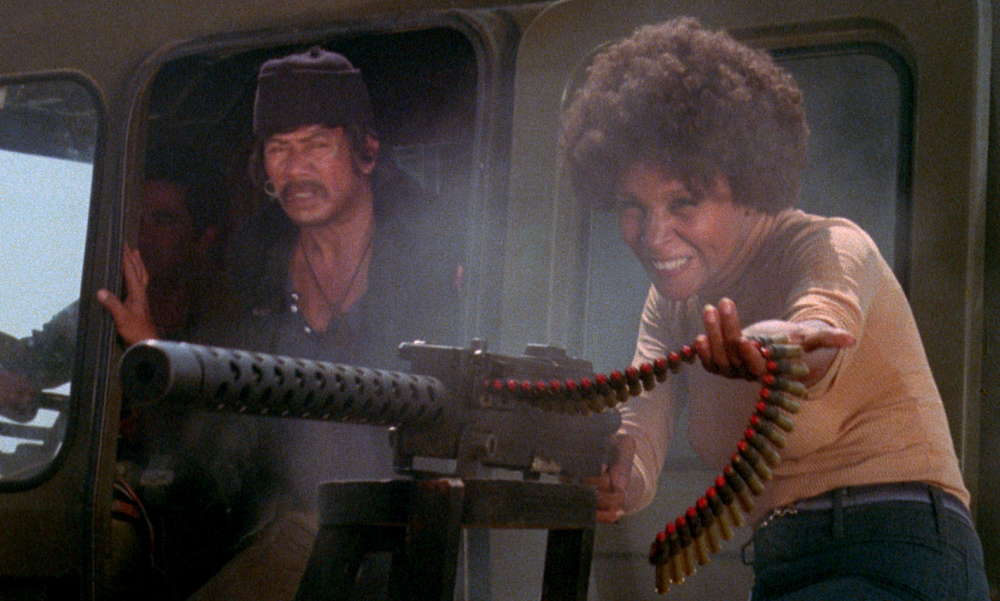
 Movie stunt-woman Laurie Collins (Chase) is out for the night with her sister, Bonnie, until the latter accepts the company of a young man. When things get more than a bit rape-y, and Bonnie ends up shooting her attacker dead. She is convicted of second-degree manslaughter, much to the chagrin of her sister. Worse is to follow after Bonnie is sent to prison, as there, she then falls foul of the jail’s top dog, Kay Butler (Martin). Bonnie soon turns up a corpse, with the incident written off as suicide, due to the heroine found in her veins. But Laurie doesn’t believe a word of it, and deliberately commits grand theft auto, among other crimes, in order to be sent to the same prison, where she can find those responsible, and make them pay for what they did to Bonnie.
 Undercover cop Gillian Kaites (Coll) needs a break from the force after an operation goes wrong, with her boyfriend and fellow cop being gunned down in front of her. She goes on a road-trip, but has the misfortune to go through a town where the local cops are in league with the prison to arrest fetching young ladies on fabricated charges. They can then be shipped off to jail and… Well, the script is kinda vague on the specific purpose behind this, clearly quite significant, operation involving a large number of people and no small effort. Let’s give them the benefit of the doubt, and presume the ends, whatever they may be, justify the means. Gillian ends up framed for drug possession, and has to survive against brutal guards, brutal fellow prisoners and matron Mrs. Puskar (Trevor) – in the interests of sustaining suspense, I will avoid revealing whether or not she is brutal. Eventually, the brutality on display becomes too much, and she leads the inmates in a revolt against their cruel captors. In other words: women in prison plot 3A.
 The comparisons of Takigawa to Lazenby above proved appropriate in another way, both being canned after one entry playing the iconic title character, which is probably just as symptomatic of something. The replacement here as Nami Matsushima is Natsuki, who seems to go back toward a more taciturn heroine, closer to the original. But it’s, effectively, another reboot, with not even a nod to the previous entry. In this case, the heroine is a nurse, framed for her involvement in the hospital murder of a politician who was threatening to expose corrupt practices.
 Just goes to show that the “cinematic reboot” is not a 21st-century invention, e.g. Batman or James Bond. For a mere three years after Meiko Kaji showed her sting as Nami, the studio reset the series, giving it a new director, new (and much more talkative) lead actress, and returning Nami Matsushima to a happy, criminal record-free young women, with a loving boyfriend. Except, of course, he turns out not to love her quite as much. Things start to collapse after her sister uncovers evidence of major government corruption, and passes it to Nami, shortly before being kidnapped. After Nami uncovers the truth – her sister is killed and she is framed for the murder, with the help of her boyfriend, and sentenced to 15 years in prison. Initially an easy mark for the tough girls in her cell, Nami soon develops her mean streak. And she’s going to need it, because the politician behind it all is looking to tidy up the loose end she represents, by killing her and making the death look like a suicide. Name turns the tables, in incendiary fashion, and it’s clear that she’s one loose end that won’t be quietly disposed of.
 Nami (Kaji) is about to get married, but her wedding day is rudely interrupted by the arrival of the cops, who arrest her. On the way to prison (and, unsurprisingly, death row, given the body count left behind in the previous three movies), she takes out the driver, causing a crash. The injured Scorpion staggers away, and is rescued by Kudo (Tamura), a former political radical who was brutalized by the police for his actions, and so has a massive load of resentment against them. After being informed of Kudo’s harbouring of Nami by a worked at the sex-club where he works, the cops take him in: and use both physical and psychological torture to try and make him give up her location. Eventually arrested, Nami is sentenced to death, but the cops intend to make sure the time leading up to her execution is as unpleasant and possible, and the detective in charge, Hirose (Tsukata), is intent on making even Nami’s death as lonely an experience as possible.
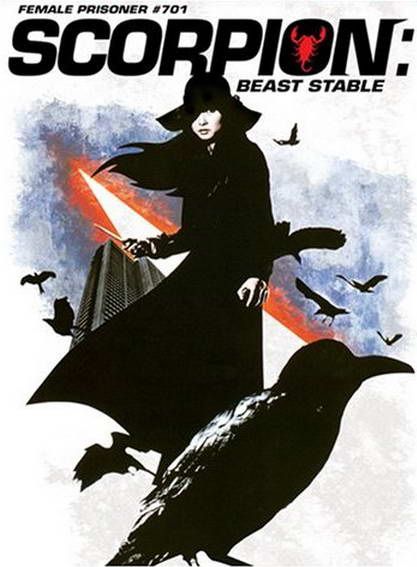 When this begins, Nami (Kaji) is on the run, and slices the arm off Detective Kondo (Narita) after he handcuffs himself to her. She befriends street hooker Yuki (Watanabe), who runs foul of the locak Yakuza gang by turning tricks on their turn, while trying to care for her brain-damaged brother, whom she also services sexually, to stop him from raping women(!). After Nami is involved in the death of a gang member who was blackmailing her, the gang’s madam Katsu (Lee), who knew the Scorpion from her own prison days, captures her, locking our heroine up in a literal big bird-cage. But after the true horror of the Yakuza’s treatment of their women is revealed (it starts with a golf-club going where no golf-club should ever go), Nami escapes and carves a bloody path of revenge on those responsible. When Katsu realizes what’s going on, she turns herself in to the police, figuring jail will be safe from Sasori’s wrath. Take a wild stab in the dark… Which, by coincidence is exactly what Katsu deserves.