
★★★½
“And we bid a fond farewell to Nami, and a third different actress.”
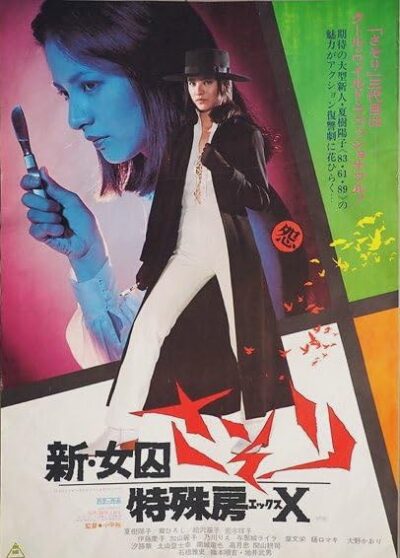 The comparisons of Takigawa to Lazenby above proved appropriate in another way, both being canned after one entry playing the iconic title character, which is probably just as symptomatic of something. The replacement here as Nami Matsushima is Natsuki, who seems to go back toward a more taciturn heroine, closer to the original. But it’s, effectively, another reboot, with not even a nod to the previous entry. In this case, the heroine is a nurse, framed for her involvement in the hospital murder of a politician who was threatening to expose corrupt practices.
The film starts with her being sent back to jail after a failed escape attempt: that resulted in the rest of the inmates being punished, and they’re none too pleased to see her brought back. There’s also a pragmatic guard who is happy to keep the inmates supplied with cigs and chocolate in exchange for peace, but his position is threated by the arrival of a new head of “security”, with a much tougher stance. After trying to expose the abuse to a visiting dignitary, he ends up in hot water, and teams up with Nami, the pair going on the lam through the mountains, chained to each other – it’s a bit like Black Mama, White Mama, with characters forced to work together for their mutual benefit.
In some ways, this feels like a combination of the first two movies: it has the “woman wronged by the man she loves” theme of the original, and then the “escape through a blasted landscape” plotline from its immediate sequel. There’s also the usual helpings of abuse, though the sexual content here is significantly toned-down, with Natsuki barely showing a nipple. On the other hand, the S&M seems more intense, most notably a scene where multiple prisoners are bound and hung up, to be brutally beaten. By this point, I’ll confess that my interest in that aspect, never exactly great, was all but non-existent. Things did perk up post-escape, with some excellent cinematography, as the pair struggle through the deserted landscape [it’s easy to forget how concentrated the Japanese population is, leaving some areas almost desolate]. Of course, it ends with another vengeful confrontation for Nami – not for the first time, on a roof.
The paucity of original ideas to be found here likely indicates why the series went into dormancy thereafter. As a way to wrap up, however, it works fairly well, particularly if you consider it as a “greatest hits compilation” from the preceding entries. While Natsuki still falls short of the intensity brought to the role by Kaji, she is an improvement on Takigawa, and this moves at a brisk enough pace to sustain interest, even in a viewer looking for less prurient aspects.
Dir: Yutaka Kohira
Star: Yoko Natsuki, Masashi Ishibashi, Hiroshi Tachi, Takeo Chii
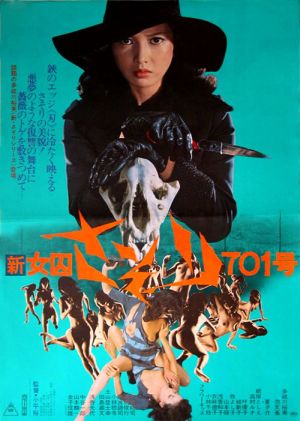 Just goes to show that the “cinematic reboot” is not a 21st-century invention, e.g. Batman or James Bond. For a mere three years after Meiko Kaji showed her sting as Nami, the studio reset the series, giving it a new director, new (and much more talkative) lead actress, and returning Nami Matsushima to a happy, criminal record-free young women, with a loving boyfriend. Except, of course, he turns out not to love her quite as much. Things start to collapse after her sister uncovers evidence of major government corruption, and passes it to Nami, shortly before being kidnapped. After Nami uncovers the truth – her sister is killed and she is framed for the murder, with the help of her boyfriend, and sentenced to 15 years in prison. Initially an easy mark for the tough girls in her cell, Nami soon develops her mean streak. And she’s going to need it, because the politician behind it all is looking to tidy up the loose end she represents, by killing her and making the death look like a suicide. Name turns the tables, in incendiary fashion, and it’s clear that she’s one loose end that won’t be quietly disposed of.
 Nami (Kaji) is about to get married, but her wedding day is rudely interrupted by the arrival of the cops, who arrest her. On the way to prison (and, unsurprisingly, death row, given the body count left behind in the previous three movies), she takes out the driver, causing a crash. The injured Scorpion staggers away, and is rescued by Kudo (Tamura), a former political radical who was brutalized by the police for his actions, and so has a massive load of resentment against them. After being informed of Kudo’s harbouring of Nami by a worked at the sex-club where he works, the cops take him in: and use both physical and psychological torture to try and make him give up her location. Eventually arrested, Nami is sentenced to death, but the cops intend to make sure the time leading up to her execution is as unpleasant and possible, and the detective in charge, Hirose (Tsukata), is intent on making even Nami’s death as lonely an experience as possible.
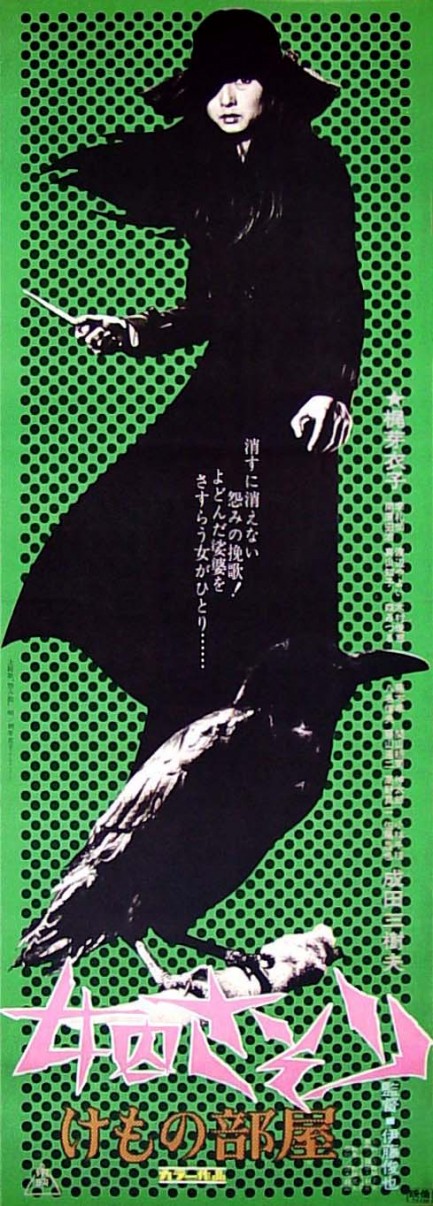
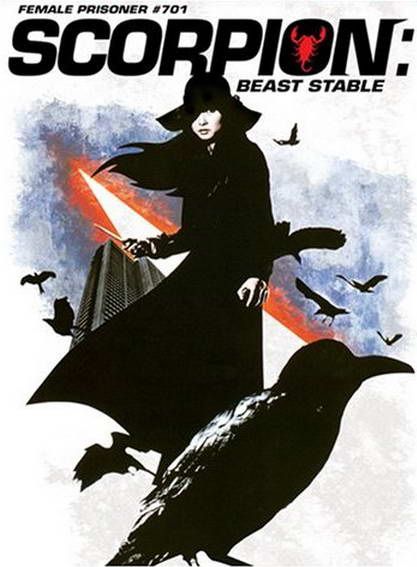 When this begins, Nami (Kaji) is on the run, and slices the arm off Detective Kondo (Narita) after he handcuffs himself to her. She befriends street hooker Yuki (Watanabe), who runs foul of the locak Yakuza gang by turning tricks on their turn, while trying to care for her brain-damaged brother, whom she also services sexually, to stop him from raping women(!). After Nami is involved in the death of a gang member who was blackmailing her, the gang’s madam Katsu (Lee), who knew the Scorpion from her own prison days, captures her, locking our heroine up in a literal big bird-cage. But after the true horror of the Yakuza’s treatment of their women is revealed (it starts with a golf-club going where no golf-club should ever go), Nami escapes and carves a bloody path of revenge on those responsible. When Katsu realizes what’s going on, she turns herself in to the police, figuring jail will be safe from Sasori’s wrath. Take a wild stab in the dark… Which, by coincidence is exactly what Katsu deserves.
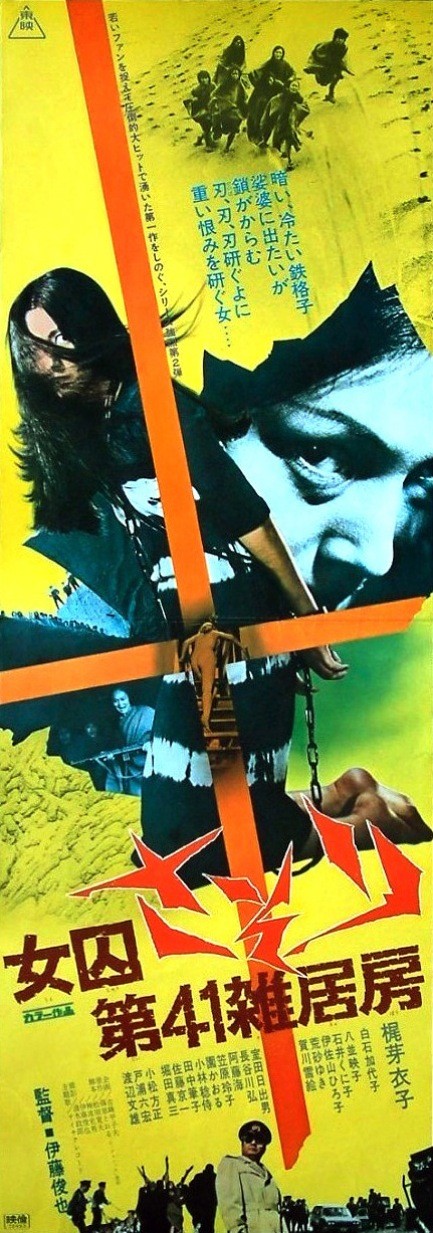
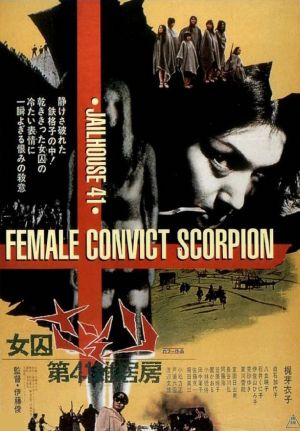 Right from the start, Nami (Kaji) established her utterly hardcore credentials, as she’s trying to dig her way out of the dungeon where she has been for the past year. With a spoon. Held in her teeth. She’s let out for the day because a bigwig is visiting, but takes the opportunity to attack warden Goda (Watanabe), almost depriving him of the sight of his other eye. As punishment for the resulting riot, Goda sends four guards to gang-rape Nami, and all the inmates are sent to a hard-labour camp. On the way back, they beat Nami as punishment, leaving her near-dead but it turns out that was just her ruse to get the guards to open the back of the van and escape. She leads the women across a blasted landscape, revenge once more on her mind, with Goda’s men in hot pursuit.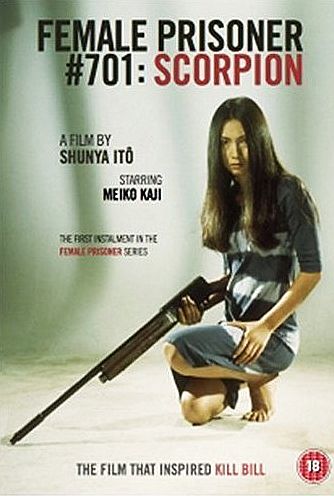
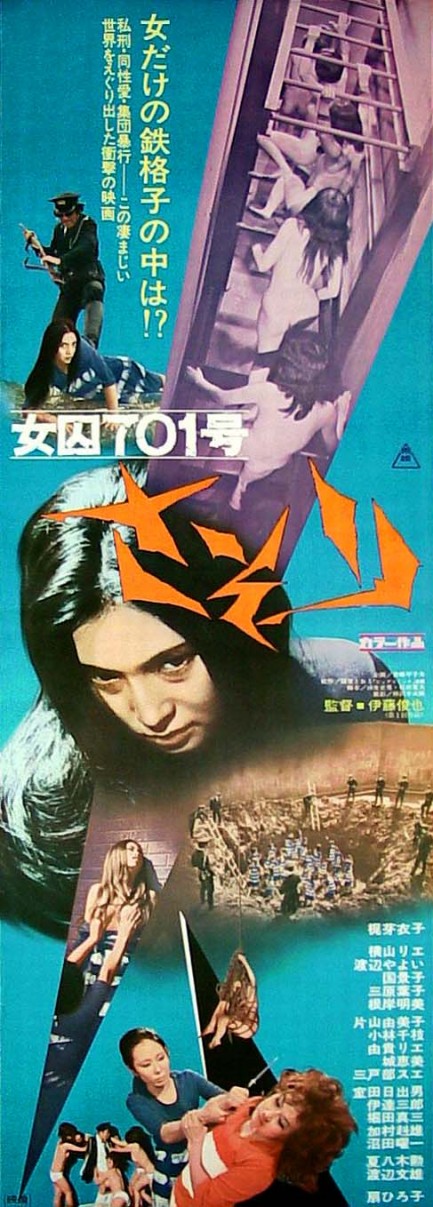
 This archetypal “women in prison” film is lifted above its colleagues in the genre, most of which are little more than crude exploitation, by being pretty damn sophisticated exploitation. The two main factors are Ito’s great sense of visual style, and Kaji’s almost-silent performance as Nami Matsushima. She ends up in jail after being betrayed by her cop boyfriend Sugimi (Isao), who turns out to be in league with the Yakuza he was investigating. Nami vows to escape, and the film starts with her doing so, but she is quickly recaptured, thrown back into jail, and her fellow inmates are punished for her actions, causing them to turn against her. While not her fault, she’s involved in an incident which costs the warden (Watanabe) his eye, and he vows to break her at any cost. That’s an awful lot easier said then done, and what happens as a result might be what Nami wanted all along. Meanwhile, Sugimi, seeking to tie up the loose end she represents, promises another inmate, Katagiri (Yokoyama) parole, if she takes care of Nami.
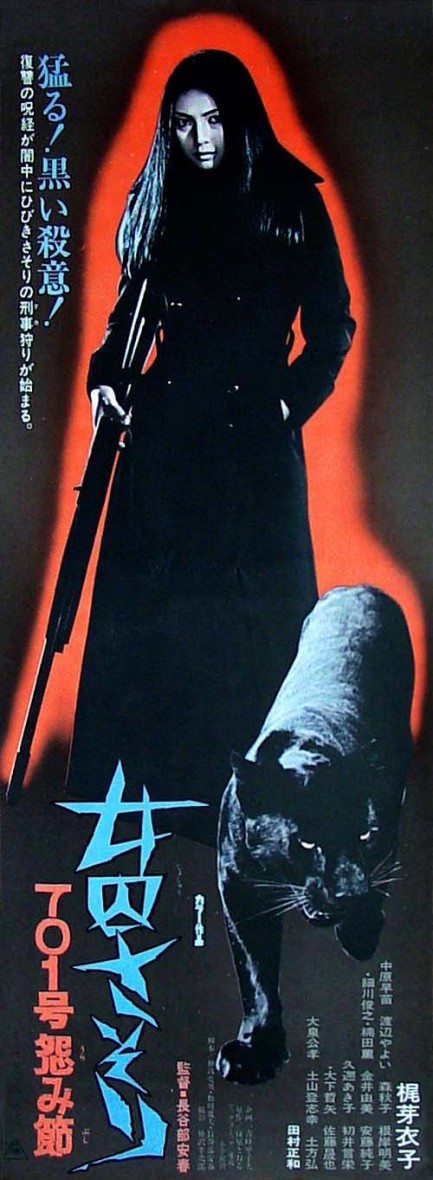
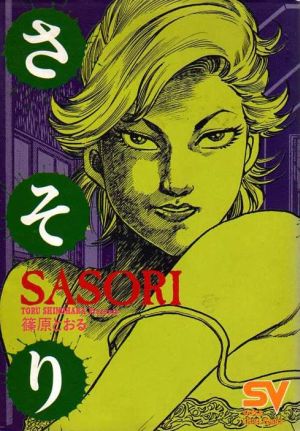 In the first half of the 1970’s, Meiko Kaji was to the slightly-disreputable end of Japanese cinema, much what Pam Grier was to the same end of Hollywood movies. Both made a career out of playing strong female characters, often operating on or beyond the boundaries of the law, and with no compunction about using violence to achieve their ends – which often involved taking revenge on those (almost alwayx men) who had wronged them. The Sasori [Japanese for “scorpion”] was not Kaji’s first foray into the genre, having cut her teeth on the Noraneko Rokku [Straycat or Alleycat Rock] films, a couple of years previously.