



★★
“Eyes without a farce.”
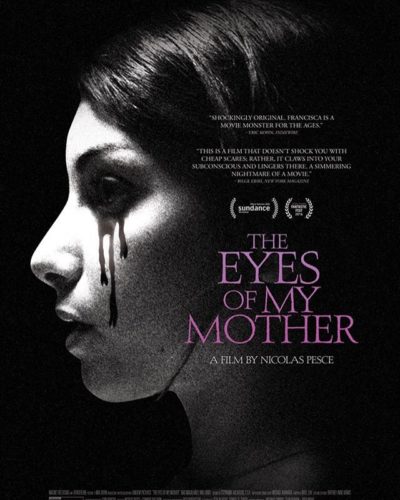 “Post-horror” is now, apparently, A Thing. It refers to horror films that subvert the traditional tropes and style of the genre in some way. Though based on the so-tagged example of it I’ve seen, the main subversion appears to be “not being frightening.” I think there’s a spot of pretension mixed in as well, since horror is generally regarded as marginally above pornography in terms of critical appreciation. By calling it something else, this gives those who turn their nose up at “horror” a chance to appreciate it. But it’s a bit of a double-edged sword for marketing, because you’re as likely to lose fans of “true” horror, who have been burned badly by films riding on the genre’s coat-tails.
There’s nothing particularly new about this. Films which rely on implied rather than explicit horror have generally been more warmly received by critics. Think of Psycho, The Shining, or even contrast the receptions of the original Cat People and Paul Schrader’s 1982 remake, which took all the repressed sexuality of the original and brought it front and center. Critics hated the latter. It’s one of my top 10 films of all-time – but I can also love the original, even though it’s so understated as barely to qualify as horror by modern standards. There’s room for both, and neither is innately superior. However, it generally takes a bit more skill to provoke an audience reaction with unseen terrors, especially if the viewer has seen their share of genre entries.
Which (finally) brings me to The Eyes of My Mother, a black-and-white film, which I guess is post-horror. For while it tells the story of a family of psychos living in the country, with a fondness for kidnap and torture… This is not exactly The Texas Chainsaw Massacre. It starts off as a family affair, with young Francesca living on a farm with her mother (Agostini), a former Portuguese eye surgeon, and father (Nazak). A home invasion results in a death, but the perpetrator is captured, and becomes Francesca’s tormented plaything as she grows into adulthood (Magalhães), honing her surgical skills on him. That turns out to be just the first victim, as Francesca if a firm believer in crafting a new family by abduction.
It’s all too highbrow for its own good, Pesce apparently believing that cutting away from virtually all actual violence, and draining the colour from proceedings is equivalent to art. He’s wrong, for you also need to be a Hitchcock or a Polanski. Although some day, Pesce might reach those heights, this is his feature debut, and the style instead comes over as unbearably pretentious: art purely for art’s sake, instead of serving the story. Not to say it gets everything wrong; the lead performance is deliciously chilling in its utter placidity, going to the other extreme from Texas, and all the more effective for it. But when Chris’s first post-screening comment is, “I wonder how they paid their electricity bill?”, you know that any supposed horror movie (even a post-horror one) has fumbled the ball badly in terms of impacting the viewer.
Dir: Nicolas Pesce
Star: Kika Magalhães, Olivia Bond, Diana Agostini, Paul Nazak
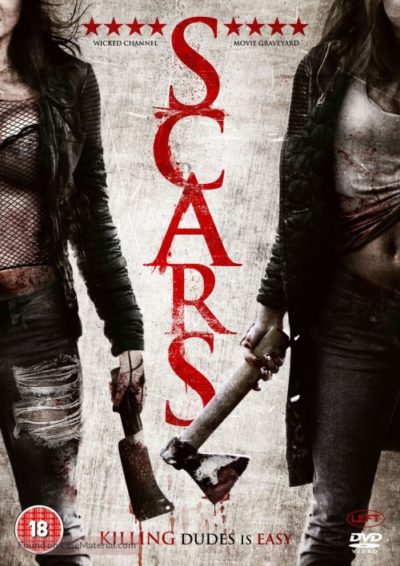 Scar (Cole) has anger issues, which we see in the opening scene, where she stabs her boyfriend to death. Scarlett (Kimmel) makes her living by having affairs with married men, then blackmailing them. The two women team up after Scar rescues Scarlett, when one of her extortion targets is beating her up in an alley. The pair subsequently begin an odd relationship, peppered with bursts of brutal violence against men. The police investigation, led by Detective Mike (Wells) passes over them, but Mike begins a relationship with Scarlett, until he begins to suspect that her friend is involved in the string of killings.
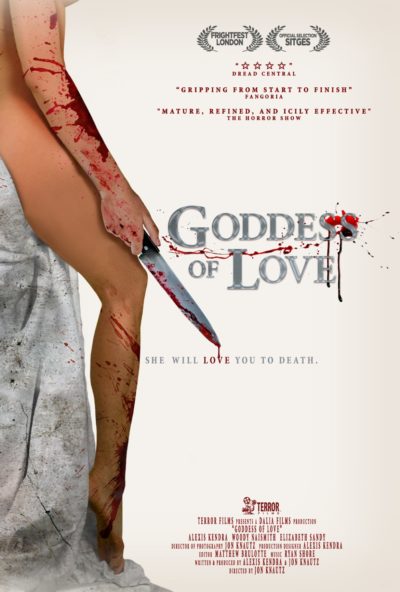 Right from the start, it’s established that Venus (Kendra) is not the most mentally stable of creatures, alternating between emotional fits in the bathtub, drug abuse and her day job as a stripper. That’s pretty much the trifecta of Stay Away for any man. But she ends up dating one of her strip-club customers, Brian (Naismith), a photographer who likes Venus because… she reminds him of his late wife. Which as opening lines go, I’d imagine would rank highly as Stay Away for any woman. While initially working far better than you’d expect, that only makes the eventual crash and burn of their relationship, all the more brutal.
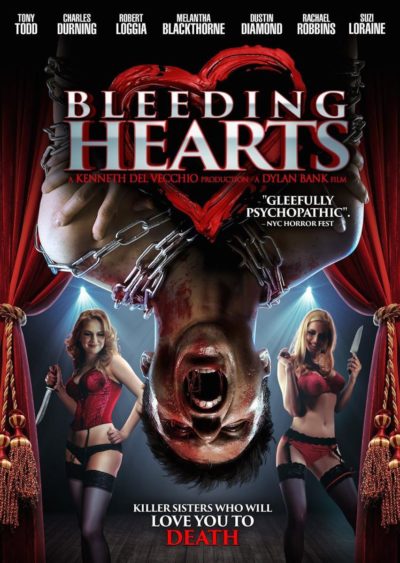 Stumbled across this low-budget horror flick almost by accident when I was Googling the similarly-titled but very different,
 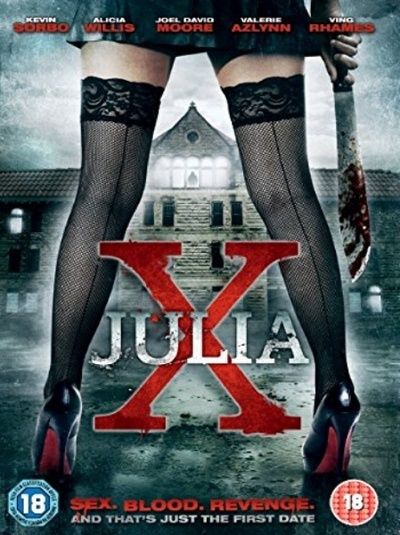 A date appears to go badly wrong for Julia (Azlynn), when her companion (Sorbo) turns out to be a serial-killer who has been using Internet dating sites to find the young women he targets. However, it turns out the tables are eventually turned, for Julia and her sister Jessica (Willis) are every bit as monstrous, who have been luring in and killing men, as a result of the abuse they both suffered at the hands of their father. But Jessica is a bit fed up of taking a back seat to her big sis, and wanders across the street to kidnap a victim of her own (Moore). But Julia’s captive is not exactly prepared to give up his liberty without a fight.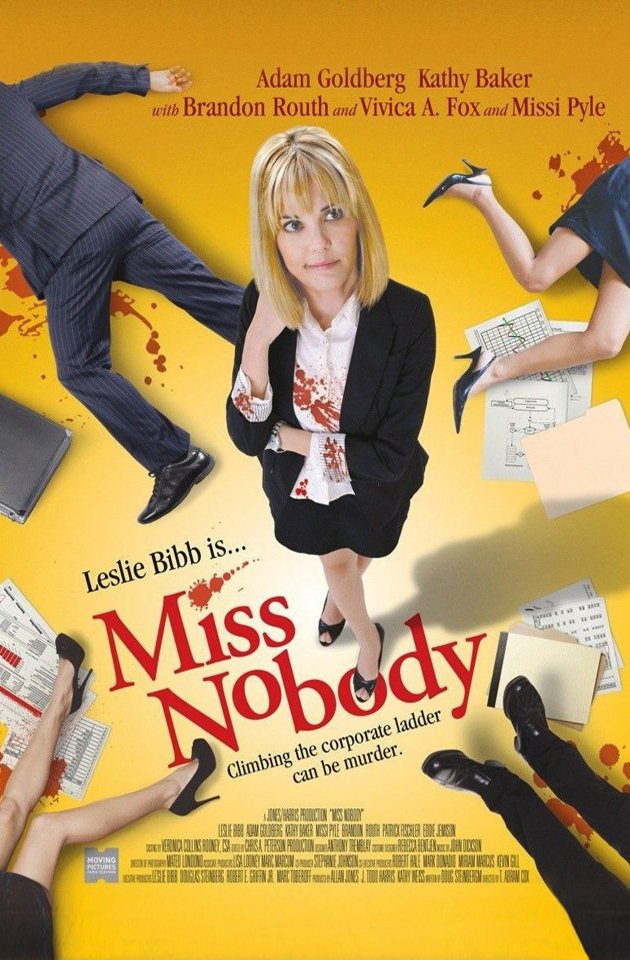
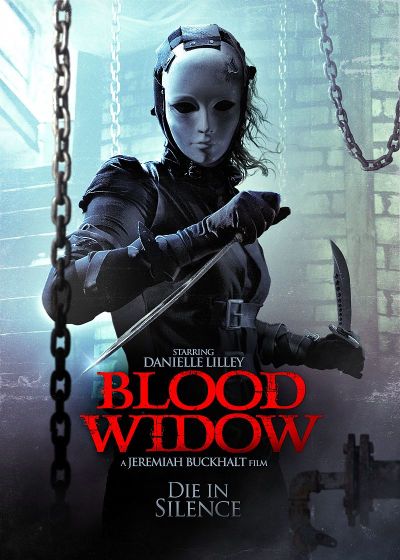 In the slasher genre of horror, the perpetrators seem almost exclusively male: Michael Myers, Jason Vorhees, Freddy Krueger, etc. Women can play an important role, and we’ve covered some of them here before – but it’s much more often as the “final girl”, than the one wielding the machete. However, it’s often forgotten that, in the original Friday the 13th movie, the killer was not Jason, but his mother, so there is some precedent for the female antagonist. See also Nurse 3D, American Horror Story: Coven or perhaps best of all,
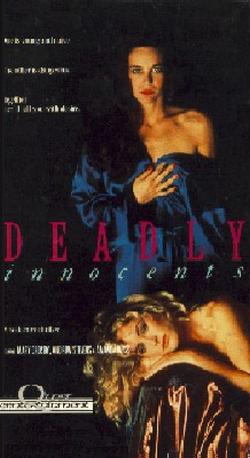
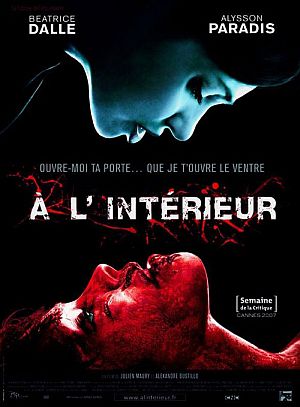
 The ‘final girl’ is a well-worn concept in horror: the last survivor, typically the “good” girl, finally fights back against the assailant in the movie’s climax. It is isn’t normally enough to merit inclusion here, since it’s usually a relatively minor aspect of the film. Here, however, not only is it just about the entire film, the main theme – motherhood and the instincts it arouses – is entirely feminine. Aliens, and Ripley’s surrogate parenting of Newt, would be another example. And it’s also a rarity in the horror genre for both protagonist
 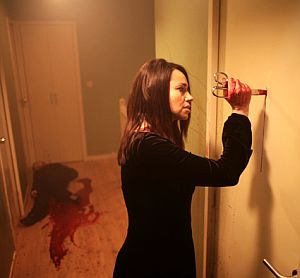 Let me be perfectly clear: this is hardcore horror of the most unrelenting sort, completely unsuitable for those of a nervous disposition, and particularly pregnant women. In the 1980’s, Dalle was a sexpot, for her role in Betty Blue, but you can flush all memory of that down the toilet: here, she has a feral, near-demonic intensity, and god help anyone who is unfortunate enough to get in her way. Particularly the men, who are disposed of with complete dispassion and brutality; as the film goes on, her relationship with Sarah becomes complex, and more a case of, “I’m taking your baby, and we can do this the hard way or… Well, really, that’s all there is. Sorry.” Friends, family, even an entire patrol of cops – no-one can help Sarah. She’s completely on her own, and her fate is entirely in her own hands.