




★★★
“Come to beautiful Scotland! And die!”
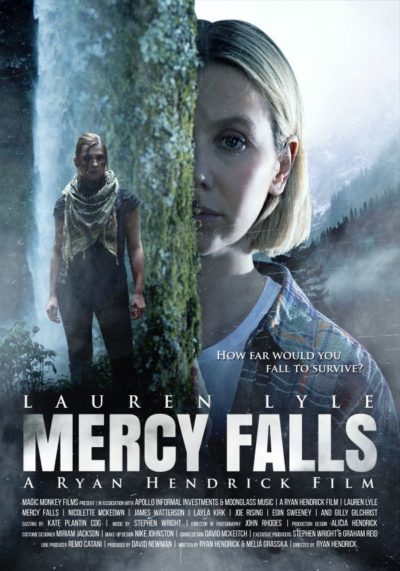 Even though I haven’t lived there since the eighties, I remain a sucker for a Scottish film. This delivers, with no shortage of rugged mountain landscapes, beautiful lochs, a ceilidh band and trees. So. Many. Trees. The foliage is understandable, because most of it takes places in the woods, where Rhona (Lyle) and her friends are looking for a cabin, deep in the wilds, which belonged to her late father. To help find it, they enlist the help of local Carla (McKeown), whom they meet down the pub when they have a pre-trip planning get-together. She initially seems fun to be with. But once they’re away from civilization, a shocking incident proves she… has issues, shall we say. And might not be the only one in the party.
The “trip into the woods goes wrong” subgenre of horror has been a staple of the industry for decades – not least because, it’s cheap to do. Why bother with expensive sets, when you can just run around a forest for the bulk of your running time? [Though from previous conversations with Scottish film-makers, the dreaded blood-sucking local insects know as midges, might make that choice of location a decision to regret!] There’s not a lot new in this incarnation of it. Having the threat come from inside the party is a moderate twist, as is having both leads being women. But horror, generally, isn’t something which requires innovation. It’s considerably more about the execution. Or, perhaps, the executionS.
There, this film is a bit of a mixed bag. If the supporting characters aren’t much more than stock characters: the slut, the jackass, the nerd (that would be the guy reading Homer in the woods!), they serve their purpose, which is mostly to die at the hands of Carla. The effects are limited, but I’d say, respectable enough. One extended impalement is likely the highlight, helped by the victim’s enthusiastic selling of their injury. The script is perhaps the weakest element, with a few moments which had us rolling our eyes, in particular the “we might be going to die, so let’s go ahead and have sex” scene. At 103 minutes, trimming might be warranted, as this stretches the material a bit thin. On the other hand: did I mention the lovely scenery?
It all builds as you’d expect, to a somewhat decent face-off between the heroine and villainess. It is somewhat problematic, in that the latter’s background should give her such an edge, as to be able to wipe the floor with Rhona inside ten seconds. Something like handicapping Carla with an injury could have helped make the playing field feel less one-sided. However, we were still reasonably invested in things by this point, and McKeown definitely makes for a convincing nemesis, capable from flicking an internal switch and going from friendly into “you are all going to die” mode in a moment. Nobody could accuse this of ambition, yet it does what it does well enough to entertain us.
Dir: Ryan Hendrick
Star: Lauren Lyle, Nicolette McKeown, James Watterson, Layla Kirk
Mercy Falls is available now on Tubi.
 The French film
 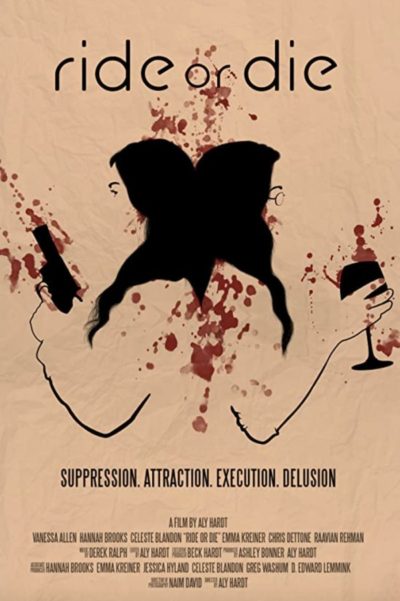 This is not to be confused with the rather higher profile i.e. it’s available on Netflix, Japanese film with the same title, made the same year, and covering a not dissimilar theme. Both are about a woman who is prepared to commit murder, in order to save their best friend from an abusive relationship. However, after the killing in question, the films take divergent paths. The Japflix version becomes a road-trip movie, with the killer and her friend going on the run. This, however, focuses heavily on the killer, whose already fragile mental state falls apart completely, after she discovers that things weren’t quite as she had been led to believe. It’s not her first time at the homicide rodeo either.
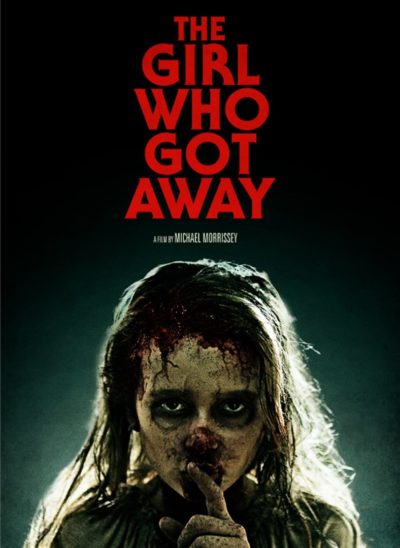 This isn’t the first movie I’ve seen, in which a woman escapes apparent death at the hands of a serial killer, only for them to track her down years later. However, the twist in the narrative here, which perhaps pushed it over the necessary boundary for inclusion on the site, is that the killer is also female. The victim is Christina Bowden (Johnson), who as a young girl was the sole survivor of Elizabeth Caulfield (Tuckerman) and her “child farm”, for want of a better phrase. Bowden has slowly put her life back together and is now a school teacher. She’s also looking to adopt another troubled teen, Lisa Spencer (McCarthy), and pay it forward. Then she gets a visit from local sheriff Jamie Nwosu (Iwuji).
 Lou Farnt (Brayben) is stuck in her life, with a dead-end job, no apparent friends to speak of, and still living with her domineering mother (Ball). She seeks escape from one self-help guru after another, spending her money on their books, DVDs and audio-tapes, though with little or no apparent positive results. Then, she meets the unconventional Val Stone (Roe), who lives in a seaside caravan and promises to change Lou’s life forever. After some qualms, she agrees to depart with Lou, who does indeed deliver on her promise. For, as the title suggests, Val is a psychotic if smart killer, who is specifically targetting those same gurus. Either she regards them as a curse on humanity with their vapid schemes, or she simply wants to dispose of the competition.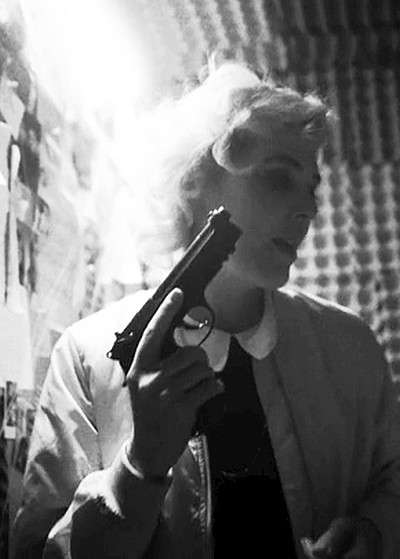
 I did not originally expect to be reviewing this here. I watched it because of the technical elements, which I’ll get to in a bit. However, by the end, it does qualify – though you certainly wouldn’t think so from how things begin. It gets underway with Lili (Puig) waiting for a date arranged over the Internet with Eduardo (Alcantara). He shows up late, very apologetic after having been mugged, and having had his phone taken, but is utterly charming, and the chemistry with Lili is immediate. They end up back at his place for dinner. But as he’s cooking on the kitchen, the tone of the evening changes, when she hears his supposedly stolen phone going off in his jacket…
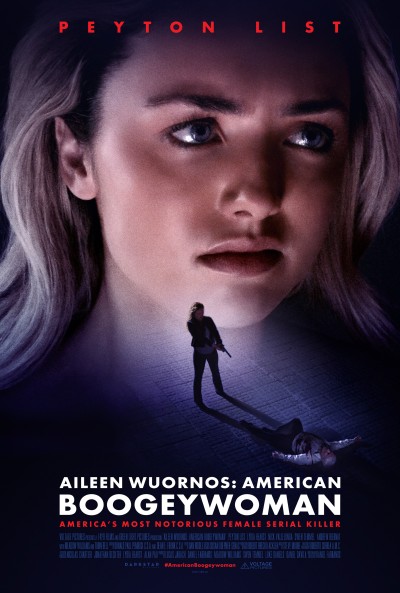 Almost twenty years after her execution, Aileen Wuornos remains a cultural icon. A very rare example of a genuine female serial killer, she was killed by lethal injection in 2002, after being convicted of six murders, and confessing to a seventh. The following year, Charlize Theron won an Oscar for her portrayal of Wuornos in
 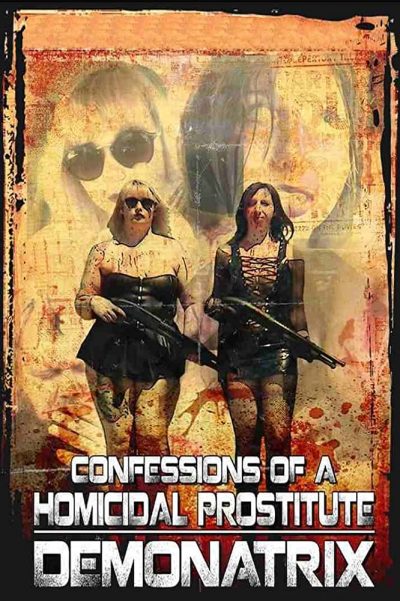 I must confess I have not seen Confessions of a Homicidal Prostitute, to which this is a sequel. It’s marginally possible, I suppose, that the character development, story and nuance were present there, and explain why these are all but entirely absent in its successor. I would not, however, be prepared to bet on it. I suspect the original was every bit as mean-spirited as this: and “suspect” is all I’ll ever do, because I won’t be making any effort to track it down. In fact, I probably wouldn’t watch it if my aged mother begged me to on her death-bed. Too harsh? Perhaps. Yet I don’t think I’ve ever seen a flat-out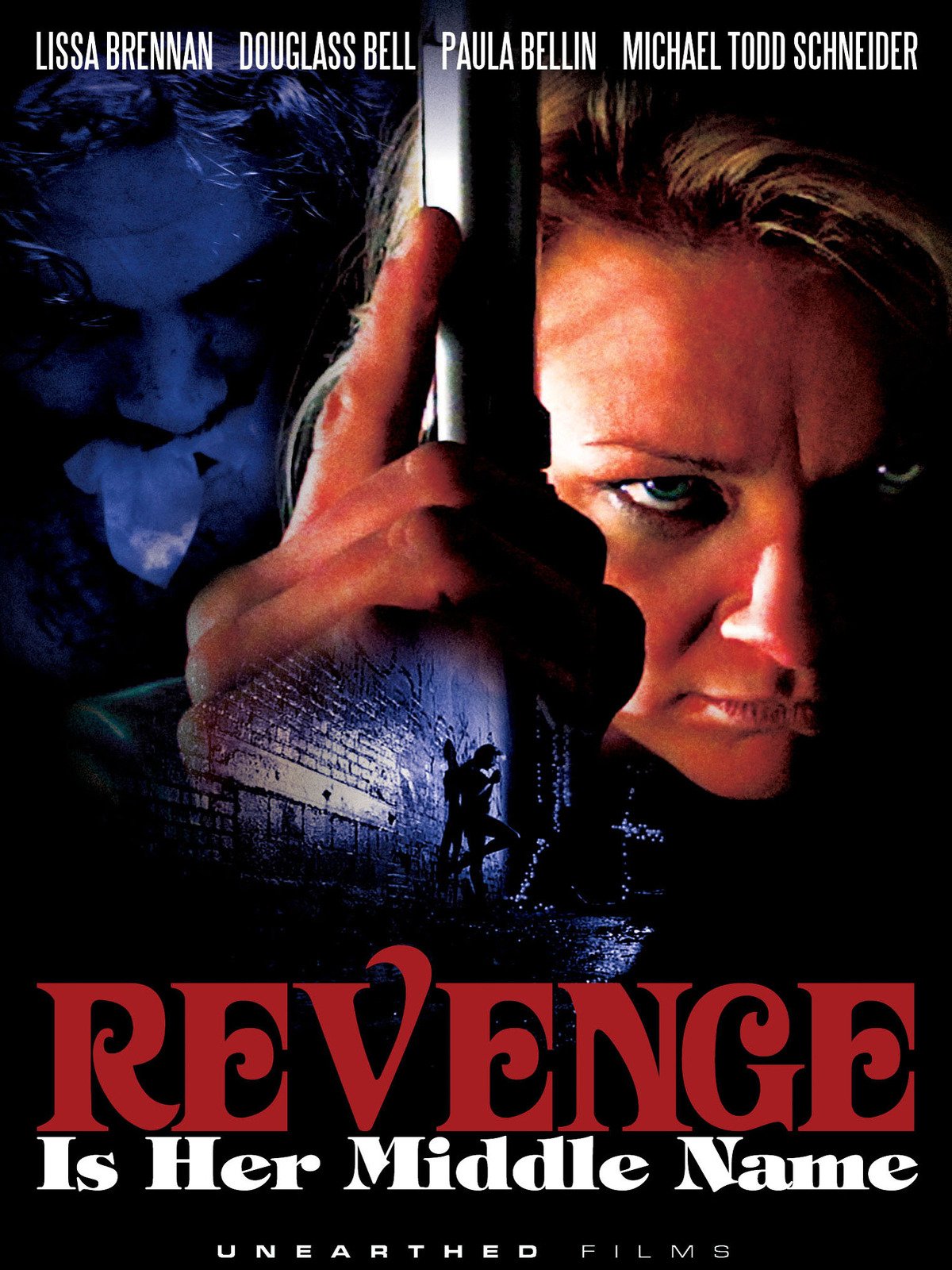
 No-one does low-budget hyperviolence like the Japanese. Whether it’s pseudo-snuff like Guinea Pig: Flower of Flesh and Blood, or more fantastical entries such as