




★★
“A two-dimensional adaptation of two-dimensional animation”
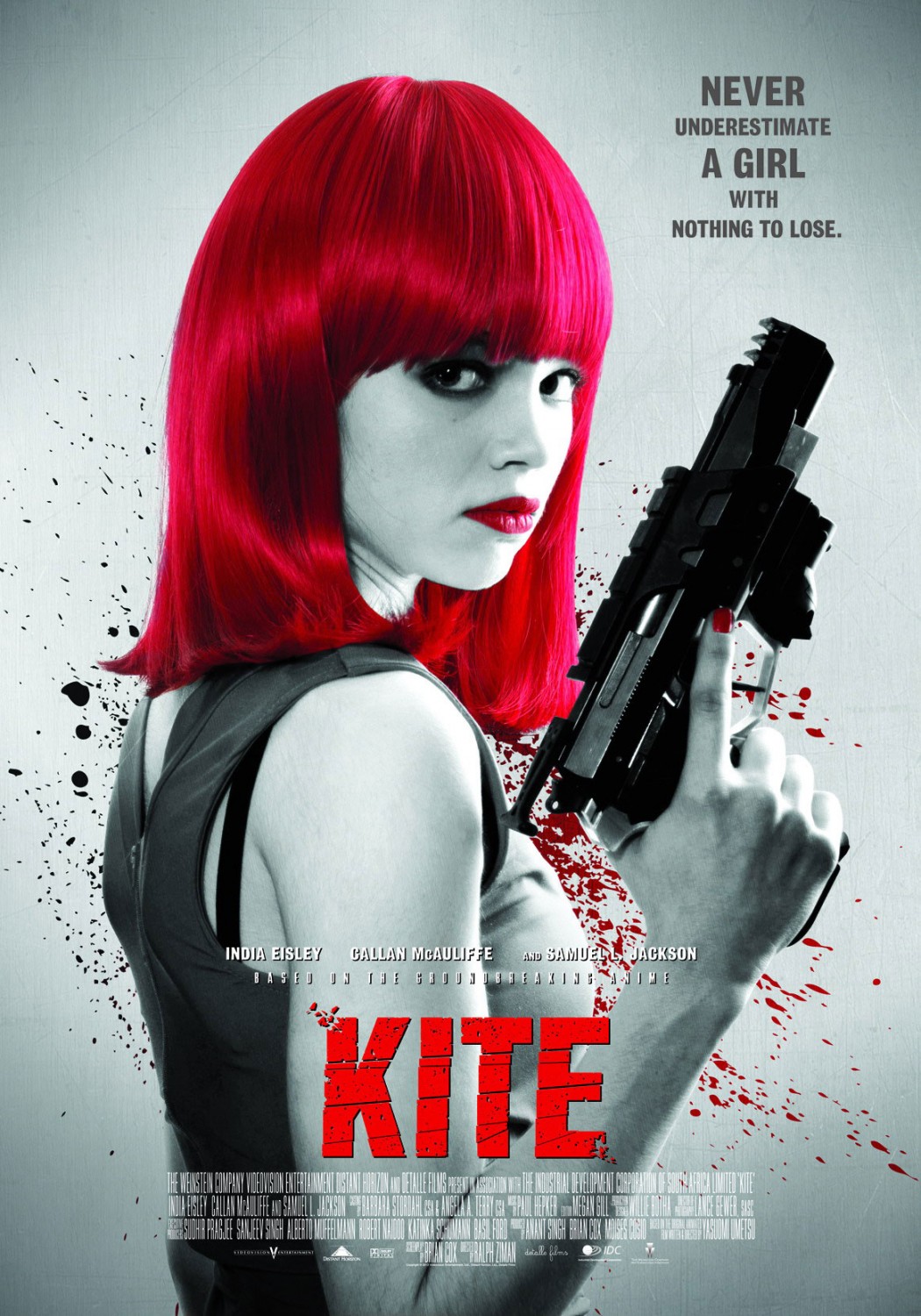 Loosely based on the notorious anime, this relocates things to South Africa, after a financial crash has turned everything into a giant slum, and human trafficking gangs operate with impunity. Sawa (Eisley) is on a mission, searching for the Emir, the leaders of one such network, whom she blames for the death of both her mother and policeman father. She’s helped, as she works her way up the chain of command, by her father’s colleague, Karl Aker (Jackson). He provides her with some literally whizz-bang equipment, in the form of bullets that explode a few seconds after they’ve embedded themselves in you, and also keeps her dosed with “Amp”, a drug that lets her forget all her killing, but at the cost, eventually, of also making her forget the parents for whom she is seeking revenge. Throwing another spanner in the works is Oburi (McAuliffe), a young man Sawa encounters, who seems to want to help her, yet also knows more about her parents’ deaths than he initially lets on.
One wonders if this might have been better served under original director, David R. Ellis, who died in South Africa during pre-production – this would have re-united him with Jackson, since Ellis also directed Snakes on a Plane. Certainly, Jackson seems to be phoning his performance in – though better that, I suppose, than the yelling which characterizes many of his recent roles, and it’s still above the 100% forgettable McAuliffe. Ziman’s pedigree is… Well, almost non-existent, with Gangster’s Paradise: Jerusalema his sole directing credit in the dozen years before Kite. This feels largely like someone tried to make a Hit-Girl movie, but based on third-hand descriptions of the character. Though Christopher Tookey, the now-unemployed (hoorah!) critic who whined about Kick-Ass fetishizing paedophilia, would have had his head explode during the scene where Eisley (19 during filming, but playing way younger) grinds in her underwear on top of a middle-aged man. Watching it uncomfortably, I kept expecting Chris Hansen to come out of my kitchen and say, “Why don’t you have a seat over here?”
There are some moments of visual style, with good use of aerial cameras, and the action is decent to solid, being well-constructed and executed. If you’ve seen the clips we have previously posted, then you’ll understand why they chose to feature them, because it’s the stuff between the action which is the problem here. You’re always skating on thin ice when you’re using amnesia as a key plot point in your movie, especially when it’s the particularly cinematic form seen in this case, where memory inevitably returns at the most dramatically convenient moments. It has to be that way, because if Sawa remembered at any other time, the entire story would collapse in on itself, long before you reach the “surprise” revelation, which will still come as a shock to absolutely no-one. Eisley, whom you may recognize from Underworld: Awakening, does okay, but compared to, say, Chloe Moretz, makes almost no impression at all. Much the same is true of the film as a whole.
Dir: Ralph Ziman
Star: India Eisley, Samuel L. Jackson, Callan McAuliffe, Carl Beukes

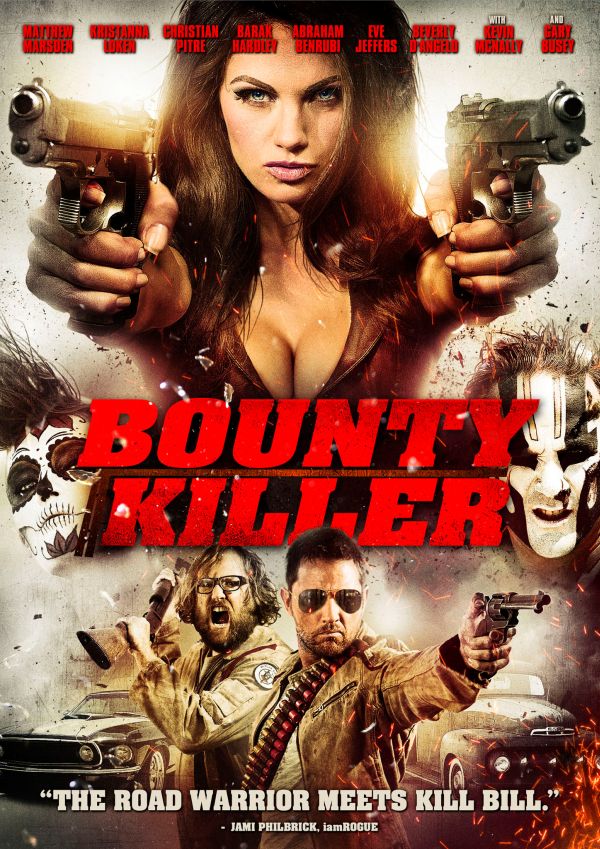
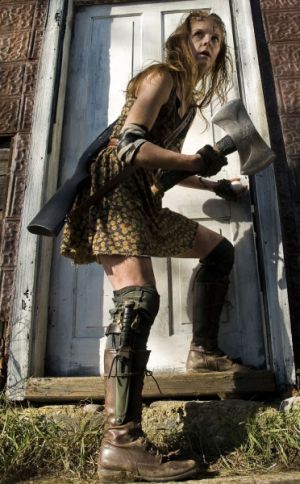
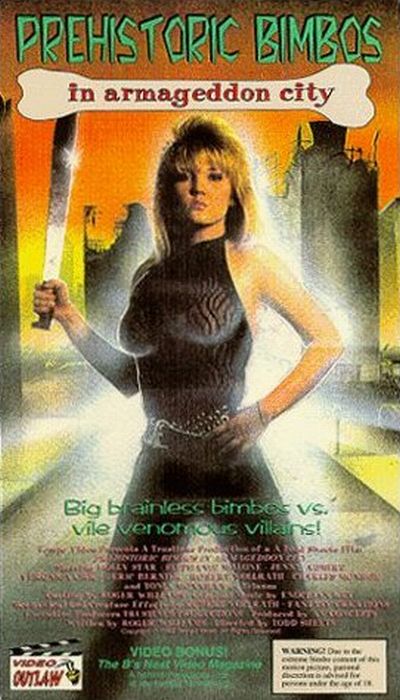 It’s hard to be critical of a film for being cheap, when the movie is not only aware of its own cheapness, but wears this on its sleeve like a badge of honour. “So what if I’m made entirely by amateurs with their pocket-money,” it seems to be saying. “We didn’t care, so why the hell should you?” I could list all the flaws here – crappy sound, low-quality video, acting your local amateur dramatic group would reject, awful use of stock classical music that would make Gustav Holst spin in his grave – but its response would simply be “…and your point is?” In the interests of space, let’s largely take those aspects as thoroughly read, and get on with the rest of our review. The setting is Chicago, and far from Armageddon having hit, it looks pretty much like the city we know – trains run in the background, for example. There is some introductory guff, which is hardly convincing, and nor is there anything particular “Prehistoric” about the leading ladies here, beyond a bit of fur trim.
 The introduction tries to make it seem as if this could take place at any point in history, but there’s not much effort put into maintaining the illusion. The guns and overall setting – best described as “distressed warehouse” – puts this firmly into the post-apocalypse genre, though it’s very much at the bargain basement end of the spectrum. The heroine (adult actress Asuka) stumbles across naively innocent Anne (Akiyama), being pawed by some bad guys after straying into the danger zone to pick flowers; clearly a kinder, gentler apocalypse. After punching them out, assisted by remarkable reactions and her metal exo-skeleton, Anne is escorted back to her
 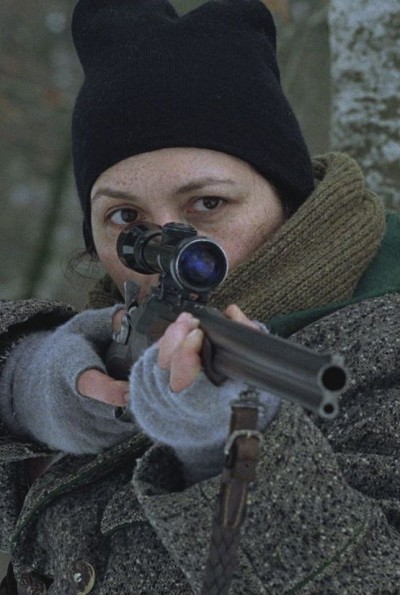 This is a very different kind of GWG film: indeed, it could almost be called an inaction heroine movie. It starts from a very simple presence. A woman (Gedeck) wakes up in a cabin in the Austrian Alps. When she tried to head to a nearby village, the path is blocked by an unseen, impenetrable barrier that has sprung up overnight, and now defines the boundary of her world. Everyone outside is dead. What do you do? How do you survive, both short- and long-term? Could you handle the loneliness? Can you retain your humanity, when you are, apparently, the only human being left?
 ★★★
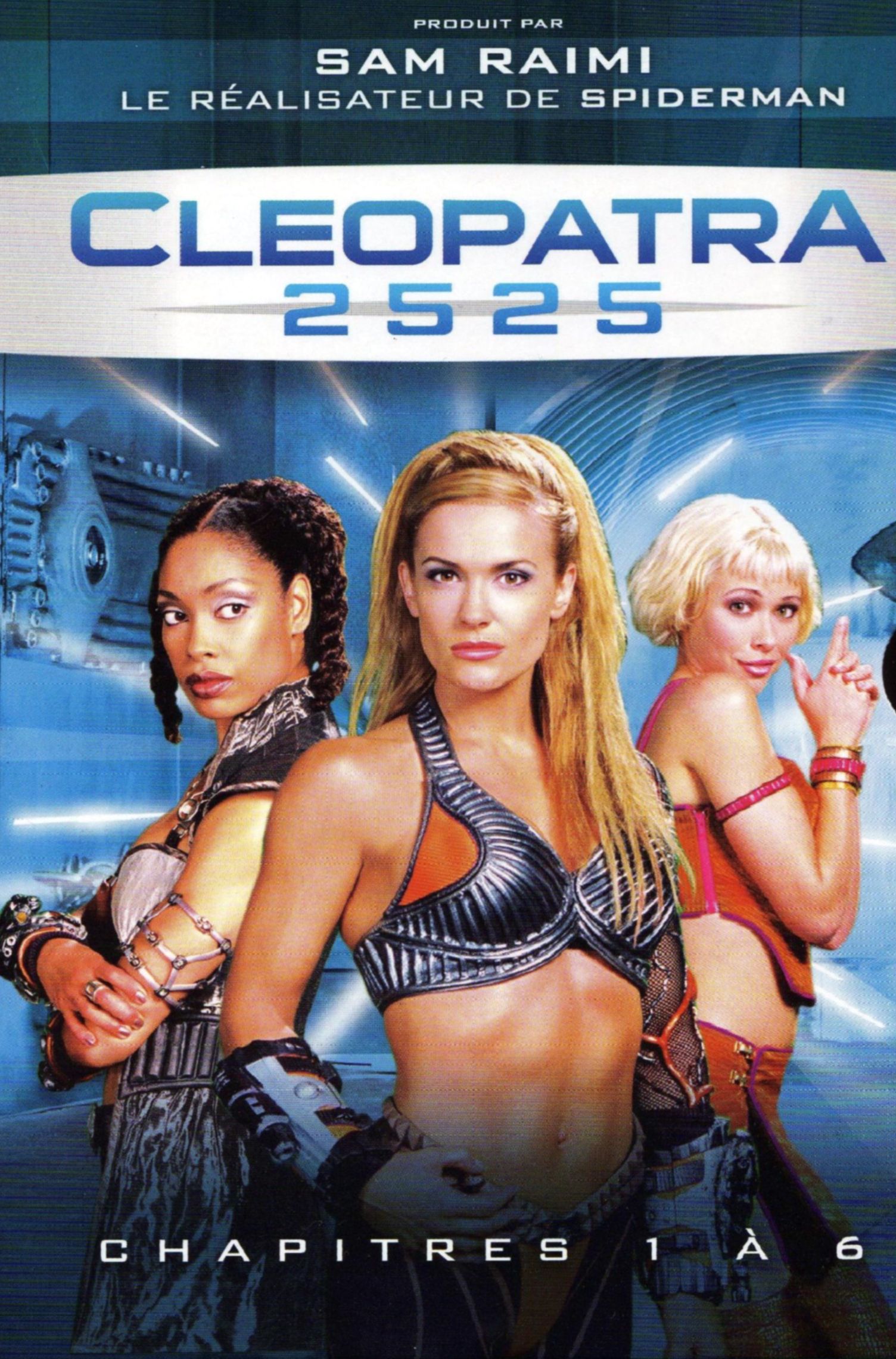
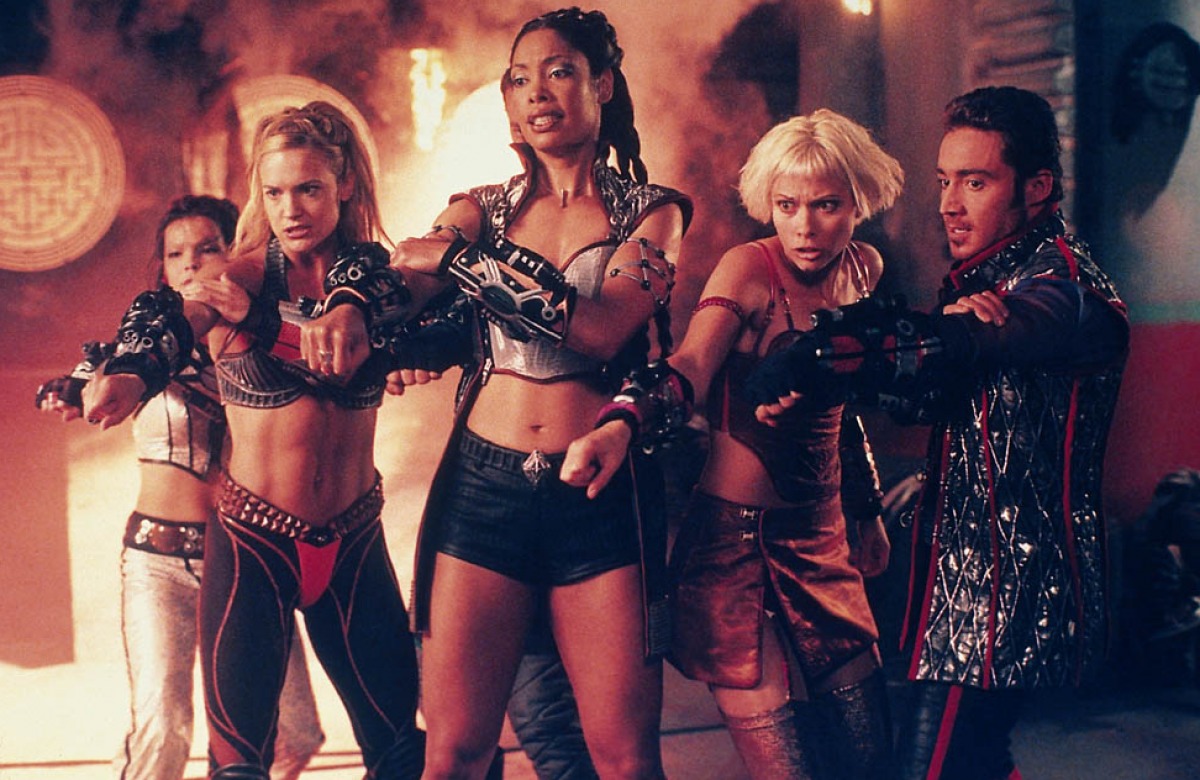
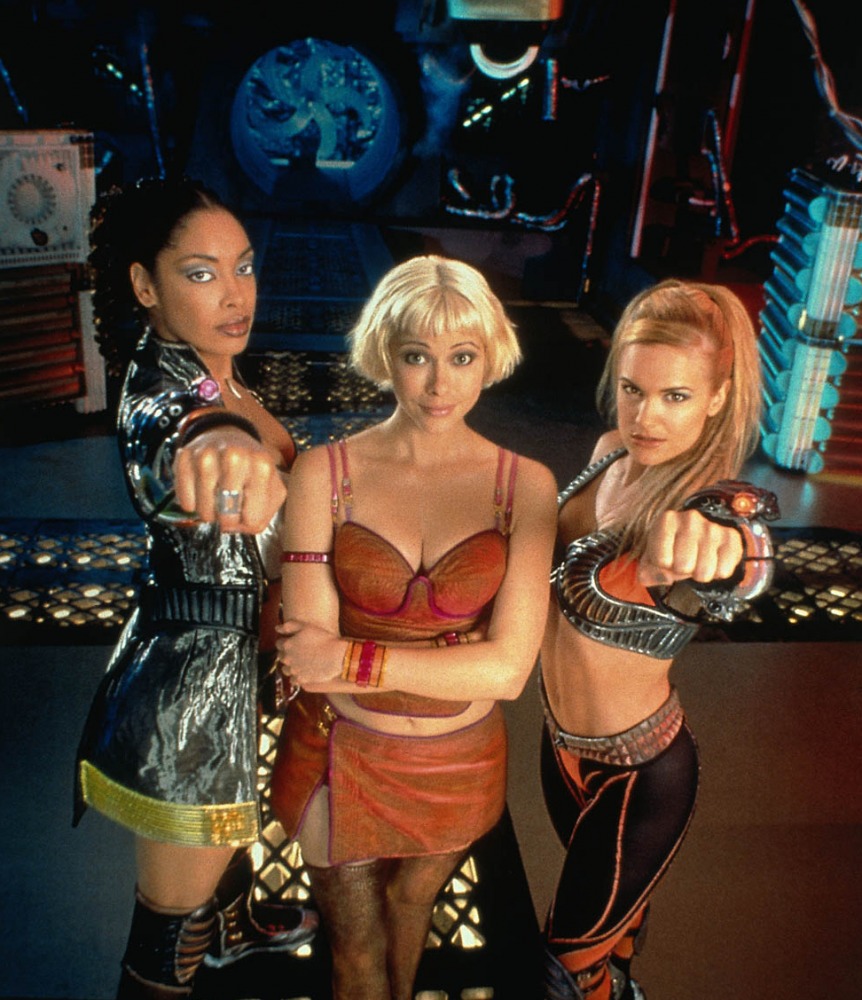
★★★ All three, however, were clearly selected as much for their visual appeal, and the 25th century is not short of beautiful people – it’s also quite warm, going by the ah, flimsy clothing worn by the trio. Cleo and her former profession fit right in. But taking any of this seriously would largely be doing the show a disservice, because it’s clear it doesn’t take itself seriously. There isn’t really time for that kind of thing, with each episode barely 20 minutes, excluding opening (theme song sung by Torres, a funked-up and lyrically altered version of Zager and Evans’ one-hit wonder, In the Year 2525) and closing credits. There isn’t much time for anything, in fact: both characterization and plotting remain about as scanty as the outfits. Hel is thoughtful but can be distant; Sarge likes shooting things first and asking questions later; Cleo, to be honest, is mostly irritating, coming over as both whiny and rather vacuous.














 There are times when not saying too much can work for a film; Night of the Living Dead is the classic example, and it works, because you don’t
  Ok, it has become the biggest-grossing action heroine film