




Literary rating: ★★★
Kick-butt quotient: ☆☆☆
 In the future, humanity has spread across much of the universe, but has also adopted all manner of enhancements, with androids and other artificial creations likely outnumbering the people. This section of the galaxy has become a vast cosmic melting pot of cultures with worlds occupied by everything from religious cults to yakuza gangs. Alice Long is an orphan on the strait-laced planet Felicity, but clearly doesn’t fit in, possessing an unusual range of those enhancements, to go with her leaning towards delinquency. Running away from the orphanage, she rescues a woman from attack, and in exchange for her help, becomes one of the crew of the slightly grey-market Square Deal, under Captain Sokol. However, as Alice blossoms, it becomes clear her obscure heritage has blessed her with artificial talents far outstripping Alice’s new colleagues.
Initially, I really liked this, appreciating the enormous amount of thought which has gone into the universe here. That’s clear from the multiple appendices, explaining technical aspects of how everything from interstellar travel to artificial intelligence works in this setting. I was greatly looking forward to seeing Alice rising from a lowly cabin girl to… well, wherever her skills might take her. Except, it didn’t quire work that way. Her rise is, in fact, super easy, with any impediments barely an inconvenience. For example, this is a universe in which fabricators can be used to make anything for which there’s a recipe, and Alice becomes increasingly over-powered due to all her enhancements. No matter what the situation, it seems she has an app for that. She’s certainly the smartest person in the book, and may well be the strongest, fastest and most lethal as well. Then there’s her heritage, best described as unique. And even if she were to be killed, it’s established that people can get restored from backups into a new body. Death, where is thy sting?
It’s an issue of which the author does seem to be aware, with a mention in one of the appendices of “post-scarcity society”. That seems to be the situation which we have here. Brown spent so much time on the dazzling infrastructure, he forgot to come up with the equally dazzling threats necessary, in a world whose inhabitants calmly discuss the possibility of them surviving a multi-gigaton nuclear blast. There’s absolutely no shortage of action, in particular a final third where Alice has to fight her way off a massive, derelict starship after betrayal by the people they are supposed to be helping. But, while this is currently a stand-alone book, it also has too many loose strands left dangling at the end. My overall feeling is that, while this is a fascinating universe that could serve as the basis for many great stories, Alice Long’s just isn’t one of them. Or, at least, she needs an antagonist of comparable ability and power.
Author: E. William Brown
Publisher: Independently published, available through Amazon, both as a paperback and an e-book.
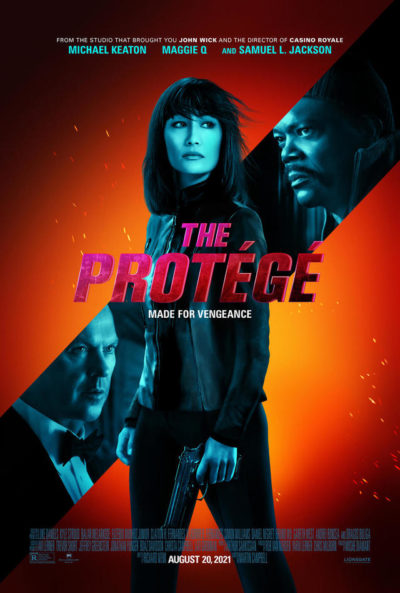 It’s nice to see Maggie Q get back into the action genre again. It’s where she achieved renown – most obviously in the second

 Bonnie Blackwell (Lesseos) is a battered wife, whose husband, Zach (Bottoms), eventually goes too far, putting her in hospital. He gets a spell in prison, and she decides to take control of her life and become a police officer. However, the scars of her abuse run deep, and she finds herself initially “freezing” when faced with potential threats, due to the PTSD resulting from her abusive relationship. Encouraged by colleague Bill Starr (Douglas), she eventually manages to work her way past that, just in time for Zach to be released from jail without her knowledge. She discovers that he had been running a human trafficking operation, bringing in Vietnamese mail-order brides, and sets out to take him down.
 The profession of journalist is not exactly well-regarded by many people these days. So it’s nice occasionally to be reminded that they can still potentially be action heroes, risking their own lives in pursuit of the truth. In this case, it’s Marie Colvin (Pike), a foreign correspondent for London’s Sunday Times newspaper, who lost an eye while covering the civil strife in Sri Lanka, leading to a piratical eye-patch for the rest of her career. Most people would treat that as a sign from the universe to look into a change of profession. But Colvin was made of sterner stuff, despite a hellacious case of post-traumatic stress disorder, with which she largely coped by drinking heavily. So she and photographer sidekick Paul Conroy (Dornan) continue to venture into the world’s hot-spots, whether it’s Iraq, Libya or Syria. There, they expose the terrible human cost that the conflicts have on the local population, without apparent concern for their own safety.
 And there I was, thinking Maleficent: Mistress of Evil would be the prettiest picture I saw in all of 2020. There’s a new champion, and whoever assembled the look of this one should have been honoured at the Oscars. Shot in Barcelona and the Canary Islands, it beats Maleficent by almost entirely avoiding CGI, in lieu of stunning locations such as the former residence of sculptor Xavier Corberó: “a mazelike estate constructed from cement that features nine connected structures and 300 arches.” That quote comes from a
 The above is the Polish for “seven”, and in the first half-hour, you’ll be forgiven for thinking that’s what you’re watching: a Polish knock-off of David Fincher’s Se7en. Homicide cop Helena Rus (Kożuchowska) is struggling to come to terms with life, after her boyfriend is killed by a drunk-driver and, for political reasons, the criminal is allowed to go free. A welcome distraction comes in the shape of a series of ritualistic murders: every day at 6 pm, a body turns up on the streets of Wroclaw. The victims have been killed in strange and unusual ways – the first, for example, is sewn inside a cow-hide, which shrinks as it dries, crushing the victim to death. Each has a word branded into their flesh, such as “Degenerate”.
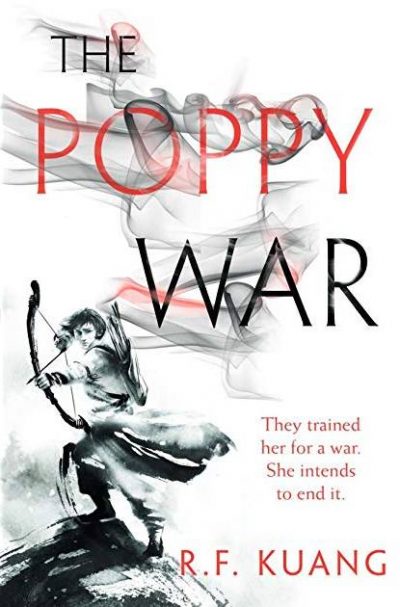 There can’t be many fantasy novels based on the events of World War II. But here we are, and Kuang has done an amazing job of taking historical events and weaving them into a saga of gods, magical powers and monsters, that works very well, even if you have no clue about the background.