




 ★★★★½
★★★★½
“First Form at Mallory Towers”
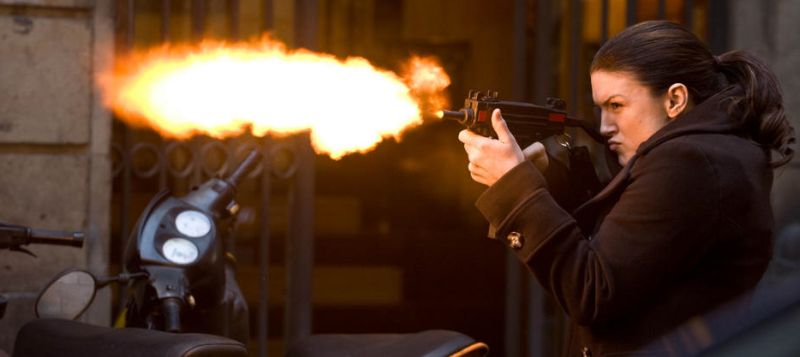
 Soderbergh has never shied away from using unconventional cast members in his movies. Bubble was made entirely with non-professional actors, and when he wanted someone to play a high-class call-girl for The Girlfriend Experience, he went with renowned adult actress, Sasha Grey. Continuing this trend, Haywire revolves around MMA star Carano, which I guess means Soderbergh’s recent leading ladies could, in real life, kick your ass or lick your ass. Ok, I’ll stop. Here, Carano plays Mallory Kane – I keep wanting to type Mallory Knox – an employee of a shady private contracting firm with links to the government, who do the dirty jobs for which the feds want plausible deniability.
 We first meet her in a diner, where Aaron (Tatum) meets her. It’s clear there’s some tension, with Aaron having been ordered to bring her in. After a brief, brutal brawl, she knocks him out and escapes, in a car belonging to startled patron Scott (Angarano). There she reveals what led up to that day: an operation in Barcelona, supposedly to rescue a hostage, followed by another in Dublin, which turned out to be an attempt to tidy up the loose ends from Barcelona, The plan is to frame Kane for multiple murders and portray her as a rogue operative. Kane needs to get to her boss, Kenneth (McGregor), and expose the truth before she’s gunned down.
It’s a deliberately-vague plot, with the characters speaking in clipped obscurisms, that leave the audience to piece things together. Don’t worry, it all becomes clear by the end, but it is probably fair to say that you have to pay a bit more attention than is usual for this kind of Hollywood thriller, between the fractured timeline and doubtful loyalties of most characters. It’s economical, at a tight 91 minutes (about 22 minutes shorter than the average Jason Bourne movie to date), and much like Carano, there’s not much fat on its bones: every scene serves a distinct purpose, which is definitely the way I like my movies.
I find it hard to criticize Carano’s acting, because it’s not clear how much acting is involved. Mallory Kane does not just possess physical prowess, but one who is also extremely comfortable with using it, and has a quiet confidence in her abilities. Any similarity to Carano is clearly not coincidental, and there isn’t much more required of her, in terms of emotion or depth. Unlike most action heroines there is no “personal” agenda e.g. Sarah Connor in T2, Ellen Ripley in Aliens, or The Bride in Kill Bill, it’s simply a case that her enemies are out to get her. In that aspect, Knox is not a particularly-“feminine” character. Just as Salt was originally envisaged as a male role, it’s easy to imagine someone like Jason Statham playing this part; hardly any plot changes would be needed.
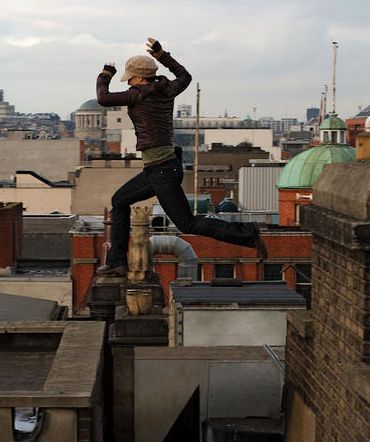 And then there’s the ass-kicking, of various kinds. It’s good, Carano demonstrating a no-nonsense style that’s highly-effective. Perhaps too effective, in fact, since it seems that hardly any of the fights last longer than about 30 seconds – even the hotel bedroom one, which is certainly one of the roughest male/female brawls seen this side of Terminator 3, feels like it ends, just about when it should be getting going. While it’s nice to be left wanting more, rather than less, it’s still not quite the all-you-can-eat buffet of action I wanted. There also is no real sense of escalation; her final battle isn’t particularly different from the one which opens the film, in the diner; it has another location, and that’s about it, there’s no indication her adversary is any more of a challenge.
While the battles are well crafted – I note that the fight co-ordinator was J.J. Perry, who worked on Sunland Heat back in 2005 – perhaps my favorite scene was not actually one of them, but an extended scene where Mallory has to shake off her pursuers in Dublin. It is adequately extended, contains a number of twists and turns over its length, and showcases Carano’s physical prowess in more than just brutality, as she glides through and over buildings. I also enjoyed a snowy car-chase, which ends in a way which, I’m prepared to bet, you haven’t seen in a movie before. One senses Soderbergh and writer Lem Dobbs enjoyed playing with the usual expectations of the genre.
It’s certainly shot in typical Soderbergh style. He throws all manner of styles in there, from black-and-white through hand-held to the heavy use of colour filters. Mostly, these flourishes enhance the film, rather than distracting from it, and a billion nods of approval are due for avoiding the rapid-cut style of editing, which is the bane of modern action cinema (except for the rare cases where it’s done properly). Still, there’s no question it’s obvious who made it, to the point that I actually laughed when a shot of Kenneth appeared in sepia – having seen Traffic, I knew, before it was explained, that he had to be in Mexico.
All told, if not quite an all-time classic, this is more than acceptable, upper-tier work. Carano is by no means out of her depth, despite a heavyweight supporting cast including the likes of Michael Douglas and Antonio Banderas, and has an understated charisma which works in her favour. I don’t know if her future plans involving returning to the octagon, or sticking with the acting, but if it’s the latter, she’d certainly be a welcome addition to the (fairly short) roster of credible action-heroines from which Hollywood can draw.
Dir: Steven Soderbergh
Star: Gina Carano, Ewan McGregor, Channing Tatum, Michael Angarano
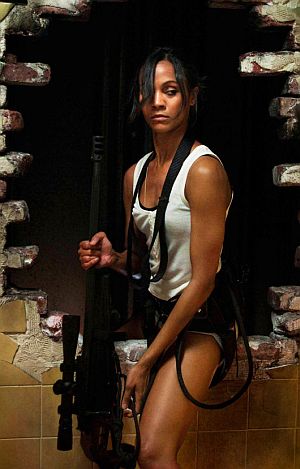 There are moments where this seems to have the potential to break out beyond its story, but once you get past the strong central core, the script has very little to offer. Cataleya (Saldana) narrowly escapes death when her parents are killed on the orders of their gangster employer, Don Luis. She flees from Colombia to Chicago and is raised by a family friend, but never forgets where she came from, and has revenge on her mind. Grown-up, she becomes a hit-woman, but has a side-project of payback. She has an occasional boyfriend (Vartan) who knows little about her, and a dogged FBI agent (James), intent on tracking down the mysterious, elusive killer. Y’know: all the usual baggage that goes along with being an assassin.
 ★★★★½
★★★★½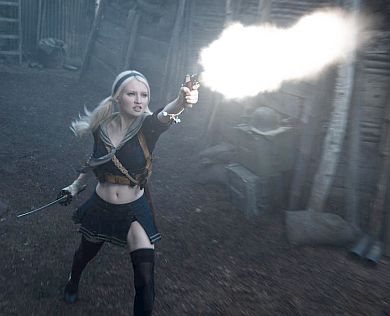 There’s not even any genre love lost. Joe Wright, director of the somewhat similarly-themed Hanna, which came out two weeks after Sucker,
  But those who like it,




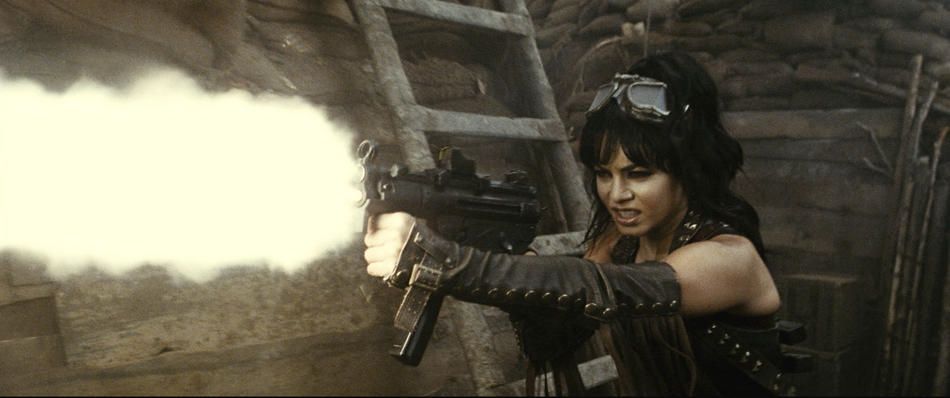
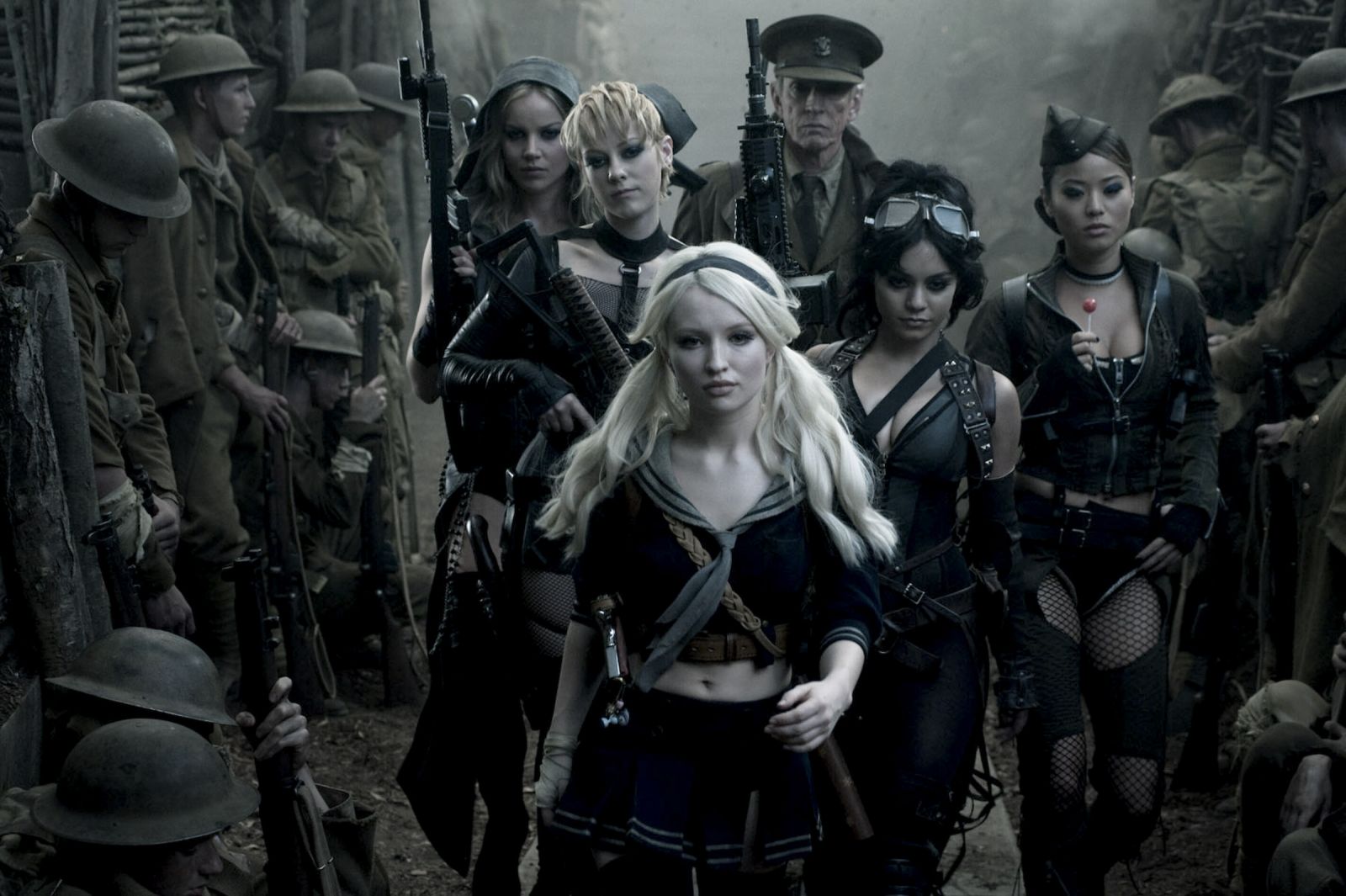
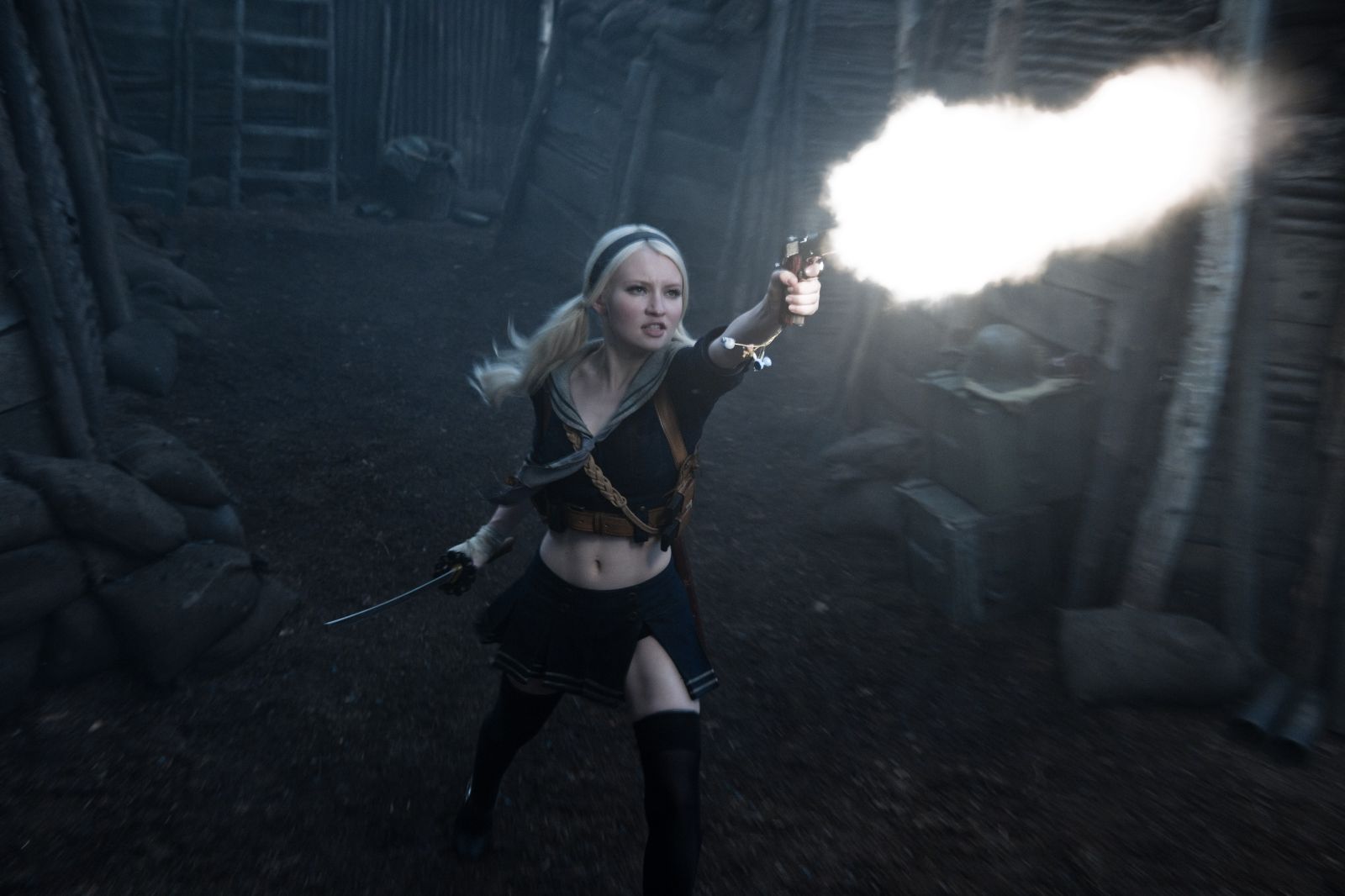
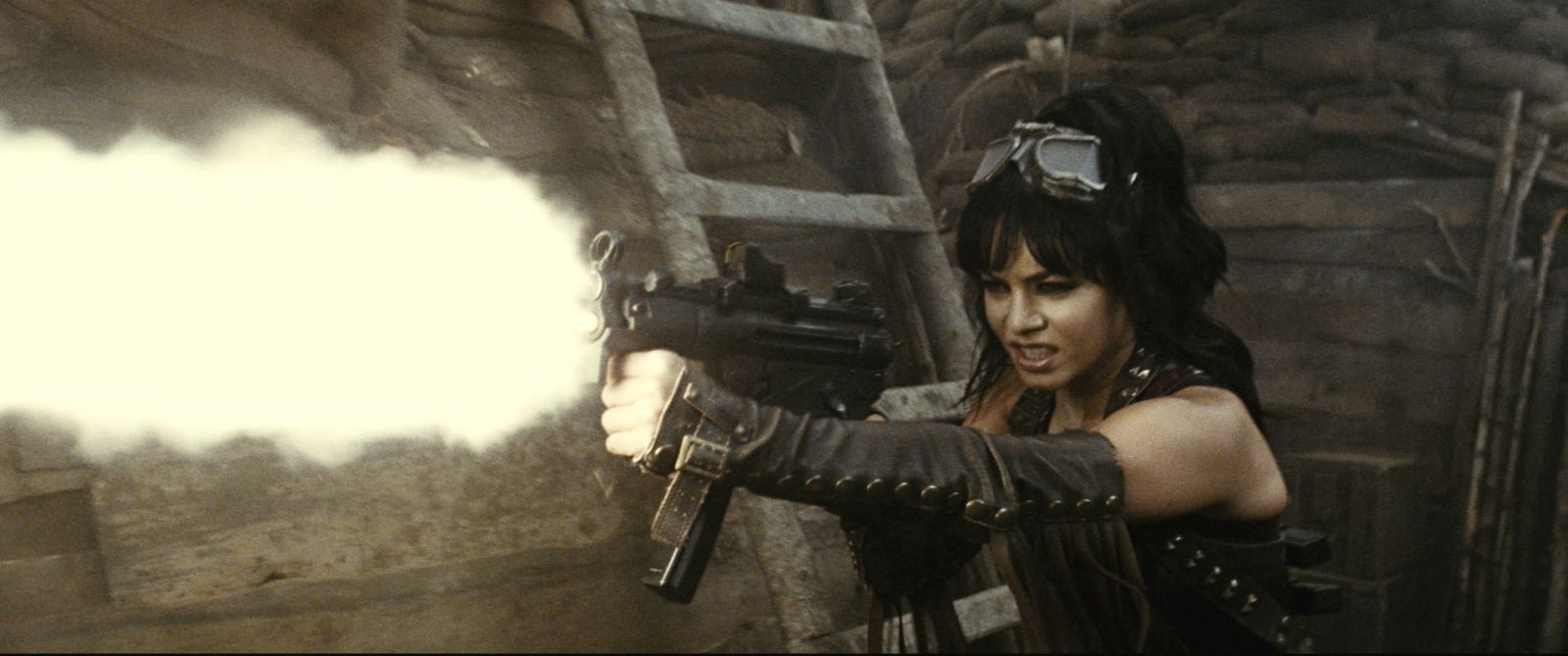
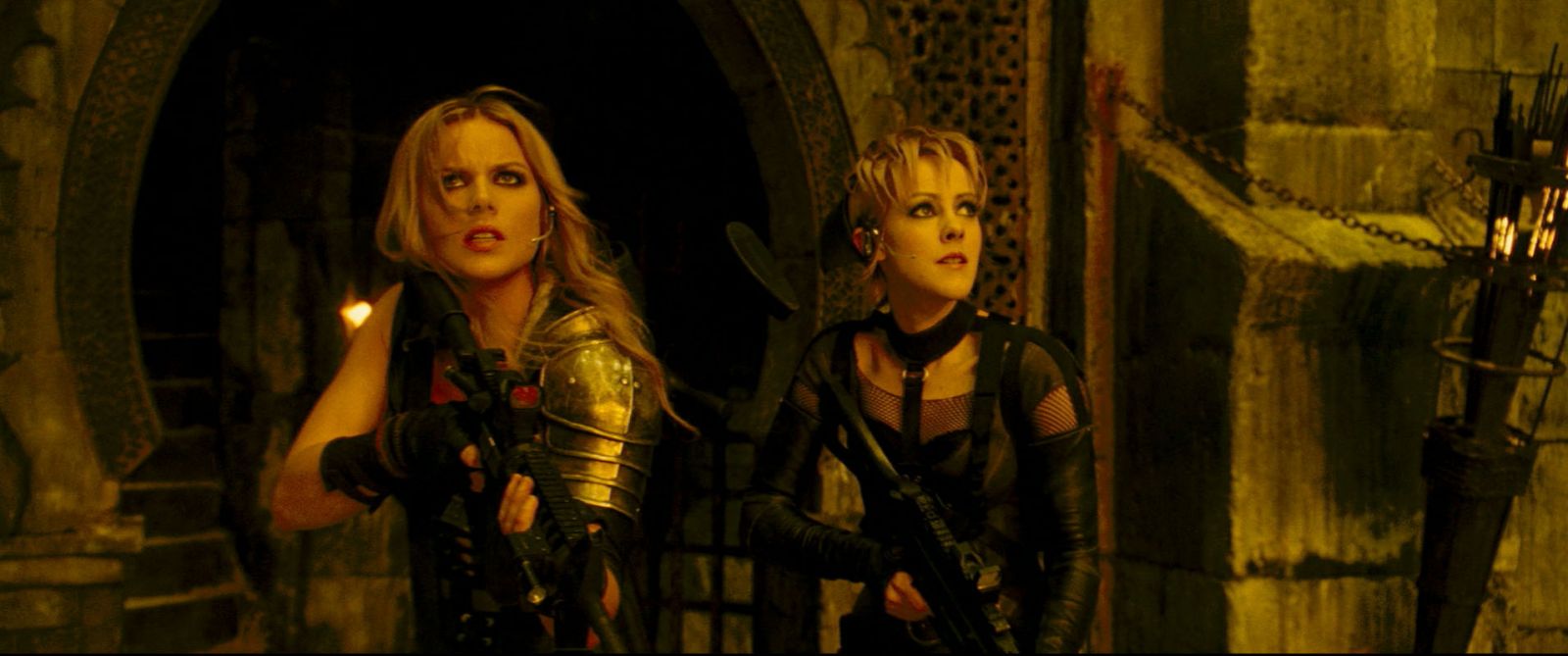
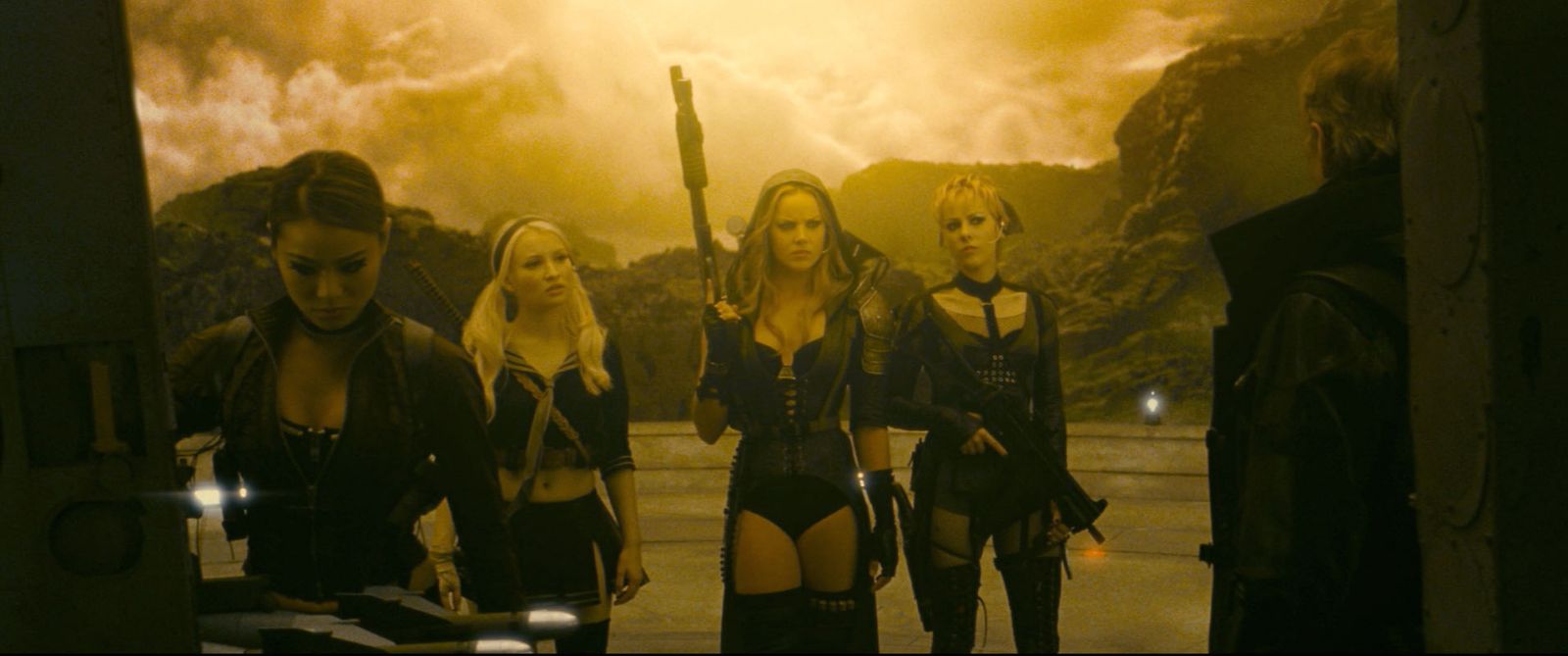
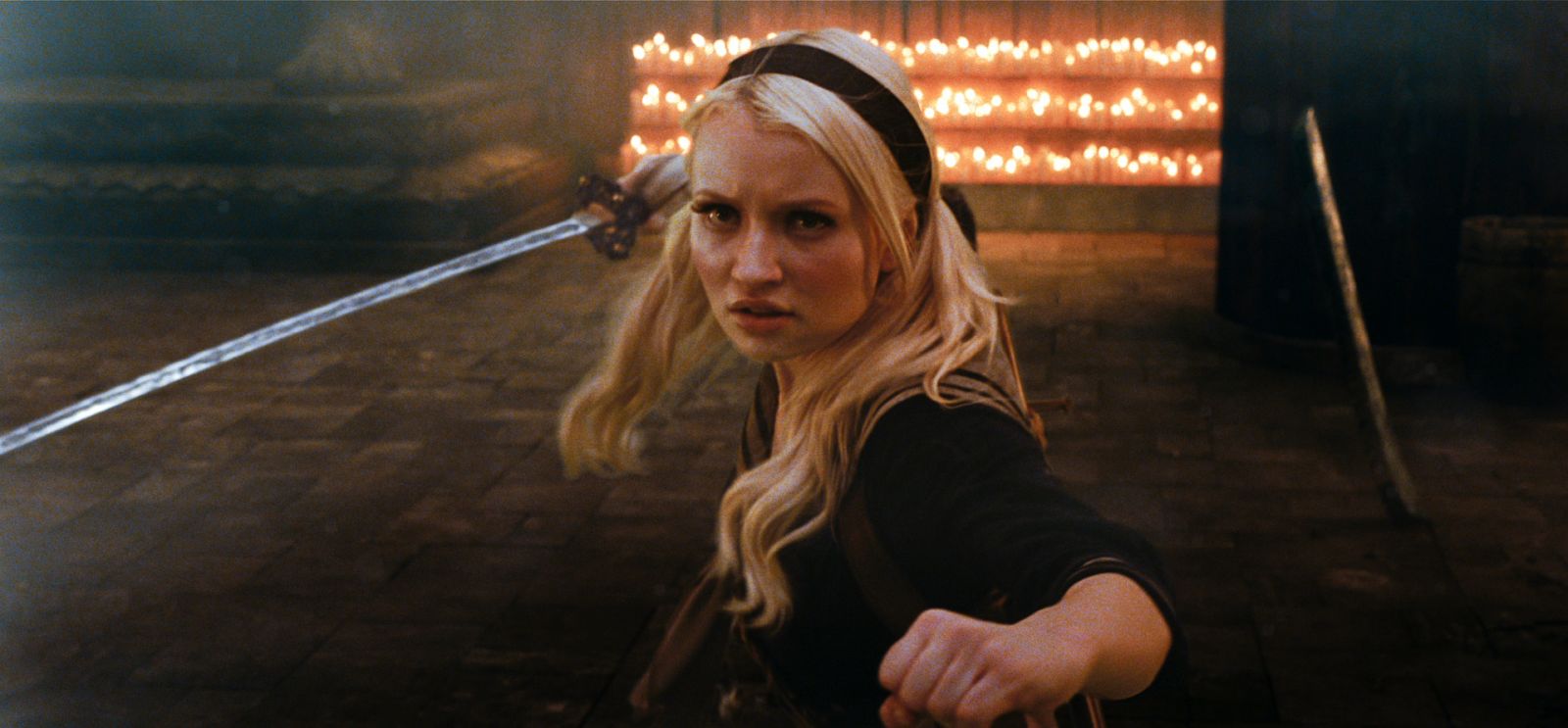
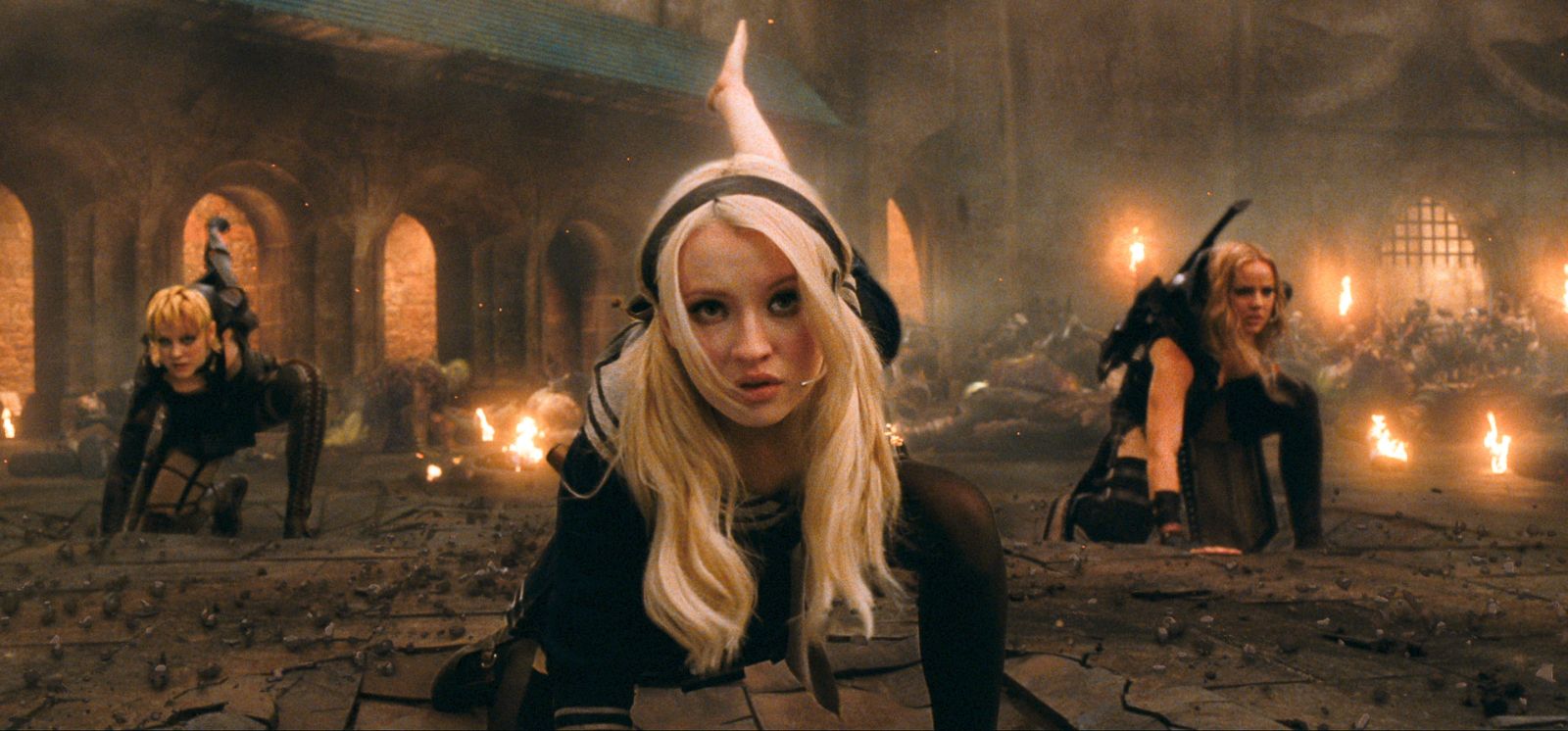
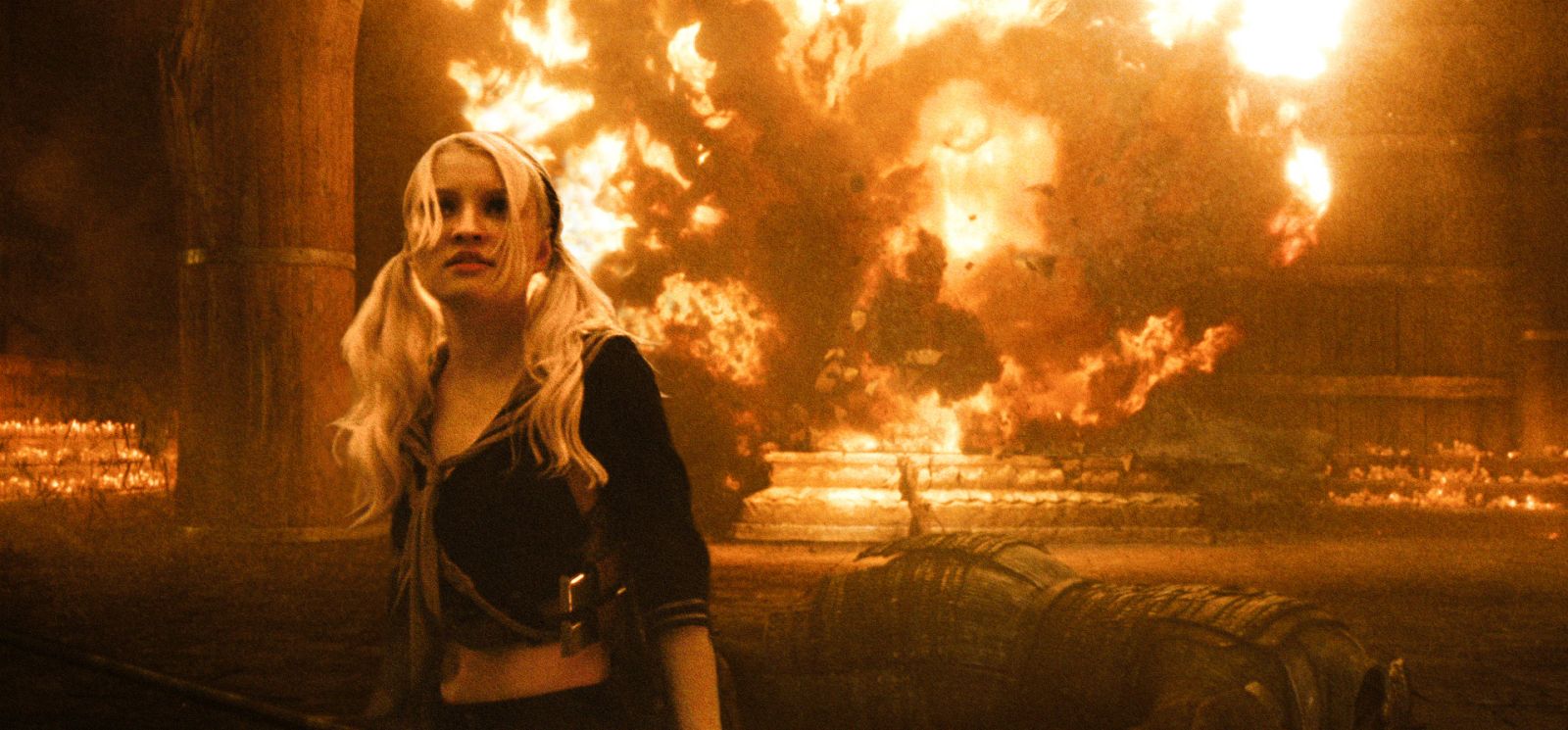
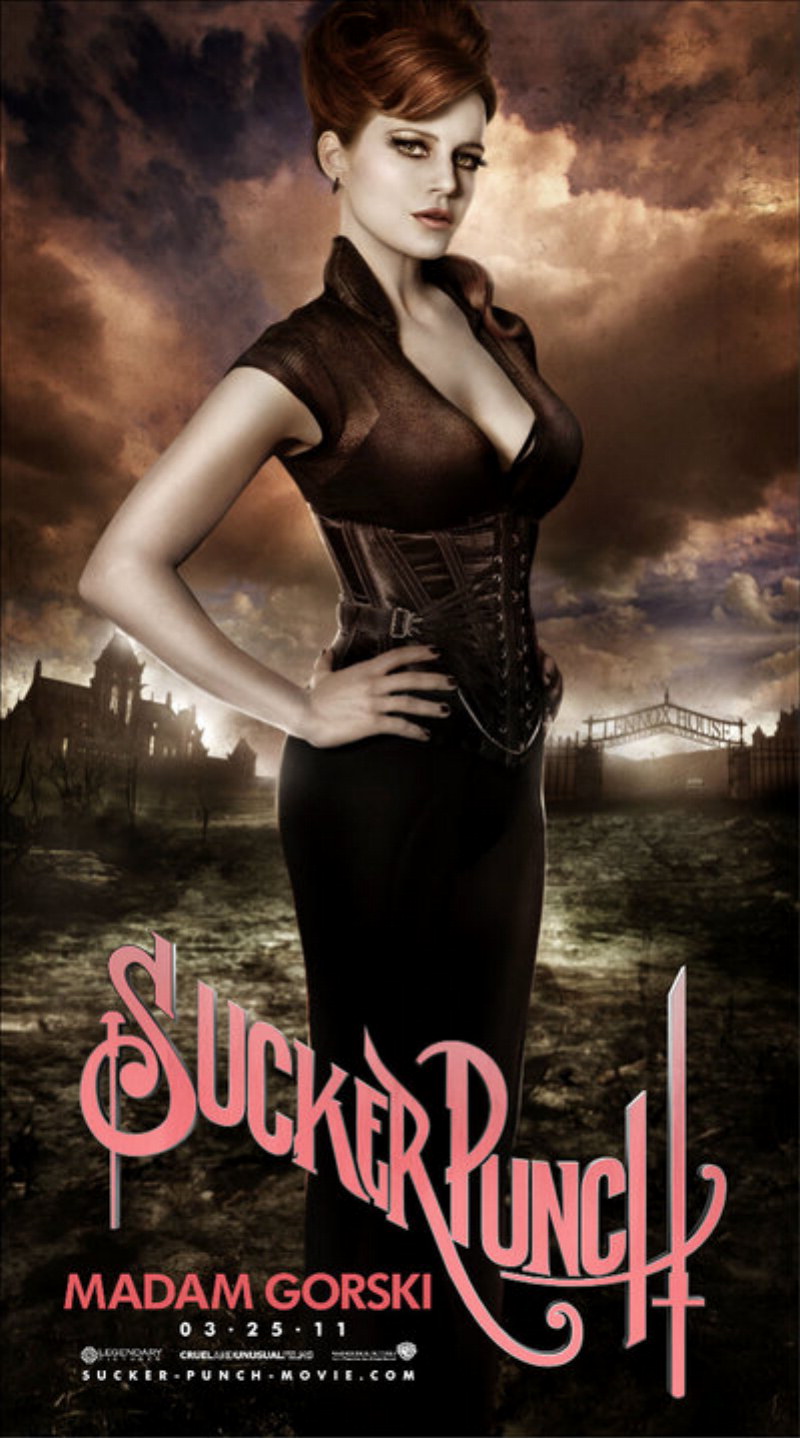
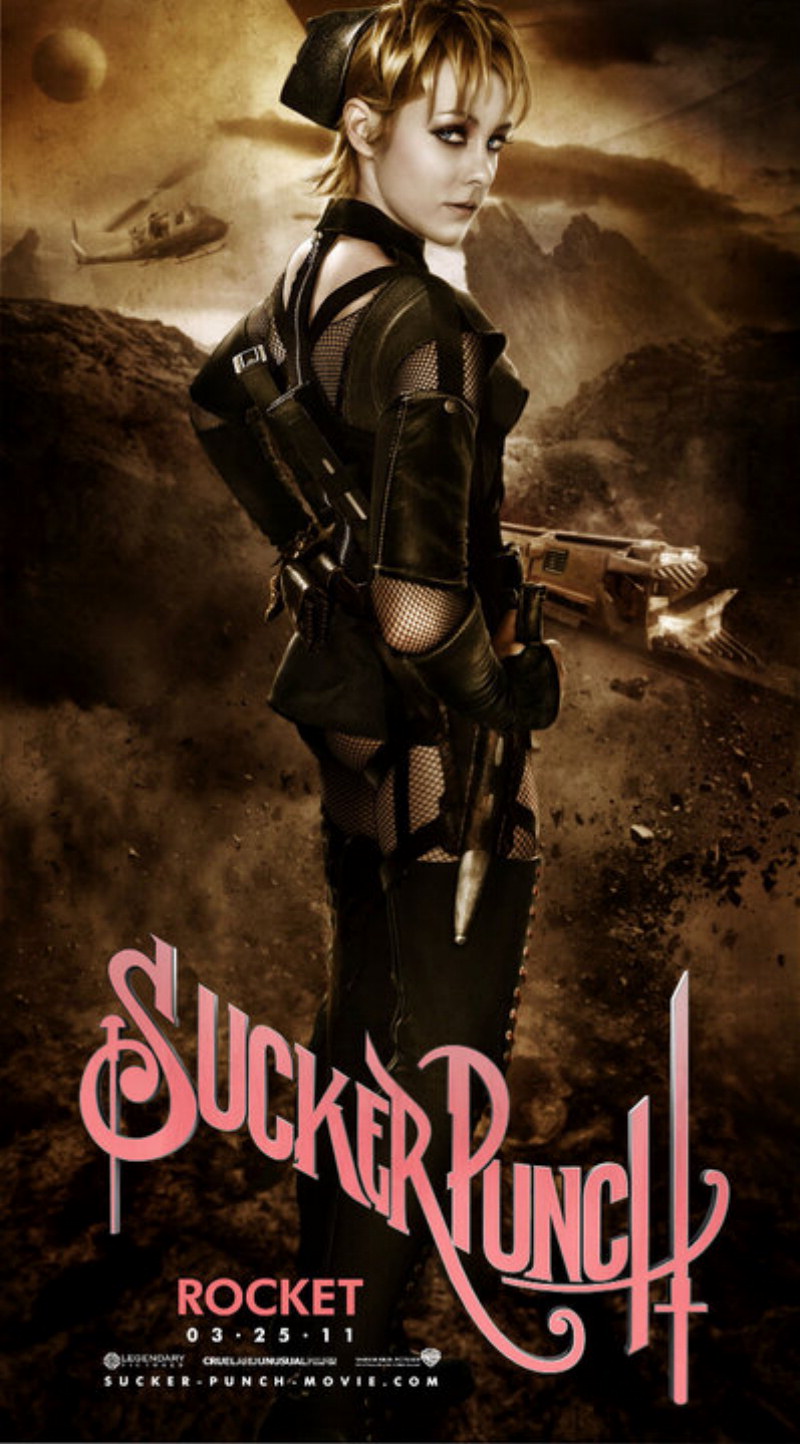
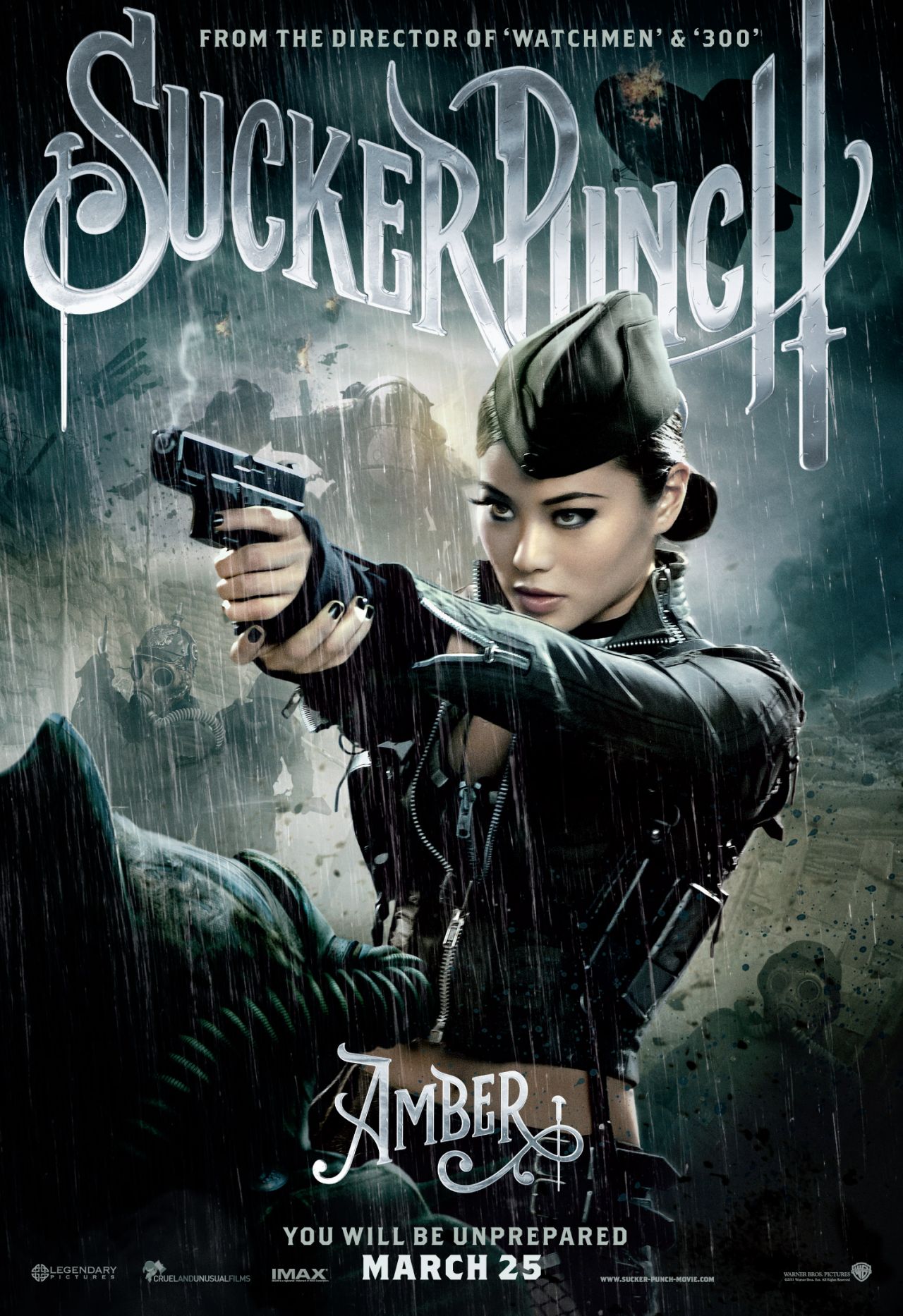
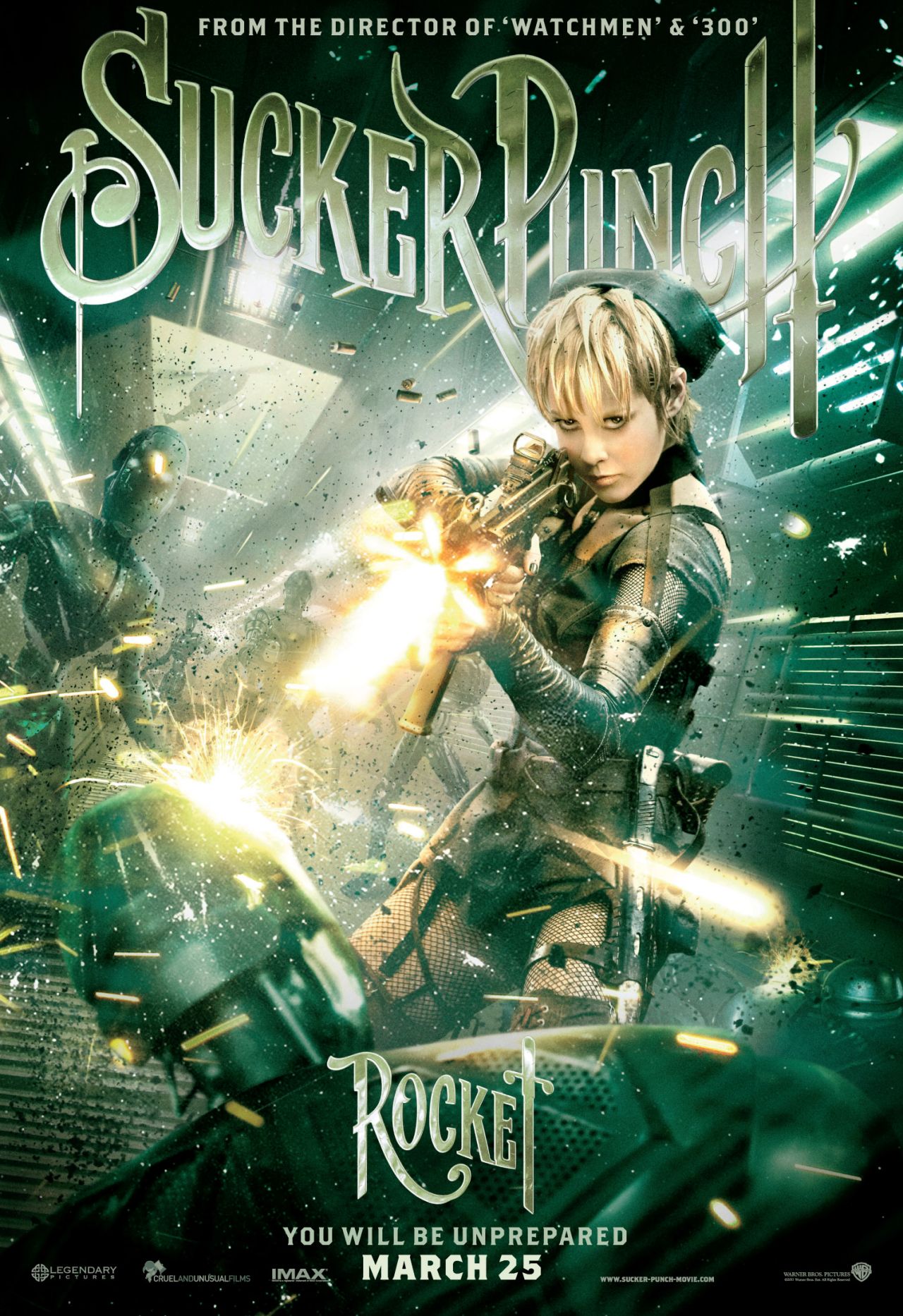
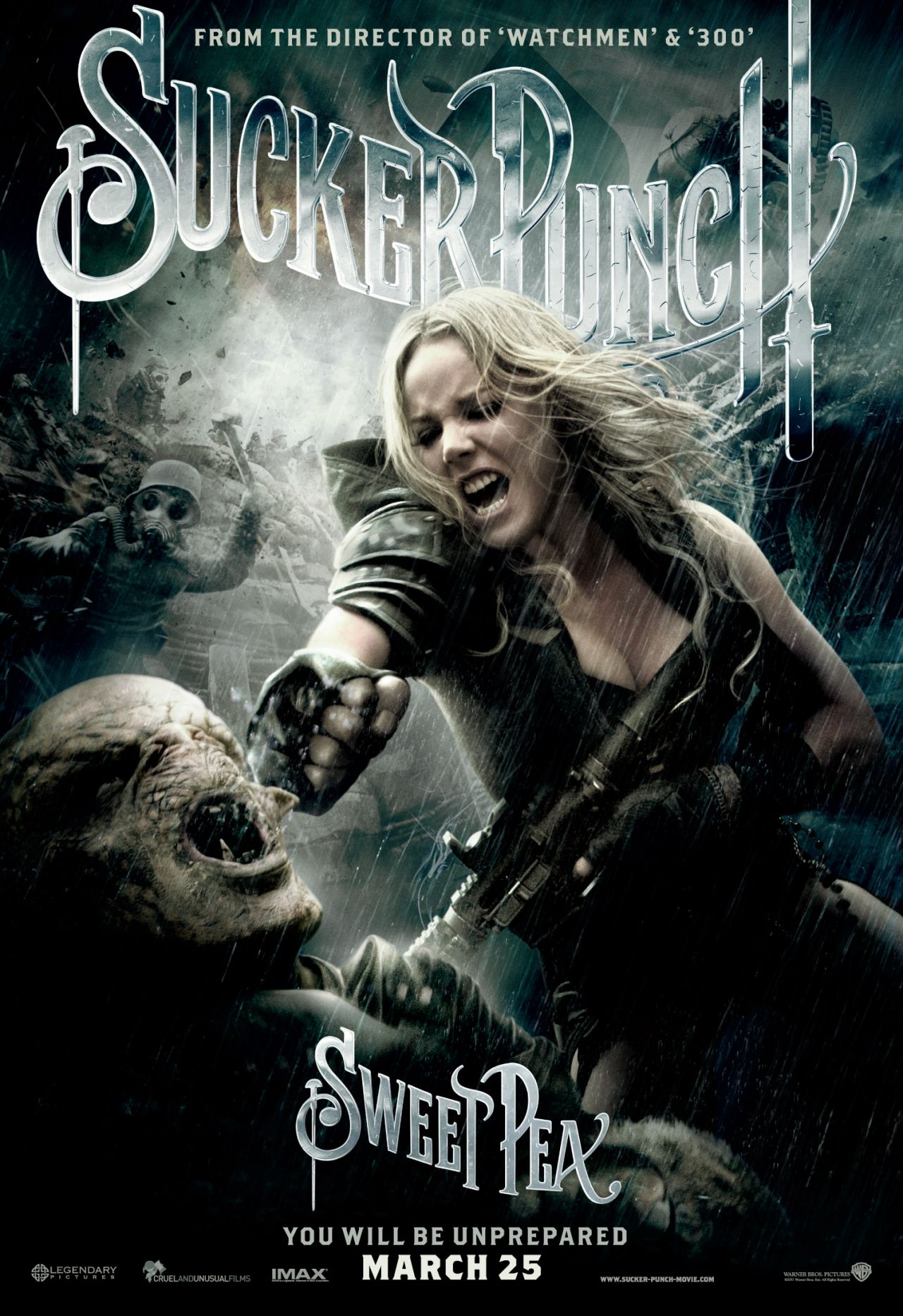
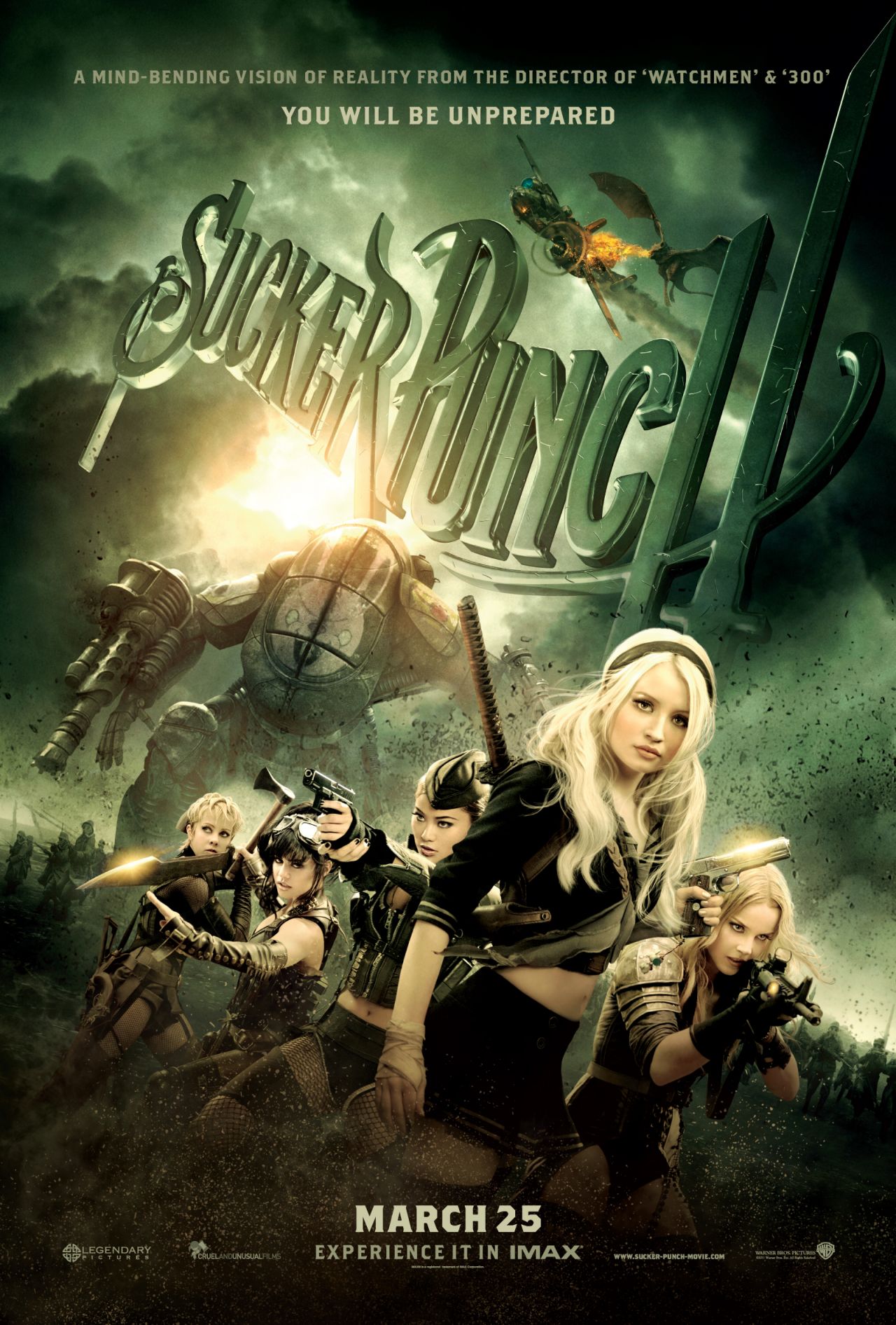
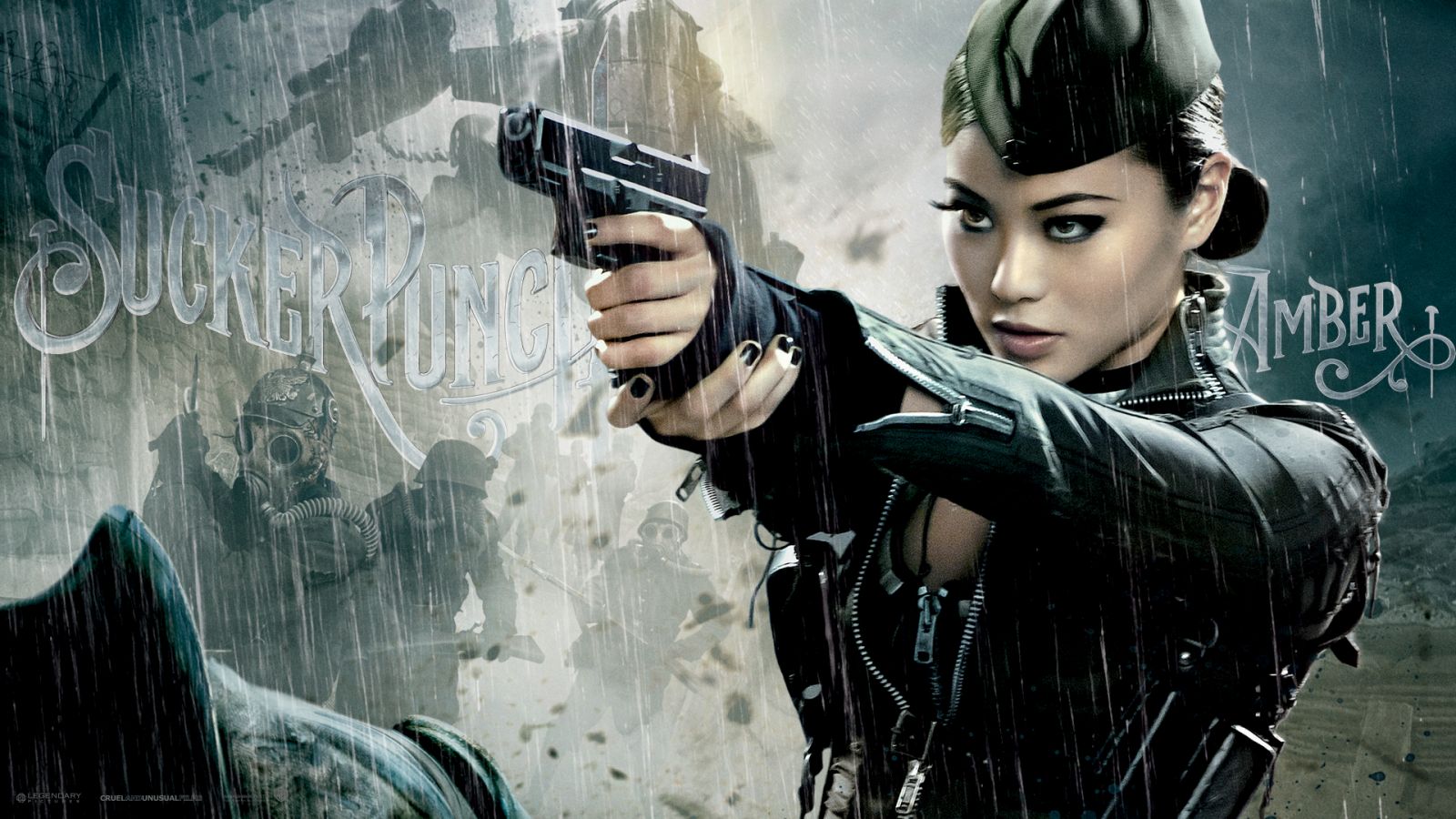
 The movie itself is imperfect; by some measures perhaps not even the “best” GWG film I’ve seen at the cinema this month. However, it is thoroughly cinematic and can only be admired as such – I’m far more likely to pick up the Blu-Ray DVD of this than Hanna. An un-named 20-year old (Browning) is sent to a lunatic asylum by her stepfather, after rejecting his attentions and being made the scapegoat for the death of her younger sister; her lobotomy is scheduled for five days time. Turns out the asylum is a high-end brothel where our heroine – nick-named “Baby Doll” – and the other girls are kept to perform for the pleasure of various high-rollers. Baby Doll plots an escape, the tools necessary lifted by her accomplices while she entrances the staff and customers with her dancing. During these, Baby Doll retreats even further, to fantasy worlds to do battle against dragons, robots, samurai warriors, etc. But which “reality” is real?
 Since Baby Doll is explicitly stated to be 20, this doesn’t strictly fall into the category of “teenage action heroines,” but her hair, clothes, make-up, etc. all are designed to evoke the spirit of what Chris disparagingly called, “schoolgirl porn” – but the PG-13 rating means it can get absolutely no closer, so really, what’s the point? At least Showgirls delivered the goods: Baby Doll’s fantasy world might as well have been an office, college dorm or, frankly, convent, instead of the world’s most demure brothel.













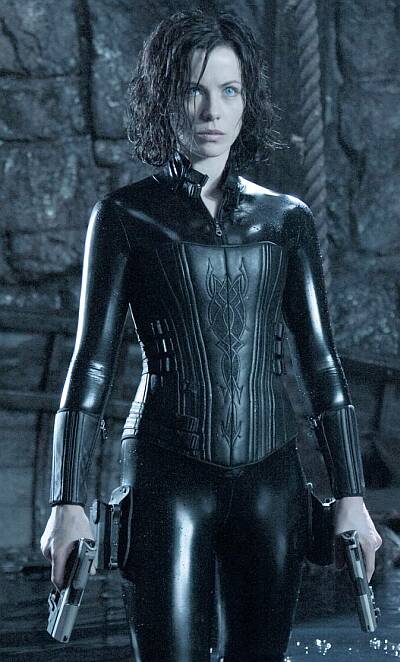 While undeniably flawed, the original Underworld had a big ace up its sleeve, in the basic concept of “vampires vs. werewolves”, which hadn’t received such a full-on depiction in cinema before. This time, the idea is familiar, and the story doesn’t have anything quite as cool to replace it. Sure, there’s the old fall-back of Kate Beckinsale in a PVC suit, but the sense of something genuinely new is rarely apparent. Sure, it’s a sequel, which in Hollywood translates to “more of the same”, but the lack of invention on view is still disappointing.
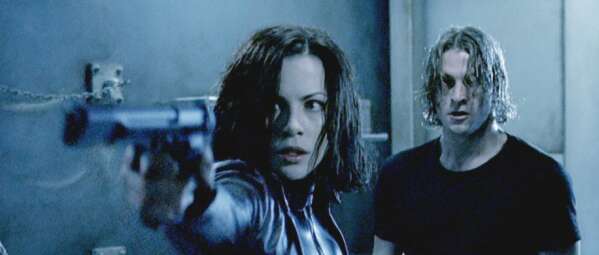
 No, it’s the moments between the battles that are the problems, not least a dumb and gratuitous sex scene between Selene and Michael that appears to have wandered in from an airline version of a SkineMax movie. And the exposition also has to count as among the most leaden of recent times, achieving the rare double-bill of sending Chris and I independently off to sleep. Hey, we’d been out boating all day. So sue us. :-) However, for any action-fantasy to have both of us snoozing is definitely problematic.
 ★★★½
★★★½ The day before this opened, we watched a “documentary” on AMC, entitled Fang vs. Fiction: The Real Underworld of Vampires and Werewolves. Quotes used advisedly, as they must be when the program interviewed someone who said he was a werewolf. Regrettably, despite our yelling at the TV, he refused to transform on camera, claiming it was too taxing. Wuss. What it did demonstrate was that the old stereotypes are alive and well – or at least
  What doesn’t work, on any level, is the Selene-Corvin relationship, which is never given any reason to blossom as it does. Worse, still, though the film is told largely from Selene’s point of view, at the end, it’s Corvin who has to battle against The Big Bad [and I’d best not say who that is; the film takes delight in pulling the carpet out from under the viewer]. Sure, Selene gets to deliver the coup de grace – and impressively so – but reducing the heroine to someone left holding her man’s coat, is mostly why this one doesn’t get our seal of approal. Making it even more embarrassing, by this stage, the hero looks like a blue version of the Incredible Hulk.
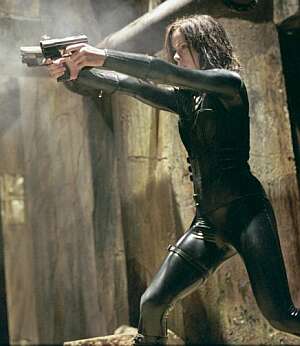 There are some plot points which are never quite explained. At one point, Selene hides Corvin in a safe house, which then mysteriously comes under attack from the lycanthropes. How did they know? Why the werewolves don’t take advantage of the daylight, and avoid moving around at night when the vampires are about? It probably also gets rather too embroiled in creating an entire society and culture for the vampires, explaining stuff not necessary to a 90-minute movie – that’s why it’s actually a 121-minute movie.