



★★½
“Only women bleed…”
The Hardcore genre is denigrated by some pro-wrestling fans as “garbage wrestling,” but I’ve never quite felt that way. To be good, you still need many of the same skills necessary to be good at the more regular end of sports entertainment: ability to work the crowd, sell the offense of your opponent, put over a storyline, etc. It’s true, you don’t need much in the way of technical aptitude to let someone break a fluorescent light-tube across your head, but the willingness to do so is certainly worthy of undeniable respect (if coupled with questions about your sanity). The bottom line is, there are good “garbage wrestlers” and there are bad ones. We’ve seen both in our previous coverage of the genre, when we wrote about FMW: Torn to Shreds, where we saw Megumi Kudo and Shark Tsuchiya, who represent the two ends of the spectrum.
We’ve also spoken before about the gulf betwen Japanese women’s pro-wrestling and the largely pathetic excuse for it put out by the WWE, where two minutes of a glorified cat-fight passes muster as a title match. You need to abandon network TV and go down to the independent level if you want to look for anything comparable – in style, if not necessarily in quality – to joshi puroresu, and it’s there that we found this. The IWA Mid-South federation had been holding annual “King of the Deathmatch” tournaments for quite some time, the first being won by Ian Rotten, one of the most well-known/infamous garbage wrestlers (current WWE heavyweight champion, C.M. Punk was part of the 2004 event, in a non-deathmatch bout). But in 2006, they also staged a similar event for women wrestlers.
 Of course, this being independent wrestling where the phrase “card subject to change” is a given, the eight women scheduled to complete ended up being seven and a man. MC Ian Rotten said that Delilah Starr had a car-crash on the way here, and another competitor, LuFisto, had broken her hand fighting another notorious garbage wrestler, Necro Butcher, in a Canadian Death Match tournament called “Bloodstock”. Taking advantage of the open spot was SeXXXy Eddy, a male wrestler with a long history of intergender matches, which his in-ring persona thoroughly enjoyed, as you can imagine from his name. The roster also included reigning IWA women’s champion Mickie Knuckles, Rachel Putski (grand-daugher of WWE Hall of Famer Ivan Putski), and two joshi wrestlers, Mayumi Ozaki and Sumi Sakai.
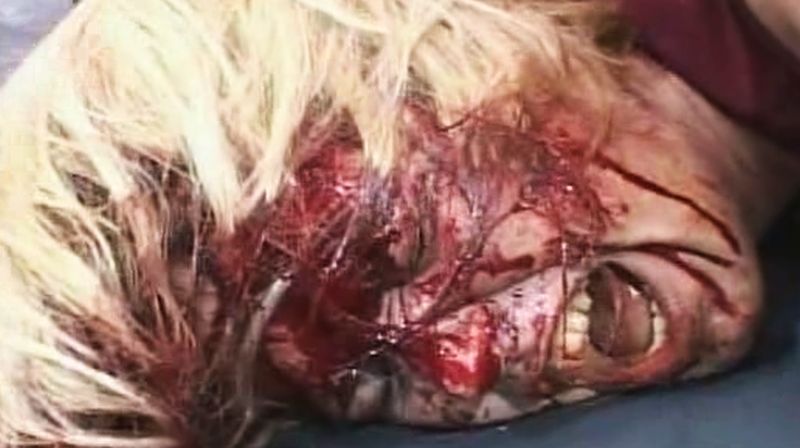
The first round got under way with a Staple Gun Match between Knuckles and Ann Thraxx: it was best of 13, so the first to embed seven staples in their opponent won. Knuckles was busted open immediately, but this was very much equal opportunity carnage: as the pic on top shows, the red, red blood contrasted nicely with Thraxx’s bleached blonde hair. The score was tied at six with a staple to Knuckle’s crotch, but she took the win by tacking a dollar bill on Thraxx’s nose. Next up was a disappointingly bland thumbtack match, with Putski taking on Vanessa Kraven in ring containing a small box of tacks: it was Kraven’s first death-match, and you could tell her heart really wasn’t in it. Add another skill to the list necessary to succeed as a garbage wrestler: commitment.
The third match was improved, though from a strictly aesthetic and visual sense, was hard to watch. Amy Lee – about as far from a WWE diva as it’s possible to get – took on SeXXXy Eddy, who was wearing what can only be described as a “banana hammock”. This was a “Four Corners Of Pain” bout, with the corners of the ring behind home to barb-wire/salt, mousetraps, fluorescent light-tubes and..,er, lemons? Life gives you lemons, you…stage a death-match. That said, this was mostly fun for Eddy’s antics, not least his epic selling of the mousetraps: though he won, he took care in the post-match interview to put Amy over, for which he deserves credit. The first round finished with Mayumi Ozaki taking on Japanese colleague Sumie Sakai, in a Barbed Wire Ropes and Boards match: this was basically a squash, Sakai taking all the damage, as Ozaki prevailed.
Moving on to the semi-finals, the first pitted Knuckles against Putski in a Taipei Death Match. In this, the wrestlers’ fists are taped, dipped into glue and then in broken and crushed glass, to turn their fists into nasty weapons – its use here may have been because the most infamously bloody of these was between tonight’s MC, Ian Rotten, and his “brother” Axl, at a 1995 ECW show. This one is not much less messy, especially when the two wrestlers set up on facing chairs, and take turns whaleing away at each other’s foreheads [a common target in this kind of wrestling, being an area not likely to incur permanent damage, but capable of generating plenty of the red, red kroovy, as A Clockwork Orange called it, running down the face]. Knuckles prevailed, but hard to say who lost more blood.
Osaki took on Eddy in a two out of three, light-tube log-cabin match. You’re wondering what a light-tube log-cabin is, aren’t you. Those are fluorescent tubes, taped together in a square, four to a side and maybe stacked four interweaved rows or so high. They make a very satisfying crunch when you drop your opponent through one, as we discover here. One thing wrestling fans know, is “two out of three” anything means the first two will inevitably be split, and that’s the case here: Ozaki gets backdropped through the first log-cabin, but comes back with a flying kick off a chair to send Eddy into the second. She takes the win after he tries a high-risk manoeuvre off the top rope, only to be grabbed by his banana hammock and flipped through the deciding log-cabin. Ozaki, again, appears to avoid significant damage.
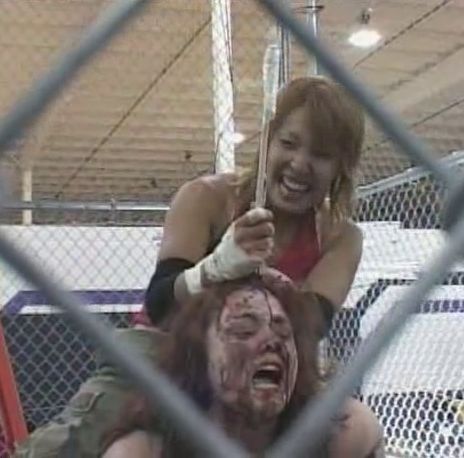 The final, between her and Knuckles was officially described as a (deep breath!) “No Rope Barbed Wire Fans Bring The Weapons Electrified Lighttubes Cage Match”. Basically, pretty much anything went, inside a steel cage which came already furnished with a ladder, beer barrel, barbed-wire ropes, a host of other offensive shrapnel (barbecue fork, baking tray, and bizarrely, a light-up magic wand with a star on the end) and enough fluorescent light-tubes to illuminate Vegas – yes, some of which were plugged in and working, for added emphasis. It is, I think, the first wrestling bout I’ve seen where the referee wore eye-protection. Knuckles hadn’t even bothered to clean up after the last bout, coming to the ring still covered in dried gore from her semi-final.
This one was relatively brief, and must confess, I actually found it somewhat disappointing, especially considering it was supposed to be the grand final. It felt almost as if both women had been drained by the previous encounters, so (understandably) had little energy left for their third match of the night. There was some breaking of glass and some mild use of foreigh objects, but it lasted only a little more than seven minutes in total, before Knuckles kicked through one of the electrified light fixtures into Ozaki’s forehead, following up with a pin for a three-count and victory. She didn’t really get to enjoy her title for long, as LuFisto and Kraven came in, blindsided her and left Knuckles draped in a Canadian flag, obviously intended to set a grudge-match up for the next IWA Mid-South event,
This is not great wrestling, by any means: matches generally proceed at a sluggish pace, and the format offers little scope for any significant degree of technical skill. But I have nothing but total respect for the participants, who put their bodies on the line for the entertainment of the audience, with a cheerful lack of concern for safety. If they were getting paid tens of thousands of dollars, I could perhaps understand it, but the paying crowd here probably numbered a hundred or less, so the compensation for their efforts can have been little more than token. Such willingness to suffer for your art (and there is no doubt in my mind, that pro wrestling is indeed an art), can only be applauded.
Date/time: November 3, 2006 at the Capital Sports Arena in Plainfield, Indiana.
Participants: Mickie Knuckles, Mayumi Ozaki, Rachel Putski, Sexxxy Eddy
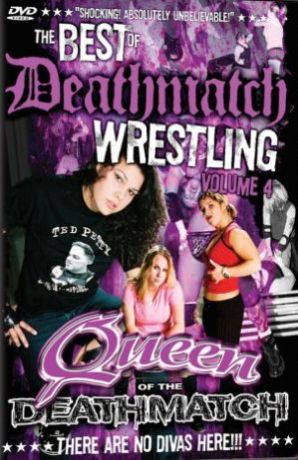
Available through Amazon, as The Best of Deathmatch Wrestling, Vol. 4: Queens of the Deathmatch.
 To the makers’ credit, they are perfectly up-front about this being made for pennies, with home video equipment and edited on a laptop. But even though I’m not averse to that – heck, I’ve been involved with films on such microbudgets myself – there’s still too much here that’s avoidably bad. For instance, if you are going to put the President of the United States in your film, be sure you have access to someone with a grasp of English that extends past “D+, must try harder”. If you don’t, then leave them out.
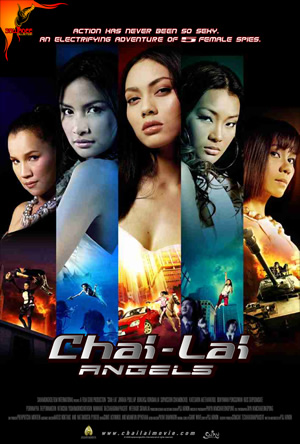 66% extra free! That’s the major difference here, as five, rather than three, little girls, who get their orders from an unseen “boss” and his faux Bosley, take on a variety of disguises and kick butt, in between romantic dalliances. Of course, with a budget approximately one-eightieth of the Hollywood version, certain economies have to be expected. But there are unexpected bonuses in the lunatic invention department, such as the when the villainous henchmen drops a cage, out of nowhere, onto four of our Angels, only for the fifth to come to their rescue, for no apparent reason either, in a
 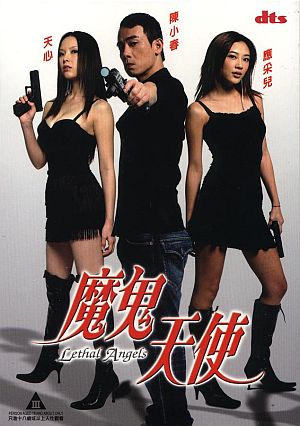 Winnie (Lee) has a grudge: against gang boss Bowen (Yuan) in particular, but also against just about any man who abuses women. She puts together a team of four underlings, such as Yoyo (Sum), whose family was killed by thugs, and uses them to take out anyone whose lustful desires overwhelm their common sense. Now, it’s time for the big one: Bowen. Winnie sends Yoyo in as an undercover nanny, to scope things out and obtain evidence of Bowen’s illegal dealings. However, once in, she finds out that Bowen is now largely reformed, and Yoyo also objects to Winnie’s plan to wipe out all of Bowen’s family, including his six-year old daughter. Meanwhile, she’s also being investigated by Jet (On), a cop who knew and almost dated her at college, and is on the case of the mysterious deaths of mob bosses at the hands of beautiful ladies.
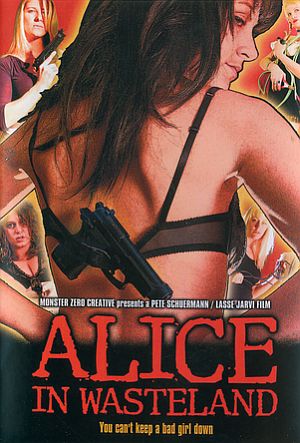 Ok, that brief is a little harsh, but it is true to say by the end, I had opted to double-task, and was watching this while I stood over the sink in the kitchen. It wasn’t as good as I expected: I was hoping for something along the lines of Faster, Pussycat, and instead got a turgid, over-extended crime drama. While it has all the right aspirations, the yawning chasm between that and its execution would require several days’ trip by mule to cross. Alice Wynn (Sondrup) is part of an armored-truck robbery, only to find herself double-crossed and left for dead by corrupt cop Jill Robbe (Beisner). Alice vows to recover the loot and take revenge on Robbe, and won’t let anyone – examples include her late mother’s boyfriend, psychotic pimp Ramrod or his Swedish assassin – stand in her way.
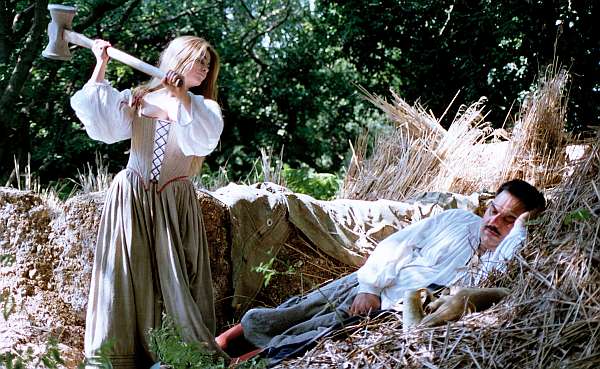 ★★★½
★★★½
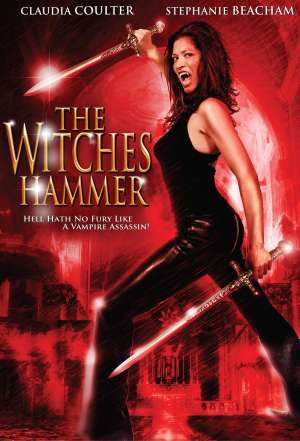 If never quite escaping its low-budget roots, or producing enough compensations or fresh imagination to make you forgive them, this is a robust enough vehicle and a decent entry in a sadly-small sub-genre: British girls-with-guns. It’s perhaps closest to the 1998 movie, Razor Blade Smile – which I really should get round to covering here, except it was pretty freakin’ awful. Similarly, Hammer involves a vampire assassin, though you can also lob in a shedload of other influences, conscious or otherwise, from Buffy, through Nikita to Bloody Mallory. If originality is not the movie’s strong suit, it is at least stealing from some of the best action heroines.
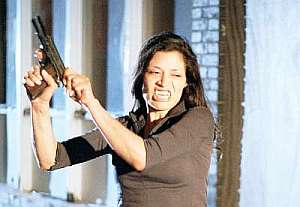 Minuses? There’s a certain unevenness of tone which doesn’t quite work. At various moments, the film wants to be exciting, poignant, self-aware, slapsticky and dramatic: these individual moments work with varying degrees of success, and the combination, with the frequent gear-changes which result, occasionally seem clunky. Camp also needs to be played completely straight to work, and that isn’t always the case here. Hayes is over-fond of flashbacks: there are at least four here, and that’s probably three more than are necessary, with the only truly significant back-story belonging to Kitanya, the Russian witch who supposedly wrote the Malleus Maleficarum, the magic book which everyone seeks. As noted above, Eaves doesn’t really bring much new to the show: if you can find a review that doesn’t mention, say, Blade, your Google-fu is stronger than mine, and it is a very obvious comparison.
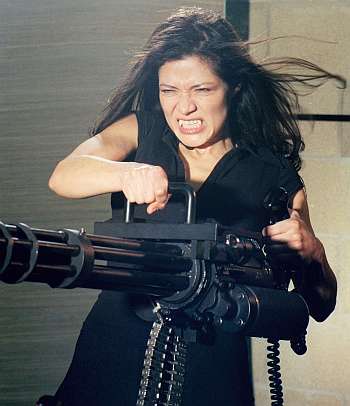 The action is solid, if generally short of spectacular. There doesn’t seem to be much doubling of Coulter – or if there is, it’s not obvious. She get to use a selection of weapons, which adds a nice sense of variety; from swords through staffs to the F-sized rail-gun pictured top left (even if the cartridges being ejected were rather too obviously digital), Kris Tanaka was the action choreographer, and also appeared as one of the vampires near the end; it’s clear he knows his stuff. I’m not quite so sure Eaves does, as the editing of the sequences – for which he is also responsible – seems to be choppy and occasionally difficult to follow, though not to the level of MTV-style editing, the bane of my life as a viewer.
 Despite being directed by the same man as part one, this is only tangentially-connected to the first two films. The most obvious difference is no Shin Eun Kyung, who was the glue that held those movies together. Instead, as noted above, there is no wife at all: Shu Qi stars instead, as Lim Aryong, a mobster’s daughter forced to flee Hong Kong after her apparent involvement in murdering the leader of a rival gang. She goes to Korea and is put under the protection of Ki-Chul (Lee), a fairly crap mobster whose sole qualification for the job is a few words of Chinese. However, his star begins to rise and he develops a tough-guy rep: it’s really Lim who is responsible, but the local criminals would rather credit Ki-Chul than admit they got their asses kicked by a girl. Eventually, her hiding-place becomes known, and a team of vengeful assassins is dispatched to Korea to take care of Lim.
 This is one of those which split the panel here. Chris was thoroughly unimpressed with its lack of a well-defined conclusion: “I
 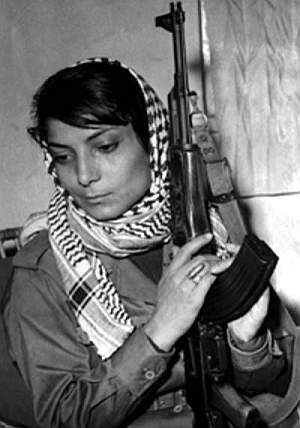 Khaled became internationally famous in 1969, for hijacking a TWA flight from Rome to Athens, diverting it to Damascus, where it was blown up – after everyone had been taken off [this was a kinder, gentler era of terrorism]. She then underwent plastic surgery to conceal her identity, and the following year tried to hijack another plane. However, air marshals shot her colleague and captured Khaled, who was taken into custody in London, only to be released soon afterwards as part of a prisoner exchange. She returned to the Middle East, her sky-piracy career at an end, but became an icon of the Palestinian movement, and remains active in it to this day, despite travel restrictions. The Guardian wrote of Khaled in 2001,
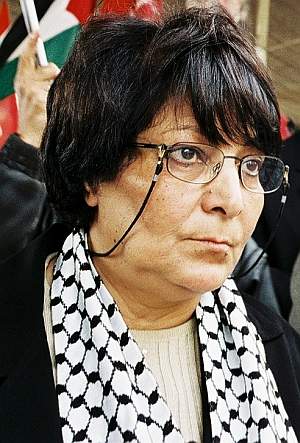 A fascinating and complex character, it can’t be said that much of the complexity – both hers, and the entire Middle East situation – comes across in this documentary, less than a hour long. You get a quick romp through her early history, her family’s departure from then-Palestine just after World War II, both hijackings, and then we leap forward to the present day, where she’s a mother and works for a political group. There are some interesting moments, such as where she draws a line between what she did, and the 9/11 hijackings: “I don’t agree with the murders of civilians, no matter where in the world”, and she’s been consistent in expressing that. More probing questions would have been welcome: instead, Makboul – brought up in Sweden by her Palestinian parents – admits to having been basically a fan. She interviews others involved in the hijacks, such as a stewardess and the crew, and follows Khaled on a trip to the Chatila refugee camp in the Lebanon, but the film ends abruptly, just as she asks Khaled about the negative image of Palestinians as terrorists that she helped create.
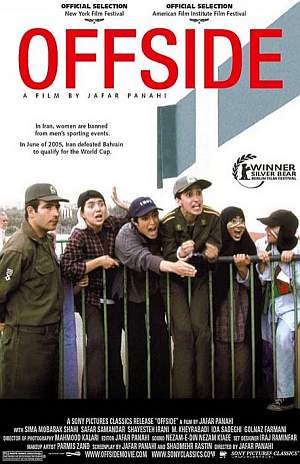 Being an action heroine is a rebellious, possibly revolutionary, act against society: what counts, depends entirely on how your society views women. Going to a soccer game, for example, would not qualify you in the Western world – but as in Ancient Greece, sporting events in Iran are strictly male-only, and a woman who attends one and gets caught, will find herself handed over to the Vice Squad. It redefines requirements somewhat, to say the least. The film tells the story of a number of women, who dress as men to sneak into a crucial 2005 World Cup qualifier between Iran and Bahrain, only to find their disguises imperfect. They’re held in an area, just out of sight of the game, by a group of soldiers, who really have better things to do themselves.
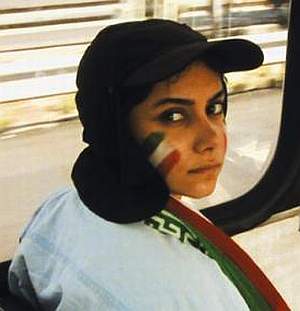 Particularly outstanding is Irani’s tomboy, who becomes the de facto leader of the group, and continually hassles the guards. The film has a surprising amount of straight-faced humour, such as her riposte when asked if she’s a boy or a girl: “Which do you prefer?” Or one girl’s response when told they can’t go in because the men will be cursing: “We promise not to listen.” Similarly, when another needs to use the bathroom, this poses problems, since naturally there are no women’s facilities. The solution involves the impromptu conversion of a poster into a mask, though this hardly resolves things. Obviously, it’s not a traditional genre piece, and it’s this