



★★★½
“A grim cinematic road-accident; hard to watch, yet harder to stop watching.”
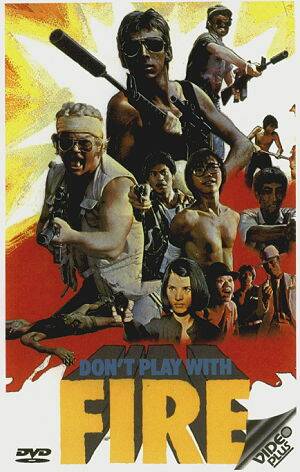 This bleak, nihilist view of 1980’s Hong Kong ran into severe trouble with local censors, for its depiction of the colony as populated solely by violent brutes. Leading these is Pearl (Lin), a teenage girl who redefines the term “troubled”, and whose brother (Lo) is a cop with a short fuse. She witnesses a hit-and-run accident and browbeats the three kids involved into joining her in a relentlessly-escalating series of violent escapades. When they find themselves in possession of 800 million yen belonging to gun-smugglers, you just know things are going to go wrong. And they do: pointedly, Hark finishes the film with photos taken during the 1967 riots in the colony. Make of that what you will…
Right from the start, with Pearl sticking pins in the head of a mouse, the film doesn’t shy from depicting cruel behaviour, particularly towards animals, and there’s hardly a sympathetic character in the film. Pearl does at least have some justification for her lack of morality, and her attempts to weld her new “friends” into something like a team, or even a family are touchingly pathetic. At one point she suggests they’ll escape to Canada and live happily ever after, which is definitely not going to happen. However, the film swerves wildly around, leaping from plot to plot with little coherence, though censorship may explain why certain threads, such as the bombing campaign, seem especially underdeveloped.
Whether robbing a gang of Japanese tourists, or taking revenge on a banker who gave them bad information, Pearl is the lynch-pin who keeps the movie focused, and when she departs, the interest level drops noticeably. Still, if you’ve only seen Tsui’s subsequent, more fantastic films, the venomous realism will be a shock. Keep an eye out for him in an uncredited role as a toilet attendant(!), as well as fellow directors Ronnie Yu and Stephen Shin.
Dir: Tsui Hark
Stars: Lin Chen-chi, Lo Lieh, Albert Au, Paul Che
a.k.a. Dangerous Encounters of the 1st Kind
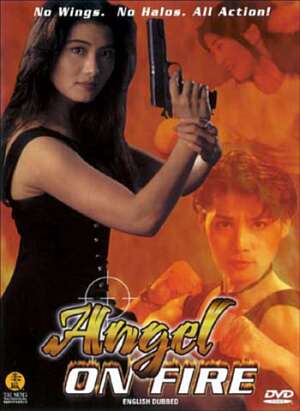 Supermodel-thief Mimi (Melanie Marquez) steals an artifact from a Chinese temple, then heads to the Philippines, via Hong Kong. HK and Chinese cops (Khan & Yeung) are on her tail, as is former partner Ko. This is, frankly, a mess. Yeung apparently does no detective work; Khan goes on a date to an illegal street fight; they’re supposedly partners, but only share one scene; and what
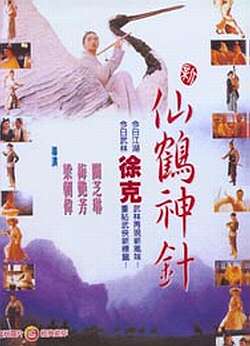 This is one of those Hong Kong movies which seems to believe that if they cram in enough complications and characters, you’ll overlook the deficiencies. They’re kinda right: if you can let go (I did, Chris couldn’t), you will enjoy this a whole lot more, though here, it’d take five times as much plot to make you ignore the truly woeful titular bird. There would seem to have been confusion in the prop department over whether the request for a “giant crane” meant a bird or a piece of construction equipment: it looks as if they split the difference, building something with feathers, which remains (painfully) obviously mechanical.
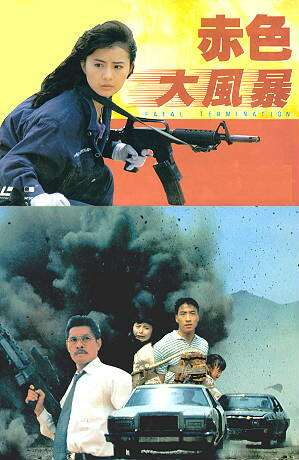 At first, this isn’t much of anything, least of all an action heroine movie. Cop Simon Yam investigates a customs officer (Shou) who is smuggling guns; it’s pretty ho-hum until an innocent underling is killed after finding evidence of the crimes. When his sister Moon (Lee) and her husband (Lui) get involved, this swiftly leads to the one scene in this film that
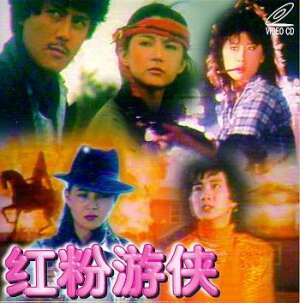 Pretty much the same cast and crew
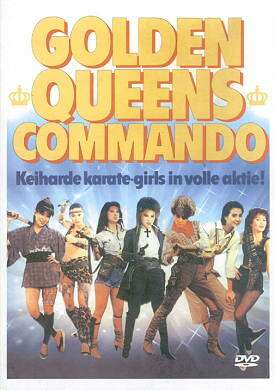 I’m going with the title on the print – your opinion may differ. As it likely will for this insane distillation of The Magnificent Seven and The Dirty Dozen, complete with music lifted from both Western and War genres. It certainly isn’t dull: incoherent and dumb, maybe, but you expect that in an early work from the director of Flying Dagger, one of the maddest Asian movies

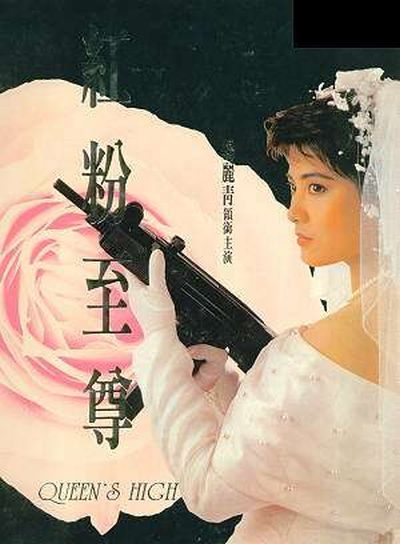 It’s surprising no-one has mentioned the similarity this 1991 pic has to Kill Bill, especially given QT’s liking, both for lifting plots and Hong Kong movies. Here, Cynthia Khan plays Kwanny, the daughter in a gangster family whose wedding day is interrupted by the treacherous slaughter of her intended (and a good few others). Thus explodes a spiral of revenge and betrayal, in which she gets plenty of chance to use her martial arts and gun skills. Of course, there are differences – she is unaware of her enemy within – but the overlap is striking. No doubt Tarantino will claim not to have heard of it – any more than he’d seen City on Fire, before making Reservoir Dogs…
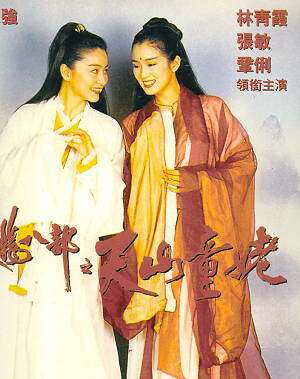 Going in, I knew this had a reputation for incoherent plotting, but after 10+ years watching HK movies, I figured I’d cope. Wrong: I sank within two minutes. An incomprehensible opening voiceover makes this feel like part 17 of an ongoing series; from there on, characters, sects, and magical kung-fu abilities (such as Shifting Stance, which lets you blink in and out of reality, or the self-explanatory Melting Stance) arrive with rush-hour frequency. Basic principle: various factions struggle for martial arts supremacy. Central to these battles are four women, who initally fight among themselves, before realising they must band together to face the ultimate enemy. If I said more, I’d be engaging in wild speculation.
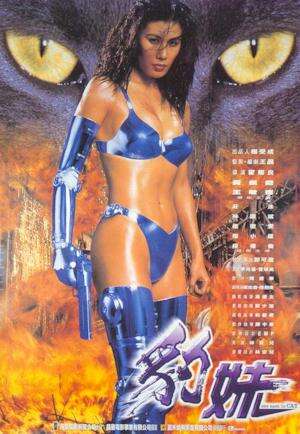 Clarence Ford seems to be after a PG-13 rated version of his hit, Naked Killer, reining in the sex while keeping the action. That it doesn’t succeed is more due to staggering ineptness in the superfluous attempts to give it emotional depth.
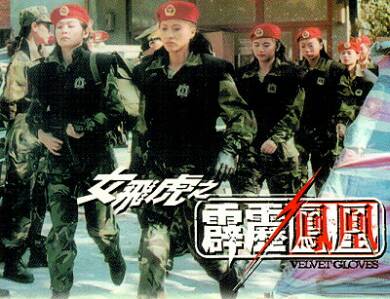 This film is a 90-minute explanation of why Jade Leung’s star never took off. While some decisions Michelle Yeoh made might have been questionable, at least her films were rarely boring, and never down to the level of this piece of tedious dreck. It depicts the struggles of a class of policewomen (including Jade), to become part of the elite. The idea certainly has potential – the Inspector Wears Skirts series has a similar premise – but here, there is almost no character given to any of the girls; they all blur into each other, like a dozen GI Jane-wannabes.