



★
How to finish 2018: one of the all-time worst action heroine flicks.
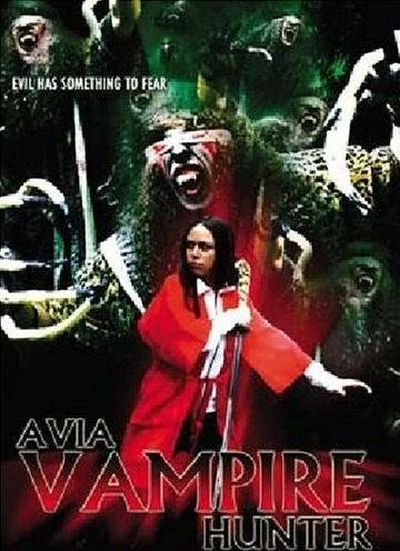 I usually try to be tolerant when it comes to low-budget cinema and the resulting flaws. There are some things which you just cannot expect when a film is financed on the maker’s credit-card, and I’m willing to overlook rough edges if a movie can hold my interest in other ways. However, there are times when the end product is almost irredeemably bad, with few, if any, merits. This would be one such case. Your script is the main area which should be an area of equal opportunity, regardless of budget. Here, if anything, the flaws at the technical level are magnified by the failings on the page.
Vast chunks simply don’t reach basic coherence, with scenes that come out of nowhere, go nowhere or are entirely unconnected to anything. And what little does makes sense is completely uninteresting. Let me give you an example of the former:
- Insert shot of the kind of clock you’d find at your grandmother’s
- 30 seconds of hand-held camera moving towards the heroine as she kneels in a forest
- 90 seconds of her twirling a sword to no purpose, where my main reaction was “Why are there table napkins stuck to the trees?”
- 25 second of hand-held camera backing slowly away from the heroine.
The basic story sounds as if it might have some potential. Avia (Valentino) saw her family attacked by vampires, and made it her life’s mission to seek out and destroy them, with the help of police officer Detective Raymond Guy (Jackson). Except it’s executed in such a low-energy and incompetent fashion, from the performances through the woeful audio mix, to the action – the only person who has a slight clue how to fight is Tomahawk, who plays the master vampire. Otherwise, the sole entertainment value to be found is in mocking its inadequacies. I will say, there’s plenty of scope there, from the moment Guy and his partner don’t notice Avia bringing a large samurai sword when she tags along with them on a routine interrogation.
The whole thing about her family? Forgotten entirely after it has been mentioned. The relationship between Avia and Raymond? Thoroughly unconvincing, sinking to “howlingly bad” during their fully-clothed sex scene. The use of music is particularly execrable, being completely inappropriate to what’s happening on screen to the point it appears to have been added at random. This is despite the presence of eighteen names in the opening credits as “music by”, not counting the London Philharmonic Orchestra, whose presence here is… well, let’s say it came as a surprise to me, and probably to them as well.
The only moment where I had interest briefly roused, was the suggestion made by Raymond’s partner (who vanishes for the middle two-thirds) that Avia might actually be completely insane, and killing innocent people in the belief they are vampires. Her slaughter of a family supports that theory, and it could have been an interesting direction. Except that the film has already established she has official sanction for her acts, Raymond clearly doesn’t give a damn about the possibility, and the final coda has Avia saying it doesn’t matter either. So why bother? Indeed, “why bother” is an entirely appropriate summary of the whole enterprise. Take my advice, and don’t.
Dir: Leon Hunter
Star: Allison Valentino, Rodney Jackson, Cliff Lee, Antonio Tomahawk
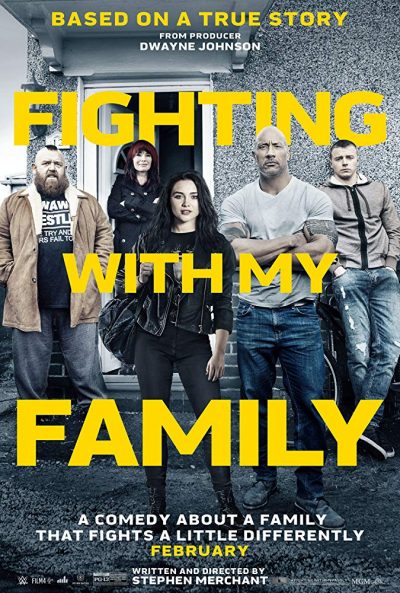 This biopic of WWE Women’s Champion Paige, a.k.a. Saraya Knight from the English seaside town of Norwich, gets a lot of things right about professional wrestling. In particular, it strikes a good balance between the various aspects – positive and negative – of the sports entertainment business. Over the past twenty years, Chris and I have been intermittently involved with the independent end of the wrestling scene, like Knight and her family, and this captures the low-rent showbiz aspects beautifully. Yet it doesn’t shortchange the seductive – almost addictive – appeal of performance for a responsive crowd, or the potential escape from a drab life it offers someone like Saraya/Paige.
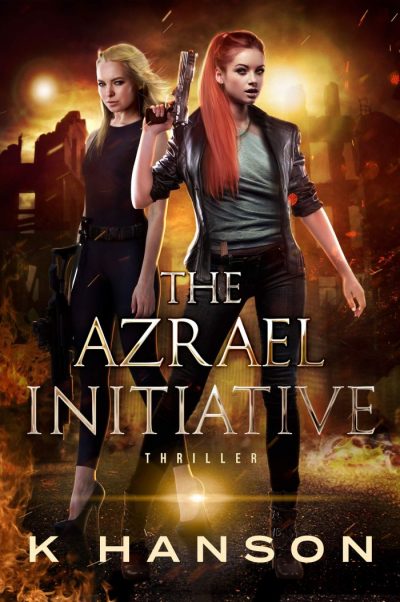 This feels less like a novel, than a novelization of a screenplay, adapted by a not particularly proficient writer. The text is littered with paragraphs which seem more like stage directions than literature, and is startlingly repetitive. For example, in one section near the beginning of the book, five of seven consecutive paragraphs start with, “As she/Kayla…” It’s not necessarily a bad screenplay, with an idea containing some potential. But it would be in need of several rewrites before any studio exec would sign off on it.
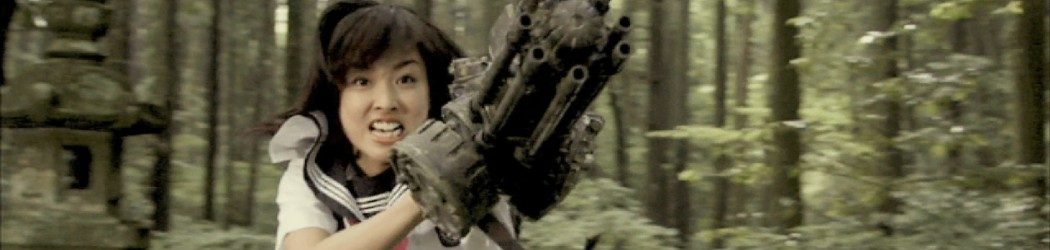
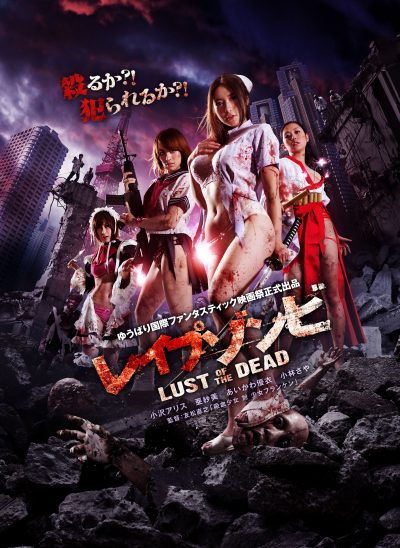 Though it may be difficult to believe such a thing, the original Japanese title for this franchise of low-budget efforts was even more politically incorrect: Rape Zombie. If ever a title change was understandable… I went into this, largely on the basis of the covers, and braced for something awful. On that basis, I was pleasantly impressed: yes, this remains staggeringly offensive. Yet it’s clearly made by people who are familiar with, and love, zombie films. There are signs of actual brains being present – and not the kind normally found in the genre, being chewed on by the shambling antagonists. Five films have been made: for now, I’m covering the first three, which are the only ones available with subtitles [because, y’know, understanding the dialogue is
 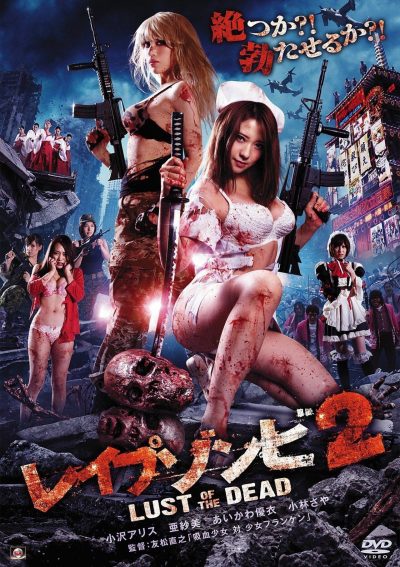 There are four heroines in the series: two pairs, who team up following some initial distrust. Momoko (Kobayashi) ends up in hospital as the crisis breaks, after slashing her wrists at work. There, she’s befriended by nurse Nozomi (Ozawa), and when all hell breaks loose, the pair flee the hospital, and end up taking refuge in a Shinto shrine. There, they meet Kanae (Asami) and Tomoe (Aikawa), a battered housewife and a schoolgirl who have also been trying to survive the carnage. The actresses portraying all four, incidentally, are best known for their adult work, though seem to acquit themselves credibly enough with the (admittedly, fairly limited) acting required here.
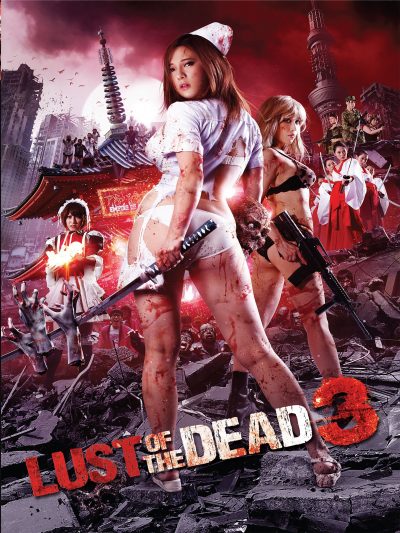 It would have been very easy for this to simply be a porn film with zombies in it, which I’m sure exist. As I hope the above makes clear, it isn’t. Horror fans will have fun spotting the riffs on other genre entries, such as the twist on Return of the Living Dead where a captive zombie is quizzed to its motivation: the answer here, naturally, being “More… pussy.” [As an aside, certain words are bleeped out on the Japanese soundtrack, which seems surprisingly prurient, given the nature of these films!] The second also introduces Shinji, a non-otaku seemingly unaffected by the epidemic, and his girlfriend, Maki; he becomes a key part of the scientific research, though it turns out his immunity isn’t quite what it seems. Despite the copious nudity, it all feels not dissimilar to George Romero’s Day of the Dead, located at the shadowy nexus of science and the military-industrial complex.