



★★★
“Not-so sunny spells.”
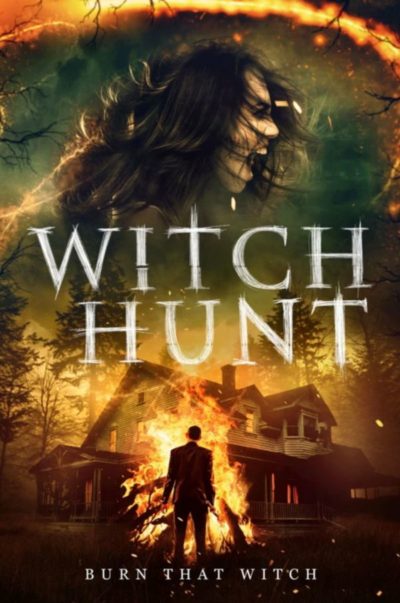 This is set in the everyday world – but with one major tweak. Witchcraft exists, and has been outlawed in the United States by the 11th amendment. Now, government agents from the BWI seek out witches, using tried and true methods from the middle ages (the “sink test” is exactly what it sounds like), and punish those found or suspected to be practicing witchcraft. But those opposed to this have set up an “underground railroad” to smuggle the targets over the boarder to Mexico. Teenage girl Claire (Adlon) is part of one such family, courtesy of her mom Martha (Elizabeth Mitchell); Dad is out of the picture. Claire is rather ambivalent about their activism, since she just wants to fit in at school. But the arrival of Fiona (Cowen) and her little sister, siblings whose mother was burned at the stake, forces Claire out of her professed neutrality,. Especially as the investigation of the unrelenting BWI Agent Hawthorne (Camargo) gets closer to home.
This was on wobbly territory in the first half, with a few storyline flaws. Why are witches outlawed? Was there some 9/11-like incident to trigger the crackdown? And why has the government built a wall to keep them in? If they want to leave, surely that’s a victory for everyone? I was also amused that, at least initially, it appears all witches are redheads. Because, as we all know, gingers have no souls. :) There was also a scene in which schoolgirls Claire and Fiona hang out in a bar: hey, this society may hate witches, but they’re clearly more relaxed about teenage drinking. However, that scene was also where the film suddenly “clicked”, as they discussed whether the ending of Thelma & Louise had been censored because they were witches. For whatever reason, thereafter I felt in tune with what the film was trying to do. The film may have been more than a little clunky with its social metaphors, yet it was still an interesting universe to depict.
This seems to ramp up markedly after Hawthorne shows up, putting an all-too human face on the hatred, and providing a good antagonist – something largely absent in the early states. There’s a very politeness to him which makes his actions all the more menacing – a little like Hans Landa in Inglourious Basterds. The updating of old-time mythology surrounding witches also works very well: the modern version of the sink test involves the school swimming pool and, in a nod to the “kinder, gentler” era, scuba apparatus. Though as it turns out, this isn’t infallible: albeit without consequence or impact. All told, there are plenty of interesting ideas here: however, the movie falls short of merging them into an effective whole. If the generally decent performances do help paper over some cracks, there are enough still apparent, and the end result is actually a little infuriating. I suspect a moderately near-miss like this has a greater sense of unfulfilled potential than a complete disaster.
Dir: Elle Callahan
Star: Gideon Adlon, Abigail Cowen, Elizabeth Mitchell, Christian Camargo
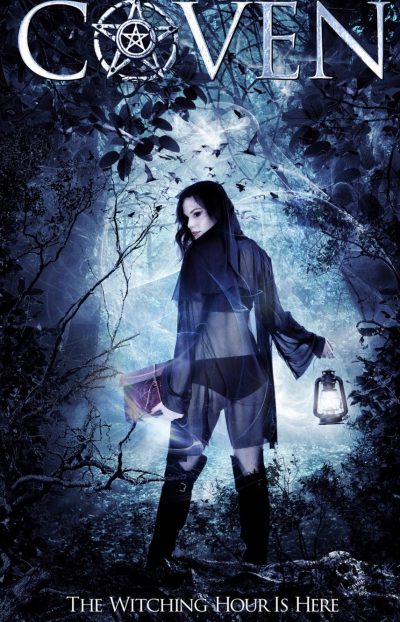 The town of Calvert has had a long association with the dark arts, going back to the founding families in the early 19th century, many of whom were involved in a coven. Now, four of their descendants, led by Ronnie (Cipolla), are seeking to unleash the power of the “goddess witch” Ashura, which has been bound for centuries. They need a fifth to complete the necessary rituals, and their first potential recruit doesn’t quite work out, shall we say, after things get a bit… stabby. However, a quick seeking spell points them in the direction of history student Sophie (Gordon, who also wrote the script).
 I previously reviewed the ninth volume in the Wardstone Chronicles series,
 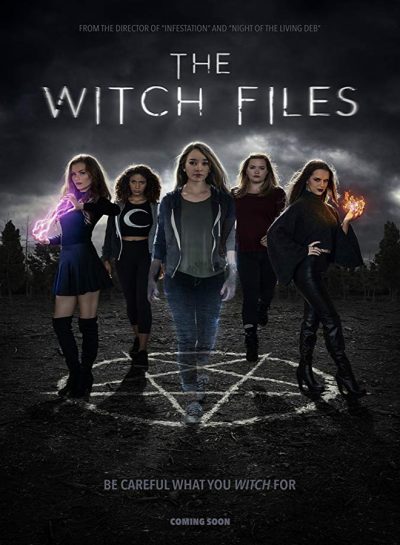 If John Hughes directed a film about witchcraft, it’d probably end up like this. For you have five stereotypical high-school girls in detention: Brooke the rich bitch (Ziolkoski); Greta the jock (Adrienne Rose-White); M.J. the timid mouse (Robinson); Jules the goth (Flatmo); and Claire the nerd (Taylor), who isn’t actually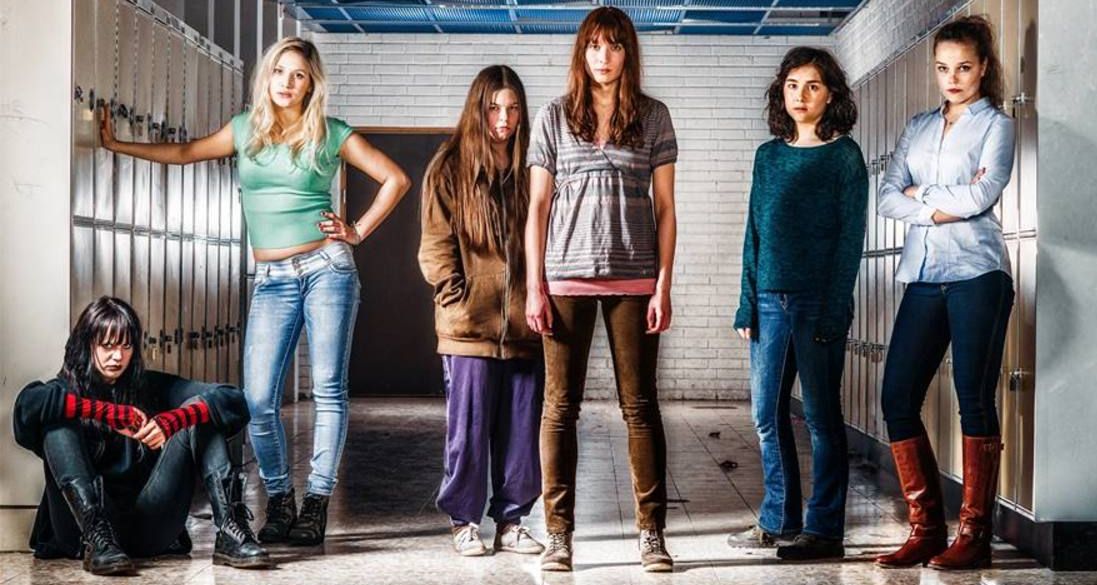
 ★★★½
★★★½
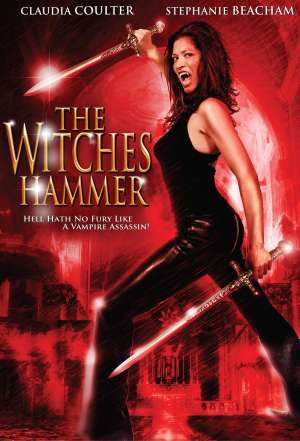 If never quite escaping its low-budget roots, or producing enough compensations or fresh imagination to make you forgive them, this is a robust enough vehicle and a decent entry in a sadly-small sub-genre: British girls-with-guns. It’s perhaps closest to the 1998 movie, Razor Blade Smile – which I really should get round to covering here, except it was pretty freakin’ awful. Similarly, Hammer involves a vampire assassin, though you can also lob in a shedload of other influences, conscious or otherwise, from Buffy, through Nikita to Bloody Mallory. If originality is not the movie’s strong suit, it is at least stealing from some of the best action heroines.
 Minuses? There’s a certain unevenness of tone which doesn’t quite work. At various moments, the film wants to be exciting, poignant, self-aware, slapsticky and dramatic: these individual moments work with varying degrees of success, and the combination, with the frequent gear-changes which result, occasionally seem clunky. Camp also needs to be played completely straight to work, and that isn’t always the case here. Hayes is over-fond of flashbacks: there are at least four here, and that’s probably three more than are necessary, with the only truly significant back-story belonging to Kitanya, the Russian witch who supposedly wrote the Malleus Maleficarum, the magic book which everyone seeks. As noted above, Eaves doesn’t really bring much new to the show: if you can find a review that doesn’t mention, say, Blade, your Google-fu is stronger than mine, and it is a very obvious comparison.
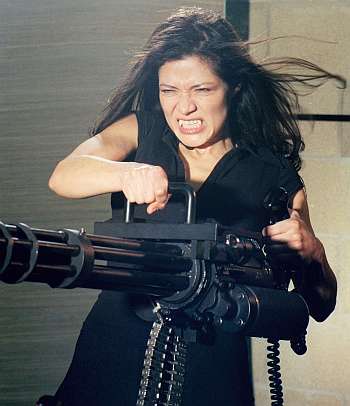 The action is solid, if generally short of spectacular. There doesn’t seem to be much doubling of Coulter – or if there is, it’s not obvious. She get to use a selection of weapons, which adds a nice sense of variety; from swords through staffs to the F-sized rail-gun pictured top left (even if the cartridges being ejected were rather too obviously digital), Kris Tanaka was the action choreographer, and also appeared as one of the vampires near the end; it’s clear he knows his stuff. I’m not quite so sure Eaves does, as the editing of the sequences – for which he is also responsible – seems to be choppy and occasionally difficult to follow, though not to the level of MTV-style editing, the bane of my life as a viewer.
 This comes from Vista Street Entertainment, whom you might remember produced some of the worst entries in the