


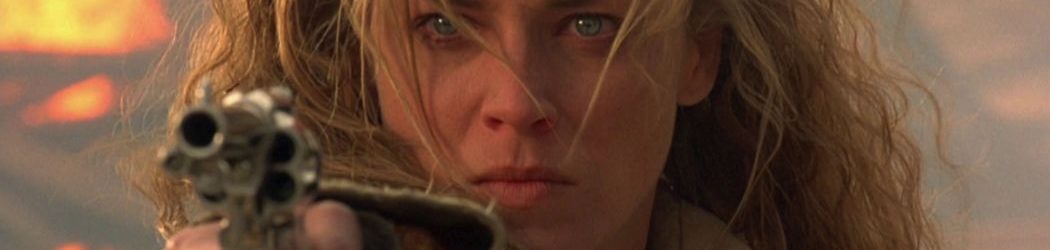

★★★
“A not-so quiet place”
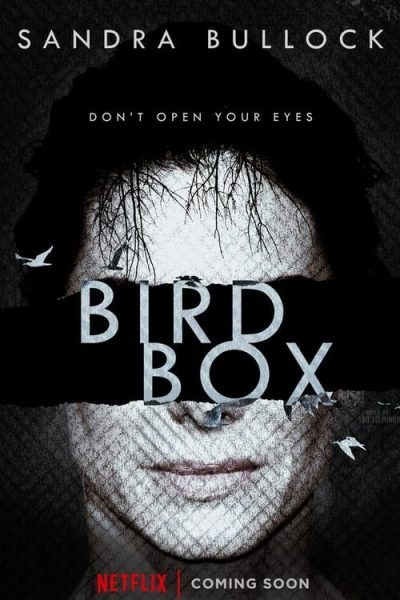 Malorie Hayes (Bullock) is nervously heading towards the birth of a child, supported by her sister (Hayes), when a mysterious epidemic of suicidal psychosis breaks out worldwide. In the ensuing carnage, Malorie finds shelter in the home belonging to the acidic Douglas (Malkovich), whose wife dies trying to help Malorie, and a small number of other survivors. They figure out the epidemic is triggered by entities of some kind who are now prowling the planet – if you see them, you are overwhelmed by your worst fears and kill yourself. The obvious defense is not to make eye contact. Yet how do you survive in a world you cannot see? Especially when it turns out that those who were previously psychopathically inclined are immune to the effects, and are free to roam that world, with their sight intact.
The structure here is a bit problematic, bouncing back and forth between the early days of the apocalypse, and five years later when Malorie and two children are making their way down a river towards a supposed sanctuary. This both robs the early scenes of some tension, since we know who will and won’t survive, and eventually leads to a troublesome and unexplained leap: how, exactly, did they get from stuck in the city, to farming in the middle of a forest? However, it manages to get by, largely on the strength of Bullock’s intensity. This is apparent from the very first scene, where she’s instructing the five-year-olds on their imminent journey, in a thoroughly unmotherly manner.
If you’re looking for an explanation, you’ll need to look elsewhere, as the film never provides any. I’m not sure whether the book in which this was based was any more forthcoming [one thing I do know is, in the novel and not the movie, the sanctuary was populated by people who had deliberately blinded themselves] This isn’t necessarily a problem: indeed, it has been a genre staple going back at least to Night of the Living Dead, to present an apocalypse and its consequences without rationale. Yet, the specifics of the event here seem particularly contrived e.g. simultaneous parturition, and if you’re overly concerned with story logic, this may prove troublesome.
Fortunately, the performances help overcome this – not limited to, but certainly highlighted by, Bullock’s. Her gradual evolution from someone who isn’t certain she wants to be pregnant, into a fiercely protective mother (even to someone else’s kid) is nicely handled, and convincing. She gets particularly good support from Malkovich, playing the jackass character who appears almost de rigeur in any apocalyptic scenario. As many have noted (and the review tagline suggests), there is more than a little similarity to A Quiet Place; though I found that rather underwhelming, and the brutally internalized nature of the threat here seemed considerably more effective. The prospect of having to lose your sight is certainly scarier to me, and if far from perfect, I found enough cheap thrills here to make the time worthwhile.
Dir: Susanne Bier
Star: Sandra Bullock, Trevante Rhodes, John Malkovich, Sarah Paulson
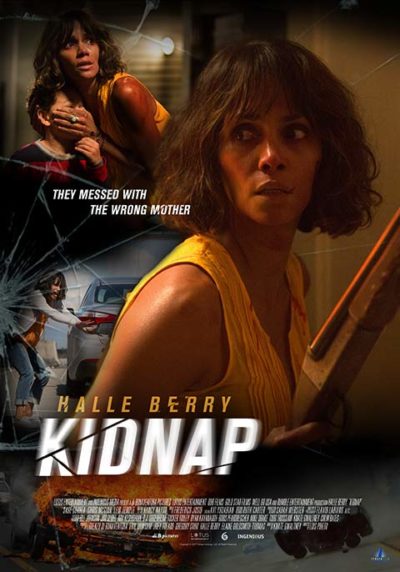 Oh, how the mighty have fallen. And considering Halle Berry’s last appearance on this site was for Catwoman, that’s saying something. This is so dumb, I genuinely felt I could feel my IQ slowly sliding away as I watched the movie. Even now, simply remembering it has me feeling more stupider by the sentence. If this review ends up sounding like Beavis & Butthead by the end, that will be why. Its plot is beyond simplistic. Karla Dixon (Berry) has her child abducted from a New Orleans park while she’s on the phone, by husband and wife kidnappers Margo (McGinn) and Terry (Temple). Losing her cell in the process, she takes off after them in hot pursuit, and nothing will get in her way for the next 80-odd minutes.
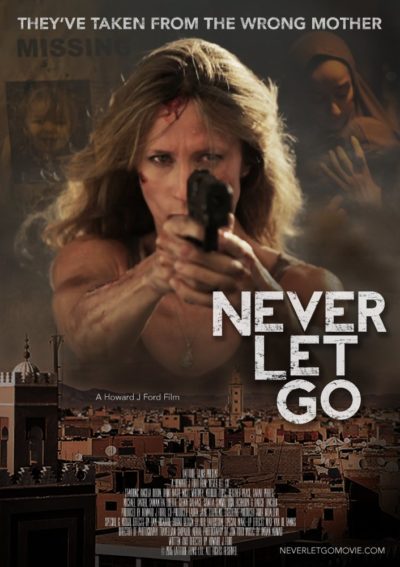 Based on the title and synopsis, I was expecting something like a Lifetime TV Movie. A mother frantically searching for her abducted child in a foreign location, before they can be sold off to some rich Arab, would seem right up their alley. [Though of course, this kind of thing has long been a popular subject for exploitation, to the point where the Hays Code of the thirties had explicitly to ban movies about “white slavery”] It’s a good deal grittier and harder hitting than that, though could have done with much better explanation of why this momma bear is so ferocious – among a number of other aspects.