




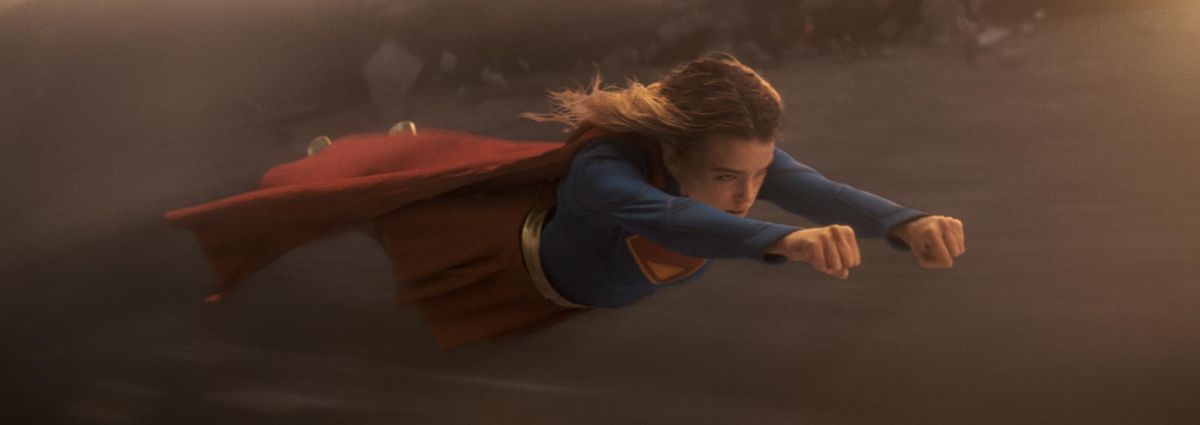
 ★★★
★★★
“A girl and her dog.”
Watching reviews by some fans for the new Supergirl movie is like seeing someone publicly tarred and feathered. But I understood how this works. A review titled “Supergirl is an acceptable, though not great, summer superhero movie” wouldn’t get you many clicks, right? Almost any big studio movie seems to get the same treatment: heavily, negatively criticized; scrutinized as to its wokeness (which admittedly can be a problem in today’s film landscape); and judged as garbage, long before the average Joe or Jane has a chance to see the movie and make up their own opinion about it. The number of views on YouTube have a clear message: social media thrives on vitriolic hatred, not a balanced attitude. I sometimes get the impression the reviewers have not even seen the movie themselves, arguably rendering their opinions worthless. How can anyone judge a movie that they have not watched?
This isn’t meant to say there aren’t problems today with the way movies are written, directed, produced or marketed. And the other side of the coin are ‘professional’ journalists, who appear to act as media mouthpieces for the industry. They consider every movie by established directors or big studios as great entertainment, glossing over its faults. There is something foul in Hollywood and I don’t want any of it. The big problem is, the average cinemagoer can’t rely on reviews or critics, and I think that’s a shame. Yes, any review will always reflect the author’s personal attitudes. But in the cases above, there is no balance, and the respective review is frequently very far from an objective dissection of the film. Let’s see if I can do better: though in any case, you should decide which movies you’ll support with your money – if at all.
Supergirl already got the YouTubers up in arms, when star Milly Alcock made some potentially ill-considered comments, including stating that Supergirl “probably goes both ways” sexually. That was perhaps not smart – unless the marketing department was targeting an audience which was never really interested in the character to start with. Supergirl, created in the late 1950s by Otto Binder, was originally intended as a tamer version for girls, of what Superman was for boys. Nevertheless, the majority of people who read Supergirl and kept the title alive over the decades were young, heterosexual men. She had a rich comic book history before the ill-fated Supergirl movie from 1984, with the lovely Helen Slater. And though DC decided to kill the character off sensationally in 1985’s “Crisis on Infinite Earths”, she made an indirect comeback in several forms, until officially returning as her true self in 2004.
Most of the buyers of her comics continue to be male. Not because “all men are creeps”. But because Supergirl was a cool character – and admittedly, also very pretty. But I have never heard about the supposed “queerness” a reporter asked Alcock about. From what alternate universe did this journalist come? Alcock continued, “What makes this film beautiful is that it’s not centered around a man, it’s not centered around love at all.” To be fair, the love story in the 1984 movie didn’t really work. But it’s a leap to conclude that a movie about a female action character is immediately better because it does not feature a love story. Look at Wonder Woman, where the love story between Diana and Steve was an integral part of the story, and see how well it worked. It’s really up to the screenwriter.
Comments like Alcock’s – though probably given without much thought – put her in the same category as Rachel Zegler, whose remarks contributed to the (probably justified) downfall of the live-action Snow White remake. That’s a shame. If a movie is bad, it’s one thing. But if the main star shoots her own film in the foot… The makers of this Supergirl mistakenly thought they had a movie targeting a female demographic of a certain age. The results of the first week indicate that 59% of those watching were male, the great bulk of those over 25. Contrast Wonder Woman, which drew a majority female audience. It’s a remarkable miscalculation. If you dismiss the audience, don’t be surprised if it doesn’t show up for your movie. Who knew? Apparently not Alcock, and the financial flop turns out to be entirely studio-made.
 Anyway, what’s the story? Supergirl continues from 2023’s Superman, which in his last scene introduced Supergirl. She is Kara Zor-El, Clark’s cousin, owner of Krypto the Superdog, and together with Clark, the only survivors of the planet Krypton. The Superman movie didn’t show the destruction of Krypton (we have seen that too often on screen in the past) but Craig Gillespie, director of Supergirl, gives us glimpses of it, or flashbacks to Argo City, the city that survived due to SF-technology on a chunk in space. Its inhabitants are nevertheless doomed, due to kryptonic poisoning. So, Kara’s father sends her to Earth, to her cousin who already lives here. The makers generally stay true to Supergirl’s origins, though there is no orphanage into which Superman puts her, nor surrogate parents like the Danvers as in the comics.
However, how it shapes Kara is very different from the original character: this Kara is jaded, cynical and stands in sharp contrast to Clark’s true blue heroism. Even when the movie was being made, she was compared to a “punk rock girl” – more or less the opposite of the original Kara. Obviously, this Supergirl has problems, and in 2026, The Powers That Be have opted out of the traditional image of Supergirl. Separate from any other concerns, it really depends on your acceptance of this new version, and whether or not you are able to enjoy Milly Alcock in that role. Her interpretation has as little in common with the original character, as Daniel Craig’s had with the original James Bond. That this version of Kara would not follow the traditional values was already apparent on the official poster that replaced the famous Superman-Reeves statement “Truth, justice and the American way.” with “Truth. Justice. Whatever.” You either accept that or you won’t like the movie at all.
Supergirl is accompanied by her pet Krypto – still a super-annoying, not very realistic-looking CGI-dog. She celebrates her 23rd birthday in an intergalactic bar, then more or less accidentally gets involved with a 13-year old girl, Ruthye (Eve Ridley). Her parents were killed by the evil Krem of the Yellow Hills (Matthias Schoenaerts). Ruthye wants revenge but Kara is not interested in helping her. That is, until Krem pops up and poisons Krypto with an arrow. As she has only 3 days left until Krypto will die, Kara follows Krem with Ruthye, whom she just can’t shake off. I have to be honest; this is not much of a story. I’ve heard the movie went through different test screenings with audiences, and suspect a lot of what was original in it ended up on the cutting-room floor. Which I’m generally in favor of, because I don’t really enjoy seeing 160 minutes long superhero movies. But here it felt as if the movie was kind of an emergency patchwork.
Why the flashbacks to Argo City, given we didn’t need any of Krypton in Superman? Yes, it might help frame Kara as a trauma survivor, since she watched her people die, slowly and painfully. But did we need the inserts of Superman (David Corenswet), save for audiences caring more about him than the new Supergirl? Why does bounty hunter Lobo (Jason Momoa) suddenly appear in the movie, only to quickly disappear from it again? Why an entire sequence with only Ruthye and Lobo in prison, while Kara is off, recovering from the effects of a green sun? I think Warner Bros saw a potential flop in the making after test screenings, and tried to save what they could. Reducing the length (= more showings); bringing in Corenswet, whom audiences reacted quite positively to last year; adding Lobo, a long-time DC comics fan-favourite.
The fact that the production had three different music composers over time, does not reflect well on it. That said, the music of Claudia Sarne, the composer the production finally settled with, is adequate: I liked it. But Gillespie obviously felt (or was forced?) to follow James Gunn’s way of using music: underlay an action scene with a cool rock song. Gunn has been doing this since his first Guardians of the Galaxy movie in 2014, and the result here is even less convincing than in his Superman last year. I yearn for the classic music of a John Williams (1978’s Superman – The Movie) or Jerry Goldsmith (1984’s Supergirl).
The big problem – apart from the re-interpretation of Supergirl – is there is little at stake. Kara wants to save her dog. Ruthye wants revenge, though the actress is never really able to deliver this convincingly, coming across as a little brat. Lobo just wants the bounty for someone’s head – and not even Krem’s. When I go to the movies to see a superhero movie, I expect that someone saves the world, prevents global annihilation, or at least brings order to the criminal underworld of Gotham. This movie feels very small because the ambitions of its protagonists are very small. I could at least understand why John Wick went berserk over his dog; I don’t feel an emotional connection here. The villain Krem is evil and… well, that’s it. He feels like lazy screenwriting. Villains should have an attitude, their own worldview, a philosophy, a big objective. Krem doesn’t have any of this. Yes, there is sex trafficking, which seems to be what Krem does. But we never get a good explanation for why or what purpose. Hitchcock once said, “The more successful the villain, the more successful the picture.” The mediocrity of its villain reflects negatively on this movie.
The end is also more than questionable: Supergirl repeatedly tells Ruthye she should not take revenge, because this is not the way, she won’t feel better after it, yadda, yadda, yadda. She then takes revenge on Krem, making her appear a hypocrite. Also, I think heroism usually, albeit not necessarily, comes with a sacrifice. If Kara would have had to give up Krypto for some bigger purpose, e. g. saving all the girls captured by Krem, the story might have had a much bigger impact. Bonus: I would finally have gotten rid of this obnoxious CGI dog. Honestly, I despise him so much and don’t think he is cute at all. But be careful what you wish for; they might replace him with Streaky the Supercat!
 There are editing and creative choices that baffled me. Instead of showing a bar brawl with Kara, the camera focuses on Ruthye in front of us, hiding from the fight. Mind you, in action scenes, the camera often gets so close we can barely tell who is fighting whom. In one flashback Clark tells Kara her powers will set in “right now” – and we cut away to another scene of Kara sitting in a room listening to music on her headphones. A couple who wants to trade Kara and Ruthye for their kidnapped daughter, poison Kara – how did they know that their poison would work on Supergirl? In another scene in a prison, small, lightly-built Ruthye takes on a henchman around double her size, possibly four times as heavy, and easily beats him. There is no explanation given how she does that. While Kara isn’t physically big either, we know what kind of power Kryptonians have. But Ruthye?
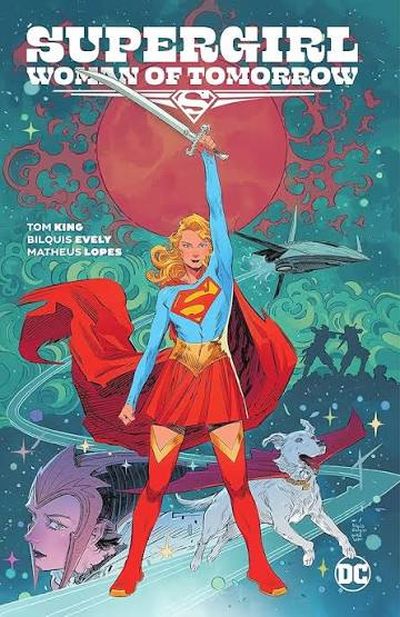
Some people have pointed out that the colour palette of this movie is mainly brown, dark or garish and I agree with them. While I personally didn’t have a big problem with it, I do prefer more colour in my superhero movies. This film was based on Supergirl: Woman of Tomorrow (left), by Tom King. While I haven’t read this myself, most reports say the movie has little resemblance with the original comic and changed its ending. Although the comic itself was an “Elseworlds” story, so you could argue it’s not really representative of Supergirl. All quite negative, right? Why am I then not as harsh as the YouTube fan critics mentioned above?
First of all, I still found the movie entertaining, despite all its flaws. That doesn’t sound much, but believe me, there are many movies out there which are either plain boring or don’t even try to be fun. Case in point: the week before, I saw The Death of Robin Hood with Hugh Jackman. Supergirl is far from perfect but at least it tries. Milly Alcock is indeed fun and a good actress. I figured what direction “her” Supergirl would go, when she was cast. I had seen her as a relentless rebel girl in Australian series Upright, and a larger audience discovered her in the first season of House of the Dragon as Rhaenyra. She has and is a great talent: while this movie doesn’t do her justice, she could have a great career in the right roles.
Eve Ridley does her best, but the part doesn’t offer much and she was not really convincing in it. The idea here is obviously that Ruthye is a counterpoint to Supergirl, creating a conflict between different objectives. It kind of works, though, I would have preferred the movie without an annoying teenager who constantly repeats herself like an NPC, and is little help during the search for Krem. Jason Momoa has been the fan-choice for Lobo, as long as there have been plans for a Lobo movie. Though this version seems a tame, “free from 12 years on” version, he is very enjoyable. I really, really would like to see a single movie with him as the Czarnian bounty hunter. But the new DC film universe under the current Warner Bros. management is already imploding. Again.
There are moments I like. If you can accept the idea of Kara being a more complex, work in progress (the ending suggests she may finally settle on Earth and support Clark), that may help you enjoy the movie more. This Kara has a quite cocky attitude which sometimes made me chuckle quite a bit. At the same time, Alcock can bring the gravitas to more serious scenes if she is given those. It’s all in the writing. I have to say, I expected more from Craig Gillespie, who directed the great I, Tonya a couple of years ago. But directors are dependent on the scripts they are given. A lot of the creative decision concerning the movie (such as the decision to have Supergirl kill Krem, were apparently made by Gunn, not Gillespie who seems more the “yes”-man of the production.
I understand screenwriter Ana Nogueira had never written a real movie before, astonishing considering that it is said to have a budget of $170 million. It also seems questionable that she has already been chosen by Gunn to write upcoming DC movies Teen Titans and Wonder Woman. It’s estimated that the movie needs to make $300 million to cover its costs. At time of writing, it’s a lot less than half that, only $115 million worldwide, and is losing screens rapidly. That doesn’t bode well for the movie. Though, it has been said that Gunn has further plans for Supergirl, as she plays a part in the next Superman-themed movie Man of Tomorrow – this time hopefully at her cousin’s side. Let’s hope, it’s not once again centered around the insufferable Krypto!
Dir: Craig Gillespie
Star: Milly Alcock, Matthias Schoenaerts, Eve Ridley, Jason Momoa