




 I am quietly co-opting the title of the recent Netflix documentary, for a more general piece on the topic of Aileen Wuornos – arguably the first, and certainly the most infamous, female serial killers. Firstly, I do have some qualms about including her here. After all, she’s certainly not what you’d call an “action heroine”. But a girl with a gun? Definitely. Representing the dark side of that trope, absolutely. But that doesn’t, and shouldn’t, mean people like her shouldn’t be covered here. Especially when, as with Wuornos, they have inspired any number of cinematic works, ranging from the straight-laced documentary to the luridly sensational. Both directions have their own merits.
With that out of the way: was Wuornos, as is often claimed, “the first female serial killer”? That’s largely a matter of definition. There were certainly earlier women who killed indiscriminately, some in much greater numbers than Wuornos’s seven confirmed victims. The most famous would be Countess Elizabeth Báthory – herself the inspiration for many movies – who was accused of killing as many as 600 in 17th-century Hungary. But, in general, multiple murderers seem to have had different motivations depending on gender. Women are more likely to kill for profit; men for sexual gratification.
History precedes her
Indeed, the modern era killer with the highest possible number of victims is a woman – probably one you’ve never heard of. Mariam Soulakiotis, known as ‘Mother Rasputin’, was the abbess of a Greek monastery. She would typically lure wealthy women to the convent, torture them until they donated their fortunes, then kill the “donor”. She also had a scam involving a cure for TB, which inflated her numbers dramatically, albeit through negligent homicide. During her trial, figures of 27 murders and 150 negligent homicides were given, though some suggest the true total for which she bore responsibility was over five hundred. That figure would surpass the tally even of the likes of Pedro Lopez, the “Monster of the Andes”, often regarded as the most prolific serial killer.
 Here are a selection of other women, generally regarded as having killed considerably more than Wuornos’s seven victims – and mostly had cool nicknames bestowed upon them in the media. I’ve not included medical personnel like Jane Toppan, because that would be a whole other list.
- 35 victims: Vera Renczi, Romania, “the Black Widow” – poisoned two husbands, multiple lovers, and her son with arsenic during the 1920s. But her existence is unconfirmed, and she may be an urban legend.
- 17 victims: Irina Gaidamachuk, Russia, “Satan in a Skirt” – pretended to be a social worker to gain access to the homes of elderly women, kill them with an axe or hammer, then rob them (pictured, right).
- 16 victims: Juana Barraza, Mexico, “La Mataviejitas (the little old lady killer)” – A former pro wrestler known as “The Silent Lady”; like Gaidamachuk, she targetted old women, bludgeoning or strangling them during robberies.
- 14 victims: Belle Guinness, USA – enticed men to visit her rural property through personal ads. Her crimes were only discovered after her supposed death in a fire, though her fate is unconfirmed.
- 14 victims, Sararat Rangsiwuthaporn, Thailand, “Am Cyanide” – Borrowed money to feed an online gambling addiction, then poisoned those to whom she was in debt.
- 13 victims, Tamara Samsonova, Russia, “the Granny Ripper” – Started killing at age 56. Murdered, dismembered, and in some accounts cannibalized, people in her flat.
- 12 victims, Enriqueta Martí, Spain, “the Vampire of Barcelona” – Self-proclaimed witch that abducted, prostituted, murdered and made potions with the bodies of small children. That’s enough Wikipedia for me.
- 11 victims, Nannie Doss, USA, “the Giggling Granny” – Confessed to killing four of her husbands, her mother, her sister, her grandson, and her mother-in-law by arsenic poisoning.
- 11 victims, Marie Alexandrine Becker, Belgium, “the Belgian Borgia” – Poisoned wealthy clients in order to supplement her income while working as a seamstress.
- 10 victims, Jeanne Weber, France – Strangled ten children, mostly while babysitting them, though also including her own. In the most unsurprising verdict ever, found not guilty by reason of insanity.
Damaged people damage people
If you ever want proof of the above, Aileen Wuornos’s early life would be it. She came from a broken home, her mother filing for divorce from her father shortly before giving birth to her daughter at the age of sixteen. When Aileen was three, her mother abandoned her, and she was taken care of by her grandparents. Who were both alcoholics. Aileen accused her grandfather of molesting her, and by the age of 11, she was sexually active, exchanging her favors for cigarettes and drugs. She became pregnant at 14, and was thrown out her grandparent’s house shortly after giving birth, living rough in woods and turning tricks to survive.
Her life from there through the late eighties, was an all-you-can-eat buffet of more or less petty crime (theft, check forgery, robbery) and suicide attempts. There was also a bizarre marriage at age 20 to the 69-year-old president of a Florida yacht club. This proved short-lived – likely mercifully for everyone – being annulled after nine weeks. In 1986, she met motel maid Tyria Moore in Daytona Beach, and the pair moved in together. But in November 1989, Wuornos killed her first victim, 51-year-old store owner Richard Mallory. She later claimed this was in self-defense, after Mallory attacked her. There may have been some truth in this, because he had been convicted of attempted rape, albeit back in 1957.
 However, it’s stretching credulity to accept this also applied to all of the six other men she shot dead, between May and November the following year. Naturally, such a spree did not go unseen, with an increasing media frenzy, especially after a witness reported it was two women she had seen abandoning a victim’s car. Fingerprint evidence – obviously, her dabs were on file in Florida due to her criminal record – helped the net tighten on Wuornos. After the arrest Moore, who had fled to her family home in Pennsylvania, agreed to turn state’s evidence against her lover, in exchange for immunity from prosecution.
In January 1992, she went on trial for the murder of Mallory. After a two-week trial, she was found guilty and sentenced to death. Wuornos subsequently pleaded “no contest” (effectively guilty) or guilty to five other murders, with one left uncharged because the body was never found. She also received the death sentence for those killings. Her attitude and explanation changed dramatically over the years. At some points she stoically maintained the self-defense claim. But at other times, she admitted her guilt, saying in court, “I am as guilty as can be. I want the world to know I killed these men, as cold as ice. I’ve hated humans for a long time. I am a serial killer. I killed them in cold blood, real nasty.”
The wheels of justice ground slowly, as they tend to do in these cases. It was more than a decade after receiving her first death sentence, that Aileen Wuornos was executed, in October 2002. It had taken so long, the state of Florida had switch from the electric chair to lethal injection as the preferred cause of death. Anyone hoping for closure from her final words would likely have been more confused than anything: “Yes, I would just like to say I’m sailing with the rock, and I’ll be back, like Independence Day, with Jesus. June 6, like the movie. Big mother ship and all, I’ll be back, I’ll be back.” To date she has not, in fact, come back.
However, approaching a quarter century since her execution, the ghost of Wuornos still haunts society in a variety of ways, remaining a topic of dark fascination. There have been books, there have been TV investigations, and even an operatic adaptation of her life. There have, naturally, been movies, at all levels. The best-known is 2003’s Monster, which won Charlize Theron an Academy Award for her depiction of the killer. But we also have seen the more lurid Aileen Wuornos: American Boogeywoman. Below, we’ll cover the first fictional retelling of Aileen’s story; a documentary which came out not long after her death; and as evidence of the ongoing interest in Wuornos, a Netflix film about her, released just last October.
Overkill: The Aileen Wuornos Story
 ★★
★★
“Undercooked and overdressed.”
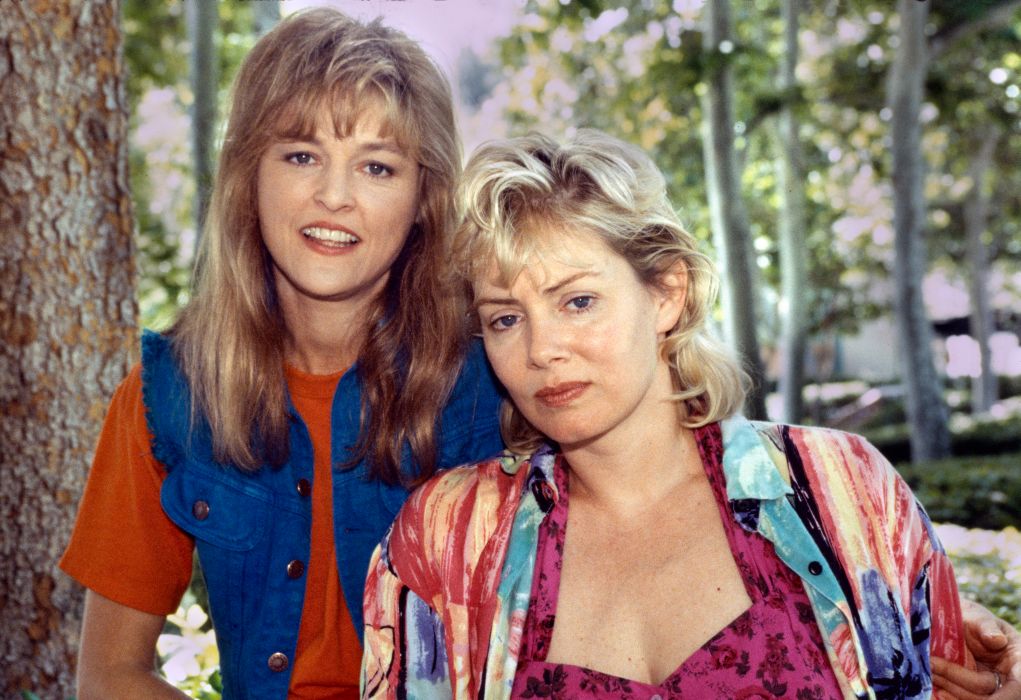
Less than eleven months after Wuornos was convicted on her first murder charge, this TV movie was broadcast on CBS. If you’re at all familiar with the facts of the case, this won’t have much to offer. It does go a little bit deeper into the police procedural, in the shape of Capt. Steve Binegar (Grimm) and investigator Bruce Munster (James). Interesting that it does depict the FBI’s indifference to the case, the investigation basically being left up to the local cops. This gives credence to an article I read, which quoted an unnamed profiler with the bureau as saying there was no such things as a female serial killer. However, said local law enforcement comes up largely smelling of roses.
I’ve a feeling this may be because some members of the police were actively involved in the production, a fact which caused them some trouble due to the conflict of interest. There were, according to The Selling of a Serial Killer, re-assignments as a result, though nothing more formal appears to have happened. This may also have been based on the story Wuornos’s girlfriend Tyria Moore sold, though I’ve not been able to confirm this. The main problem is simply that a TV movie is a profoundly inappropriate medium in which to tell the story of a serial killer prostitute. Particularly one who was a lesbian, though you would be hard-pushed to work that out here. Aileen/”Lee (Smart) and Tyria (Overall) seem much more like room-mates than lovers.
The limitations of the form mean that we don’t really get to see much of… anything, to be honest. The formative influence of Wuornos’s appalling childhood is only seen in a couple of murky flashbacks. The killings themselves come nowhere near the description of them by the authorities as brutal. The closest we get to the grubbiness required for an authentic portrayal is probably the chaste shower scene in which Aileen examines her wounds, behind which we get entirely inappropriate sexy sax music. Though let’s face it: as the picture above proves, Smart and Overall are both far too conventionally pretty, despite being somewhat uglified up. I did laugh at how even the witness sketch impressions of the pair were prettier than the ones actually used by the police.
As long as you’re fine with an obviously watered-down idea of the story, this isn’t terrible. The actors generally do a good job: I’m not familiar with Smart, but there are points when she is able to capture the body language and mannerisms of the real Wuornos effectively, and her performance does balance between making Aileen sympathetic and demonizing her. I also liked James, an actor I know more from villainous roles such as his replicant in Blade Runner. Seeing him here as a smart detective certainly felt against type. But the whole endeavour feels like a jar of “hot” supermarket salsa. You expect to get something spicy, only to find it has relentlessly toned down for mass-market consumption.
Dir: Peter Levin
Star: Jean Smart, Park Overall, Tim Grimm, Brion James
Aileen: Life and Death of a Serial Killer
★★★★
“Lethally blonde.”
 This is Broomfield’s second documentary around the topic of Aileen Wuornos, having previously made Aileen Wuornos: The Selling of a Serial Killer. It’s a glorious doc – one of my all-time favorites – but is more tangential, being about those around Wuornos, seeking to exploit her situation for their own personal gain. He thought he was done with the topic, but he was called as a defense witness during Aileen’s final appeal against the multiple death sentences, largely because among those exploiters was her lawyer at the time, Steve Glazer. But around appearing in the witness box, Broomfield decided to make a second documentary, this time focusing on the woman at the centre of proceedings, all the way up to her execution by lethal injection in October 2002.
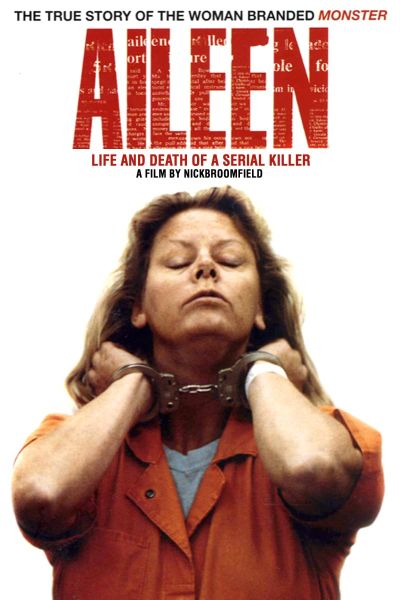 What I love about Broomfield’s work is, he goes where the story leads him. Some documentarians – and I’m looking at you, Michael Moore – go into production with An Agenda (caps used advisedly). They then craft the end product towards that agenda. To me, that’s less a documentary than propaganda. Broomfield seems to have a much more open mind, and the results sometimes end up going in unexpected directions. Here, it’s clear that he has sympathy for Wuornos, but doesn’t pull any punches about her personality and mental state. He presents footage both of her claiming self-defense and absolutely confessing to having committed cold-blooded murder. The scary thing is, Wuornos appeared to me to be highly credible in each, contradictory situation. Maybe I’m just easily fooled. Sobering.
Certainly, there is evidence of Aileen’s anger issues. During his final interview, we see how she can go from calm discussion to volcanic ferocity in short order, for little or no reason, and storming out while flipping Broomfield the bird. If there had been a firearm to hand during this outburst… Yeah, watching this, the idea of her killing seven in less than a year definitely seemed possible. Rage and easy access to guns is a dangerous combination. But as the film proceeds, it appears Wuornos’s mental situation deteriorates into frequent surges of paranoia, claiming mind-control weapons are being used on her, and that the cops knew who she was after the first murder, and let her continue killing so they could exploit things in the media.
Should someone so clearly ill in the head be executed? Political considerations – it being an election year, with the governor wanting to appear strong on crime – appear to have overridden any judicial concerns. A cursory mental exam pronounced her fit to die, and the sentence was duly carried out. On that day, Broomfield was interviewed by the media (a classic case of the snake eating its own tail). He said, “Here was somebody who is has obviously lost her mind, has totally lost touch with reality. We’re executing a person who’s mad, and I don’t really know what kind of message that gives.” As someone not averse to the death penalty, this documentary certainly made me pause for thought, and that alone proves its quality.
Dir: Nick Broomfield and Joan Churchill
Aileen: Queen of the Serial Killers
★★
“More of a propamentary.”
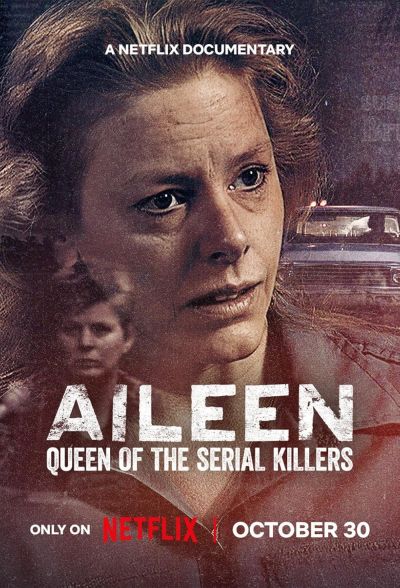 This would likely have benefited had I not watched Life and Death the previous night, because any comparison does not work in this documentary’s favour. Titled on the print just Aileen, forgetting that awkward serial killing thing, this is less balanced, and skews heavily towards Wuornos as victim – of the legal system, her clients and life in general. “Actually, she was made, and that’s chilling,” said co-director Turner, apparently opting to ignore the concept of free will. The bias is apparent, in the way the film concentrates heavily on Wuornos’s first murder, that of Richard Mallory. While that is the only one where there was a full trial, it’s also the only one where I think there’s credible evidence to support her claim of self-defense. The film barely mentions the other six victims.
I won’t argue that prosecutors did everything they could to obtain a conviction. That would be… their job? The footage of a reporter quizzing lead prosecutor John Tanner about Mallory’s sexual assault conviction in the fifties, just made me wonder, how the heck Wuornos’s team didn’t pick up on this? Checking the background of the victim for something like that seems like Defense Lawyering 1.0.1. In general, though, Turner and Cunningham are largely re-treading the same ground as Nick Broomfield: indeed, some footage here appears to be repurposed from his films, or at least comes from the same sources. I was a little surprised how this largely glossed over Wuornos’s upbringing, which I’d have to consider a huge factor in her issues.
The new stuff is mostly from Australian film-maker Jasmine Hurst, who corresponded long-distance with Wuornos for year, and interviewed her in 1997. I felt she was the whole endeavour’s weakest aspect. Her adoration for the killer is wildly improper from that start, Hurst drooling over Wuornos: “She’s like the trifecta. Gay, female, sex worker. And killing white men.” Hey, it is the Netflix trifecta, anyway. Later on, Hurst delivers this doozy of a statement: “It didn’t matter to me at all if none of the men had raped her. Those men may not have raped her in the moment, but they are icons of previous rapists that she didn’t fight against.” That the makers saw fit to leave that comment in the movie, says a lot about their agenda.
For, make no mistake, an agenda is what we have here, and what differentiates it most sharply from Broomfield’s work. Turner and Cunningham aren’t seekers after truth. They are convinced they know it, and want to drag the viewer to agree. That’s why we get comments on Reddit about the film like, “I feel so dumb for falling for the Aileen is evil stuff. This doc changed my mind completely.” More than one thing can be true, y’know. Yes, she did not receive a fair trial. Yes, she had a rough life. But she was also evil, and an incredibly angry sociopath. Not that you’d know it from the footage here, almost all showing Wuornos at her most serene.
Dir: Emily Turner, Kirsty Cunningham
 Coincidentally, I watched this the night after Sinners, another period piece which looks at the place of a specific culture in society. There, it was music in predominantly black society of the thirties; here, it’s professional wrestling in the overwhelmingly white society of the fifties [the presence of in this WWE champion Naomi as Ethel Johnson, feels very much a token gesture]. Definitely fewer vampires in this, however. It’s the story of Mildred Burke (Rickards), who went from working as a waitress in a diner, though wrestling at carnivals, to become one of the biggest draws in the ring of her time. The end of the film calls her the first woman to become a millionaire through sports.