



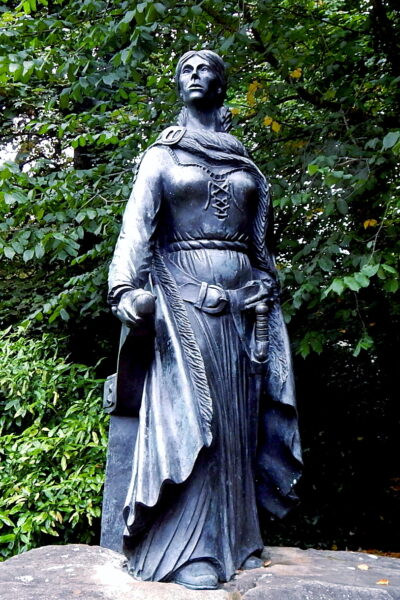
 The daughter of Owen “Dubhdarra” (black oak) O’Malley, famous Irish sea captain, is somebody whose life could easily be made into a film. Known as Gráinne Ní Mháille in her native tongue, I suspect the English version, Grace O’Malley, would be a little more manageable for cinemagoers, and so, that’s the form we’ll use here. She was born in 16th-century Ireland, which at the time was largely allowed to operate independently of England. However, during her lifetime, that gradually changed, and it’s this which was behind many of the turning points in her life.
Her family were great seafarers, and there are tales that say Grace went to sea with her father while still a child, and decided that a life of adventure was for her. In one story, she cut her hair – either to disguise herself as a boy, to sneak aboard, or because she was told it would get caught in the rigging – this led to her nickname “Grainne Mhaol”, or “Bald Grace”. In another tale, her father tells her to get below when their ship is attacked, but she disobeys him. Climbing the rigging to watch the fight, Grace noticed one of the attackers was about to stab her father in the back. Screaming in fury, she swung down from the rigging and attacked him from behind. While folklore-esque exaggeration is likely, there may be an element of truth involved – at the very least, it sounds like a pretty good movie scene to me.
It is known that Grace’s mother did not approve of such things. She employed a tutor to educate her daughter at home and teach her things a well-connected young lady should know, such as Latin. Owen O’Malley was the chieftain of the Barony of Murrisk and controlled a powerful clan and quite a lot of land. At a young age, as was the custom of her people, Grace was married to Donal O’Flaherty, the son of another clan leader. Although it was an arranged marriage it seemed to work well and her new family soon accepted Grace as she got involved in politics, fishing and trading.
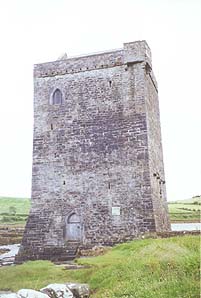
Rockfleet Castle, Grace’s home
After a few years she began to overshadow her husband was in charge of the O’Flaherty fleet of ships, an important position and in an age when such jobs were not given to accountants, let alone women. The port city of Galway was refusing to trade with them, so Grace starting seizing ships that passed through her clan’s waters. This is where her reputation as a pirate comes from. It has been recorded that she used to fight with a sword in each hand and the thought of watching her boarding another ship in this manner has a lot of appeal for a scene. She used to let them go on their way once they had paid her off – it’s not like she made anyone walk the plank.
But all good things come to an end. During the 1560’s, there was a power shift in the clan: another leader who had been making trouble for the English, was bought off by being made clan chief. Soon after this, Grace’s husband died in battle and she was left with nothing. Taking her three children, and accompanied by 200 followers, Grace headed back to O’Malley country, determined to make a fresh start. She set up base on Clare Island and rebuilt her fortune by trading and piracy. She did well and soon owned five castles in the area and married the man that owned the sixth; Richard Burke.
Initially, the marriage was on a trial basis, for one year; legend has it, Grace ended the trial – and kept the castle! – but must have relented, as they remained married for many year thereafter. They had a son called Tibbot, who was born aboard a ship while Grace was on a peaceful trading expedition, and what happened a few days later would have to be in the movie. I have speculated a little on the beginning of the story, but left the rest intact.
I see Grace singing a beautiful Irish lullaby to her baby below deck. Suddenly the peace is shattered by the shouts of angry men – their ship is under attack from Moorish pirates. The baby starts to cry and Grace tries to calm him by saying that her crew will take care of the nasty men. She listens intently to the sounds of fighting from above and soon realises that her men are loosing. Muttering that she has to do everything herself, Grace loads her gun and sticks two swords into her belt. After a few soft soothing words to her son; “Don’t fret, darling – Mummy won’t be long. I just have to go and kill the nasty men myself.” Grace bursts on to the deck, in a very bad mood, blasts the first enemy with her gun and then takes to the rest with her swords. The tide of battle now turns and the attack is repulsed.
It is important to realise that this was a period when ships of rival nations frequently attacked each other on the high seas. On his first trading expedition to the Americas, Francis Drake was attacked by Spanish ships, and spent the rest of his life attacking them. The Spanish always regarded him as being a pirate, although to the English he was a privateer, a subtle but significant difference. A privateer is a privately financed ship, that has letters from the government giving permission to attack ships belonging to an enemy power. Their purpose is to capture, rather than sink, such vessels and make a profit for the shareholders who had financed the expedition.
Drake made several trips to the Caribbean, and on his most famous voyage sailed around the world 1577-80. When he returned, the Spanish wanted him executed as a pirate and their treasure returned to them. They had a point: at no time during his voyage were the two countries at war. Elizabeth had been warned by her advisors not to antagonize the Spanish, but as usual, took no notice. She knighted Drake, her favourite adventurer – then, as main financial backer of the expedition, gleefully collected her share of the loot. The Spanish were of course, furious, but their moral indignation is suspect: the gold and silver involved originally belonged to the Incas, a civilization destroyed by the Spanish in the process of ripping them off. Drake’s return to England, where he was greeted as a hero, would make an great scene and would establish Elizabeth as a character.
The English decided that the best way to gain control of Ireland was to buy off the Irish Lords with English titles. Grace was not interested, so the Governor, Richard Bingham, decided to put her out of business; Slowly but surely he started working on this, constricting her operations, and at one time even put her in prison; she escaped execution only when her son-in-law traded himself for her, with the condition Grace gave up her independent ways. The situation was becoming unbearable and all Grace’s appeals to the Governor came to nothing. In desperation she went over his head and sailed for England, determined to ask Elizabeth to intervene on her behalf. This was a courageous thing to do – but she would not have achieved what she had without being a shrewd judge of character. She gambled her life on this ability. Grace started off by writing Elizabeth a series of letters asking for an audience.
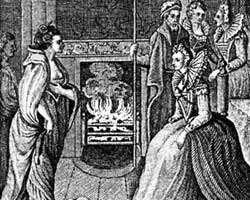 Finally the English Queen agreed and Grace came to court to make her pitch (left). She horrified them by addressing the Queen as an equal – Grace’s use of Latin, the language of nobles, would have impressed the Queen. She made a point of saying that they were much alike, both prepared to fight to keep their possessions. Grace referred to the way Elizabeth had joined her army at Tilbury, when the Spanish Armada threatened to invade in 1588. She made a difference too, as her rousing speech did wonders for the moral of her, up till then, pessimistic troops. [It is historical fact that Elizabeth was fond of hunting, and an excellent shot with a crossbow, so it is possible she may well have got involved if the Spanish had landed.] Around the same time, some Spaniards were shipwrecked in Ireland and slaughtered by Grace. A scene of each of these incidents would help illustrate that they did have a lot in common.
The English Queen took to Grace and the two were soon chatting in private, like old friends. They were about the same age and had both led eventful lives. Elizabeth’s father, Henry VIII, had her mother, Ann Boleyn, beheaded for treason, and her half sister, Mary, imprisoned her for a time in the tower of London. It was experiences like this that made Elizabeth a lot tougher and more pragmatic than many people give her credit for. She gave Grace everything she asked for, provided her piracy against Britain ended. Soon Bingham was forced out of Ireland in disgrace – for doing exactly what he was told, to the woman he called, “Nurse of all the rebellions in the province for 40 years”. Politics, it seems, doesn’t really change much in 400 years.
 Another interesting tale is told about an incident on the way home to Ireland. She stopped at Howth Castle, where hospitality dictated she should have been offered a meal and a place to stay. But she was told the lord was dining, and wasn’t to be disturbed: an infuriated Grace was leaving, when she met the lord’s son, who was returning to the castle. She kidnapped him, and as the terms for his return, demanded that in future, anyone who asked at Howth Castle would get food and a bed. The tradition continues to this day; the family that lives there still has an extra seat for dinner, just in case…
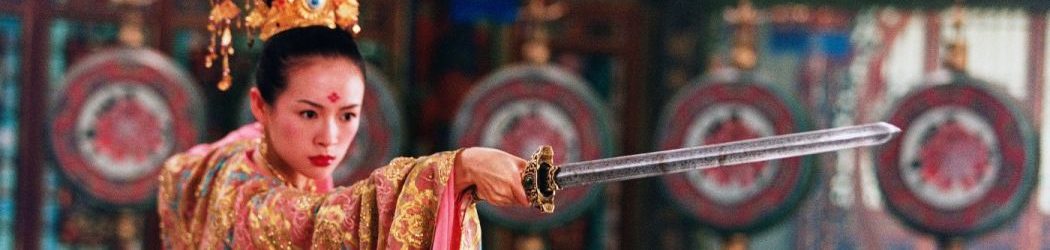
Grace lived on into old age and died peacefully – in the same year as Elizabeth, 1603 – although it is said she never lost her sense of adventure. The meeting would involve several scenes in the film, and it would be a case of deciding what to leave out rather than having to make things up. I first heard about Grace from the Warrior Women series hosted by Lucy Lawless (right). The enthusiasm for her subject was quite infectious and I can’t think of anyone better to play her in a movie version.
[Jim chips in: I think Nicole Kidman might be an interesting alternative too. She seems to have the kind of quietly steely personality that would be right for the role. Sigourney Weaver is another possibility. The difficulty is the film needing to span several decades of time, so it might be best to have several actresses playing Grace at different times in her life. On the plus side, the total lack of any portraits or illustrations drawn from life does give us enormous flexibility in this area. Though it does pose problems when it comes to finding pictures for this article!]
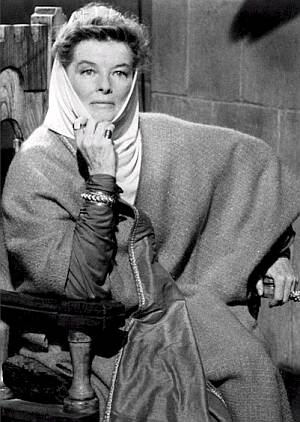 If Eleanor of Aquitaine is perhaps best known through the Oscar-winning portrayal of Katherine Hepburn (right) in The Lion in Winter, she was one of the richest and most powerful women of the Middle Ages in her own right. She was married twice, to the Kings of France and England, and she survived to see two sons also became monarchs. But Eleanor’s own life was both long – she lived into her eighties, remarkable for the era – and colourful.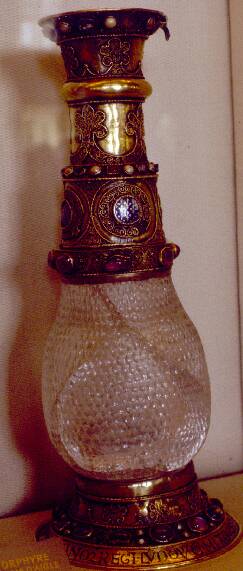
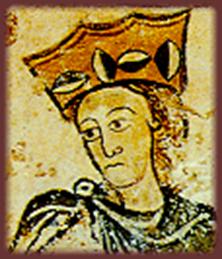 It was Eleanor who looked after things when he was gone; a contemporary writer, Ralph of Diceto, says: “He issued instructions to the princes of the realm, almost in the style of a general edict, that the queen’s word should be law in all matters.” This is significant, since of Richard’s ten year reign, only six months were actually spent in England. She did make one major overseas trip during this period, arranging for Richard to marry Berengaria of Navarre. But he wasn’t waiting around to get hitched to anyone – he was off to Palestine. It was up to Eleanor, now almost 70, to ride over the Pyrenees, collect the prospective bride from her home, and then travel with her through Spain, France and Italy to Sicily where Richard and his army were camped.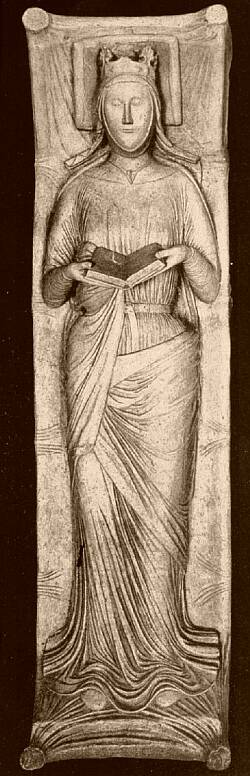
 This particular lady is one who has come close to being written out of history, and it’s about time she was put back in. It is partly because she is so obscure that I think her movie should be done as a sequel to one on her father, Alfred the Great who, though better known, also deserves more recognition and is definitely worthy of a movie in his own right.
 While he got his inspiration from many sources (and did not welcome speculation on such matters!), it is, however, hard to ignore certain similarities between Middle Earth and Anglo Saxon England. For example both had: just one woman to fight on horseback; one woman to lead men in battle; one woman to help rule her people when destiny called. Taking everything into consideration, it is quite likely that the legends of Aethelflaed, Lady of the Mercians, inspired Tolkien to crate Eowyn, Lady of the Rohan (left). I do admit, that this similarity seems to relate more to their character, rather than to the lives they led in fact and fiction.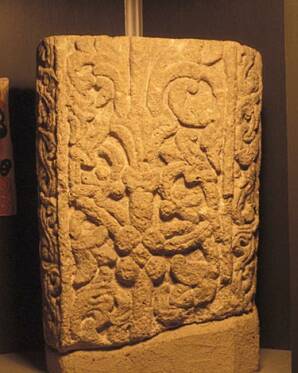
 After her husband died in 911, Aethelflaed ruled alone until she died in 918 – he had been sick for some while before this, so in reality she already had the reins. In these last few years she is reported to have led her army in battle against the Vikings, recaptured the town of Derby without a siege, skilfully negotiated treaties with the Danes, Scots and Welsh, and built fortifications – her street plan can still be seen today in the town of Gloucester, where she also rebuilt the Roman walls. Though final victory went to others, without Aethelflaed’s tactical prowess to pave the way, the task of those who followed would have been much harder, if not impossible. [Picture at left is Skeggjold, one of a serious of Valkyrie dolls created by Tanya Van Der Ploeg – for more information visit
 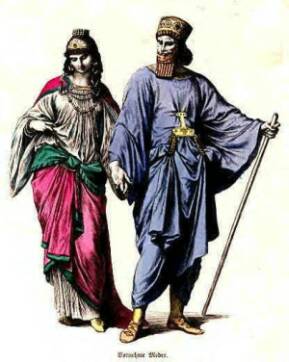 There were actually two queens of Halicarnassus called Artemisia. In the 4th century BC, one built a mausoleum to her husband, that was so beautiful that it became acknowledged as one of the Seven Wonders of the World, but she was the later, and at least for our purposes, the secondary holder of the name. Her predecessor’s time in the spotlight came during the Battle of Salamis, in the year 480 BC – the story of how she arrived there, leading a squadron of ships, would occupy the bulk of the movie, with the battle as the climax. Artemisia had married the King of Halicarnassus about twenty years earlier and when he died a few years later, took the throne for herself.
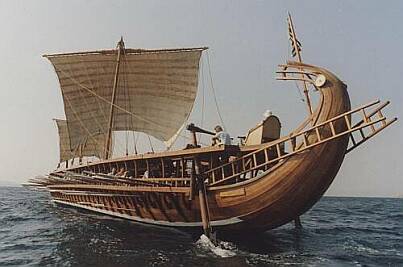 The Persian Empire was a huge collection of diverse races united only in the tributes they paid to Xerxes. A select group of these subservient allies plus some of his own officials made up his military council. Artemisia was a member of the council and she alone spoke against taking on the Athenians in a naval battle. She advised him that the fleet would be better employed in supporting the army. Athens had already been occupied, and the whole of Greece lay open, but if the Persian fleet were decisively defeated, most of the army would have to withdraw as it could no longer be supplied from the sea. She wasn’t predicting disaster – but she wasn’t ruling it out either and considered it not worth the risk.
 It has been recorded that Xerxes watched from the beach and when Artemisia rammed her rival exclaimed, “The men behaved like women, and the women like heroes.” It has been suggested that Xerxes was unaware of who she rammed, but I don’t buy this. Calling it a Persian fleet is done as a convenience, because describing it as a combined Phoenician, Egyptian, Cypriot, Cilician and Ionian-Greek fleet, is so cumbersome. Persia was a land empire and called on its allies and vassal states to provide ships. These were peoples who were natural rivals most of the time and would need little incentive to start fighting each other, especially as they try and escape the Greek trap. Artemisia only did what everyone else was trying to do – she just did it with style. The recognised facts support this view: after the battle, she remained on good terms with Xerxes while most of the fleet, and Xerxes himself, returned to their home countries