
In the medieval and Tudor world there was no question in people’s minds about the order of God’s creation – men ruled and women didn’t. Yet despite everything that stood in their way, a handful of women did attempt to rule medieval and Tudor England. Historian Dr Helen Castor explores seven queens who challenged male power, the fierce reactions they provoked and whether the term ‘she wolves’ was deserved. Helen looks at what happened when England was faced not just with inadequate kings, but no kings at all.
Matilda and Eleanor
800 years ago Matilda almost became the first woman to be crowned queen of England in her own right. Castor explores how Matilda reached this point and why her bid for the throne ultimately failed. Her daughter-in-law Eleanor of Aquitaine was an equally formidable woman. Despite being remembered as the queen of courtly love, in reality during her long life she divorced one king and married another, only to lead a rebellion against him. She only finally achieved the power she craved in her seventies.
Isabella and Margaret
In 1308 a 12-year-old girl, Isabella of France, became queen of England when she married the English king. A century later another young French girl, Margaret of Anjou, followed in her footsteps. Both these women were thrust into a violent and dysfunctional England and both felt driven to take control of the kingdom themselves. Isabella would be accused of murder and Margaret of destructive ambition. But as historian Helen Castor reveals, their self-assertion that would have seemed natural in a man was deemed unnatural, even monstrous in a woman.
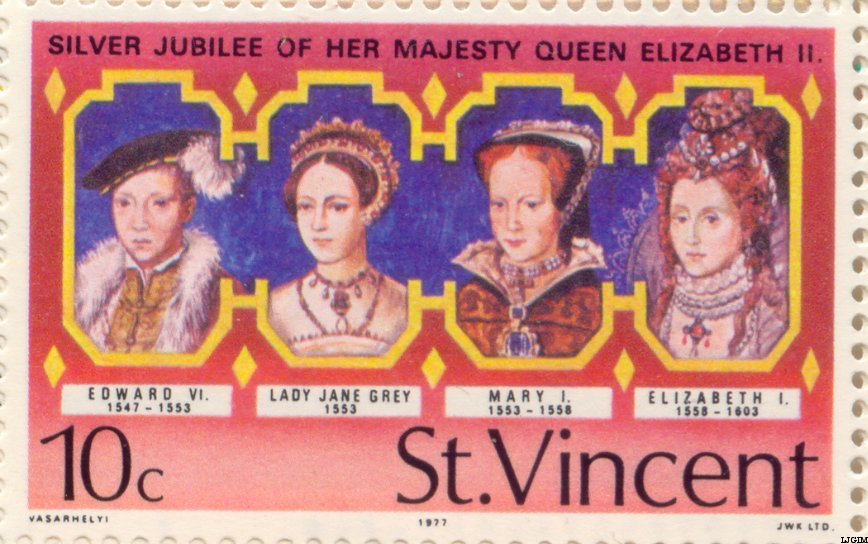
Jane, Mary and Elizabeth
In 1553, for the first time in English history all the contenders for the crown were female. In the lives of these three Tudor queens – Jane, Mary and Elizabeth – she explores how each woman struggled in turn with wearing a crown that was made for a male head. Elizabeth I seemed to show that not only could a woman rule, but could do so gloriously. But at what cost?
 While twice as long as the first series, at 12 episodes rather than six, I can’t say it’s actually any better. Indeed, I think the dilution of the main element which was so much fun the first time round – the relationship between the two, disparate hitwomen, Roxie (Osment) and Veronica (Chriqui) – leaves this season less entertaining. Yes, it’s bigger and more exotic: but it feels spread thinner, to the detriment of the core aspects. The story takes up shortly after the events of the first series, with V+R in the Caribbean, waiting to get their share of the money from Eileen (Missi Pyle) and Mother (Gershon). But instead, an assassination squad is sent to get them, kicking off a reunion with Veronica’s “parents”, a deranged killer who thinks Roxie is his dead wife, a rogue CIA operative who sends Frank Barnes (Arquette) after Mother, and so on. It builds to a climax where Veronica, previously injected with a lethal nanobot virus that’s about to go off, takes part in an underground death match at a cockfighting arena, to prove her love for the deranged killer. I shit you not.