



The author – a.k.a. “Made in Sweden”
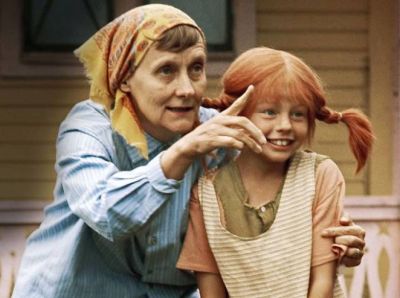 Astrid Lindgren (1907-2002) was an acclaimed Swedish author of children books, probably best known for her Pippi Longstocking books (1945-48). It’s heroine was a “break all the rules” child character, behaving in a way seen as both unthinkable and inacceptable in the 1940s. They were possibly influenced by the earlier Anne of Green Gables books by L.M. Montgomery, but also by the little girls Lindgren knew, as well as her own childhood memories. It is interesting to note that the character was often used by early feminists as a role model – and still is today, by those who are critical of the system. Indeed, it is said that Stieg Larsson’s dark anti-heroine Lisbeth Salander was inspired by Pippi.
Lindgren had a huge impact on modern ideas of how children should be treated and raised, in a way often seen as anti-establishment. She went on to write many more children’s books that were equally beloved, though Pippi probably remains her most famous character. In 1978 she initial declined the “Peace Price of the German Book Trade”, giving a speech in which she spoke against violence ever being used in raising children. She also remained an important voice in Swedish politics, and many of her books were turned under her watchful eye into movies and TV series, often co-productions between Swedish film companies and German TV channels. According to Wikipedia, Lindgren is the world’s 18th most translated author, and it is estimated her books have sold 167 million copies worldwide, in 95 different languages. There is even an asteroid named after her!
The Book (1981) – a.k.a. “Memories are made of this”
Literary rating: ★★★★★
Kick-butt quotient: ☆☆
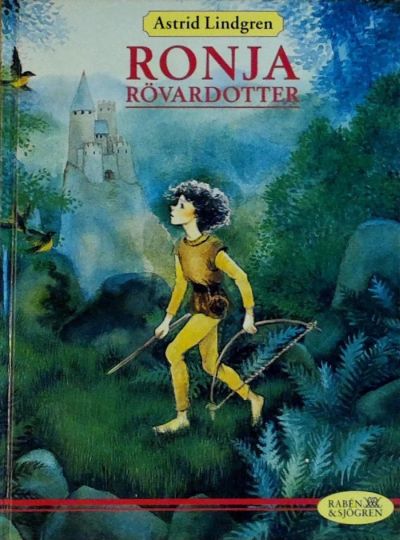 In her later life, Lindgren’s novels became more grown-up, though still being written for children, and definitely took on a darker tone. In 1973’s The Brothers Lionheart, she dealt with heavy subjects like suicide, mortality and the trauma of losing a beloved one. It was much discussed at the time of publication, though can with good conscience still be called a fantasy book. Her final, and maybe best, novel was Ronia, the Robber’s Daughter (original title: Ronja rövardotter). This is a return into the Swedish woods Lindgren loved so much. She had to leave her home-town in the province of Småland, after becoming pregnant as a single young woman. She re-located to Stockholm, married and had a second child but never returned. Many of her books play out in small towns, on islands or in fantasy countries, and deal with the loneliness of young children, as well as their friendships and adventures with each other.
It is never stated explicitly when the story takes place, but it can be estimated at some time in the early middle ages. Ronia is the daughter of Matt (original: Mattis), chief of a robber gang living in the so-called “Mattiswood”, and his wife Lovis. As a young child in the forest, she discovers fantastic and deeply frightening creatures such as gnomes and trolls, as well as the deadly harpies (original: vildvittror – there’s no English equivalent, since they are an original invention by Lindgren). Matt’s castle was split in two by a lightning bolt on the day of Ronia’s birth. Eventually, another group of robbers settles in the other half – much to Matt’s annoyance as he has been fighting their chief, Borka, since his youth. Ronia herself initially despises Borka’s son, Birk. But after some initial resistance she grows fond of him and they explore the Mattiswood, although their friendship has to remain a secret. Unfortunately, a situation occurs where she has to choose between her friend and her father.
That’s the story, in an admittedly brief nutshell. You can see touches of Romeo and Juliet in it, but the story may also have autobiographical aspects, Lindgren dealing with her own relationship to her father. We don’t know for sure, and the book is much more than a story. It’s a plea to overcome hatred, plus a depiction of growing up and the circle of life. This is seen in the character of “Bald-Per”, a supporting but important character, who serves as a father figure to Matt. He shares the love for untamed nature, beautiful as well as cruel. It’s also about the value of friendship and taking a stand for who you are and for whom you care for. That’s quite a lot to chew on, and more than most children’s books ever dare to offer their young readers.
The book was originally published in 1981 with illustrations by long-time Lindgren-collaborator Ilon Wikland and became – like most of Lindgren’s books – a big success. It has been turned into a movie, a TV series, an anime series, a musical and a stage play several times.
The original movie and TV series (1984) – a.k.a. “A mainstay of 1980s children’s fantasy”
Movie rating: ★★★
TV series rating: ★★★
Inevitably, it became a movie and TV series, as with her Pippi or Emil of Lönneberga books. In most cases, the process was to produce a TV series, with an edited version then released in cinemas. It’s still the case with many Swedish series today, e. g. The Girl with the Dragon Tattoo. In this case “edited” is not quite accurate, since it was meant to be a movie and a TV series from the beginning. There is some confusion over different cuts of the TV series: in Germany it was shown in three parts, but Sweden saw it in six. Both the movie and TV versions have some scenes which didn’t make it into the other. The movie runs two hours, the TV series 15 minutes longer. As the usual director of Lindgren adaptations, Olle Hellbom, had died, this was directed by Tage Danielsson, a former actor in Lindgren movies himself: he also died, shortly after finishing the movie.
In general, this wonderful film stays true to Lindgren’s book – not too surprising, considering she wrote the screenplay. It also fits the era’s desire to embrace nature and natural environments. In the 80s, the world was suffering from environmental pollution, smog and acid rain, leading to the German expression “Waldsterben” (the death of woods). Chemical and industrial waste was being fed into rivers, we had the hole in the ozone layer and so on. At the same time, the 80s was a period when the fantasy genre dominated screens for the first time in a big way. America gave us movies such as Legend, Labyrinth and Willow. Europe produced Excalibur, The NeverEnding Story and Time Bandits. While on TV there was Robin of Sherwood.
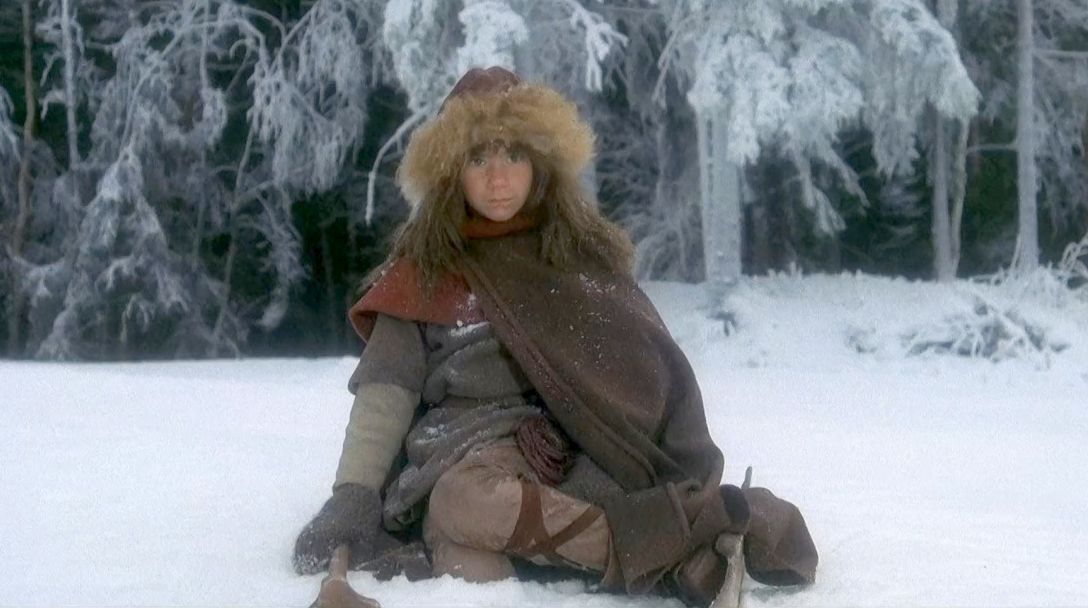 But while the movie was beloved, I had problems with it, despite my young age. First of all, the characters looked different from the book illustrations. Ronia, who had dark curls in the book, had long flowing hair; Birk, whose hair was like a copper helmet, had curls. I also found issue with the child actors, in particular, that they seemed much too young. Based on the illustrations and what went on in the story, I always figured Ronia and Birk to be in their early teens: here the actors were 11 years old, and didn’t fit my own inner image of them. The special effects… alright, while you wouldn’t expect something on the level of George Lucas and ILM, I found them unsatisfying, especially the harpies. They were so intimidating and loaded with a frightening, sadistic aura in the book. Here? Actresses in costumes in front of a badly lit green-screen.
However, revisiting both recently, I can say: The movie wasn’t as bad as I thought. I still had to cope with the beautiful, touching prose of Lindgren, stressing the feeling of loneliness, emotional pain and danger, being replaced with something closer to a bucolic comedy, seriously underplaying the dramatic conflicts inherent in and so vital to the story. Especially, Börje Ahlstedt, who played Matt, steals the limelight from everyone else when on screen. Which is not necessarily a good thing: while Matt is a key character and, to some degree, the antagonist, young actress Hanna Zetterberg can hardly stand up against him. That said, I do think Zetterberg, and Dan Håfström as Birk, gave good performances for their age, and the movie has grown on me over the decades. Though, I guess you wouldn’t show children as young as these swimming naked in a movie today, for obvious reasons. But the 80s were a more innocent time.
Wikipedia tells me the movie was the Swedish entry for the Best Foreign Language Film at the 58th Academy Awards, although it did not get nominated. Though it was awarded the Silver Bear at the 35th Berlin International Film Festival, and was also the highest-grossing film of the year in Sweden. So, what the heck do I know?
The anime (2014) – a.k.a. “Doing justice to the book”
Anime rating: ★★★★
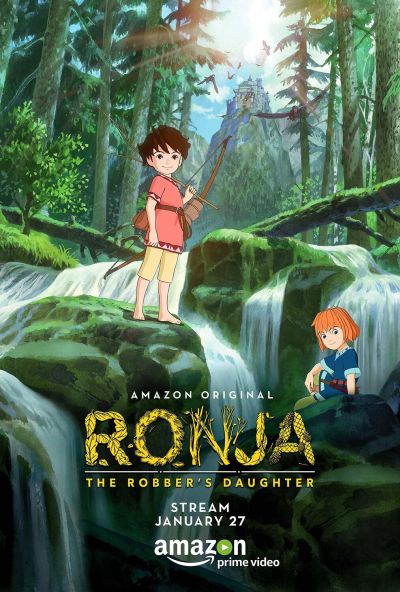 Since I always loved the book, through multiple re-readings, I always wished for a better adaptation. Who would have thought that it would come in the form of Japanese anime? Goro Miyazaki, the son of the great Hayao Miyazaki, turned the children classic into a 26-episode series, original running from October 2014 to March 2015. It was a co-production between Dwango, NHK, NHK Enterprises, Polygon Pictures and Studio Ghibli. I believe it is the only TV series Ghibli ever produced, though they did some TV movies. It has to be said – and it’s my one big complaint – that this is not really animated, in the sense of hand-drawn, but is CGI-animated,, and it… uhm… shows. So do not expect the greatness of a typical Studio Ghibli movie, and less still the overwhelming greatness of a Hayao Miyazaki movie. What was not acceptable for a long time, was that it was only available in the West in over-priced DVD volumes, and not everyone is willing to lay out 120 Euro or more. But now, you can get the whole collection for a fraction of that price – or just stream it online.
But the show itself is great. I was initially at odds with an anime style that, in typical Ghibli fashion, had Ronia looking more like Heidi. Yet it is an adaptation that leaves hardly anything out from the book. Even tiny details and the imaginings of Ronia, find their way in this visual translation. Events that are only told by others, like some robbers getting captured by the law, are depicted here too. And finally, they get the character of Birk right, one that was totally misrepresented in the previous version. It’s my absolute conviction we will never get an adaptation of the material more true to the original story than this.
Bald-Per, who became such a clown in the first live-action version, regains the deeper aspect of wisdom and irony that he possessed in the novel. I really love the depiction of the supernatural beings of the wood, such as those trying to lure Ronia into their underground realm. The harpies finally get the unique beauty and horrific grandeur, I wanted them to have – extra kudos for casting Angelina Jolie’s German voice actress in that role! The only thing to disappoint me is, once again, the age of the children. While Ronia and Birk have the right hairstyles, they seem even younger. Still, I must recommend the series to everyone who has read and loved the book, and wants a faithful adaptation. This show doesn’t downplay the more grown-up aspects of the novel – which is strange, considering the author did that when adapting her own book for the screen previously.
The new TV series (2022) – a.k.a. “Modernizing a classic”
TV series rating: ★★★
After a long time where no one seemed to have access to the new adaptation, it would finally be shown on German TV over Christmas 2024. Or, to be exact, the first season, containing six episodes, was shown; the second, also in six parts, screened the following Easter. Part of the reason for the long wait was due to the show being used to launch a new Scandinavian streaming channel, that never really was successful, got into trouble, and as far as I believe, has ceased to exist. The series was a co-production with the public German TV channel ARD. Traditionally, German TV has a long history in co-producing Scandinavian TV series, starting with the Pippi Longstocking TV show in the 1960s. This version was written by Hans Rosenfeldt, one of those responsible for the very successful Danish crime series, The Killing, and the director is Lisa James Larsson.
The most interesting things are the changes to the story. While mostly true to the original, new characters, scenes and an additional plot have been added. There’s a corrupt sheriff in the nearby town, paid off by Borka, but who is put under pressure by the female town leader Valdir. Also, female bounty hunters Cappa and Smarvis are added, and employ a black man to go undercover in Matthis’ gang. Obviously in 2022 a diversity quota must be fulfilled, even though two weaponed women hardly make sense in medieval Sweden. I doubt Lindgren would have approved of the female warrior type, such a common trope today, since her message was always about children and peace. Though I don’t necessarily complain about it!
But it has to be said: half the screen time in the series is dedicated to these new characters, not from Lindgren and not part of the book. It’s all added by the filmmakers of their own accord. I’m not sure I like their choices. It unnecessarily complicates an otherwise simple story, and shifts it away from the fantastical aspects, becoming too much a social message-board on poverty, inclusion and discrimination. Main characters have been slightly changed: Matthis comes across here as a more down-to-earth, common-sense type, a father justifiably worried about his daughter, rather than the classic, hotheaded version.
On the other hand Lovis, Ronja’s mother, appears much less bossy than previous versions, and Bald-Per is less a weird, obnoxious old man, and more an understanding mentor that touches Ronia’s (and our) heart. These are changes you have to digest, although they are not necessarily bad. Key elements from the story are still here, such as the Wolf’s song Lovis always sings for Ronia, the Glupa Fall, and the wonderful idea of Lindgren’s that a child must make their own experiences outside, even though it’s dangerous. [No modern parents would let their children into a wood full of dangerous creatures!] These have been retained and take on an initiation form. “What are you watching out for today?”, asks Bald-Per, when Ronia leaves again for the wood after having encountered grey gnomes and harpies first-hand, just days before.
FX-wise this new version is definitely up-to-date compared with the old version. But in the latter’s defense, there were no computers doing effects in movies then, so it had to rely on puppets and animatronics. For the first time the Grey Gnomes appear here as really frightening. Unfortunately, the design of the Harpies has been changed. They look more like large CGI-animated predatory birds while originally, they were hybrids of ravishing beautiful women with birds. For me they always symbolized the dark side of grown-up female sexuality and cruelty, and therefore Ronia’s unspoken anxiety of becoming a grown-up woman herself. This is, of course, only my interpretation, but I find it regrettable this shadowy aspect was totally abandoned here.
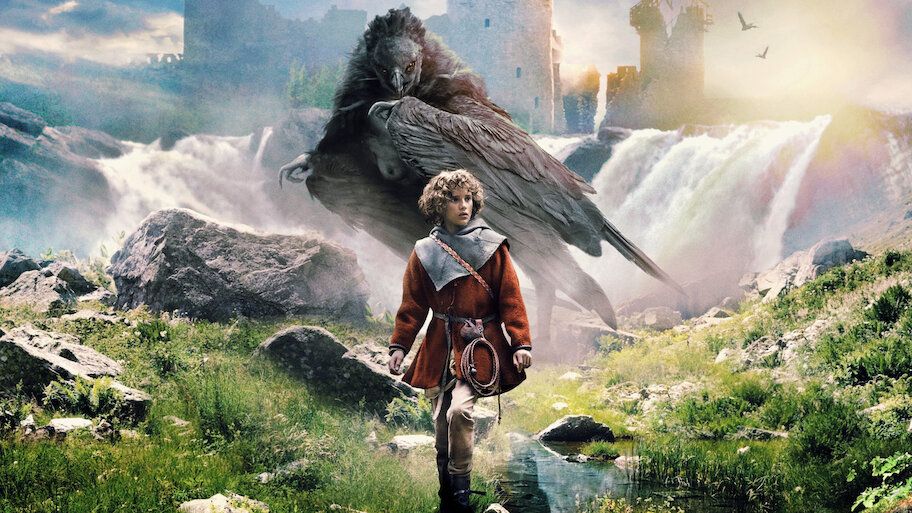
What you lose on one side, you gain on the other. I love very much the idea that Matthis takes Ronia on her first raid. Seeing with her own eyes what the robbers do, shatters Ronia’s image of her father and cements her decision never to become like him. While this became a subject later in the book, too, it never played such an important role. I actually do think this scene is an improvement. Interestingly, Ronia shows no qualms when the robbers kill a reindeer for food. I suspect Lindgren might have rejected that scene, though it’s logical that in winter the robbers have to become hunters.
Admittedly, some things don’t make sense to me, such as there being quite a lot of black people in this show. Undis, Borka’s wife, does not look very Scandinavian to me. Honestly, folks, this plays in Sweden, around the 13th century, when the population was likely quite homogenously Caucasian. Do we really need the standard equality nonsense here, too? As noted the strong social justice message replaces the essential core of the original story, about the love of nature and overcoming hostilities. Though Lindgren likely wouldn’t have objected, since she was clearly left-leaning! Also, when Ronia is little she is blond with straight hair; when she becomes a teen, she is a brunette with curls, as she should be. Couldn’t they cast a little girl with brunette curls for the early scenes?
I still like the story, though if I had to choose, my vote would probably go to either the 1984 version or the anime series. One problem I find in all versions is the representation of Ronia and Birk. This is no exception. While I think the actors for Ronia (Kerstin Linden) and Birk (Jack Bergenholtz Henriksson) are absolutely adequate, and I like that for the first time ever the characters are shown as a bit older, more in keeping with the idea of the book. I somehow still miss the hotheadedness and impulsivity Ronia embodies, a character trait she definitely inherited from Matthis, as well as the cocky arrogance Birk displayed in the book. That said, I like the new version of the characters nevertheless.
In general, the new version can stand on its own feet but feels a bit toned down and tame compared with the original. The fantastic aspects play more a supporting role here, which I find less satisfying, and a clear minus point is that the enormous love of Lindgren for this magical wood and nature is hardly felt. Yes, the Swedish landscapes are beautiful as they should be. But the feeling this wild, magical forest was essential to tell Ronia’s story isn’t there anymore. The story loses quite a bit when its ending is changed, with Cappa and and a group of soldiers invading Matthis’ part of the castle to take revenge for the death of her father, for which Matthis’ father was responsible. This revenge story doesn’t fit Lindgren’s attitude to life and beliefs, and its solution comes out of nowhere: Cappa and Smarvis vanish from the story without ever being mentioned again.
While the original story was mostly adapted 1:1, this new story-line feels as if someone took an existing work by a famous artist and paints some additional elements and characters into it. It just feels wrong, and dilutes the original. This was really not necessary, and for me, is a sign of the vanity of the new writers and film makers who think they can “improve” upon Lindgren and make her timeless story “more contemporary”. That said, the new series is still watchable and entertaining.
Over the years, Ronja Rövardotter has become a similar national icon for Sweden like Lindgren’s other great heroine, Pippi Longstocking. The book and its characters have stood the test of time and can rightfully be called a classic. I wouldn’t be too surprised if one day, in the not-so-distant future, we get another version of Ronia. The good thing is that – up until now, at least – Hollywood has not tried to give us an Americanized version of her, unlike Pippi or Lisbeth Salander!